














What are the differences to note between different types of stainless steel tubes during recycling?
1. Use the testing liquid for it. When the steel is 304 stainless steel, stainless steel recycling companies should use the corresponding 304 testing liquid for testing. If it's genuine, the corresponding test results will appear. This is a pinpoint testing method that can distinguish different steel grades.
2. Apply the copper solution to the product, and if there is no change, it is a genuine product; otherwise, it is of poor quality.
High-Price Door-to-Door Stainless Steel Recycling and Processing Method Introduction
The methods for recycling and processing scrap stainless steel mainly include: magnetic separation, cleaning, and preheating.
(1) Magnetic Separation: This is a method of processing that utilizes the magnetic differences among various substances in solid waste to sort them in an uneven magnetic field. Magnetic separation is an effective method for sorting ferromagnetic materials. After solid waste is introduced into a magnetic separator, the magnetic particles are magnetized under the action of an uneven magnetic field, attracting them into the cylinder, where they are then discharged along with the cylinder at the discharge end; Non-magnetic particles, experiencing a minimal magnetic force, remain in the waste. The magnetic source typically used in magnetic separation is an electromagnet. Or permanent magnets.
(2) Cleaning involves using various chemical solvents or hot surfactants to remove oil, rust, mud, and sand from the surface of steel parts. Commonly used for large-scale processing of engines, bearings, gears, and other components contaminated with cutting oils, lubricants, oil stains, or other adherents.
(3) Preheating: Many steel mills use the method of preheating scrap steel, which involves directly roasting scrap iron and steel with flames to burn off moisture and oil, before feeding it into the furnace. In the metal preheating system, two main issues need to be addressed: firstly, unburned oil can produce a large amount of hydrocarbons, leading to air pollution, which must be resolved; secondly, due to the varying sizes and thicknesses of the scrap steel on the conveyer belt, uneven preheating and combustion occur, and sometimes the pollutants on the scrap steel cannot be thoroughly cleaned.
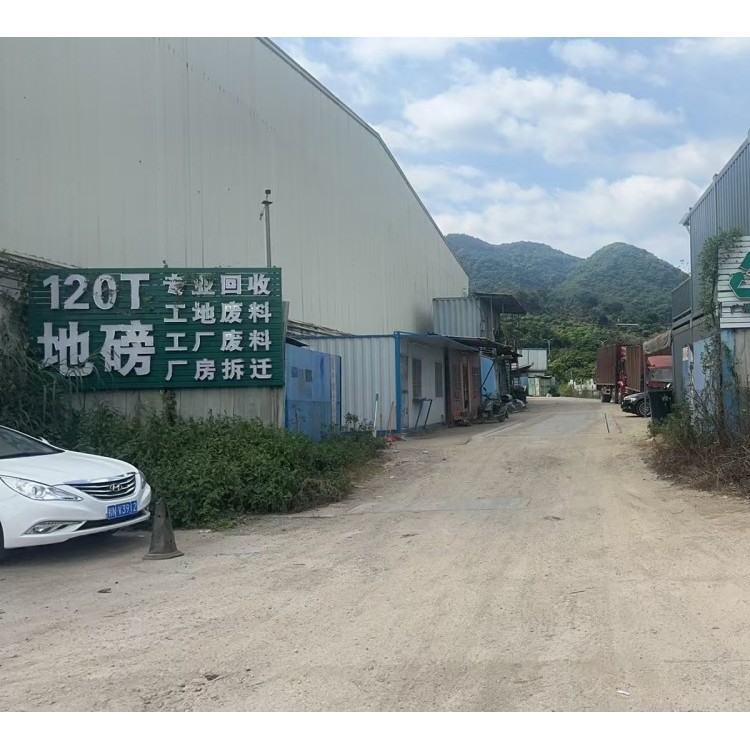
Guangzhou Lv Guang Recycled Resources Recovery Co., Ltd. has been engaged in the recycling of metals such as copper, iron, and aluminum, as well as waste equipment materials, and the dismantling of factory buildings and steel structures for many years. Our company boasts strong capabilities and always upholds reasonable pricing, keeps its promises, offers cash payments, and operates quickly. We provide free on-site inspection and valuation of goods, and integrity is our core principle.
What are the methods for inspecting and identifying scrap stainless steel?
1. Differentiated by toughness and hardness: Common scrap steel is soft and flexible, bendable but not easily broken; chromium stainless scrap steel is hard, can be bent but not broken upon impact; nickel-chromium stainless scrap steel is tough, can be bent but not broken upon impact.
2. Differentiated by oxidation resistance: ordinary scrap steel is prone to oxidation and rust, whereas; chrome stainless scrap steel is not easy to rust; nickel-chromium stainless scrap steel is also not prone to rust.
3. Color differentiation: Common scrap steel is brownish-black; chrome stainless scrap steel turns white after acid washing; unacid-washed is brown-black; nickel-chromium stainless scrap steel is silver-white after acid washing; unacid-washed is brown-white (chrome-manganese-nitrogen steel is black and hard); cold-rolled, unannealed is silver-white with a reflective surface, and is hard.
4. Magnetic distinction: Common scrap steel can always be attracted by a magnet under any circumstances; chromium stainless scrap steel is magnetic and can be attracted by a magnet; nickel-chromium stainless scrap steel is non-magnetic in the annealed state. After cold working, it will have a slight magnetic property, but high manganese steel and chromium-manganese steel with high manganese content are non-magnetic.
5. Differentiate by luster: ordinary scrap steel has a lustrous appearance without oxidation; chrome stainless scrap steel is non-lustrous; nickel-chromium stainless scrap steel is lustrous.
6. Copper wiping distinction: Common scrap steel shows a purple-red color; chromium stainless scrap steel remains unchanged; nickel-chromium stainless scrap steel, after scraping off the oxide layer, a drop of water, copper wiping remains unchanged.




















