















Equipment Inventory Management
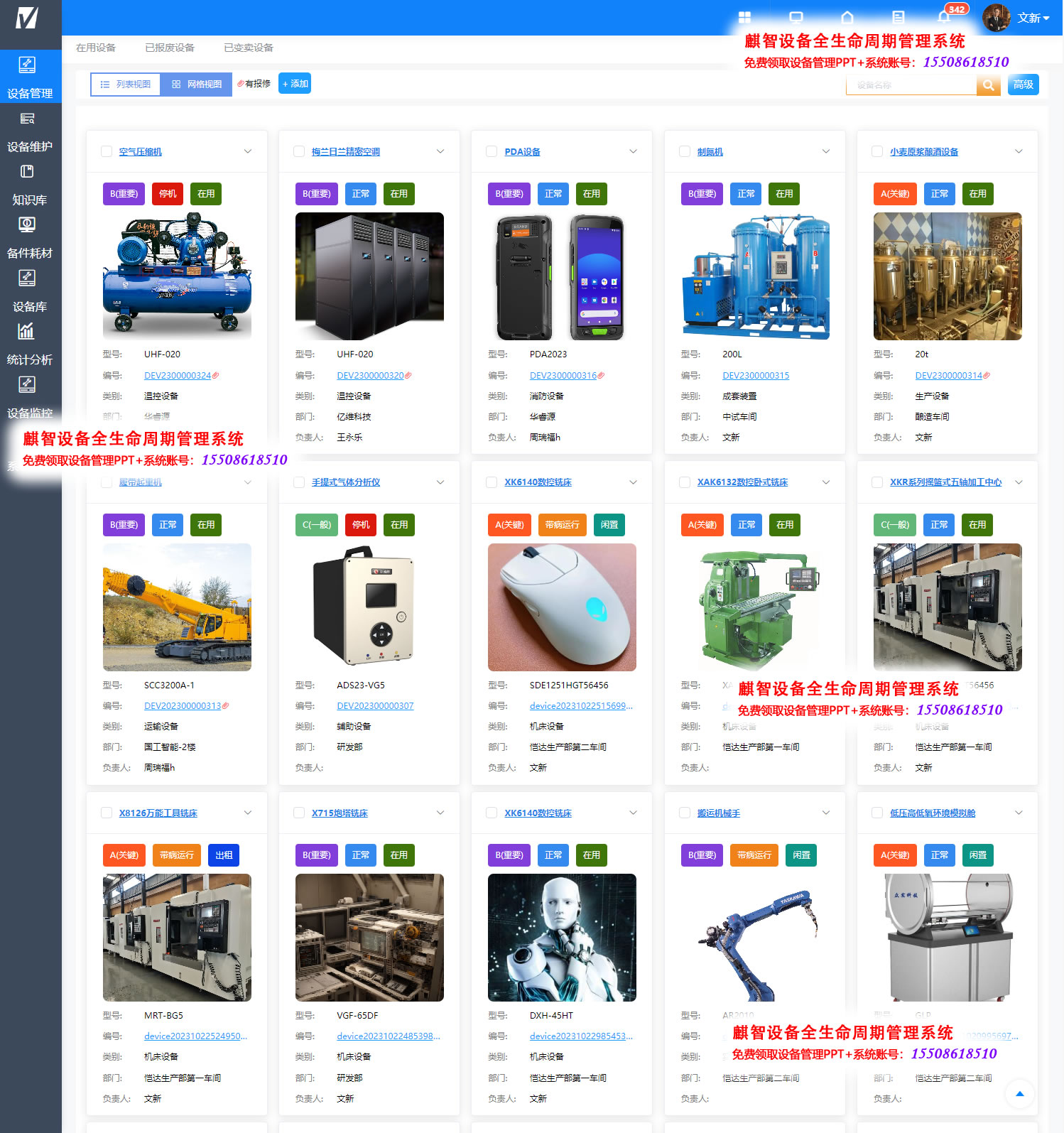
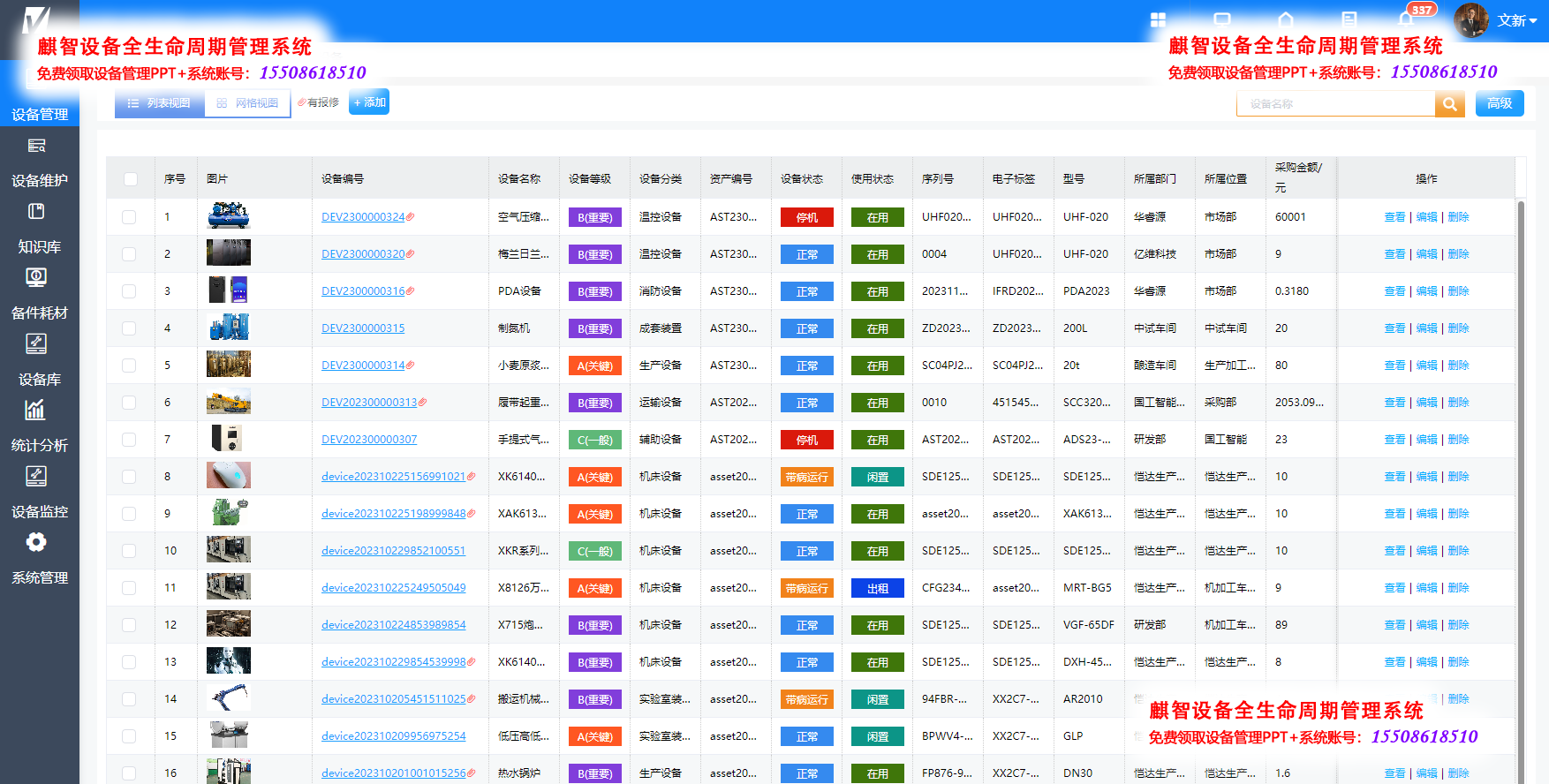
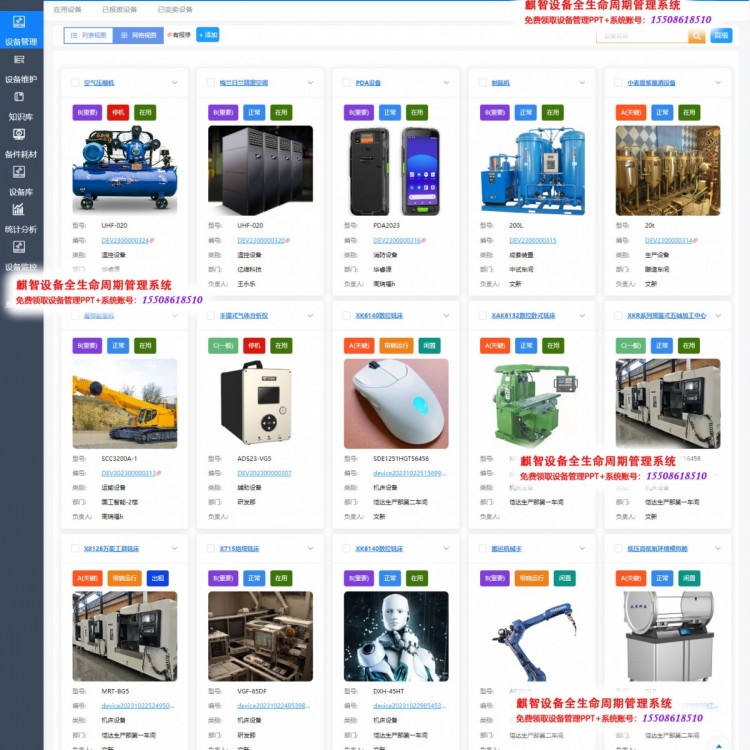
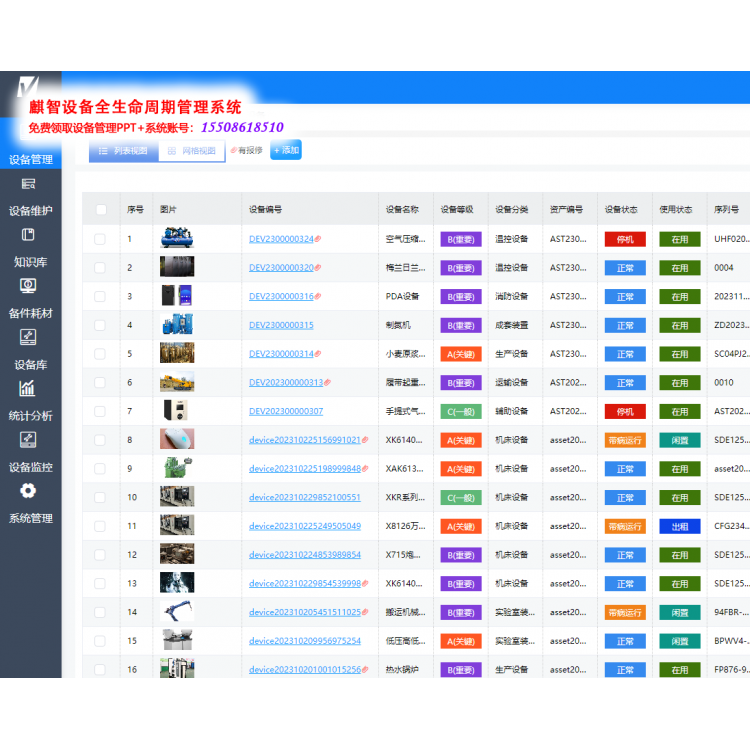
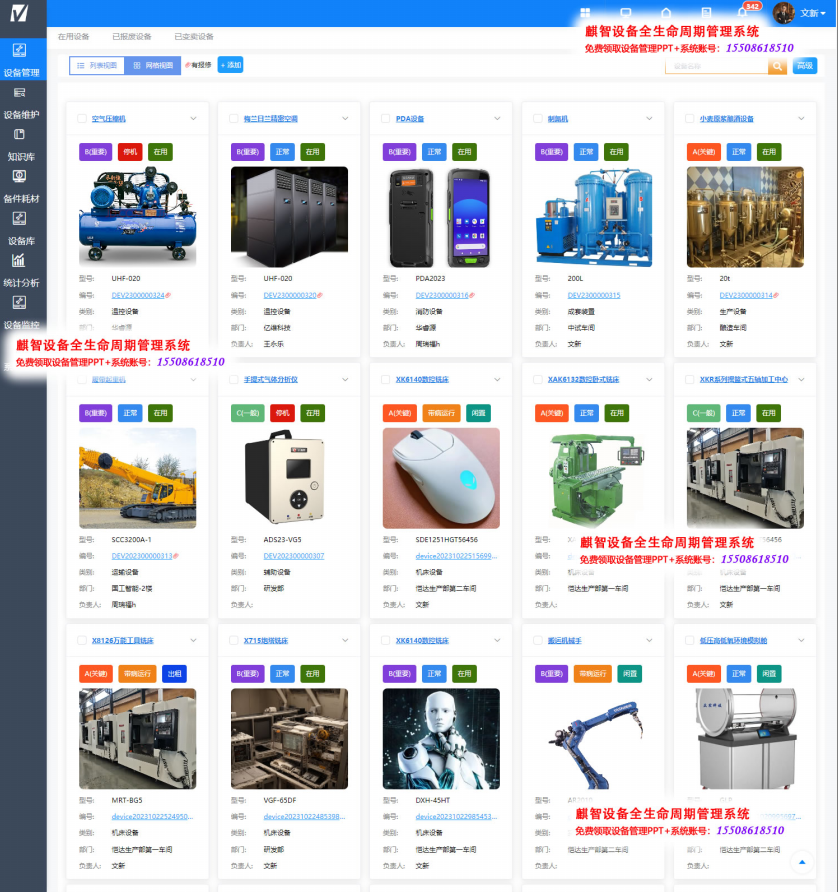
Equipment information and inventory records in the equipment management system are crucial components, used for documenting and managing key information and operational status of various equipment.
Equipment information includes basic attributes and technical parameters of the equipment, such as equipment name, model, manufacturer, production date, and installation location. This information facilitates accurate identification and categorization of the equipment, allowing users to quickly locate the required equipment. Additionally, equipment information also includes technical documents like maintenance and operation manuals, as well as supplier contact details.
The equipment ledger provides a more detailed record of the equipment's entire lifecycle information. It includes the acquisition cost, maintenance records, repair history, fault situations, and repair costs. Recording this data helps assess the performance and health of the equipment, as well as plan for maintenance and upgrades. The ledger can also contain operational logs, repair reports, and inspection records to trace the equipment's operation and maintenance history.
The Equipment Management System's equipment information and ledger functions provide a centralized platform for managing and tracking equipment. Users can quickly locate equipment information within the system, understand the status and history of the equipment, and make corresponding management and decision-making. Recording and analyzing this information helps optimize equipment usage and maintenance, extend the lifespan of the equipment, reduce costs, and enhance production efficiency.

Basic Equipment Information
Equipment Name:Provide the name or description of the equipment. This helps in quick identification and convenient management.
Equipment Type:Set the type or category to which the equipment belongs. Categorize the equipment for easy organization and search.
Equipment Location:Document the storage location of the equipment. Specify where the equipment is located for easy identification and management.
Equipment Status:Document the current status of the equipment, such as normal, under repair, scrapped, etc. Understanding the current condition of the equipment aids in decision-making and maintenance.
Factory Code:Record the equipment's factory code or serial number. This serves as the equipment's identifier for easy tracking and recognition.
Activation Time:Record the activation date of the equipment. Determine the start time of equipment usage for planning maintenance, etc.
Department:Set the department or responsible unit for the equipment. Understanding the equipment's affiliation aids in communication and management.
Equipment lifespan:Record the expected service life of the equipment. Estimate the lifespan of the equipment and establish a maintenance plan.
RFID tags:Record the RFID tag information of the equipment. Utilize RFID technology to track equipment location and information.
In Use Status:Document equipment usage status, such as normal or idle. Understanding equipment conditions aids in resource allocation.
Operating Status:Document equipment operational status, such as running, stopped, etc. Understand equipment performance and address anomalies promptly.
Equipment Brand:Record the brand and manufacturer of the equipment. Knowing the equipment manufacturer information aids in maintenance and quality control.
Supplier:Document the suppliers or distributors of the equipment provided. Understand supply chain information for easier procurement and maintenance.
Warranty Period:Document equipment maintenance years. Understand maintenance limits for equipment to plan maintenance schedules.
Equipment Contract:Document contract information related to the equipment. Track equipment contract details for easier management.
Contact Person:Document the responsible party or administrator for the equipment. Set up a designated equipment management contact for ease of communication.
Currency:Record the currency for equipment-related expenses. Set the monetary unit for equipment-related expenses.
Purchasing Cost:Record the purchase cost of the equipment. Understand the expenditure on equipment for financial accounting.
Equipment Barcode:Record the barcode information of the equipment. Use barcodes to track equipment information and operations.
After-sales hotline:Log equipment after-sales support phone number. Provide after-sales support contact information for easy maintenance.
Equipment Grade:Set the level or importance of the equipment. Differentiate the importance of equipment for priority management.
Asset Number:Record the asset number of the equipment. Used for asset management and financial accounting.
Estimated Scrap Date:Record the projected disposal date of the equipment. Plan for the equipment's lifespan and manage assets.
Parent Device:Indicate the parent device or associated devices for the equipment. Establish the relationship between the equipment.
Purchase Time:Document the procurement date of the equipment. Understand the purchase date to establish maintenance schedules.
Manufacturer:Record the manufacturer of the equipment. Knowing the equipment manufacturer's information aids in maintenance and collaboration.
Equipment Images:Upload images of the equipment to showcase its appearance. Providing exterior images aids in identification and maintenance.
Other Notes:Record additional remarks for the equipment. Add extra information to assist with equipment management.

Equipment Expansion Information
In the equipment management system, the setup of equipment attributes usually varies depending on the category of the equipment. Different types of equipment may have different attributes, such as temperature control devices may require temperature-related attributes, while hydraulic equipment may need pressure-related attributes. As the equipment evolves and the demands change over time, you may wish to add, modify, or refine these attributes to better reflect the characteristics and status of the equipment.
Equipment Expansion Information:Record additional information for specific equipment categories. Store extra equipment details for easy categorization and search. This feature is primarily designed to accommodate customers' specialized equipment, such as laboratory equipment.
Dynamic Attribute Updates:Add, modify, or delete device custom attributes at runtime. Flexibly manage device attributes to adapt to business changes.
Attribute Filtering and SearchFilter and search for equipment by attributes in the equipment list. Search and select equipment via attributes.
Expandable Attributes:The Qizhi Device Management System supports expandable attribute settings. This means you can easily add new attribute fields to accommodate the specific needs of different categories of equipment.
Custom Attributes:Offer a user-defined attribute feature, allowing administrators to add required attributes based on actual conditions. These custom attributes can be modified and expanded over time.
Attribute History Record:For each equipment attribute, retain historical records to allow you to trace changes and modifications to the attributes. This helps understand how the equipment attributes evolve over time.
Notifications and Reminders:Set up system notifications or reminders so that relevant personnel can be promptly informed of any significant changes to attributes or when modifications are needed.
Attribute Association:Associate equipment attributes with equipment status, maintenance records, etc., to obtain a more comprehensive equipment information.
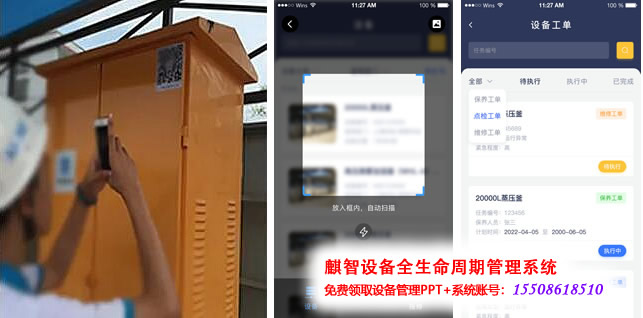
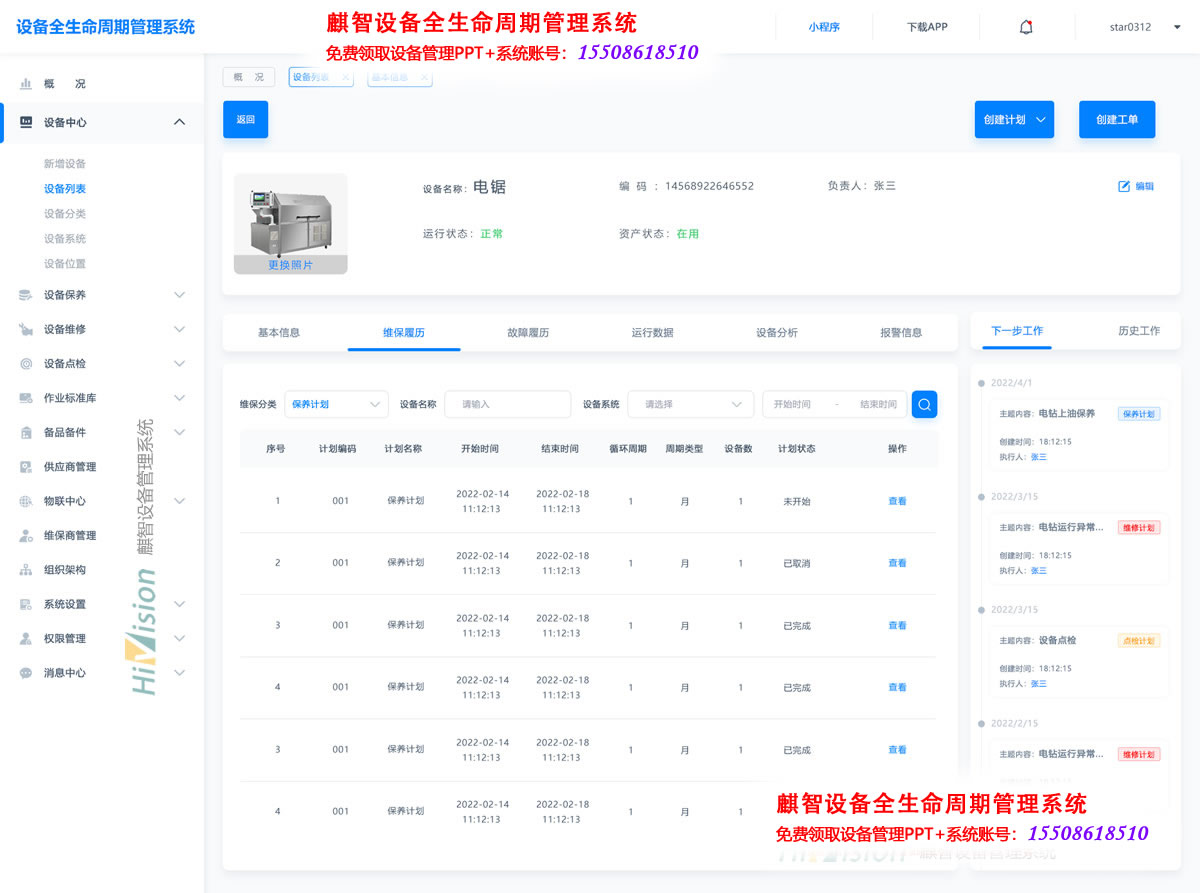
Equipment Maintenance Plan/Tasks, Maintenance Records
Equipment Maintenance:In the equipment management system, equipment maintenance involves the repair process for equipment failures, damages, or anomalies. The system supports the submission of maintenance requests, the allocation of maintenance tasks, the tracking of maintenance processes, and the recording of maintenance results to ensure timely repairs when equipment malfunctions.
Equipment Maintenance:Equipment maintenance is a scheduled, preventive measure to ensure smooth operation and extend the lifespan of the equipment. The equipment management system can establish maintenance schedules, remind of maintenance tasks, and record maintenance contents and outcomes, facilitating effective management of the equipment maintenance process.
Equipment Inspection:Inspections are routine checks performed on specific parts or functions of equipment to ensure proper operation and to identify potential issues. The Equipment Management System can generate inspection schedules, assign inspection tasks, and record results, aiding in early detection of problems and prompt action.
Inspection Schedule:Inspection schedules are designed to examine equipment and their respective areas to identify potential issues and ensure a safe equipment environment. The system can create inspection schedules, assign inspection tasks, record results, and promote the safety and smooth operation of equipment.
Task Management:The equipment management system enables the creation and allocation of various maintenance, upkeep, inspection, and patrol tasks to the corresponding personnel, ensuring tasks are executed on time and records of task execution are maintained.
Maintenance and Repair Records:Maintenance records document the actual execution of equipment repairs, maintenance, inspections, and patrols. The records in the system include maintenance dates, maintenance details, used spare parts, and personnel involved, serving to track the equipment's maintenance history and status.
Equipment Disposal Record
In the equipment management system, change information for equipment encompasses acquisition, modification, and scrapping stages. The documentation of these changes is crucial for the integrity and traceability of equipment management. By automatically recording equipment changes, you can ensure that management information is always up-to-date and accurate. This also aids in meeting regulatory requirements, ensuring transparency and reliability in equipment management.
Equipment Procurement Change Information:When new equipment is purchased, relevant change information is documented. This may include the purchase date, purchase amount, supplier details, etc. This information is crucial for financial accounting and asset management.
Equipment Change Information:If any changes occur to the equipment, such as updates to specifications or model numbers, or department transfers, the relevant change information will be documented. This aids in tracking the equipment's change history and understanding its evolution.
Equipment Decommissioning InformationWhen equipment is scrapped, relevant scrap information is recorded, such as the scrap date and reason. This helps to understand the equipment's lifespan and maintenance status.
Business Application and Approval:These change notifications are typically automatically generated during the business application and approval process. For instance, when a equipment procurement application is approved, the relevant procurement information is automatically recorded.
Information Integrity and TraceabilityThese auto-generated change notifications enhance the completeness and traceability of information in the equipment management system. Users can access the change history of devices at any time, thereby understanding the status and attributes of the equipment at various stages.
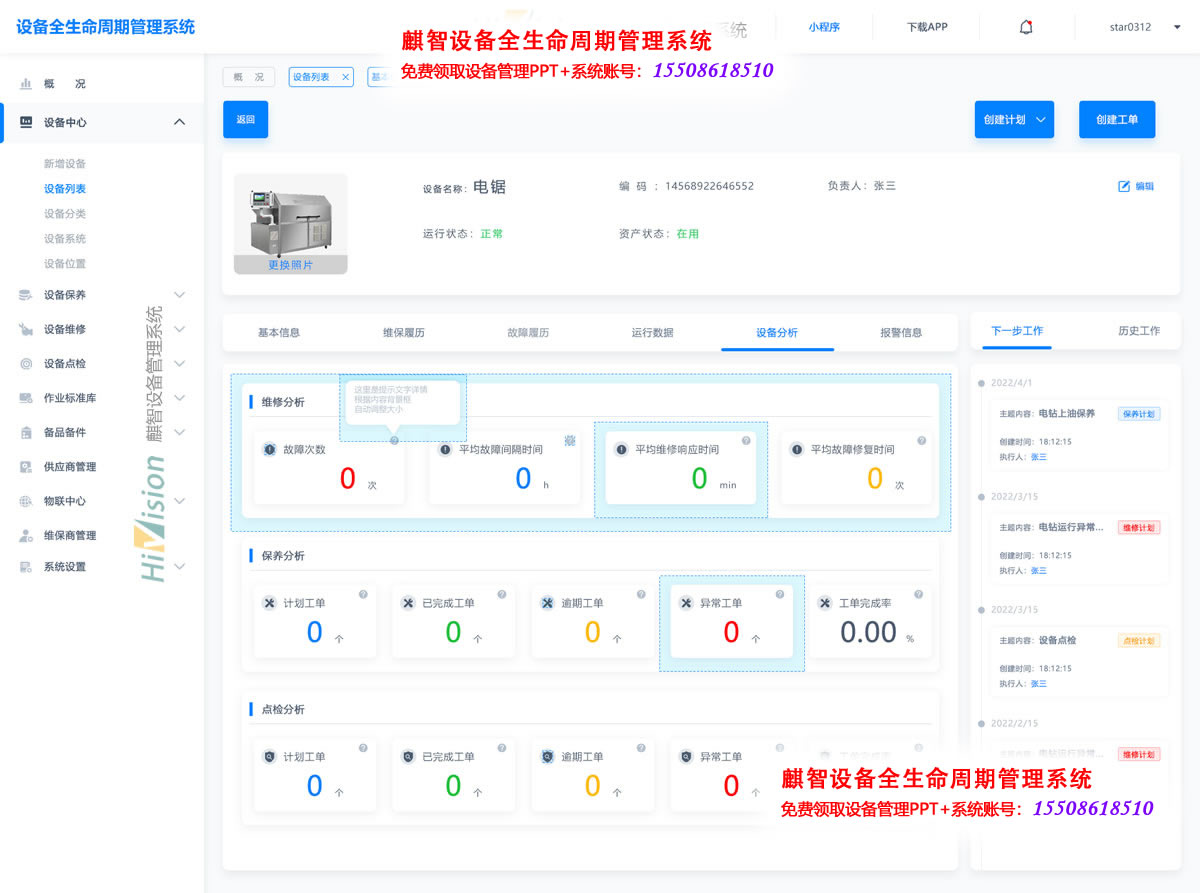
Equipment Knowledge Base
Equipment Documentation:Upload related equipment documents, such as manuals, instruction sheets, ESOP (operation documents), specifications, regulations, and knowledge bases. Store equipment documents to create a structured knowledge base for easy access and sharing. Additionally, provide maintenance and repair recommendations to technicians through post-system big data. Document version management: Manage multiple document versions to ensure access to the latest documents. Track document history to ensure information accuracy.
Equipment Knowledge Base:
Description: The Equipment Knowledge Base is a compilation of information related to various types of equipment, including operation and maintenance. This may include technical specifications, usage instructions, troubleshooting guides, and more.
Function: Provides information required by equipment operators and maintenance personnel to ensure proper use and maintenance of the equipment.
Equipment Documentation:
Description: The equipment documentation includes all files related to the equipment, such as the user manual, maintenance manual, safety operation guide, and parts list.
Function: Provides equipment managers with comprehensive equipment information, enabling them to operate, maintain, and troubleshoot under various conditions.
Equipment Specifications:
Description: Equipment documentation is a compilation of relevant data, records, and historical information pertaining to the equipment, typically including specifications, maintenance records, and maintenance schedules.
Function: Provides a comprehensive understanding of equipment history and status, supporting better decision-making and resource allocation.
ESOP (Operation Standard Manual)
Description: The ESOP is an Operations Manual, which provides detailed descriptions of the equipment's operational procedures, safety precautions, and maintenance requirements.
Features: Provides standardized operation guides for equipment operators, ensuring safe operation and maintenance of the equipment.
Regulations and Policies:
Description: Regulations and rules are specified for equipment management and operation, aimed at ensuring the smooth operation of equipment and personnel safety.
Features: Establishes guidelines for equipment management and operation, aiding in maintaining order and ensuring the safety and reliability of the equipment.
Material Management / Spare Parts / Warehouse Management
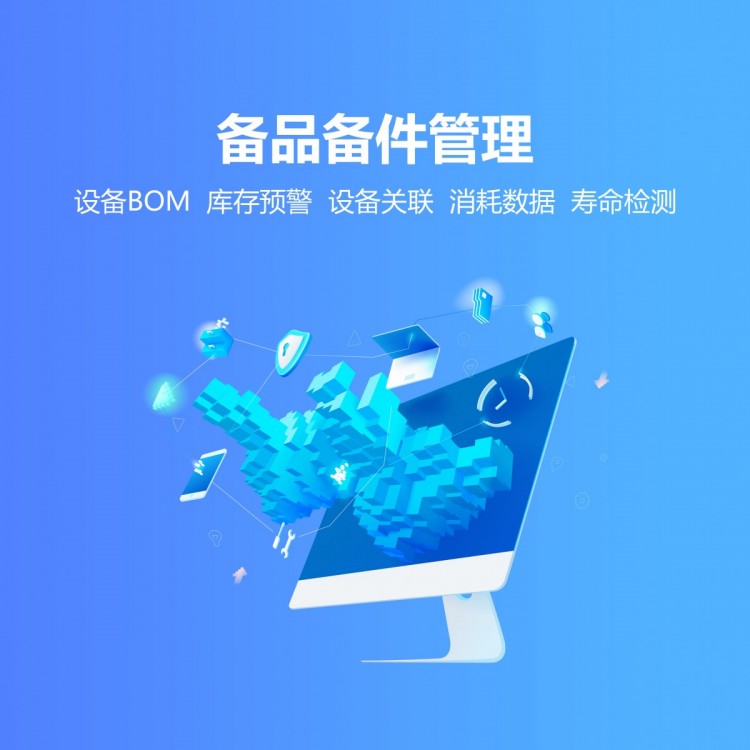
In the equipment management system, spare parts refer to components, tools, and equipment used for repairing and replacing faulty parts of the equipment. The system incorporates spare parts into its management scope to ensure quick access to the necessary parts in the event of equipment failure, thereby reducing downtime and maintaining the normal operation of the equipment. Therefore, spare parts management in the equipment management system is a crucial aspect for ensuring the normal operation of the equipment, which helps to minimize downtime and enhance equipment efficiency.
Inventory Management:The system records inventory quantities, locations, and statuses of spare parts, enabling maintenance personnel to have real-time access to available spares.
Ordering and Procurement:Based on inventory levels and forecasted demand, the system supports the ordering and procurement process for spare parts, ensuring timely supply.
Usage Record:The system logs the usage of spare parts, including when they were used and which equipment components were replaced, to help monitor the consumption of spare parts.
Alarm and Reminders:When the inventory of spare parts falls below the predefined threshold, the system generates an alert and reminder to notify relevant personnel for replenishment ordering.
Cost Control:Monitor the cost of spare parts, assist the management team in optimizing spare parts inventory and procurement strategies, and reduce inventory costs.
Efficiency Enhancement:Accurate management of spare parts can reduce equipment repair times, thereby enhancing equipment availability and production efficiency.
Equipment Depreciation Information
Service Life:Document the expected lifespan of the equipment. Estimate equipment lifespan and establish maintenance plans.
Initial Net Value:Record the initial value of the equipment purchase. Clearly define the initial investment for financial accounting.
Current Net Value:Estimate the current value of the equipment. Understand the current value to make informed decisions.
Net Residual Rate:Record the depreciation percentage of equipment. Analyze equipment depreciation for asset management.
Monthly Depreciation Amount:Calculate the monthly depreciation amount for equipment. Regularly calculate and track equipment depreciation.
Depreciation Calculation Method:Select the specific depreciation calculation method. Calculate the depreciation of the equipment based on the depreciation rules.
Depreciation Trend Analysis:Display the trend of equipment value over time. Plot a trend chart to analyze the changes in equipment value.
10 years of focus - for a simpler and more efficient work experience
Now we are trying a simpler and more efficient work method.
Trial Application