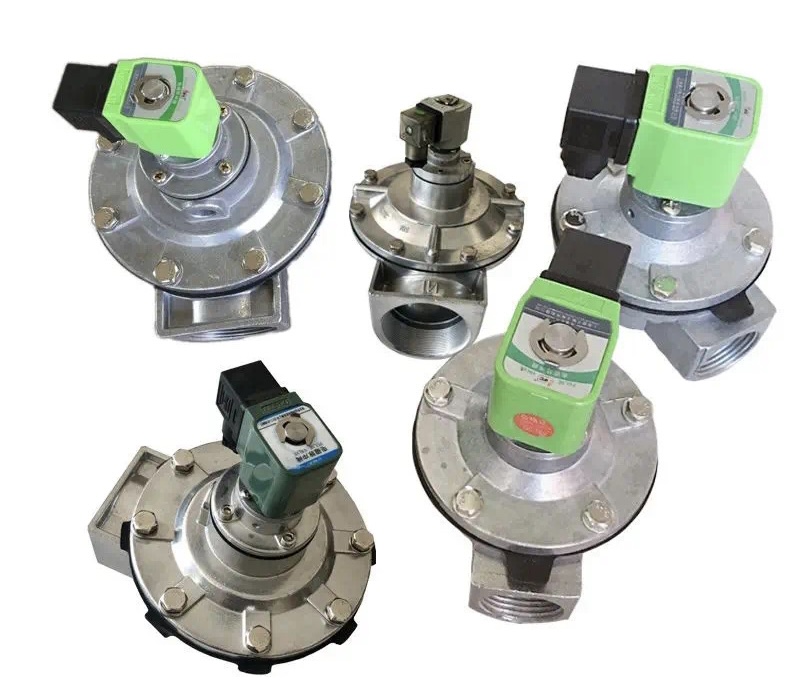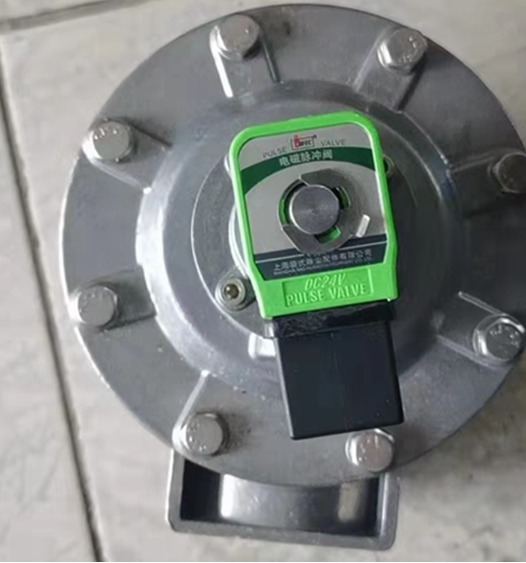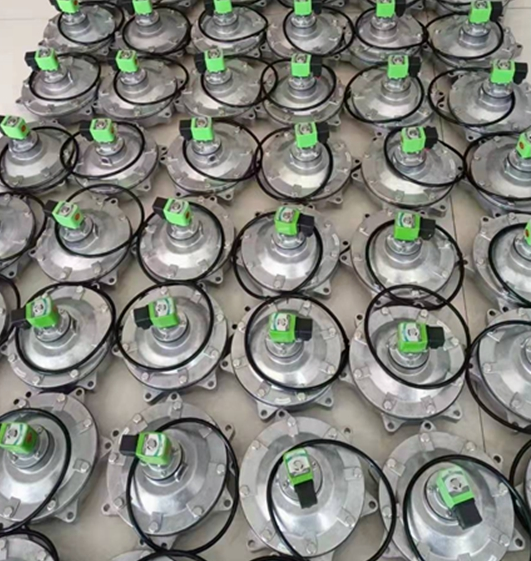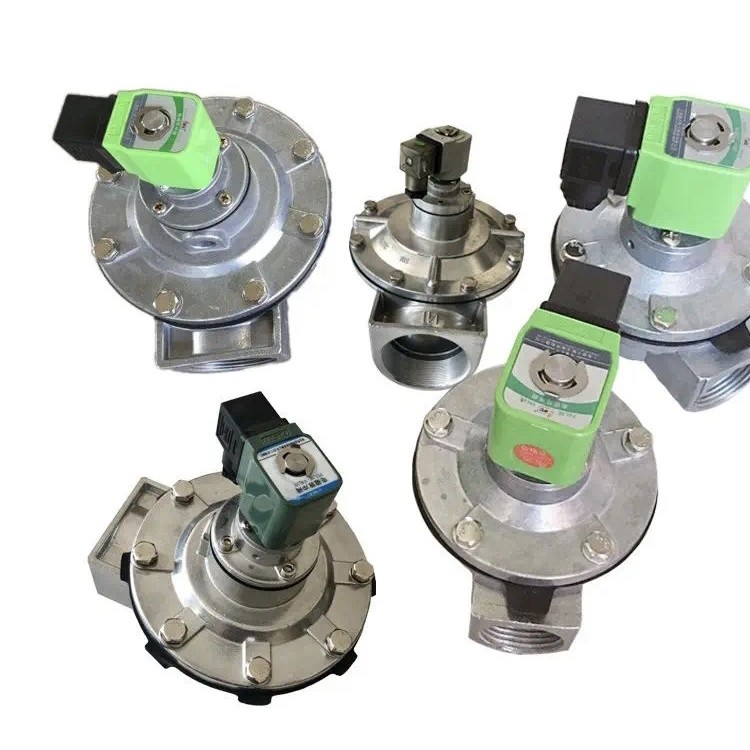

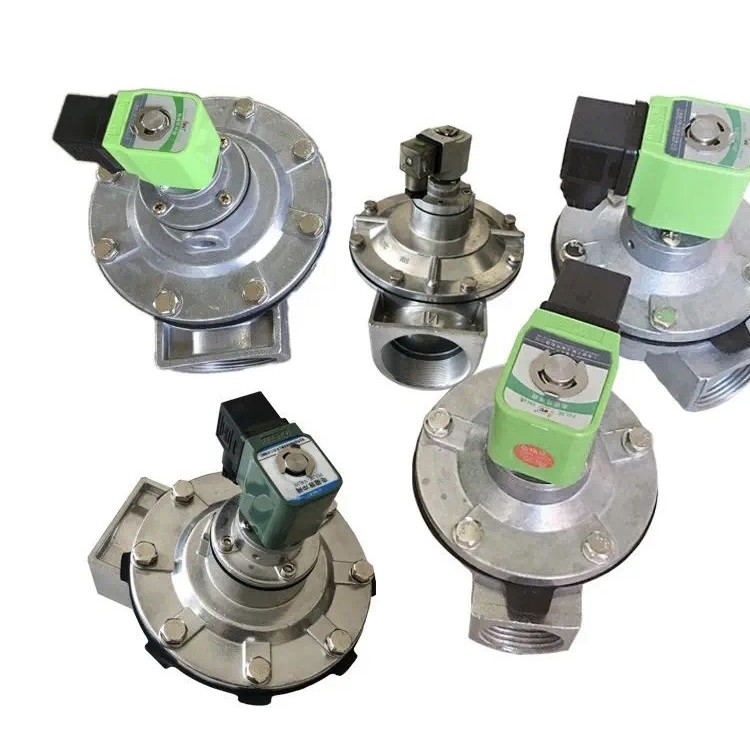
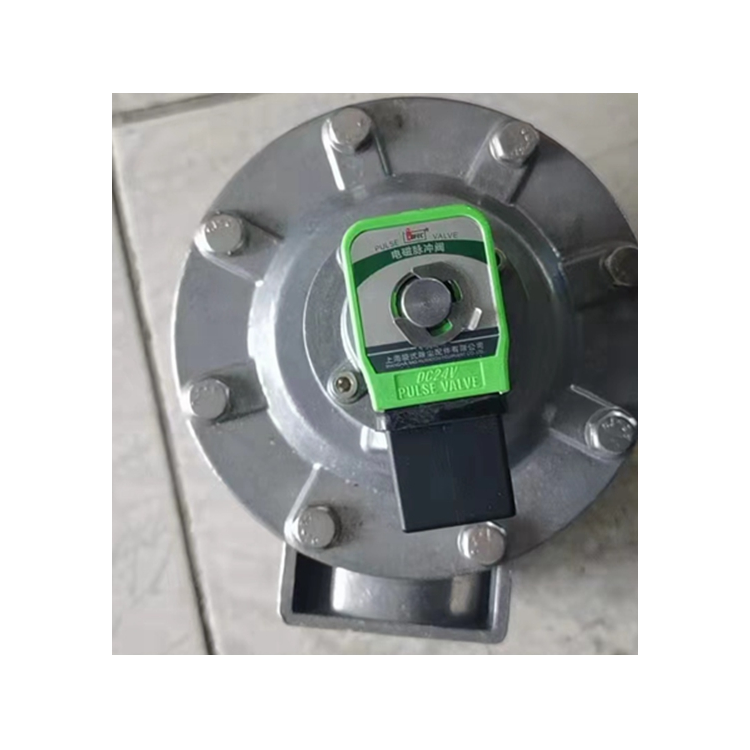
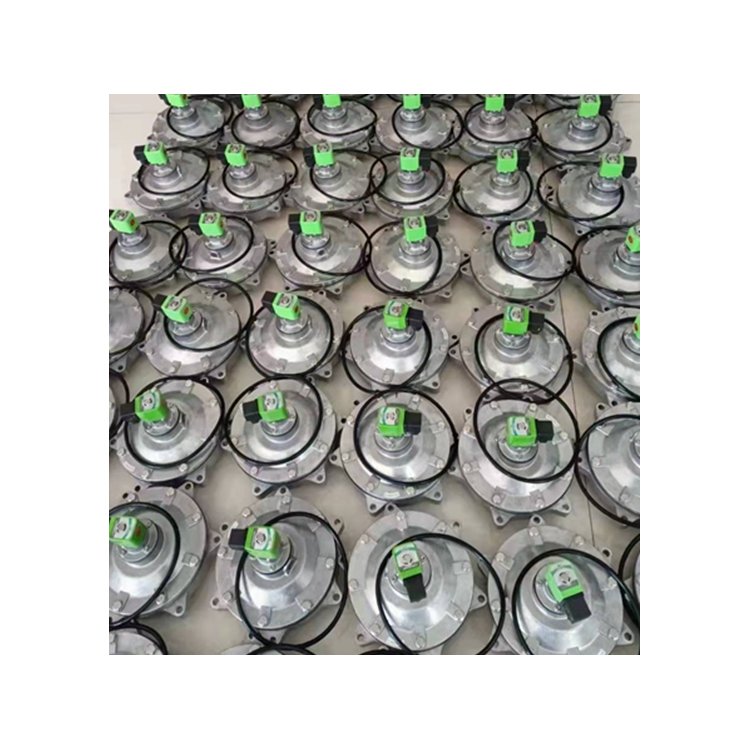








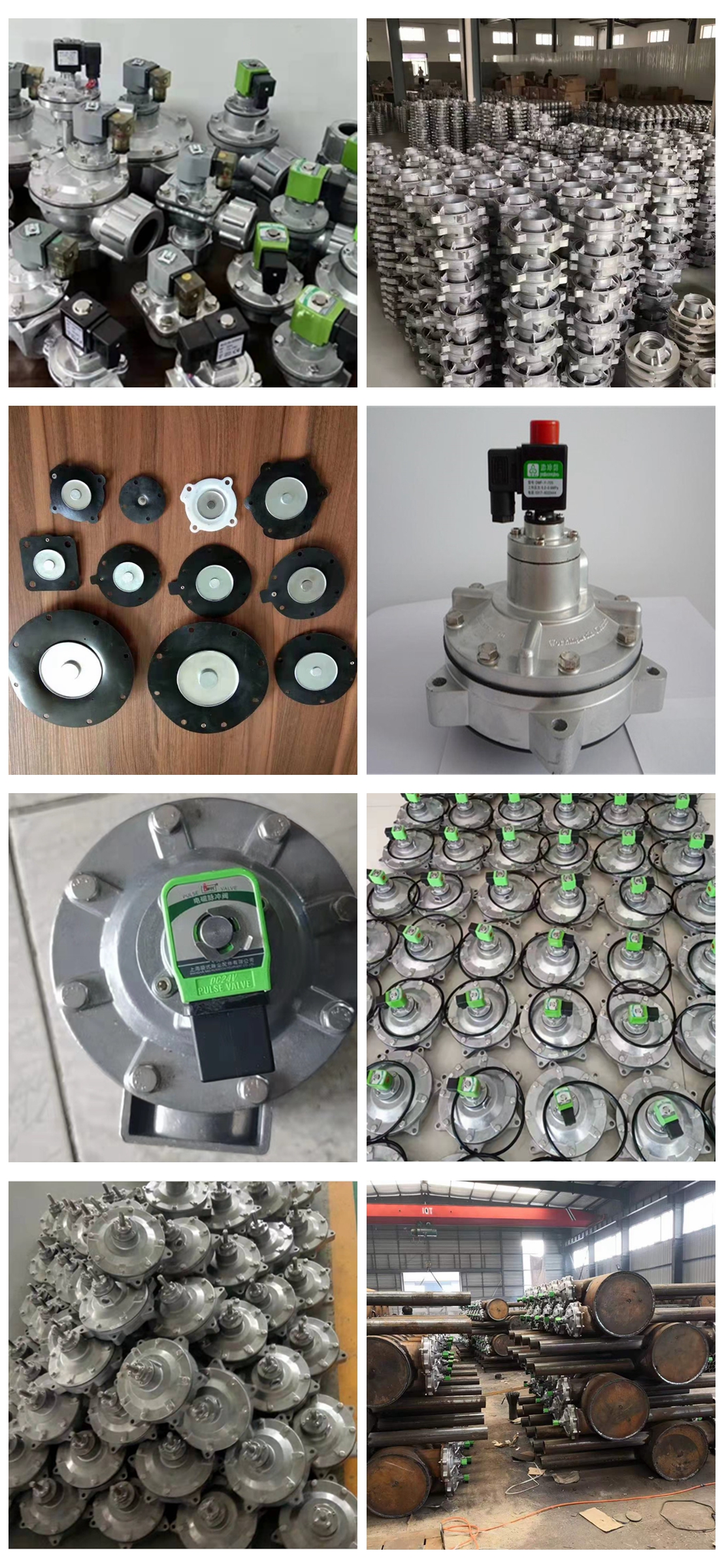
The diaphragm of the electromagnetic pulse valve divides the right-angle electromagnetic pulse valve into two gas chambers. When the electromagnetic pulse valve is connected to clean compressed air in the dust removal system of a pulse bag dust collector, the compressed air passes through the throttle hole and enters the rear gas chamber. At this point, the pressure in the rear gas chamber presses the diaphragm tightly against the valve's exhaust outlet, keeping the pulse valve closed. The pulse control instrument outputs a signal to move the armature, opening the exhaust hole in the rear gas chamber. The rear gas chamber rapidly depressurizes, causing the diaphragm to move back. Compressed air is then ejected through the valve's exhaust outlet, and the pulse valve is in the open state, starting the jet. The electrical signal from the pulse control instrument disappears, the armature of the electromagnetic pilot valve resets, the exhaust hole in the rear gas chamber closes, and the pressure in the rear gas chamber rises, pressing the pulse valve diaphragm against the valve's exhaust outlet again, returning the pulse valve to the closed state, stopping the jet. The duration and volume of the jet are controlled by the control instrument.
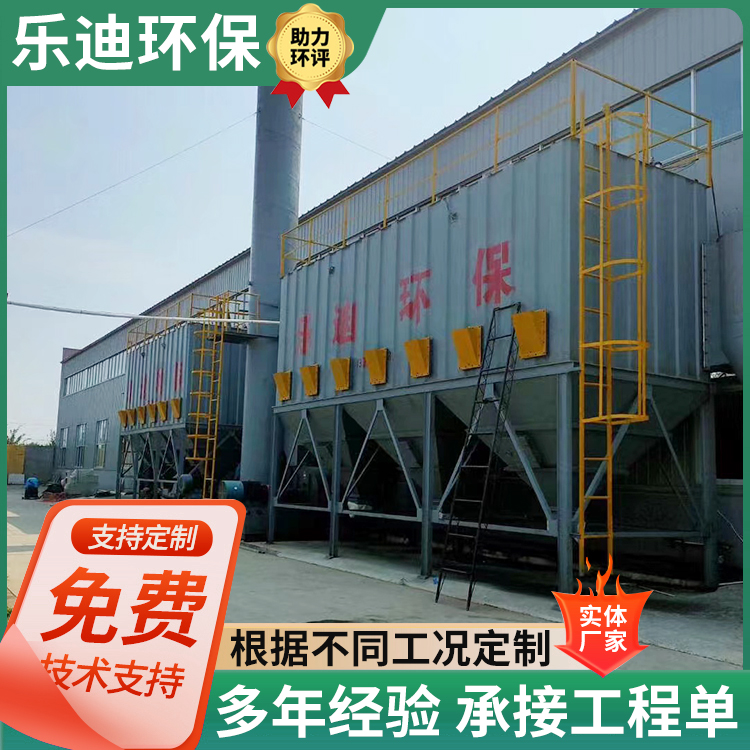
The DMF-Z-40S solenoid pulse valve with a DC24V power supply has an actual blowing air volume that is not solely determined by the connection diameter size; the cleaning function cannot be judged solely based on the interface size. Our solid and sincere footprints are present in various industries such as steel metallurgy, non-ferrous metallurgy, intelligent automatic control systems, construction cement, chemicals, dust removal equipment for severe enterprises, industrial boilers and power stations, urban waste incineration, bag dust removal equipment, and environmental protection equipment industries. This expands your selection range, making it a choice for converting from electric to bag systems. The pulse valve handle is stuck at a certain position within the valve seat bore (not the sealed position), causing the piston to always be under pressure due to the large difference between the input and output media. Therefore, it is necessary to select a valve with an appropriate valve diameter. Thus, it is sensitive and reliable, widely applicable, and commonly used. When the pressure of the steam drum or superheater exceeds the specified value, steam passes through the impulse conduit and valve into the pulse spring safety valve, lifting the valve core. The steam then enters the main safety valve piston upper part, causing the piston to move downward, opening the main safety valve, and releasing the steam pressure.