









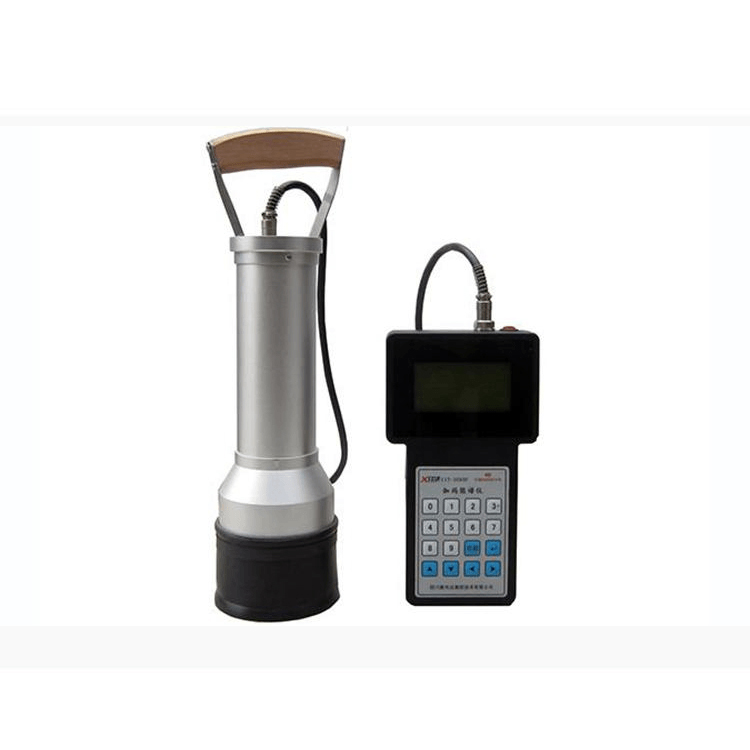
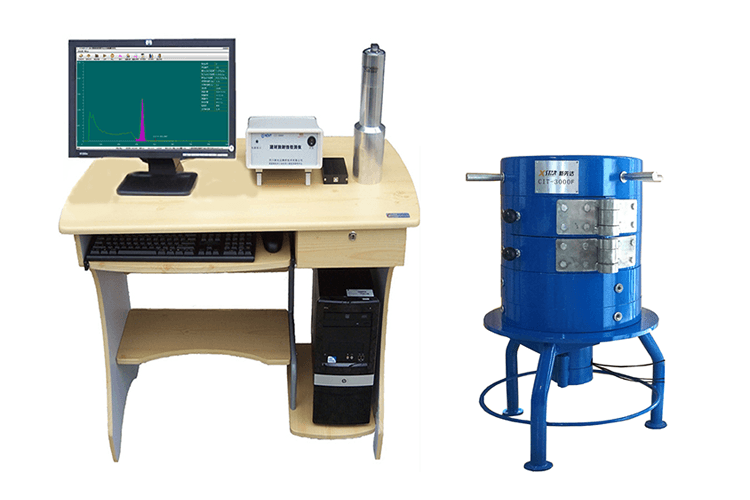
I. Instrument Overview
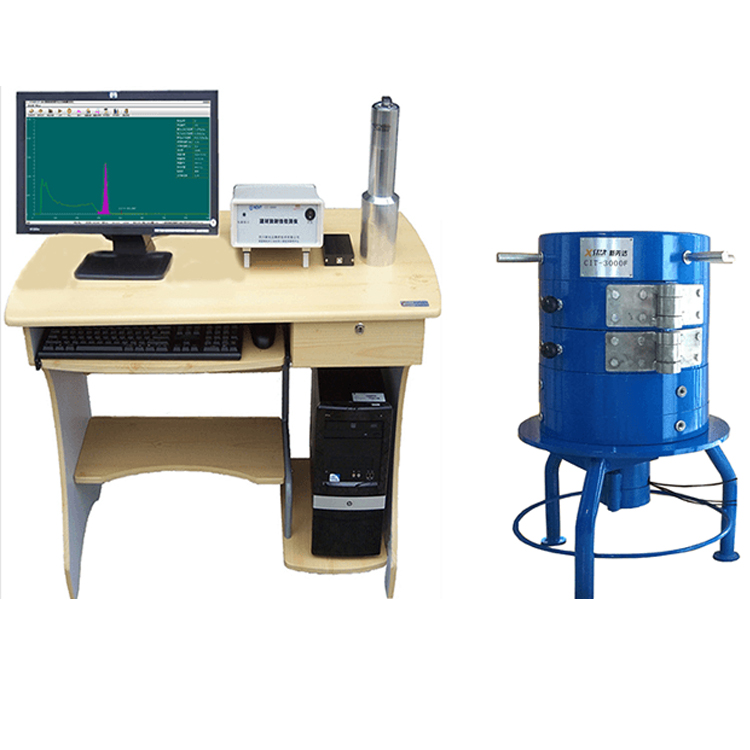
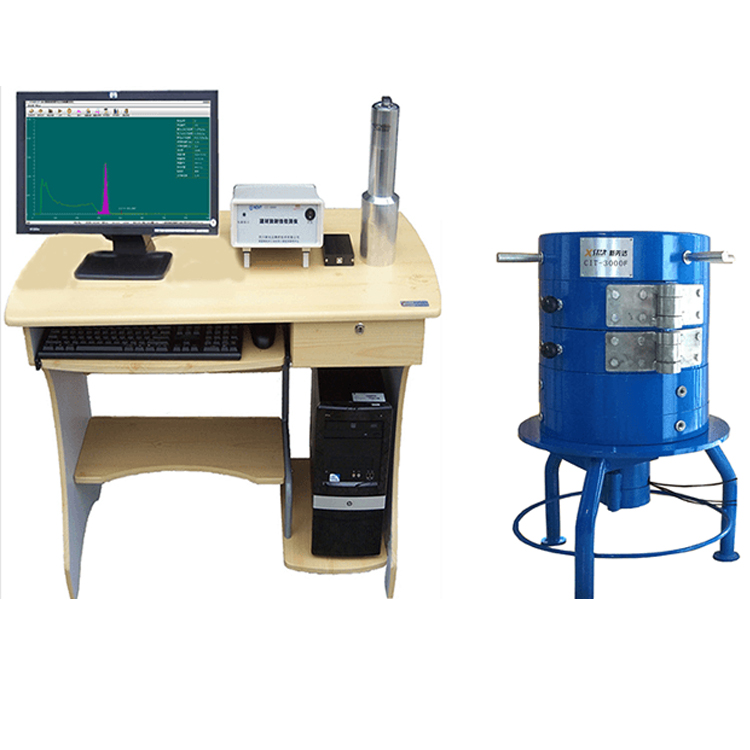
The CIT-300Fv Spectrometer is a new generation of intelligent spectrometer developed by Sichuan Xinxianda Measurement and Control Technology Co., Ltd., which meets the national standard TG417-2006 of the People's Republic of China's Legal Metrological Verification Regulations. This instrument is at the forefront in domestic technology for multi-channel spectrometer peak search, activity measurement models, data collection and processing, and method research, and is suitable for quantitative measurement of radioactive contents in geological samples and construction materials. Utilizing a digital spectrometer with a full Chinese Windows operating system, the measurement is intuitive and the operation is convenient.
II. Basic Principles
Gamma-ray spectrometry can quantitatively determine the content of uranium, thorium, and potassium in geological samples and rock fragments based on the differences in the original gamma spectra of these three nuclides. The high-energy region of gamma instruments (greater than 500KeV) can distinctly differentiate the main characteristic peaks (all-energy peaks) of the original gamma rays. Gamma rays produced by different radioactive isotopes have different characteristic energies, such as potassium at 1.461MeV, thorium at 2.614MeV, and radium at 1.764MeV. Therefore, the intensity of gamma rays from uranium (radium), thorium, and potassium can be used to calculate the specific activity of radium, thorium, and potassium.
Section 3: Main Technical Specifications
Digital Multi-Channel Analyzer (1024/2048)
Pulse mode and spectral line mode can be freely switched between.
Trapezoidal pulse forming, molding time: 2μs;
Differential Nonlinearity: 0.2%
Nonlinear Points: 0.01%
Software adjustable gain range: 1-65535
Time Range: 10-65,500 seconds, adjustable time, with 600s accurate measurement.
Measurement range of nuclides: U, Th, K, Cs-137, Am-241, and various other radioactive nuclides.
Repetition: <2.0%
Stability: <1.0%
Utilizes standard RS232 serial interface for computer connectivity and online operation.
Measurement Uncertainty: ≤6%
Instrumental whole machine resolution: Better than 6.9% (Cs-137)
Peak position drift within 24 hours not exceeding 0.5%.
High-efficiency whole machine detection with zero missed counts.
Certified for single-element standard substances, quick, accurate, and convenient.
Background count rate not exceeding 5 cps within the energy range of 50 keV to 3000 keV.
Full Chinese measurement software for Windows platform, database management system, simple and convenient to operate.
Total Power Consumption: Current less than 300mA
Operating Temperature: 0℃—50℃
The main unit weighs less than 1.5kg, dimensions: 20×15×10cm.
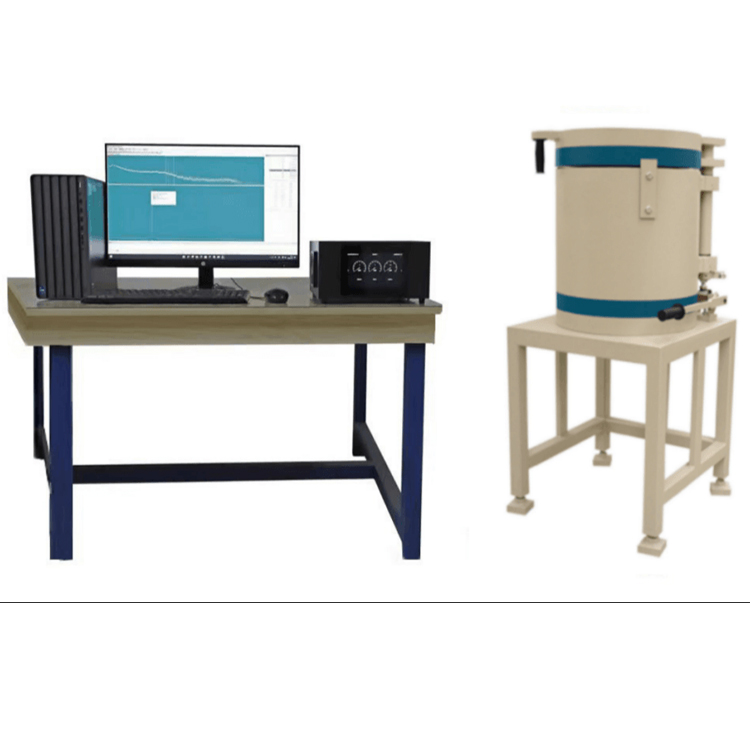
Standard Lead Room: Shielding wall thickness 100mm, internal diameter 200mm.
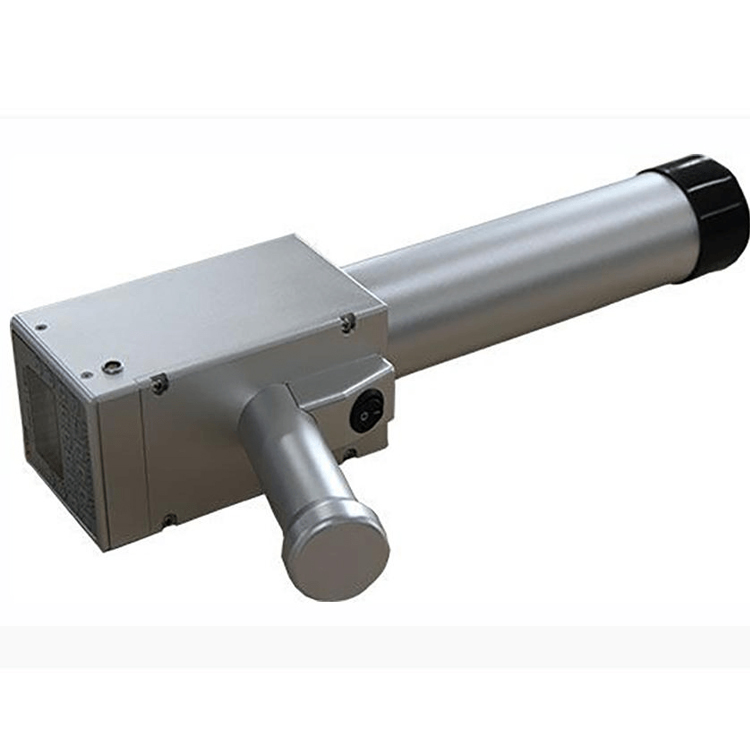
High-sensitivity Low-K Potassium NaI(Tl) Spectrometer Probe Crystal Size: φ75mm×75mm. Four, Instrument Performance Features: 1. Measurement time range: 10-65500S, time adjustable (generally set to 600 seconds, high work efficiency); 2. Model established using Ra, Th, K mononucleotide sources, scientific and reasonable, compliant with international standards. Provides accurate data, facilitating instrument calibration and self-checking; 3. Instrument certified by MC metrology, with verification certificate provided by the Chinese Academy of Metrology and Testing Technology; 4. Probes feature a single connector structure, capable of shielding magnetic interference, insensitive to magnetic fields; 5. Utilizes high-energy spectral lines, with low background interference and minimal interference between different nuclides. High spectral resolution and high measurement accuracy; 6. Calculation employs inverse matrix method, eliminating the influence between peaks of different nuclides, resulting in accurate calculation; 7. Multi-functional: Indoor quantitative analysis; activated carbon radon measurement; radioactive nuclide identification; 8. Sample box features a large-sized U-shaped sample box designed in-house, allowing the detector to be directly placed in the U-shaped groove, increasing the detection area for more accurate measurement results.
V. Instrumentation Configuration
One CIT-3000F gamma logging instrument unit.
One high-sensitivity, low-potassium NaI(Tl) spectrometer probe (crystal size φ75mm×75mm).
Standard Lead Room Set (Room wall thickness greater than 100mm, internal diameter 200mm)
A set of system operation software.
One communication cable.
A set of national radioactive standard substances (one each of radium, thorium, potassium).
One certificate of national radioactive standard substances; 9. Certificate of instrument calibration from China Research Institute of Testing Technology and Metrology.
A set of radioactive standard sample boxes; 11. A set of sample machine FM-2.
Six, Quality Assurance
1. The product has obtained the qualified certificate for the trial model issued by the Sichuan Provincial Administration for Market Regulation (Certificate No.: 1999LSYZD No. 053). 2. The product has obtained the manufacturing metrology instrument license issued by the National Administration for Market Regulation (License No.: Chuangji No. 00000175). 3. In 2002, the product was jointly approved by the Ministry of Science and Technology, General Administration for Quality Supervision, Inspection and Quarantine, and five other ministries as a "National Key New Product" (Project No.: 2002ED810016). 4. The product was tested by the Chinese Research Institute of Testing & Calibration, and a verification certificate was issued. 5. The product undergoes strict quality testing by the company's inspection personnel before leaving the factory.