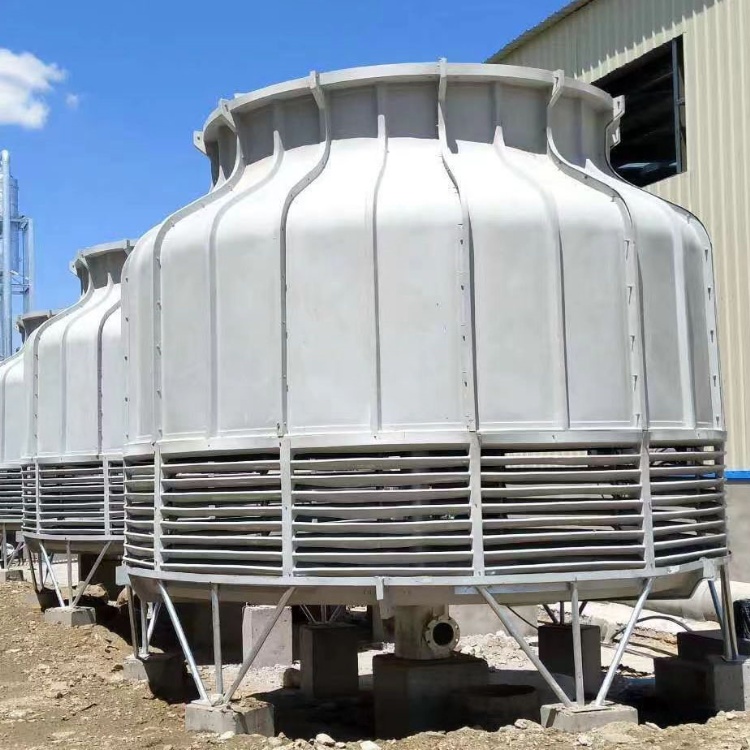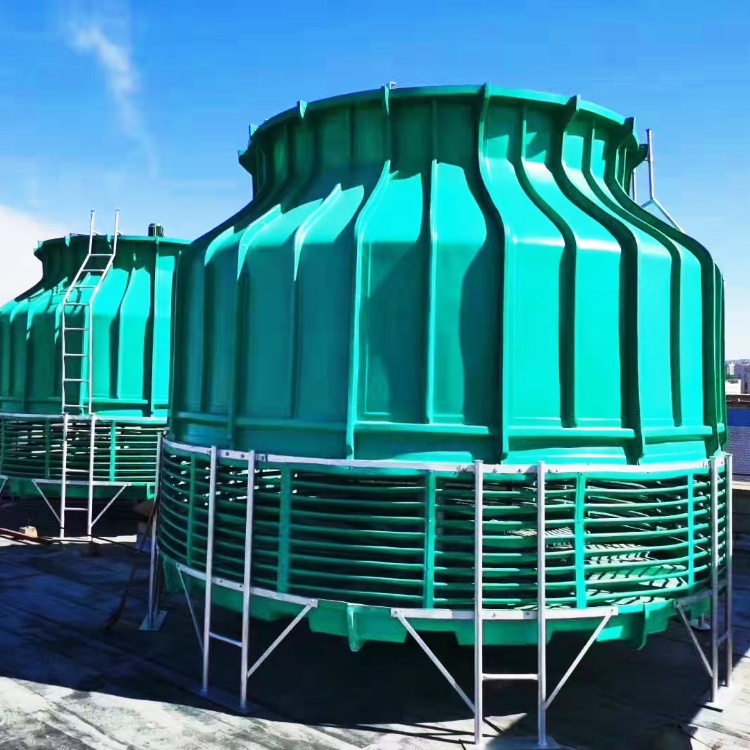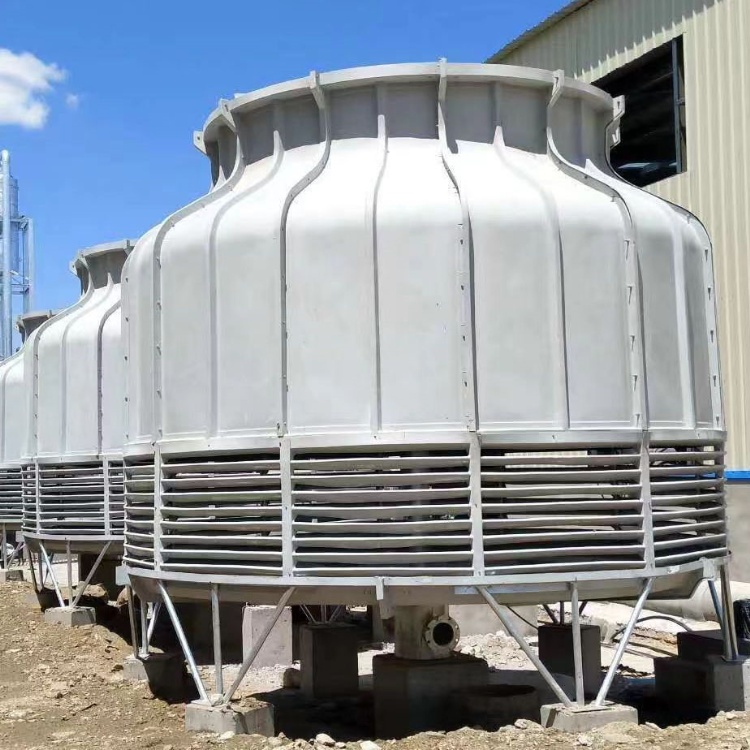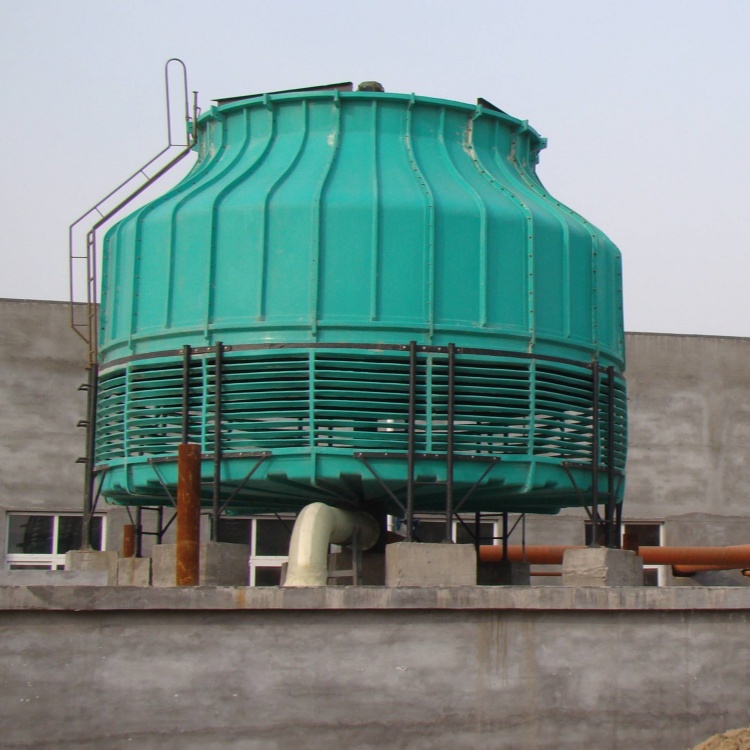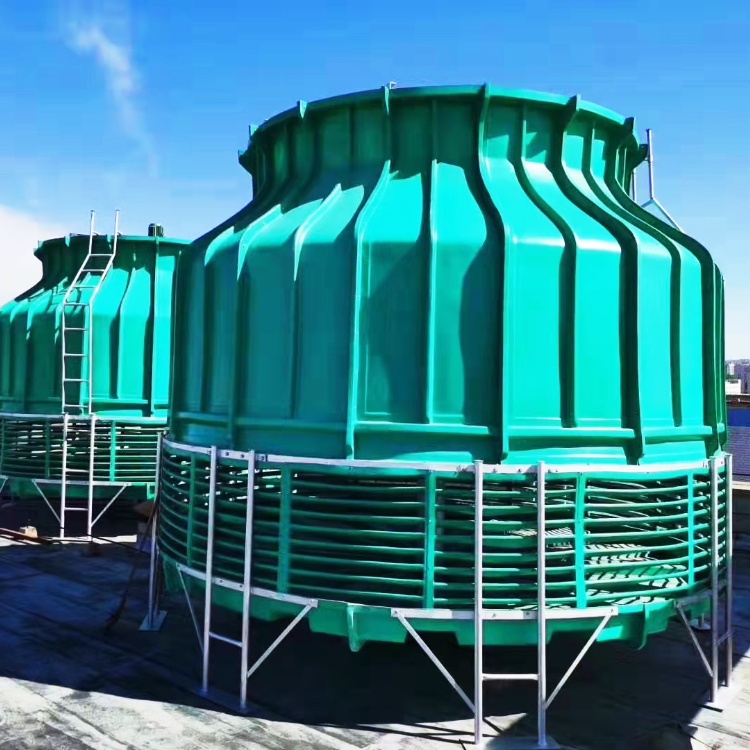

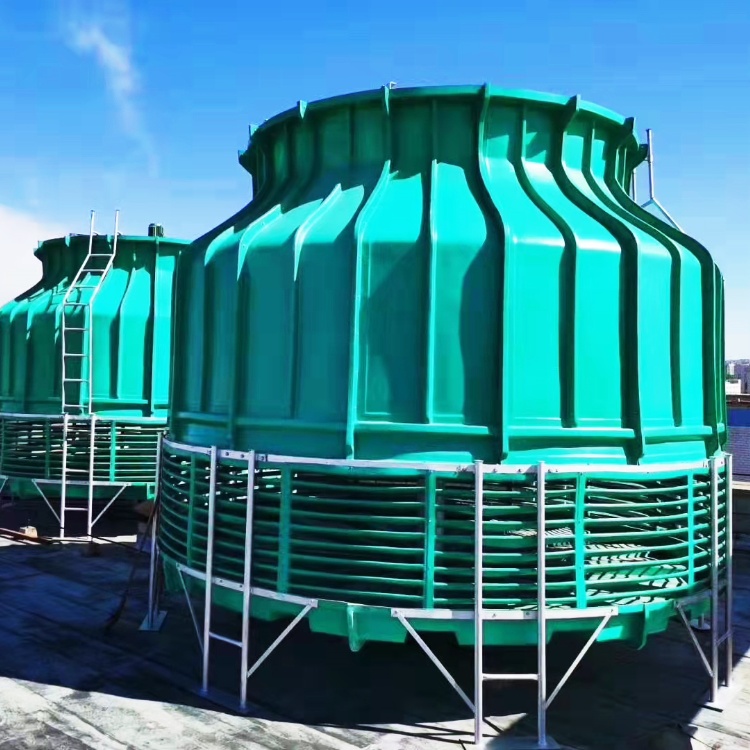
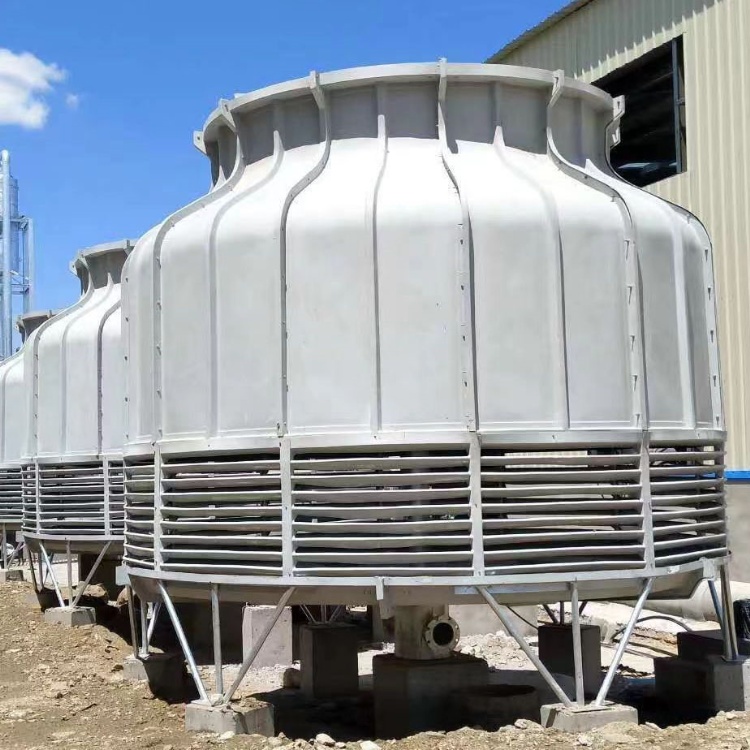
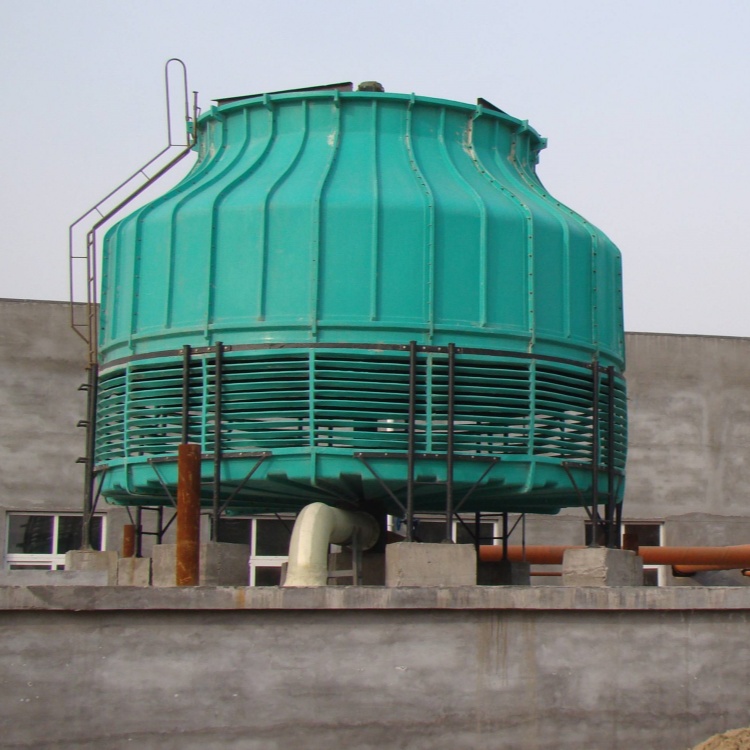













The cooling tower operates primarily by using water as a circulating coolant to absorb heat from a system and release it into the atmosphere, thereby lowering the water temperature. Such equipment is typically cylindrical, utilizing the contact between water and air flow to produce steam, which evaporates and carries away heat, thereby achieving evaporative cooling. The components of a cooling tower include the tower body, water tray, motor, fan, and sprinkler system, among others. The water is pumped up by a high-pressure pump, filtered through a distributor, and evenly sprinkled down, where it comes into contact with the wind brought by the exhaust fan at the top. During this contact between air and water droplets, heat is transferred away, effectively cooling the water.
Cooling towers are widely used, primarily in steel mills, textile factories, chemical plants, food processing plants, etc., to enhance their production efficiency. Depending on the cooling method and principle, natural ventilation and industrial cooling towers are more common domestically.
The design and manufacturing of cooling towers involve multiple disciplines, including aerodynamics, thermodynamics, fluid mechanics, chemistry, biology, and informatics, making it an integrated product that combines various technologies. Additionally, the maintenance and upkeep of cooling towers are relatively complex and costly.