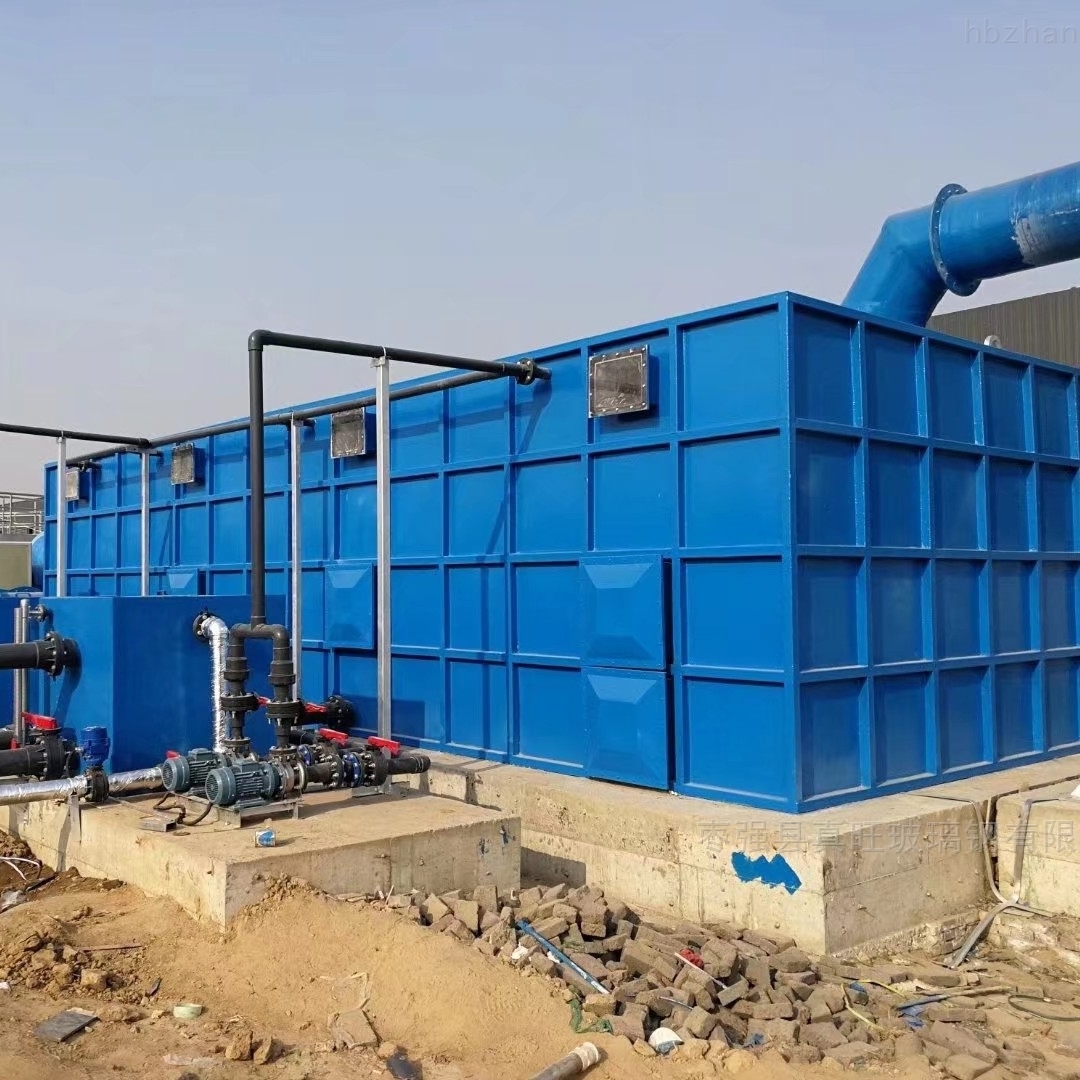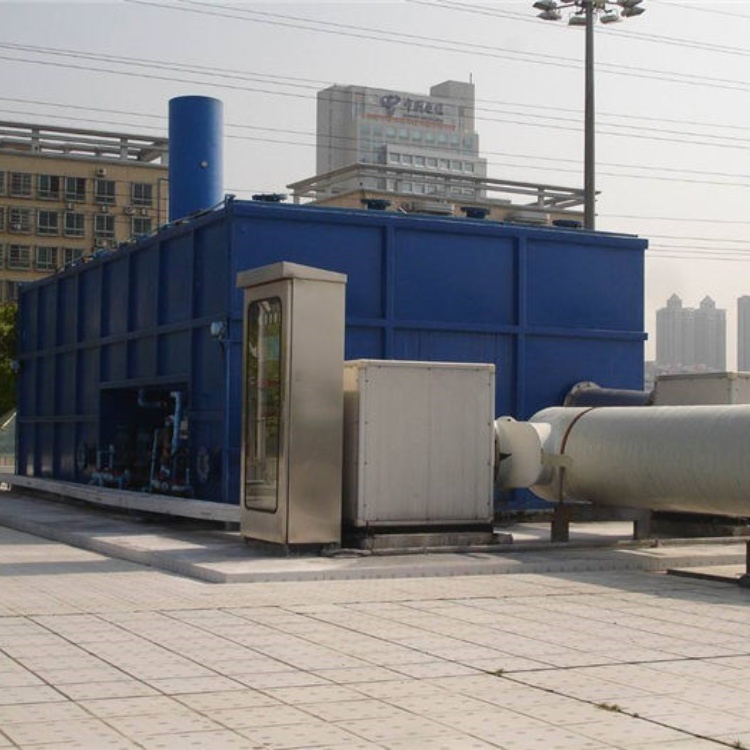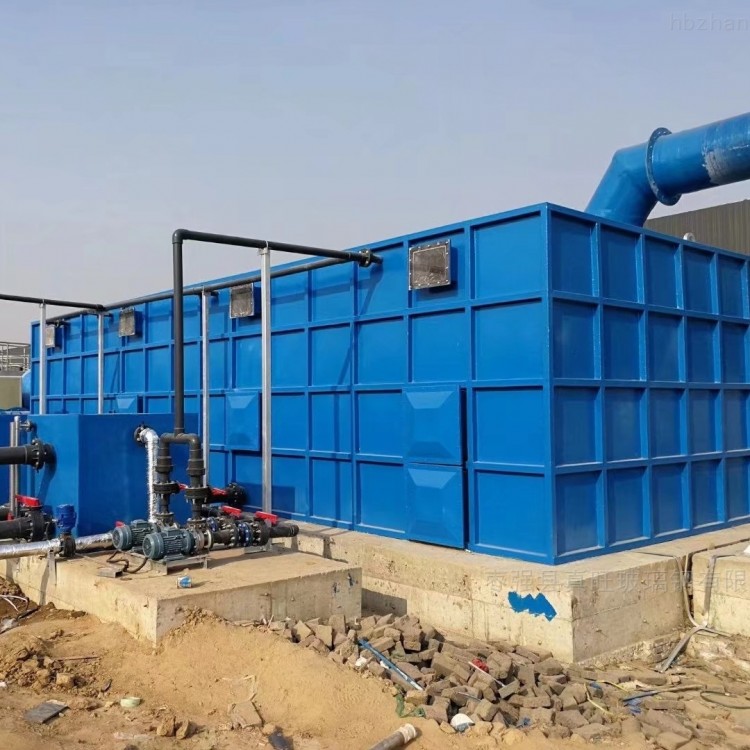













Malodorous gases are collected from the odor-elimination structures and sent to the upper section of the bio-washing stage via the main odor conveyance pipeline. The atomizing nozzles fully atomize the water, which then mixes with the airflow, quickly reaching a saturated humidity state for the gas to be treated. Some malodorous molecules in the gas are absorbed by the washing liquid, creating favorable conditions for the stable operation of the bio-filtering process.
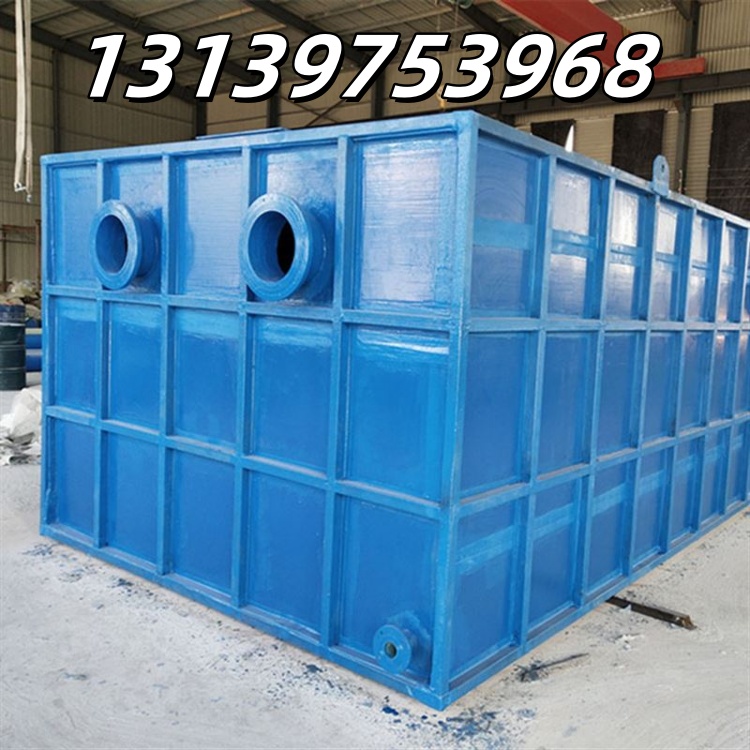
The gas treated through the biological washing section enters the biological filtration section from bottom to top. As the gas moves upwards, odor molecules within the gas pass through the filling layer, making ample contact with the biofilm formed on the surface of the filling material. These odor molecules are then oxidized and decomposed by microorganisms, transforming into carbon dioxide, water, minerals, etc., thereby achieving the goal of odor purification.
The gas processed through a biological filter is discharged through a 15-meter exhaust pipe, meeting emission standards.
Process Principle and Features: The biological deodorization device is a method extensively researched, technically mature, and commonly used in the practical treatment of malodorous gases. Its process involves the gas containing malodorous substances being pre-treated with dust removal, humidification, or cooling, then passing through the filter bed from bottom to top. During this passage, the malodorous substances transfer from the gas phase to the water-microorganism mixed phase (biolayer) within the filter layer, where they are decomposed by the metabolic action of microorganisms attached to the filter material. This method primarily utilizes the biochemical action of microorganisms to decompose pollutants into harmless substances. Microorganisms use organic matter as the matrix required for their growth and reproduction, converting large or complex organic molecules into simple inorganic substances like water and carbon dioxide through heterotrophic processes and subsequent oxidation. Simultaneously, they utilize the energy produced during the heterotrophic process through assimilative processes, allowing the microorganisms to grow and reproduce, creating favorable conditions for further enhancing their ability to process organic matter. The essence of pollution removal is the absorption, metabolism, and utilization of organic matter as nutrients by microorganisms. This process is a complex one composed of physical, chemical, physicochemical, and biochemical components. It can be simplified into the following expression:
Volatile organic compounds vary in composition, resulting in different decomposition products. Different types of microorganisms produce diverse metabolic by-products. For nitrogen-free organic substances like carboxylic acids and formaldehyde, the final products are carbon dioxide and water. For sulfur-containing malodorous components, under aerobic conditions, they are oxidized and decomposed into sulfate ions and sulfur. In the case of nitrogenous malodorous substances like amines, they release NH3 through ammonification, which can be oxidized to nitrite ions by nitrosating bacteria, and then further oxidized to nitrate ions by nitrifying bacteria.