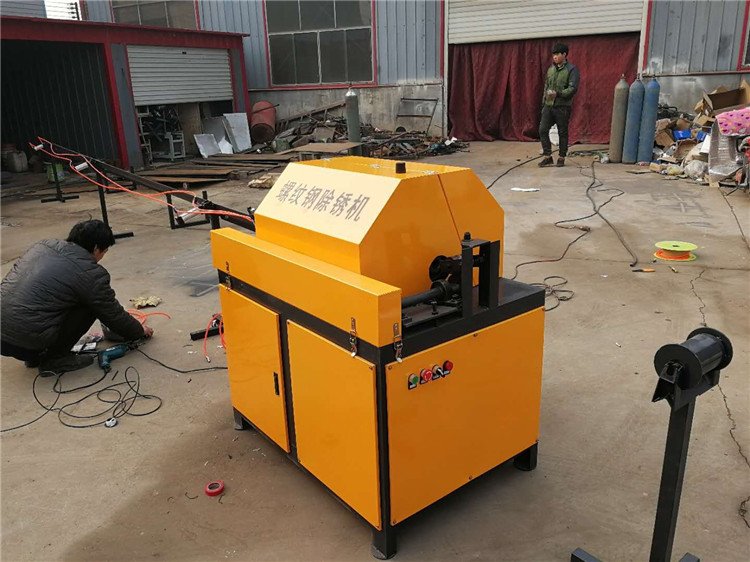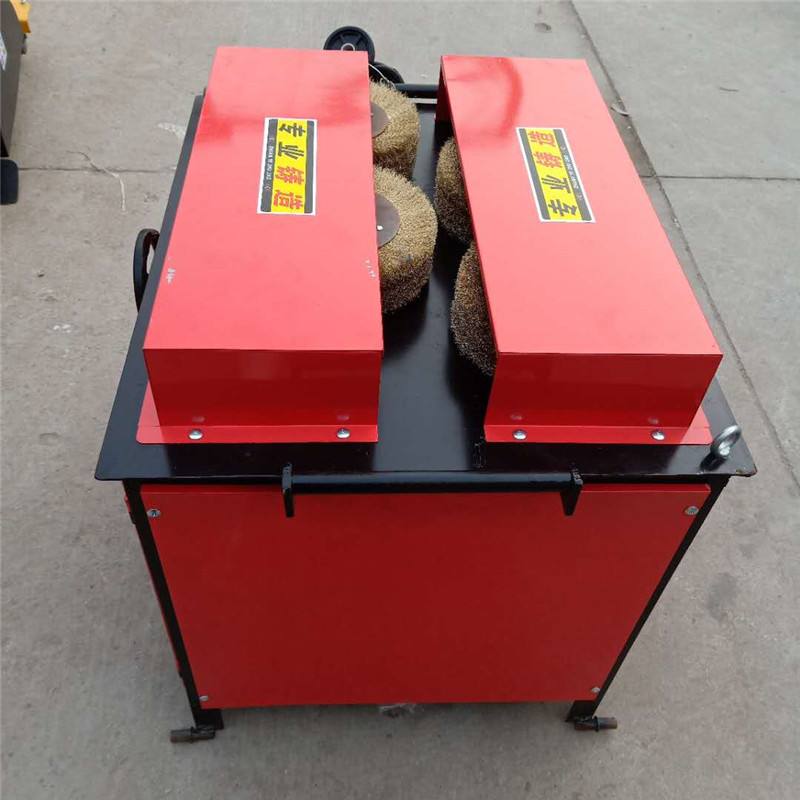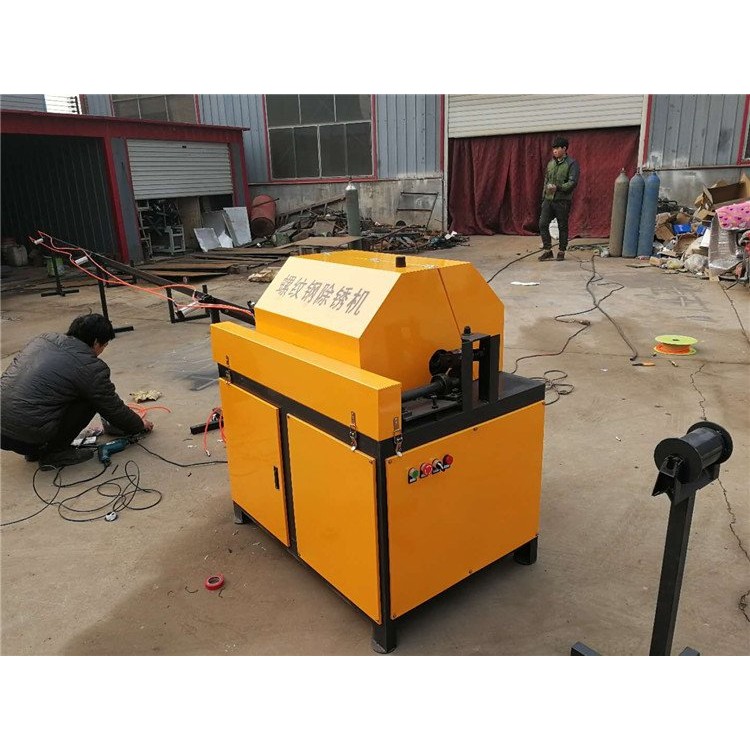

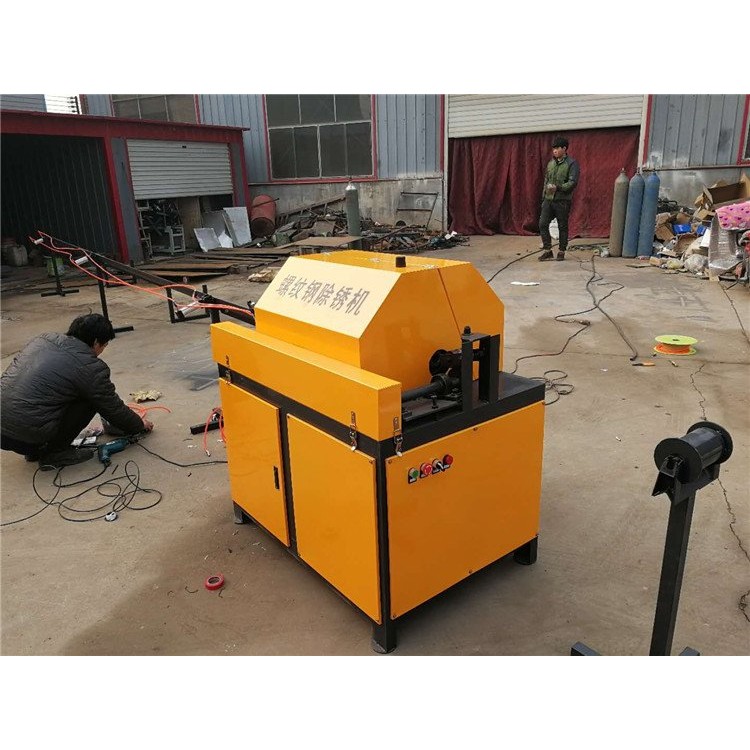
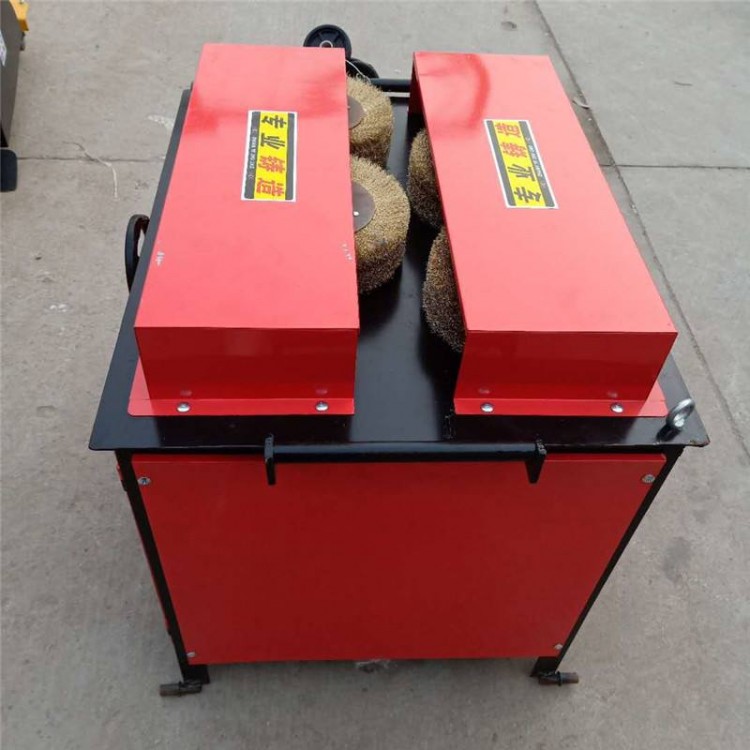









Rebar straightening: The wire adjustment section of the two rust removal device units must be tightly adhered to the straightening rebar. (1) Pre-selected straightening rebar: First determine the wire diameter to be descaled, and pre-select a smooth straight material with a diameter 2-4mm smaller than the others as the reference rebar (e.g., stainless steel rebar is 25mm).
Operation Process: While the machine is in normal production, there must be personnel operating at both the import and export ends, and proper safety precautions must be taken to prevent any hazards. (1) Pre-treatment before steel reinforcement insertion: Prior to inserting the steel reinforcement, it must be cleaned of any attached steel and other attachments.
Preparation before automatic production:
(1) Install a leakage protection device and ensure a reliable grounding. Connect to a 380V power source and run the power switch for 1-2 minutes to test operation.
Rebar straightening
The wire adjustment section of the two rust removal unit must be tightly abutted against the alignment rebar.
Pre-selected and corrected reinforcing steel bars
Firstly, determine the diameter of the wire material to be de-rusted. Pre-select a smooth round straight material with a diameter 2-4mm smaller than the others as the standard reinforcement bar (e.g., if the stainless steel reinforcement is 25mm, use 22mm for the straightening reinforcement). Align the feeding port, the adjustment parts of the two de-rusting devices, and the discharge port.
(2) Wire adjustment section of the rust correction device:
Load the pre-selected straightened rebars into the feed opening, through the rust removal unit (both forward and reverse units), and out of the discharge opening. Adjust the feed and discharge opening roller to use the straightened rebars as the reference for alignment.
(3) The 22mm steel rebar is pre-calibrated before the machine leaves the factory. The wire adjustment part of the descaling device can fine-tune rebar from 14-32mm by adjusting the micro-screw nuts. To calibrate rebar from 12-14mm, adjust the locking nuts on the wire adjustment part of the descaling device. *Note: After the rebar is calibrated, the screws on the wire adjustment part must be tightened, no loosenings allowed.
Operation Procedure
The machine is in normal production. There must be separate operators for import and export ends, and proper safety precautions must be taken to prevent any hazards.
(1) Pre-treatment before steel reinforcement delivery: Before delivery, it is necessary to remove any attached steel and other accessories from the steel reinforcement to be processed, grind the joints, and pre-straighten steel reinforcement with a bend greater than 5 degrees to eliminate potential safety hazards for equipment and personnel.
(2) Align feed and discharge roller: Adjust the feed and discharge roller according to the parallelism of the material to be rust-removed and secure it tightly.
(3) Insert Reinforcement Bars: Turn on the power switch, the machine starts operating, release the clamp mechanism to secure the reinforcement bars, and then uniformly feed all the de-rusted wire materials into the feeding port de-rusting unit in both forward and reverse order, following the sequence at the discharge outlet.
(4) Check for abnormal operation: Look for excessive noise or vibration. If a cause is identified, address and eliminate it. If the issue is due to "rebar alignment," perform a re-alignment.
(5) Reboot the machine: Moderately control the speed of steel bar insertion to achieve the ideal rust removal effect.
Note: If the steel rebar does not achieve the desired cleaning effect, repeat step (3) "Send in steel rebar."
After running for a period (about 3-5 hours), switch the direction of the steering switch to protect the wire adjustment section, and then restart the machine.