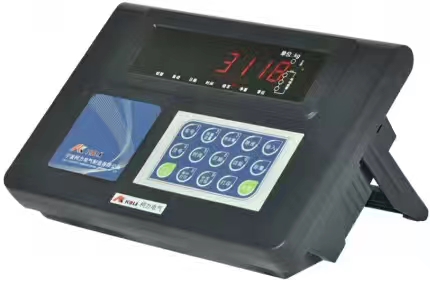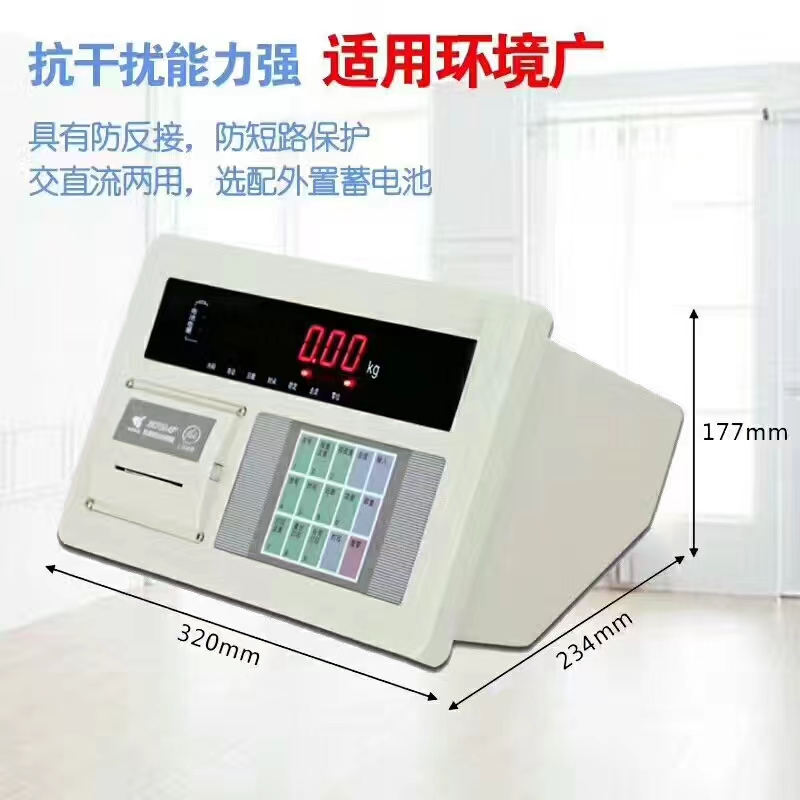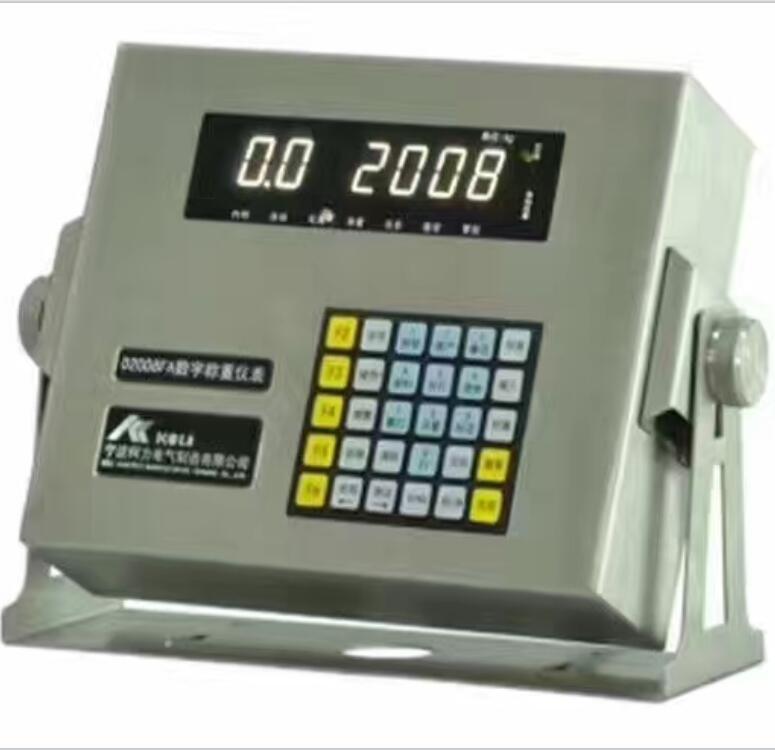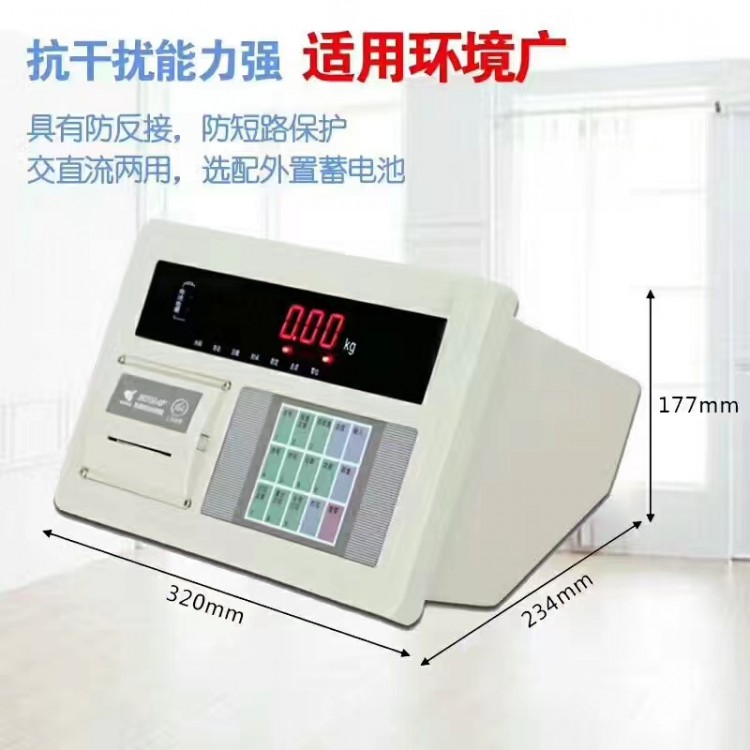

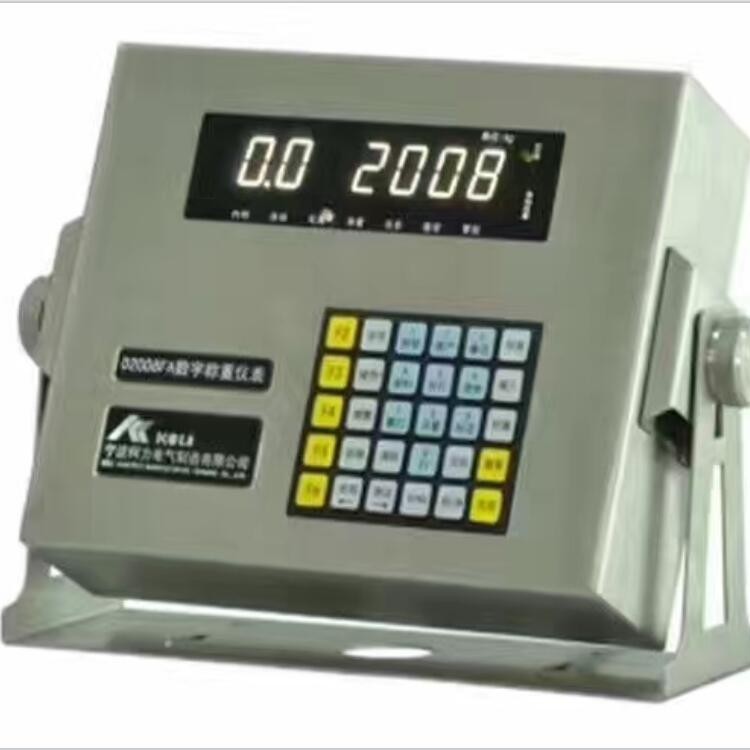
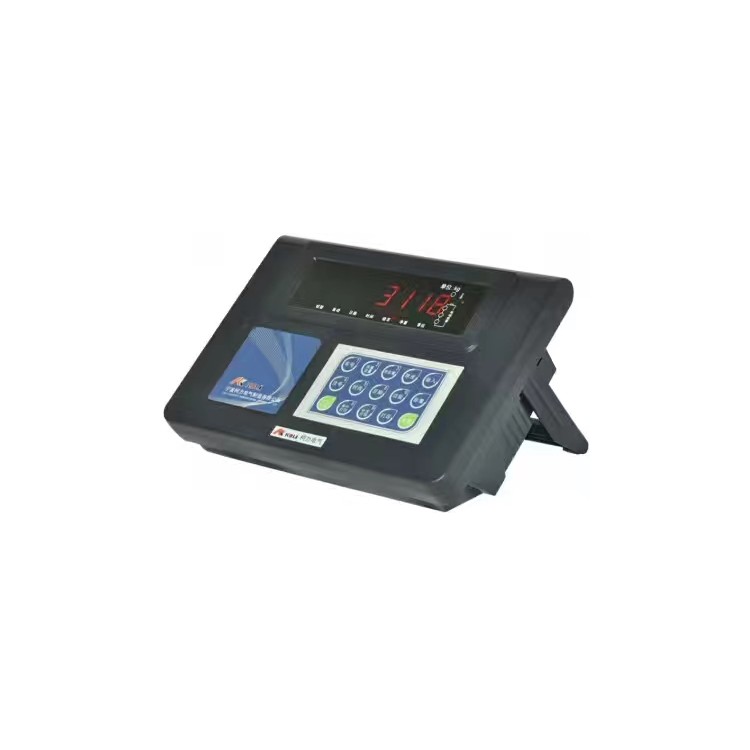









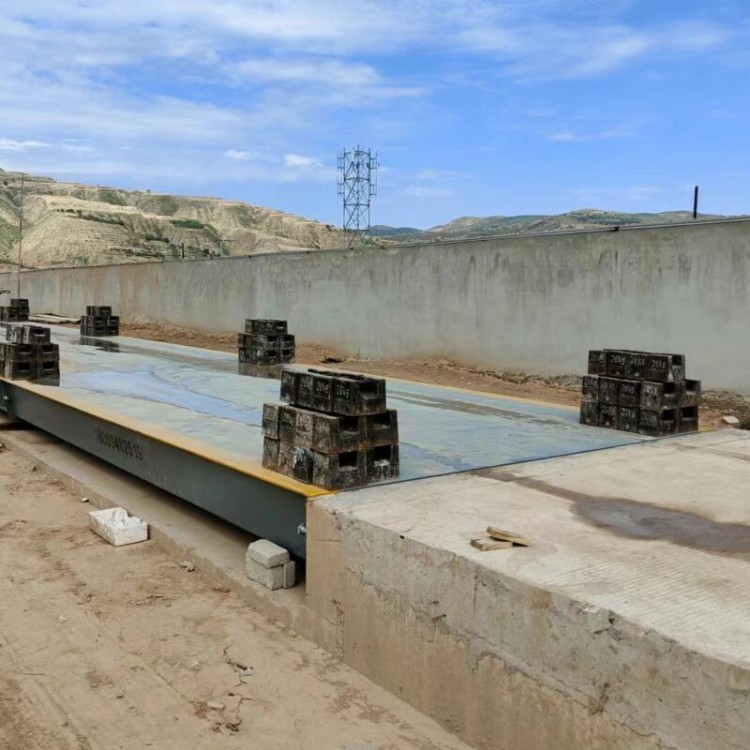

A weighing indicator, also known as a weighing display and control indicator, converts weighing sensor signals (or further through a weight transmitter) into digital weight displays. It is an electronic device capable of transmitting, storing, counting, and printing weight data, commonly used in industrial and agricultural production for automated batching and weighing to enhance production efficiency.
Weight scales (such as series 8142, 8530, etc.) generally operate on 220V AC power, with a voltage tolerance range of typically 187V to 242V. Always remember to measure the voltage before powering on the instrument after changing the power line to ensure it meets the requirements. Connecting a 380V power source to the instrument may cause damage. In situations with significant voltage fluctuations, a good voltage stabilizer (such as a CW type AC parameter stabilizer) should be used to ensure proper instrument operation. Avoid using the same power outlet as strong interference sources (such as motors, bells, fluorescent lights) to prevent unstable readings on the instrument. Some instruments (like HAWK meters) are dual-purpose for AC and DC. When using dry batteries, be cautious as battery leakage can damage the instrument. If the instrument is not to be used for an extended period without battery power, remove the batteries.