



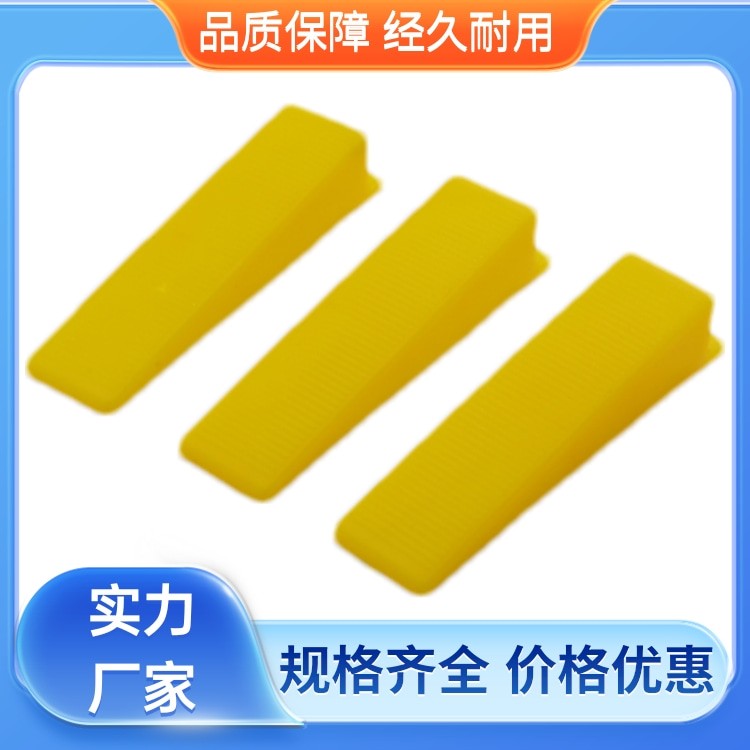
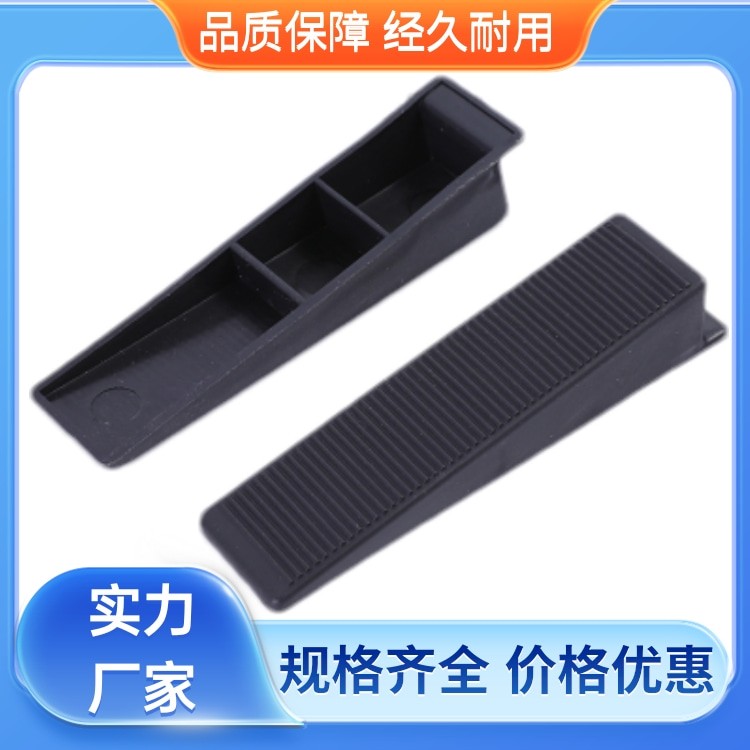















During home renovations, it's not the style or quality that matters most; it's the dimensions and flatness. Only when these two factors are in place can the above scenarios be achieved. Otherwise, achieving a perfect style is often unattainable. A challenging task is leveling the floor, as sometimes it's difficult to remove the leveling tool. So, how do you remove a tile leveling tool? How do you level tiles?
How to remove the tile leveler?
The sequence and method for removing leveling templates should comply with the specifications of the panel design, adhering to the principle of dismantling in the order of support first, then removal, starting with non-load-bearing sections before load-bearing sections, and working from top to bottom. It is strictly prohibited to use sledgehammers and prybars to forcefully remove the molds.
First, dismantle the side formwork, followed by the load-bearing formwork.
2. The assembled large template is best removed in large, whole pieces.
3. Support and connecting parts should be dismantled with the components. Templates should be removed and passed in blocks; no damage to the templates or concrete should occur during removal.
4. Removed templates and accessories should be neatly stacked by category, with attachments stored in the toolbox.
How to level tiles
1. Cement Mortar Leveling: Suitable for leveling ground for various types of floors before installation. If the leveling thickness exceeds 25-35mm, improper cement mortar mix can cause surface powdering, sanding, dusting, and cracking. Gaps form between the floor (laminate) and the leveling layer, causing dust to disperse outward when stepped on. The dust then escapes through expansion joints and spreads out through the gap in the skirting boards, creating a dust-raising phenomenon. Additionally, hollowing can occur in areas where the cement mortar leveling is not detailed.
2. Gypsum Levelling: Suitable for local levelling without raising the floor height, with a thickness of approximately 5-20mm, causing minimal impact on room height. It dries quickly, is relatively inexpensive, and is easy to install. However, it is only suitable for levelling in small areas.
3. Self-leveling leveling: No segregation (various components in the cement slurry do not separate throughout the construction process and after hydration), no sanding, no dusting, no cracking; low shrinkage, typically between 0.3% to 0.4%, with no surface cracks after hydration. The shrinkage rate of common cement is higher, which often leads to cracking. The construction thickness is relatively thin, ranging from 2 to 5mm. The surface can be walked on after 4-8 hours of construction, and flooring can be installed after 36-48 hours. However, it must be done for the entire room, not just in parts.
Laying tiles is a crucial step in renovation, and the master's skill level greatly affects the overall outcome. Previously, most masters laid tiles by hand, often encountering such frustrations: unevenly laid tiles, bumps and valleys; uneven gaps, varying in size; hollow tiles being squeezed, leading to breakage and detachment; repeatedly aligning with the baseline, resulting in slow and labor-intensive construction.
Now with technological advancements, the tools for tiling are also evolving. Many people are now using the tile wonder tool, which helps us achieve a more perfect and error-free installation. Do you know about the tile wonder tool—the tile leveler?
Tile Leveler Types
1.楔子款 - Wedge payment
Composed of a pushing clamp, a wedge, and a base, the pushing clamp and wedge are reusable, while the base is not. Common base sizes on the market include 1mm, 1.5mm, 2mm, 2.5mm, and 3mm. The variation in the base is primarily based on the width of the tile gap specified by the customer.
2. T-shaped steel needle style
Available in non-replaceable, replaceable without a level, and replaceable with a level, all are reusable.
3. Cross Card Slot (Tile Aligner)
Standard Sizes: 1.0mm, 1.5mm, 2.0mm, 2.5mm, 3.0mm, 4.0mm, 5.0mm, 6.0mm, 7.0mm, 8.0mm, 9.0mm, 10.0mm. The purpose is to adjust the gap between tiles to ensure a neat and attractive finish, with consistent and even gaps between tiles. The primary objective is to accommodate thermal expansion and contraction, preventing hollow tiles due to compression.


.jpg)


















