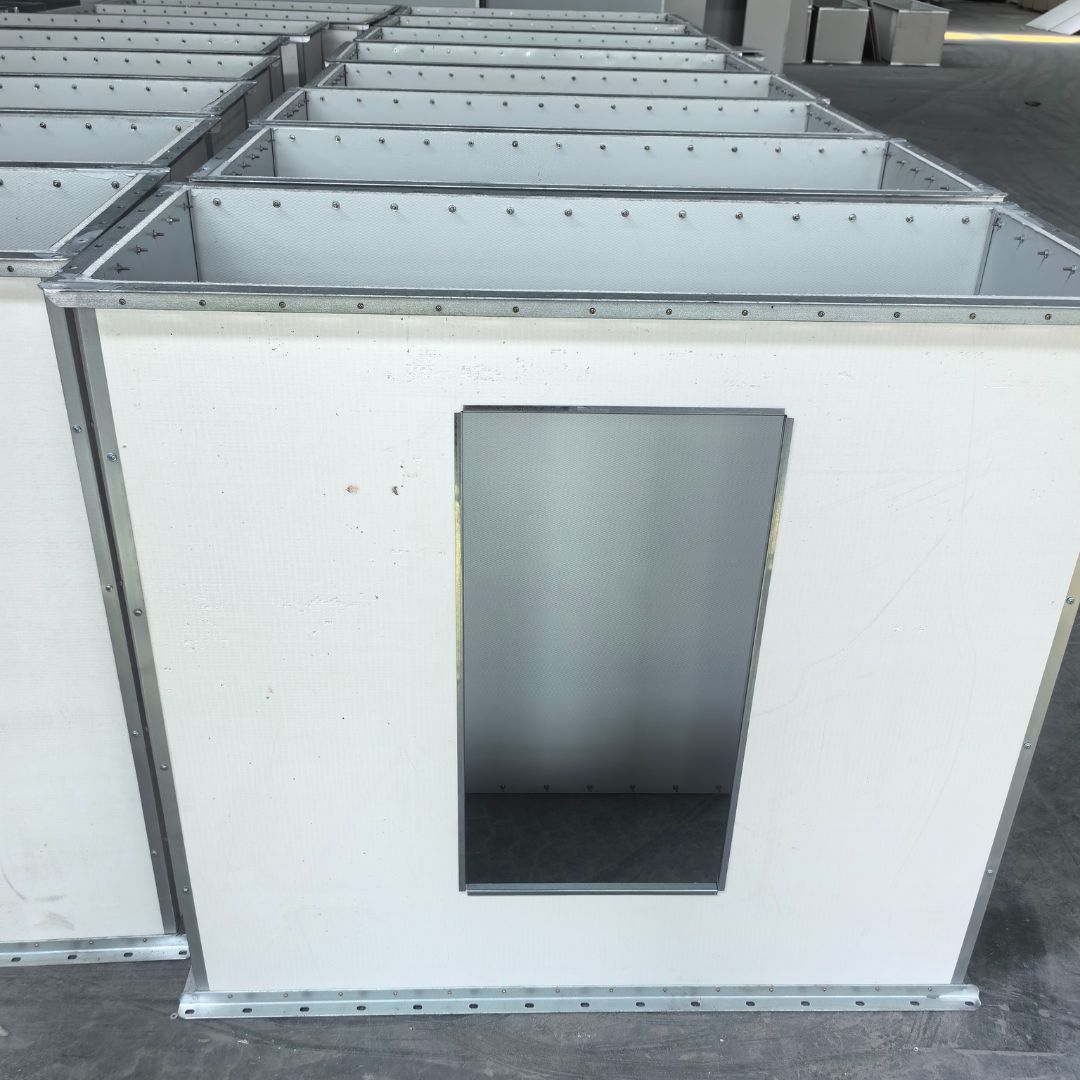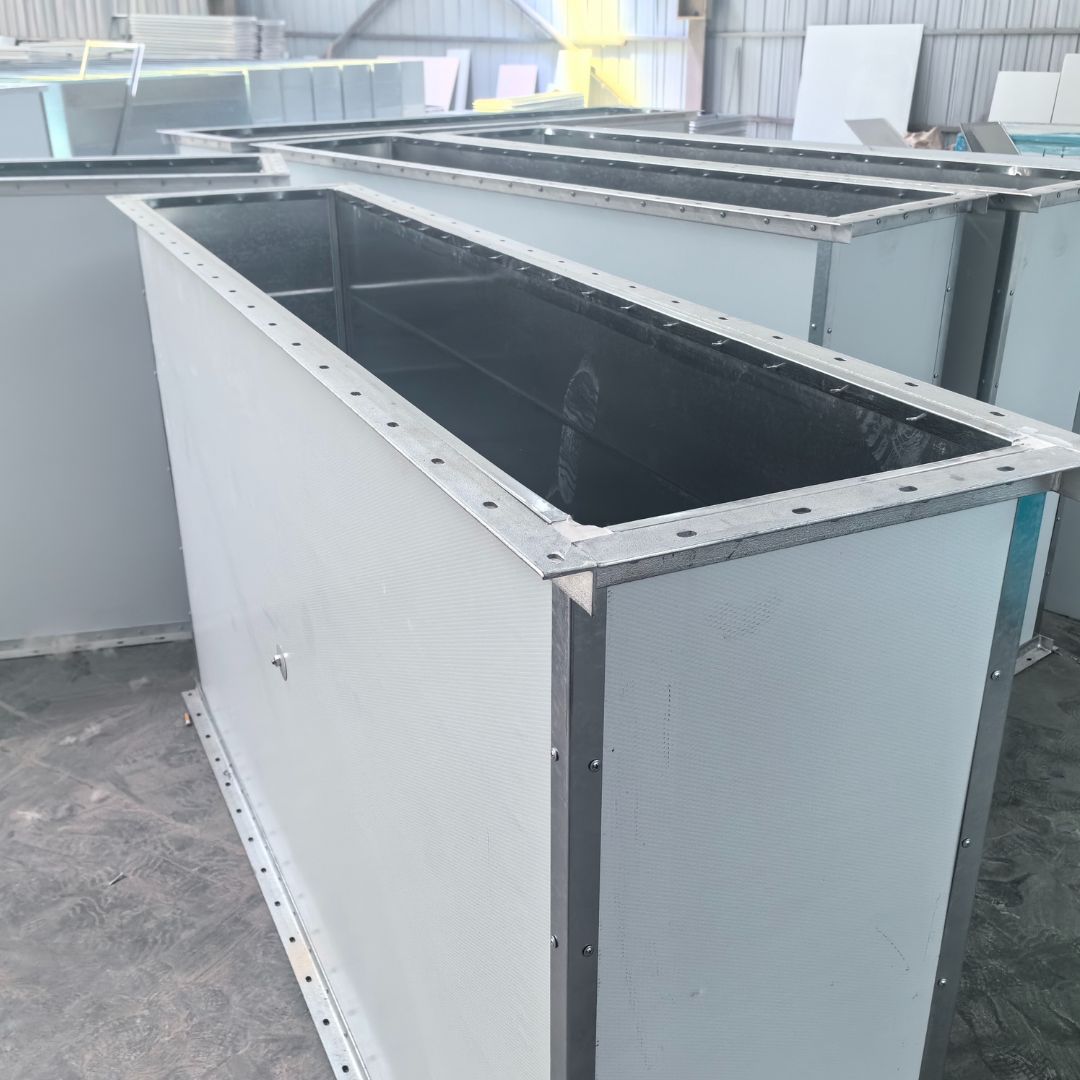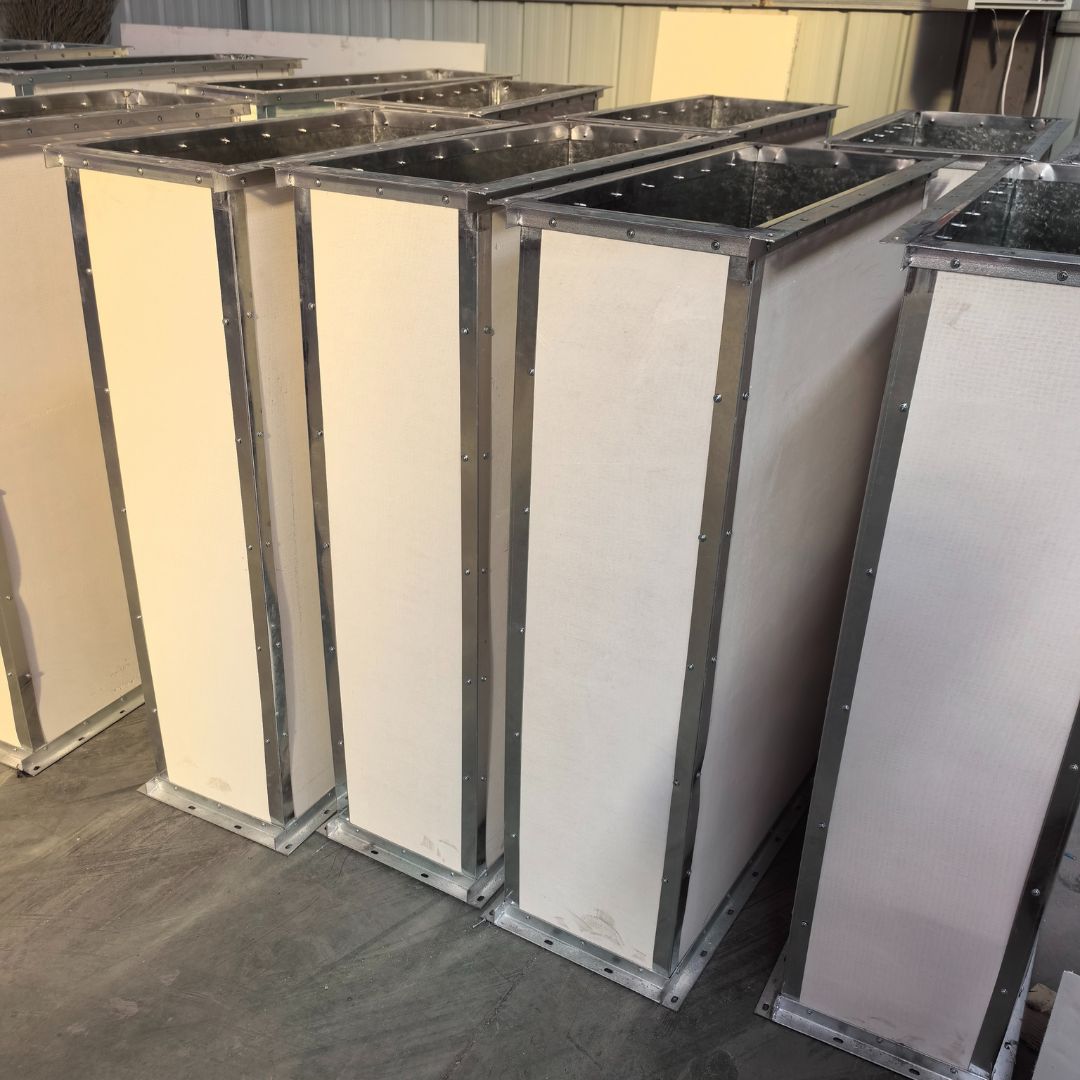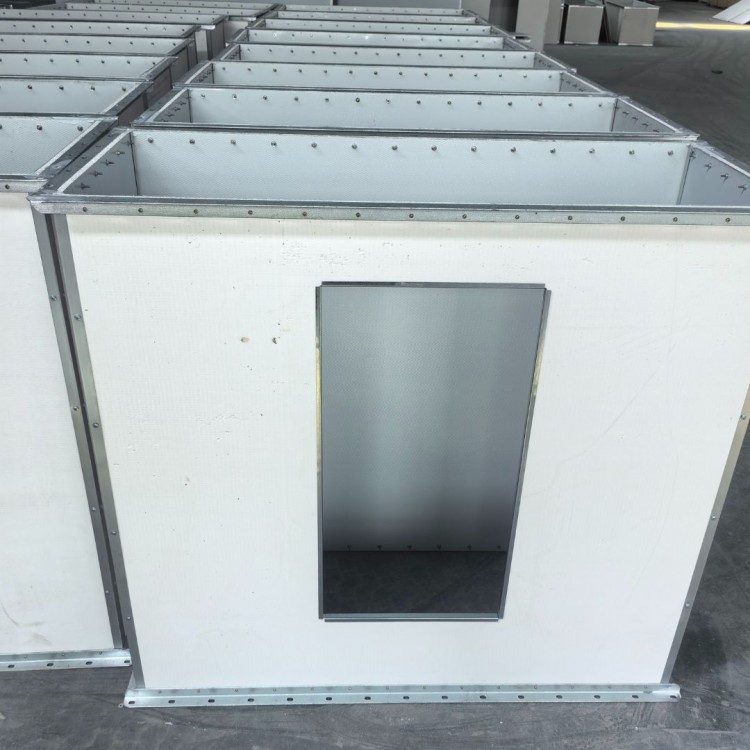










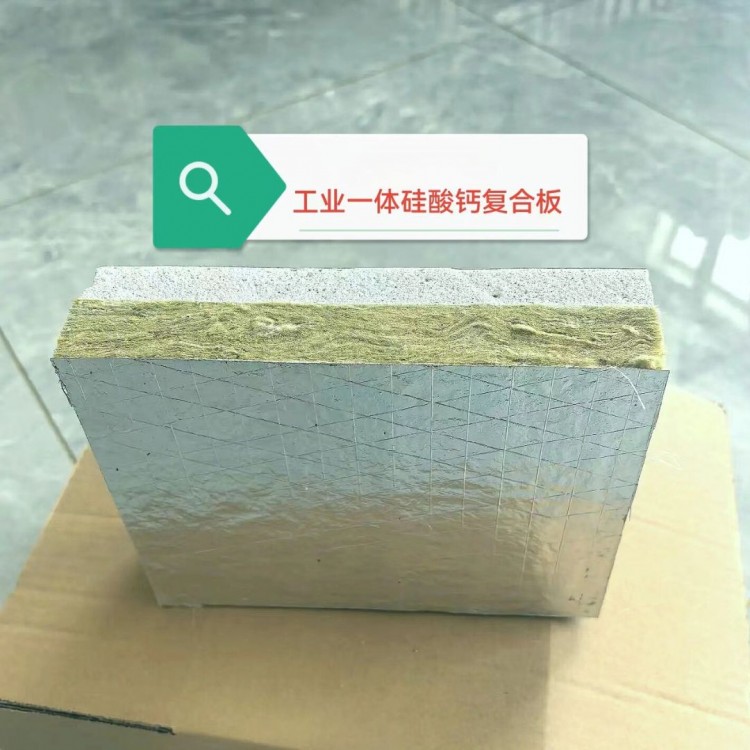
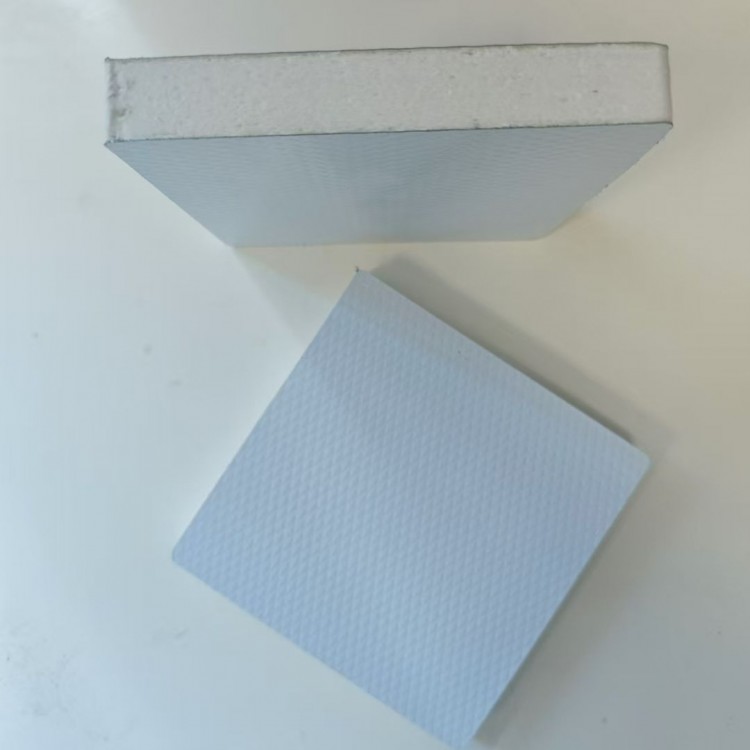
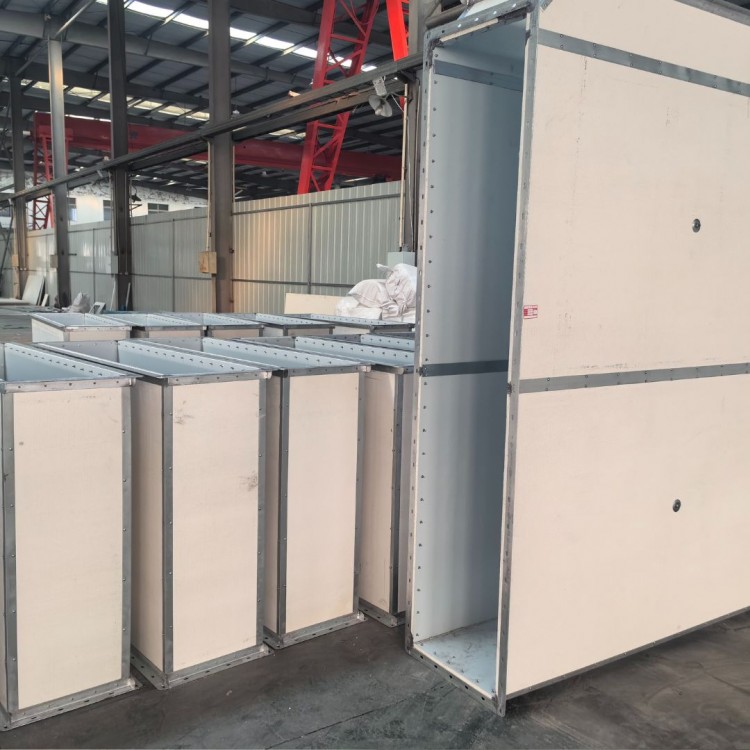
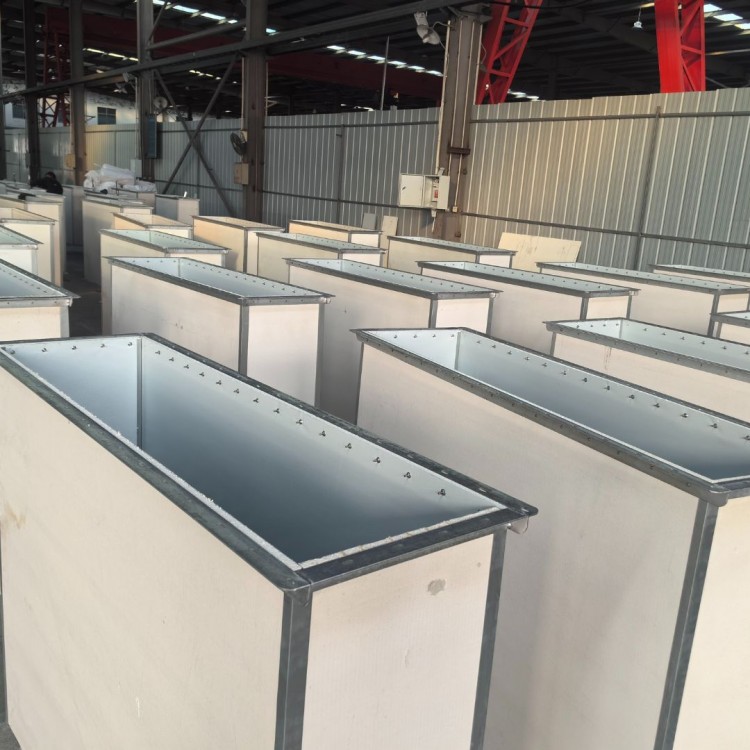

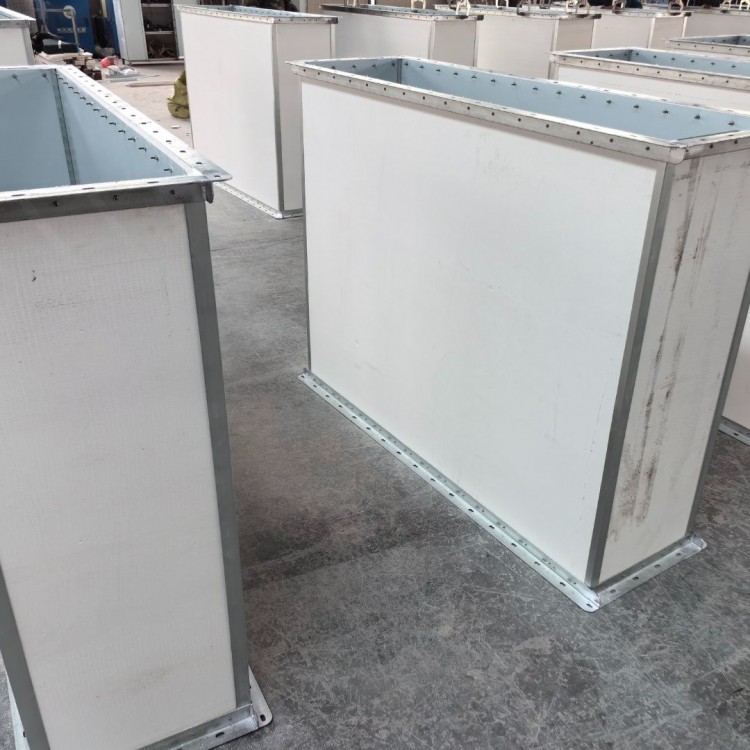
The principle of the steel-faced magnesium fire-resistant duct is achieved through its fire-resistant and insulating layer, combining the three properties of fire resistance, heat resistance, and insulation to meet the fire integrity and insulating properties of GB/T17428-2009 for building smoke exhaust ducts. This type of duct uses protective steel surfaces or both inner and outer protective layers made of high-corrosion-resistant metal plates or corrosion-resistant aluminum foil, with a service life of over 30 years. The connecting materials for the ducts are made of special angle steel flanges, featuring high connection strength and easy installation. Additionally, the design concept of the steel-faced magnesium fire-resistant duct includes the mixture of non-combustible materials such as steel and magnesium oxide, which not only has high strength but also excellent thermal insulation and non-combustible properties, maintaining its shape and not easily burning during a fire. The structural design considers installation methods (surface or concealed), connection methods, and sealing factors. Reasonable wall thickness ensures the safe operation of the pipeline system; thinner steel plates can be made thin yet not brittle under the conditions of forming. For aesthetic purposes, high-quality surface textures and vibrant, durable epoxy resin powder coatings can be chosen.
In summary, the principle and design of the steel-faced magnesium fire-resistant ducting have fully considered fire resistance, heat insulation, structural safety, and aesthetics, ensuring effective prevention of fire spread and protection of personnel during a fire.