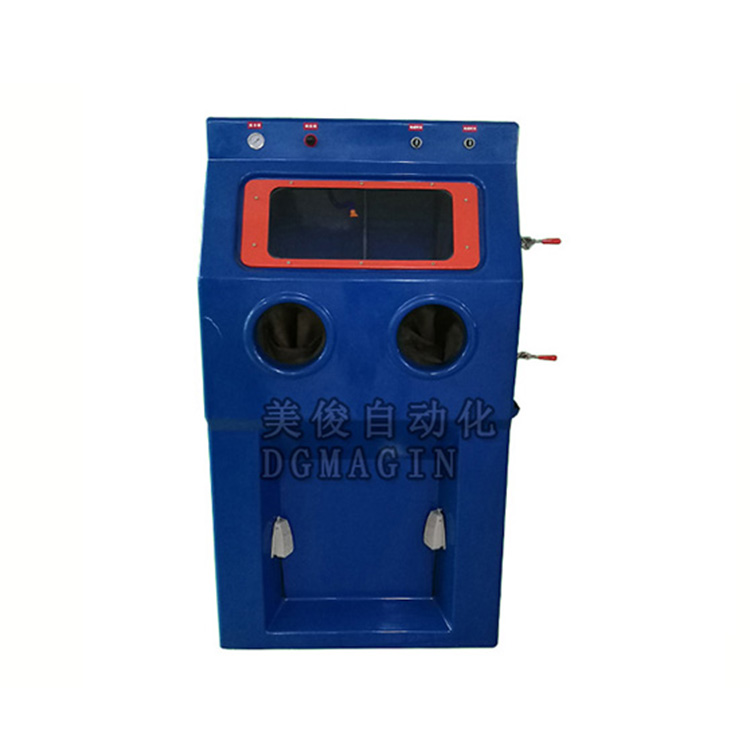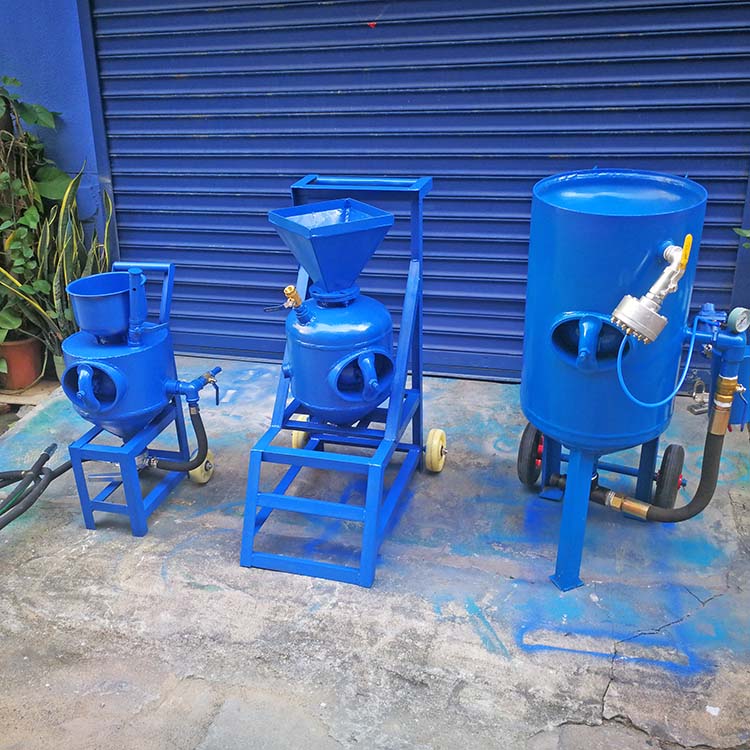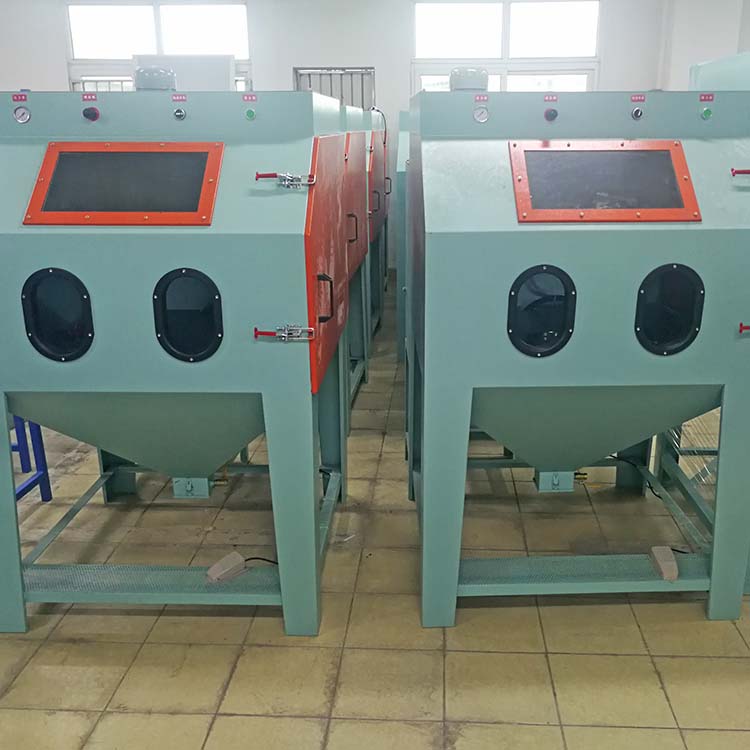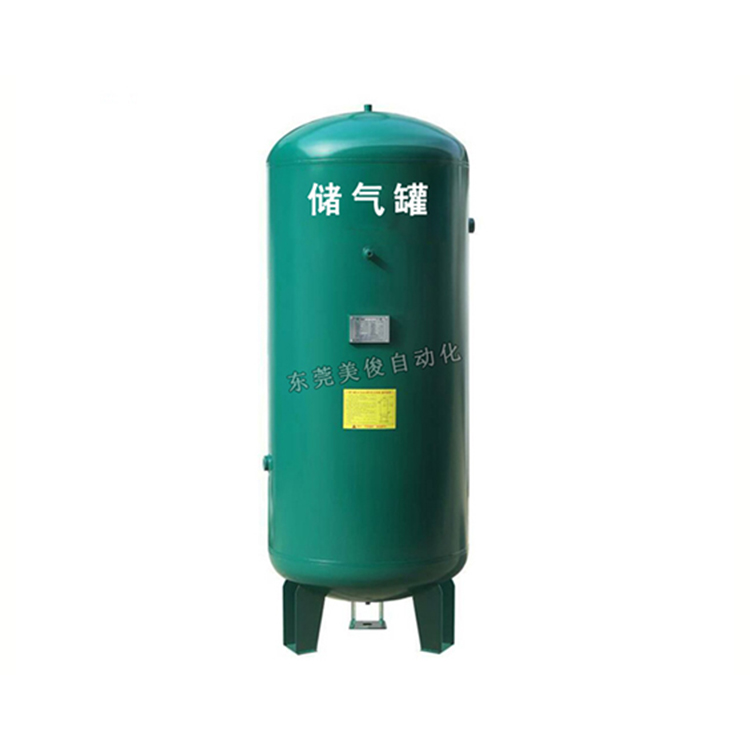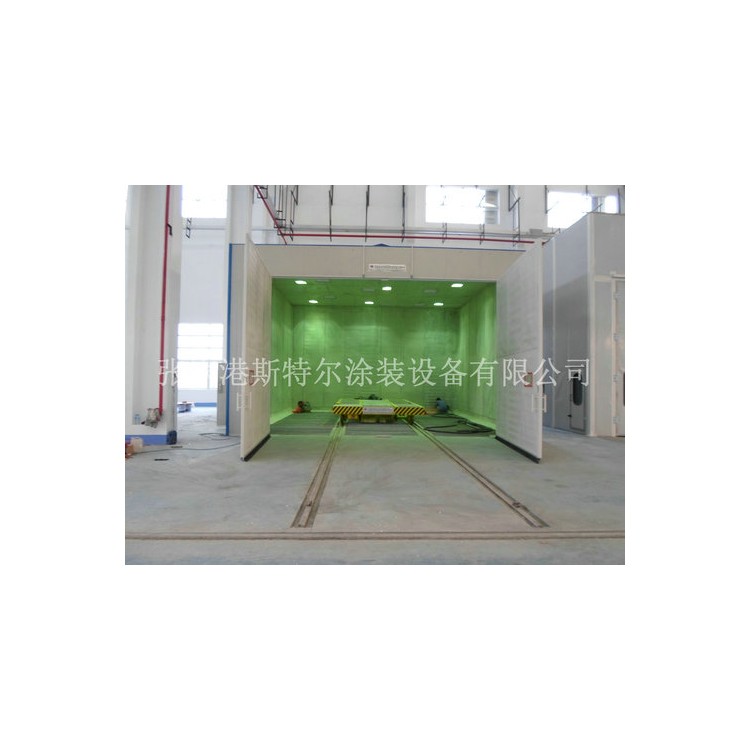

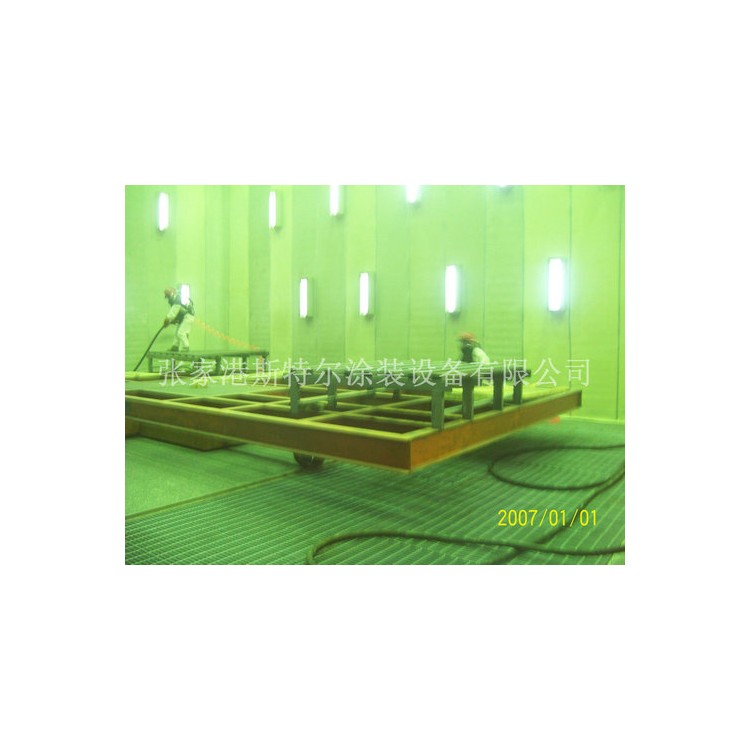
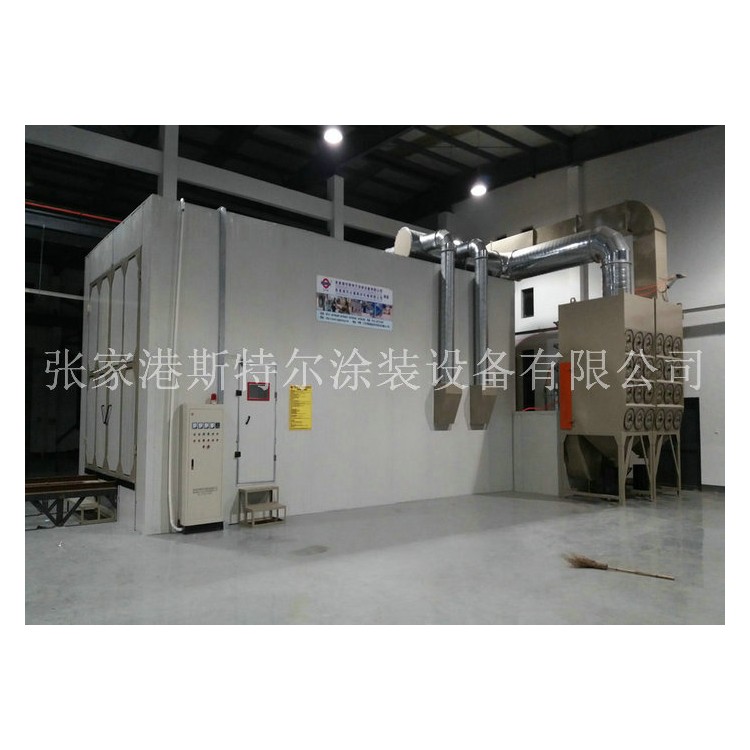


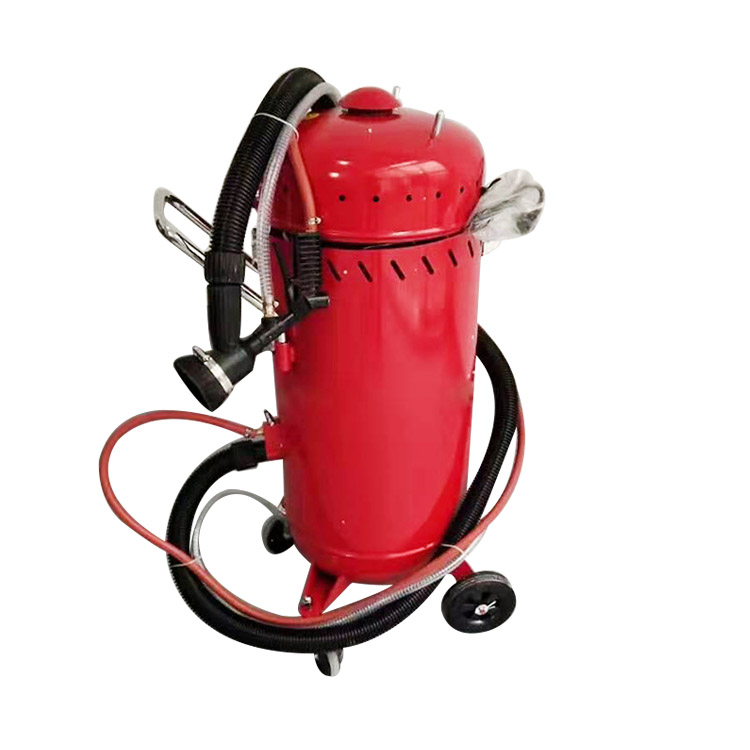
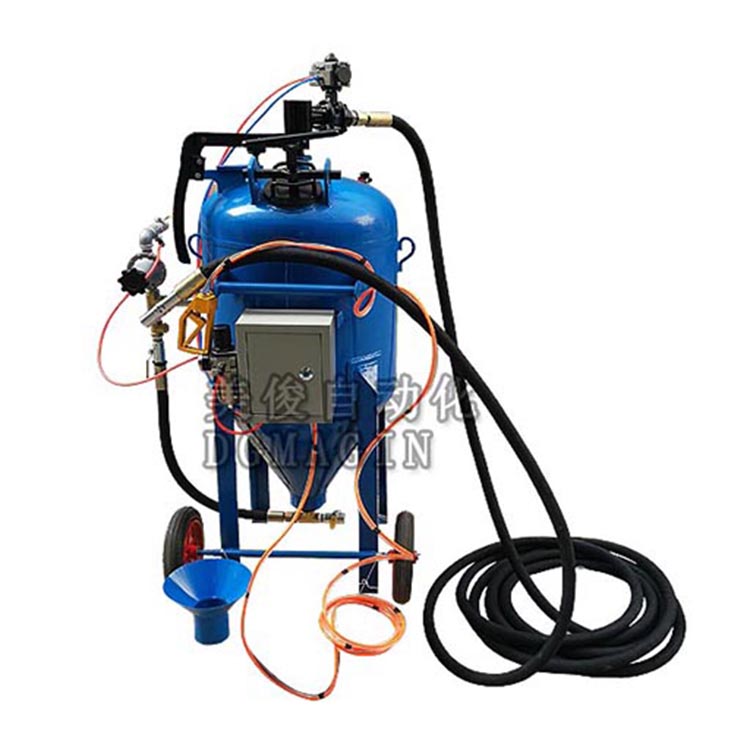
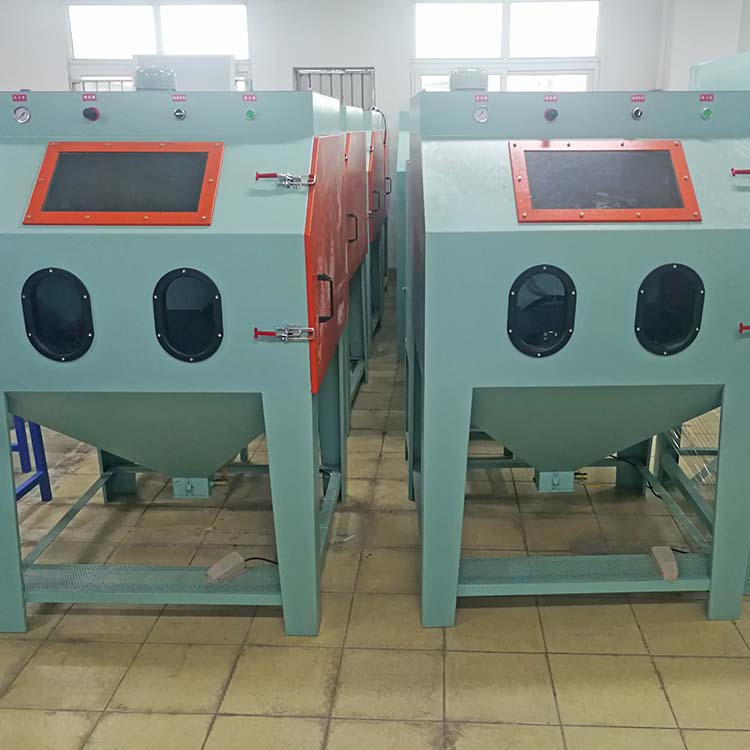







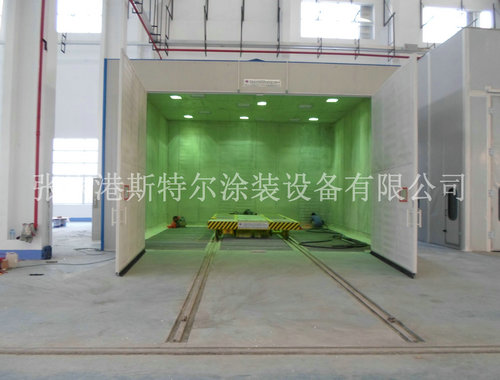
Ideal for large steel structures, ships, bridges, aerospace, military products, track equipment, wind turbine towers, port machinery, oil machinery, construction equipment, mining machinery, textile machinery, specialized vehicles, large castings, and surface rust removal for both inner and outer walls of steel pipes.
Ideal for large steel structures, ships, bridges, aerospace, military products, track equipment, wind tower frames, port machinery, oilfield equipment, construction machinery, mining equipment, textile machinery, special-purpose vehicles, large castings, and surface rust removal for both inner and outer walls of steel pipes.
Principle Introduction:
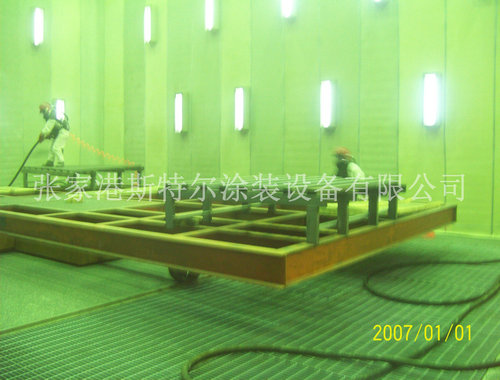
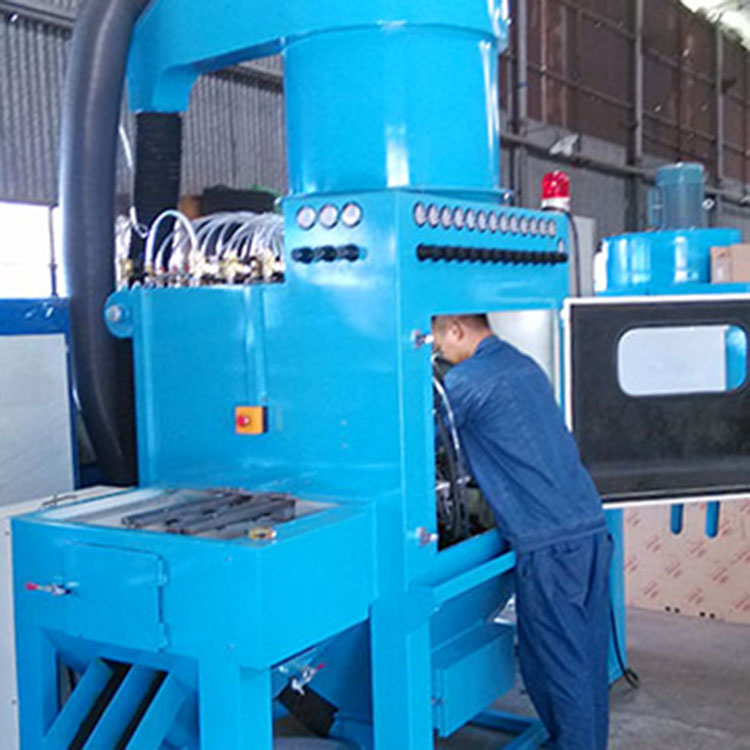
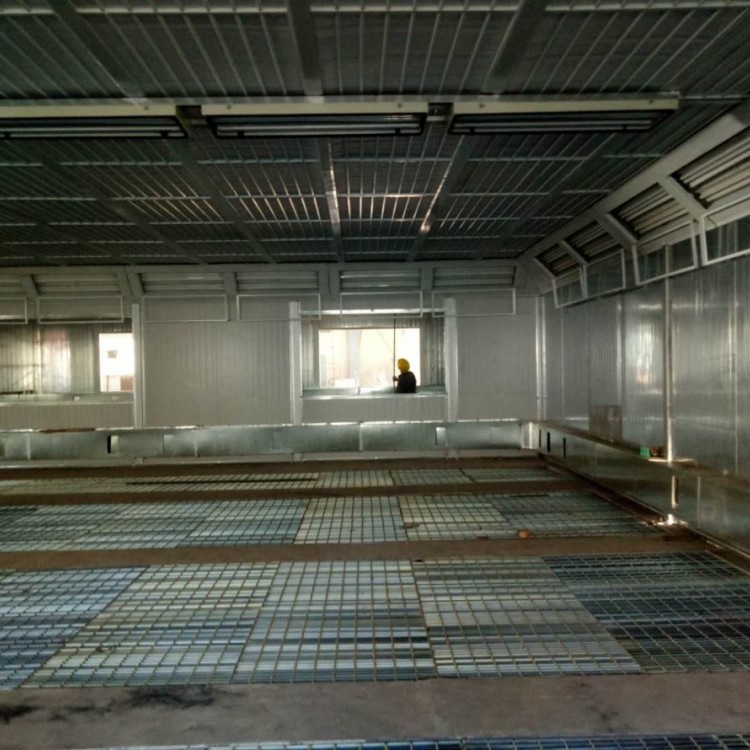
The internal chamber of the sandblasting room forms an air flow layer from top to bottom under the influence of wind, while the abrasive material is jetted onto the workpiece surface under the action of compressed air to remove chips. Some of the abrasive chips break down into dust, which is then carried down by the air flow, re-mixed with the abrasive and rust particles, and returned to the separator system via a honeycomb back-sanding floor. After sorting, reusable sand is returned to the storage bin and automatically recycled to the sandblasting system as needed; non-reusable dust and impurities are transported to a dust collector for fine filtration. The dust settles in the waste bin and is recycled, while the filtered gas is re-released into the atmosphere or cycled back to the sandblasting room. The entire process is sealed, with no dust leakage, ensuring safety and environmental protection.
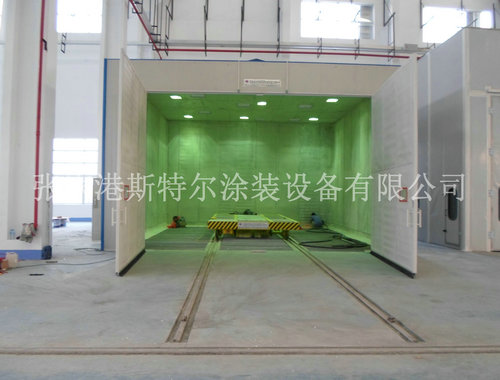
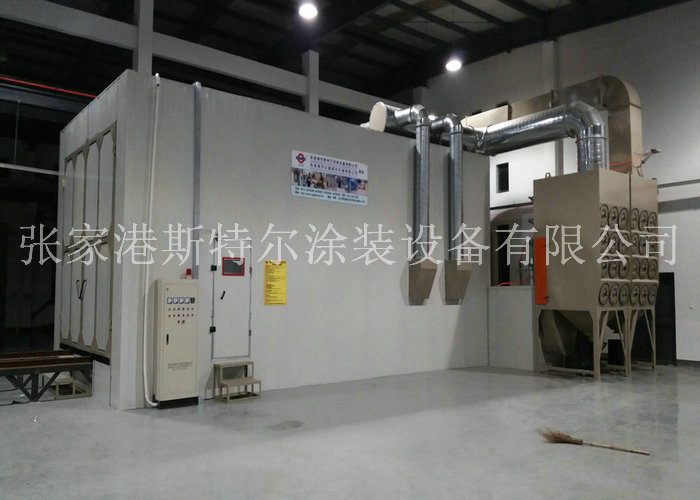
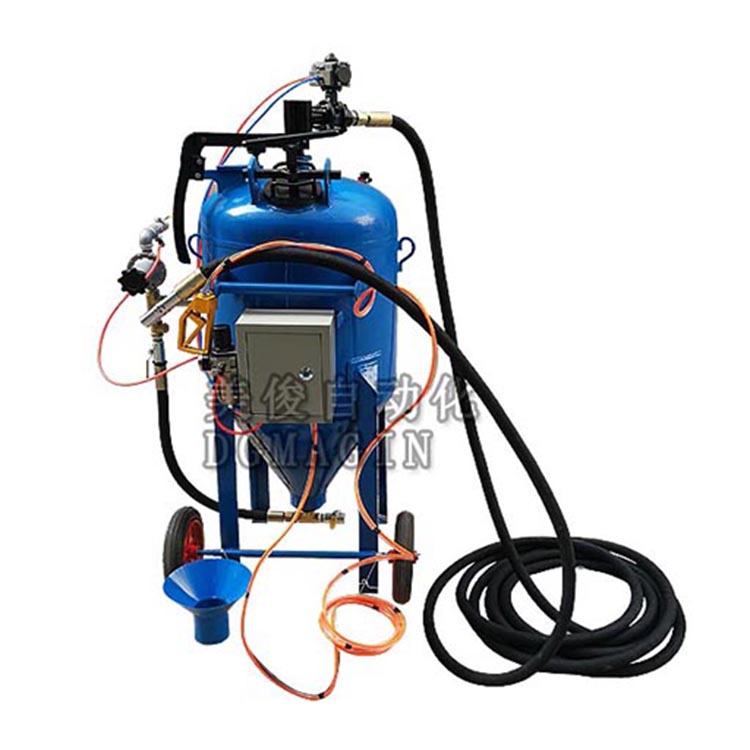
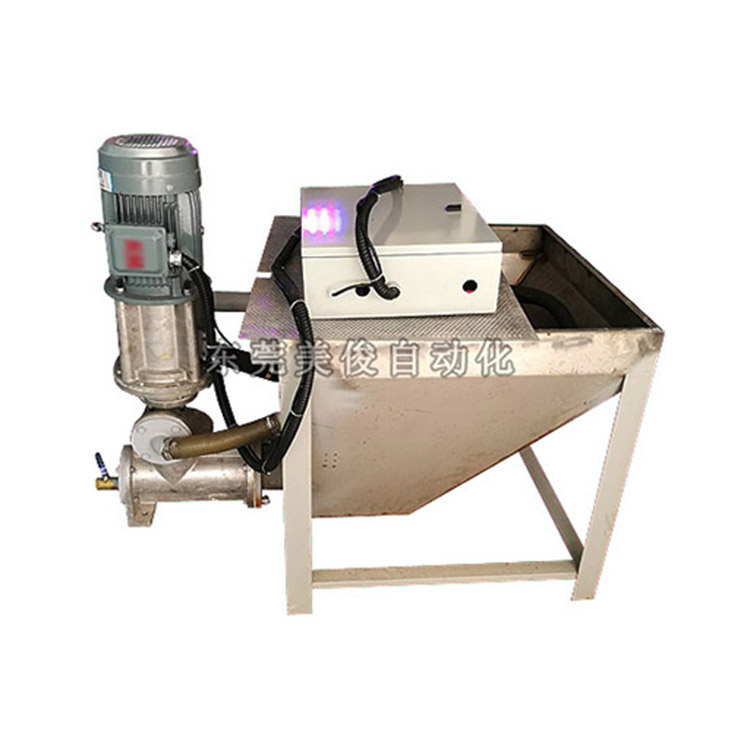
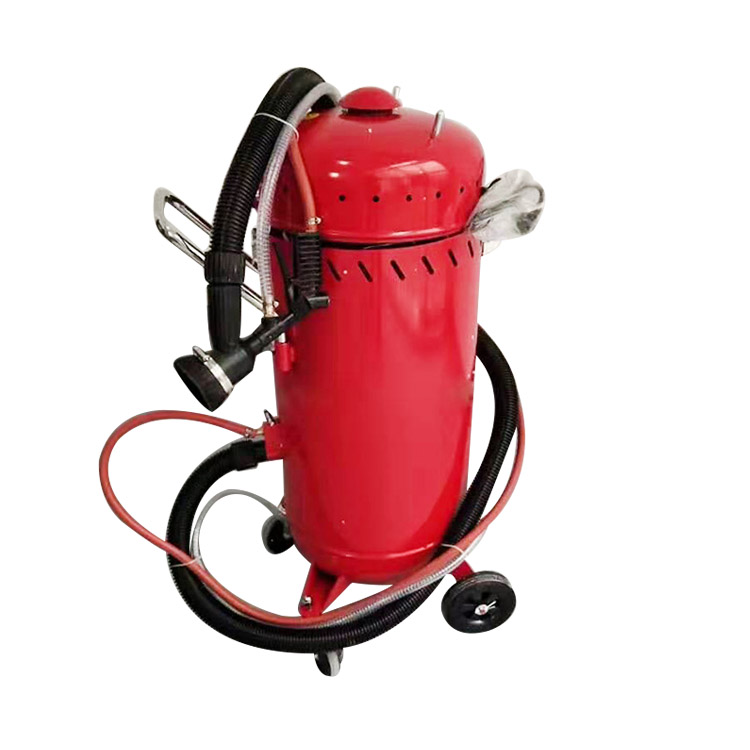
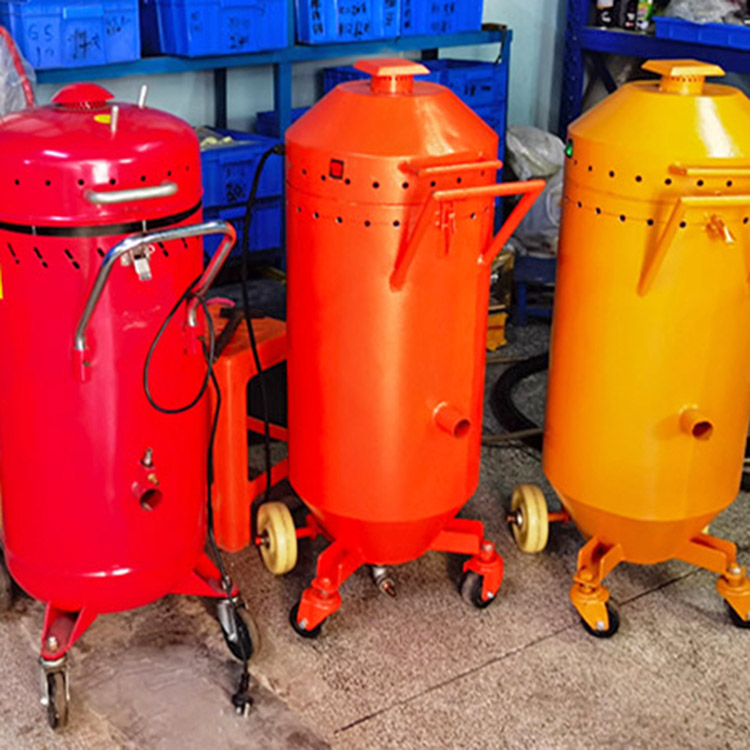
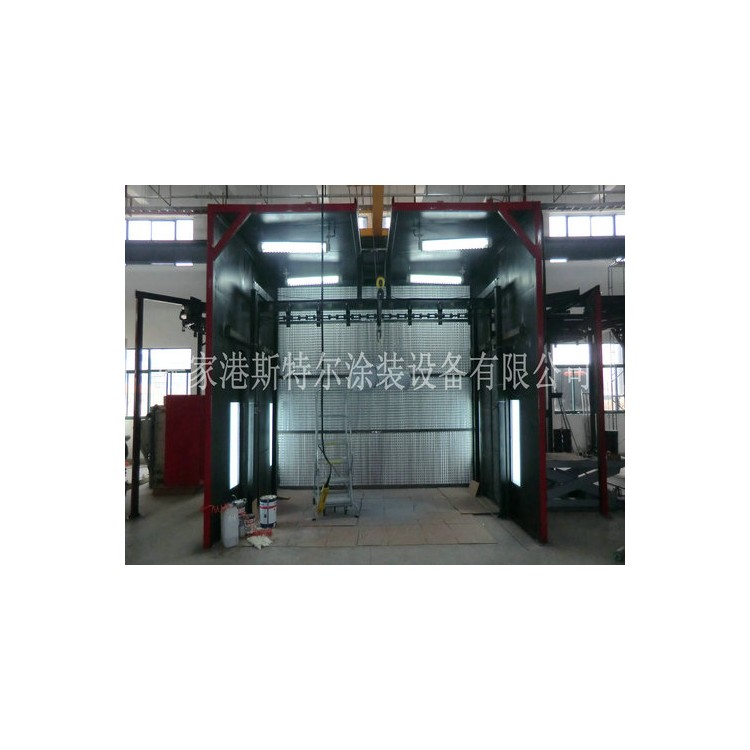
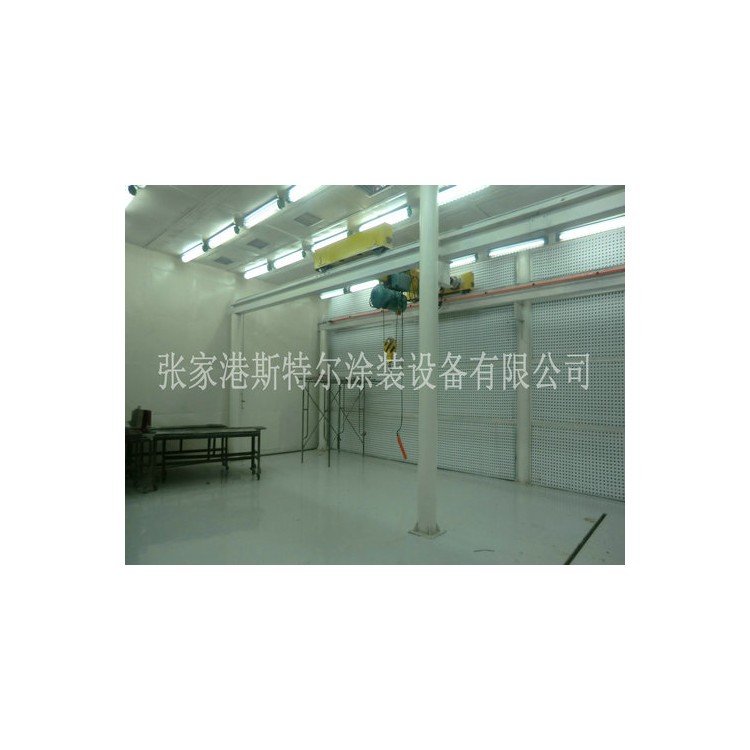
Mechanical circulating sandblasting room complete set mainly consists of the sandblasting room body, lighting system, air-powered recovery floor, separator, sandblasting system, dust collector, fan, control system, workpiece conveying system, and operator protection system.
Mechanical circulating sandblasting room features:
★Environmental Protection: The fan is driven by electricity, ensuring cleanliness and pollution-free operation; sandblasting is conducted in a sealed environment, and sand material is recycled in enclosed pipelines, preventing any leakage of sand or dust that could cause pollution; dust is filtered through a core filter, resulting in emissions concentration that exceeds national standards.
★Automatic Recirculation: The system utilizes an aerodynamic floor for material recycling, enabling automatic reuse of sand.
★Dual-purpose: The wind generated by the fan not only meets the requirements for conveying sand material but also serves the system's dust removal.
★Automatic Sorting: The separator utilizes aerodynamic principles to effectively sort sand, impurities, and dust. The recyclable sand returns to the storage bin, while the non-recyclable dust and impurities are transported to the dust collector for fine filtration.
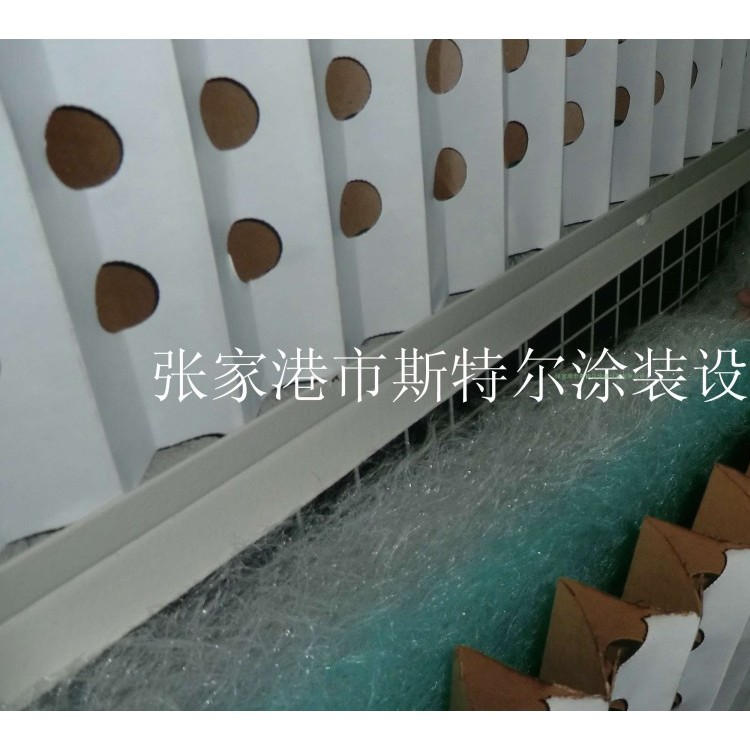
★ Filter Core Dust Removal: The system employs filter core dust removal method, with high filtration efficiency.
★ Imported Filter Media: Made from imported long fiber materials, the filter cores have a large filtering area, with each core having twice the filtering area of a standard core.
★Automatic Control: Automation is achievable for sand recycling, sorting, nozzle control, dust removal, and sandblasting pot operations. The system features automatic fault alarms and prompts.
High Integration: The control system uses PLC + touch screen display, enabling both automatic operation mode and manual control mode.
★Efficient Cleaning: Utilizes a high-pressure twin-cylinder continuous sandblasting machine, with a single nozzle cleaning area of up to 10~30 m²/h.
Compared to traditional shot blasting rooms, it boasts the following distinct features:
No deep excavation required (or can be omitted), low infrastructure costs, and a short construction period.
2. Equipped with sand-suction flooring, eliminating the need for traditional conveying equipment such as augers, belt conveyors, and bucket elevators. This design avoids wear, clogging, and other issues caused by sand and dust on conveying equipment, bearings, and motors during sand material transportation and lifting, resulting in a low failure rate and minimal maintenance workload.
3. Equipped with abrasive separator and sorting device, the abrasive is automatically recycled, improving utilization rate and sandblasting cleaning efficiency.
4. The abrasive recycling separator and dust removal share a single fan, achieving multiple uses with one wind, saving 30% of energy compared to traditional sandblasting rooms.
5. The sandblasting system allows multiple high-speed nozzles to operate with a single sand pot, each gun can be controlled individually, offering high sandblasting efficiency and pressure that can be infinitely adjusted.
6. Utilizing tungsten carbide durable sandblasting nozzles with an average lifespan of 800-1000 hours.
7. The sandblasting room can utilize different materials and grain sizes of abrasive media (such as steel shots, glass beads, steel grit, quartz sand, copper ore sand, yellow sand, fruit shells, etc.), catering to various process requirements.
8. Shot blasting (bead) indoor air flows in a circular motion from top to bottom, with bright lighting, comfort, and high visibility.
9. Utilizing filter core dust removal technology, the dust emission from the sandblasting (pellet) room is significantly lower than the national environmental protection requirements.
10. The sandblasting (bead) room is constructed with foam plastic sandwich color steel panels, featuring sound absorption capabilities, aesthetics, durability, and airtightness.
Dust Separation System
The material and dust recovered from the honeycomb floor must be separated by a sand-dust separator before the sand can be recycled. The efficiency of the sand-dust separator directly impacts the sandblasting performance of the sandblasting machine and the filtration performance of the dust collector.
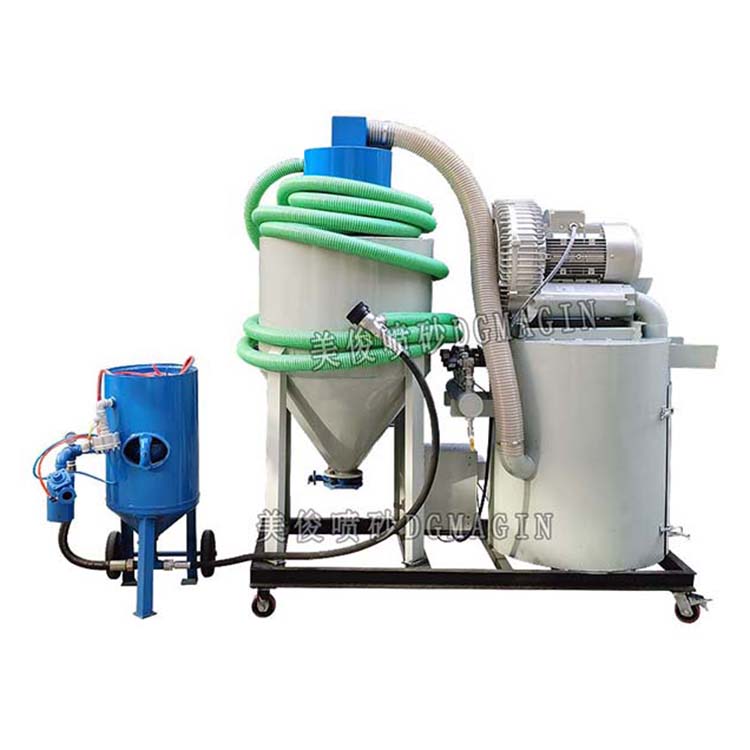
The sand separator employs a two-stage air separator specifically designed for our sandblasting systems. The first stage is a unique cyclonic inertial separator, followed by a reverse-air blowing separator. It effectively sorts the recycled reusable sand, crushed sand, dust, scale, and other impurities. The whole sand is returned to the sandblasting machine for continuous reuse, while the dust and sand fragments are sent to a dust collector, filtered, and stored until scheduled cleaning.
By adjusting the regulating mechanism on the dust separator, the size of the separated sand particle diameter can be controlled. Special customized dust separators can achieve grading, segmenting (various particle sizes), and round selection of sand particles.