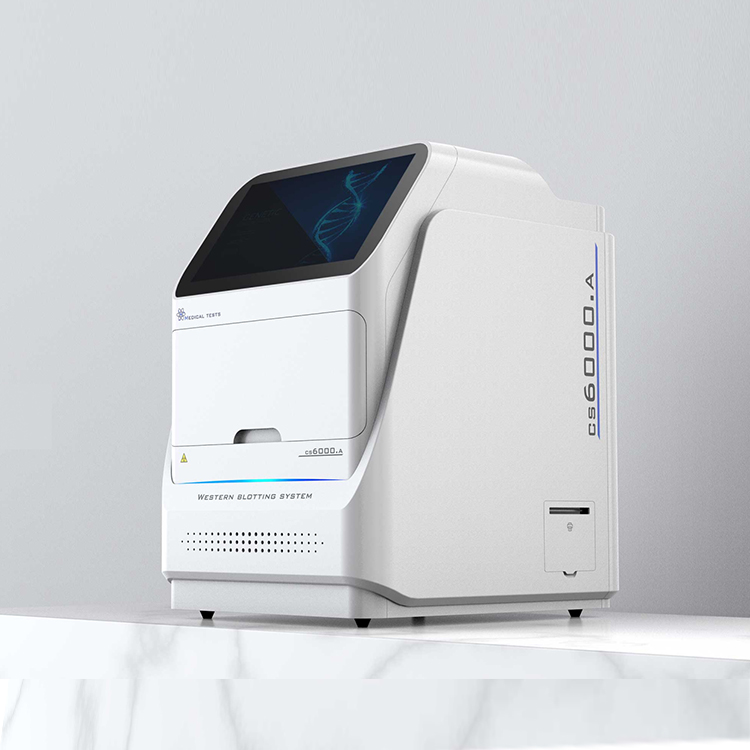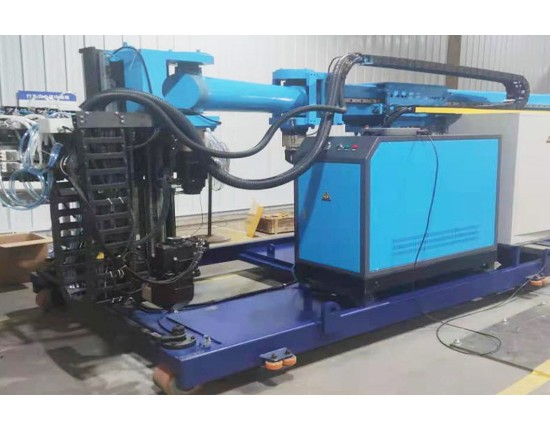











Unmanned Factory - Also known as an automated factory or fully automated factory, an unmanned factory is one where all production activities are controlled by electronic computers. These factories are equipped with robots on the production line, eliminating the need for human labor. In such factories, production orders and raw materials are input at one end, and after passing through product design, process design, production processing, and inspection packaging, the finished products are output at the other end. All tasks are performed by robots controlled by computers, CNC machines, unmanned transport vehicles, and automated warehouses, with no direct human involvement.
Artificial Intelligence is a new branch of technology science that focuses on the theories, methods, technologies, and application systems for simulating, extending, and expanding human intelligence. It is a subset of computer science, aiming to understand the essence of intelligence and produce new intelligent machines capable of responding in a manner similar to human intelligence. The research in this field includes robotics, language recognition, image recognition, natural language processing, and expert systems.
The development of "Smart Factories" represents a new direction in the evolution of intelligent industry. Its characteristics are reflected in manufacturing production:
One, the system possesses autonomous capabilities: it can collect and understand information from the external environment and itself, and use it to analyze, judge, and plan its own behavior.
Section II: Practice of Overall Augmented Reality Technology: Integrating signal processing, reasoning and prediction, simulation, and multimedia technologies to showcase the design and manufacturing processes in real life with augmented reality presentation.
III. Coordination, Restructuring, and Expansion Features: Each group in the system assumes responsibility for forming system structures based on their respective tasks.
Four: Self-learning and Maintenance Ability: Through the system's self-learning feature, implement database supplementation and updates during the manufacturing process, automatically perform fault diagnostics, and have the capability to handle fault exclusion and maintenance or notify the appropriate system.
V. Human-Machine Coexistence System: The system allows for mutual coordination and cooperative relationships between humans and machines, complementing each other across different levels.