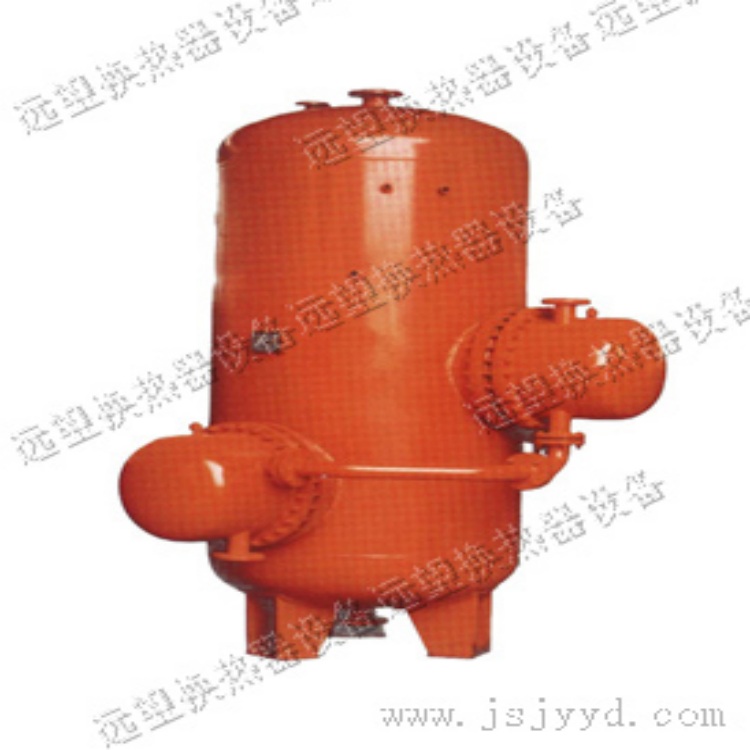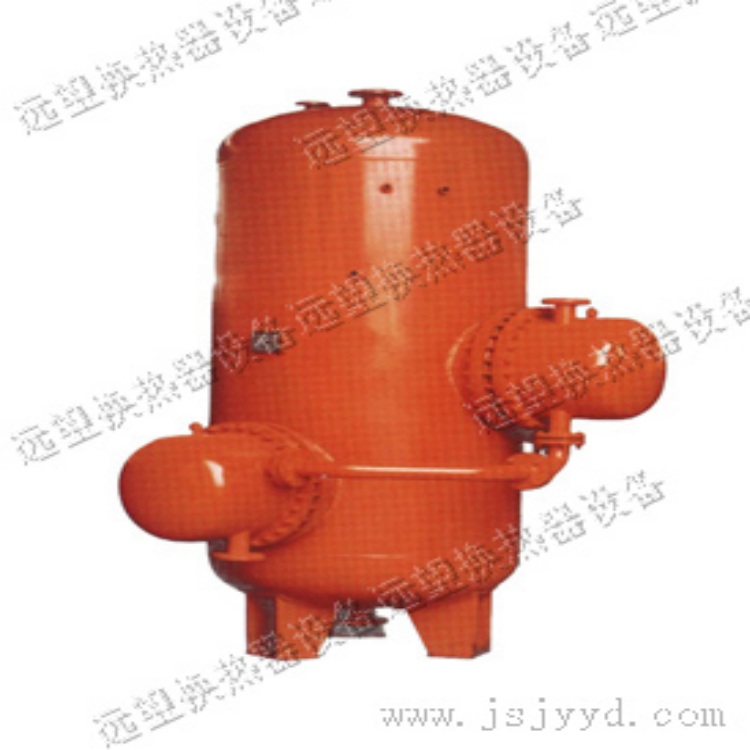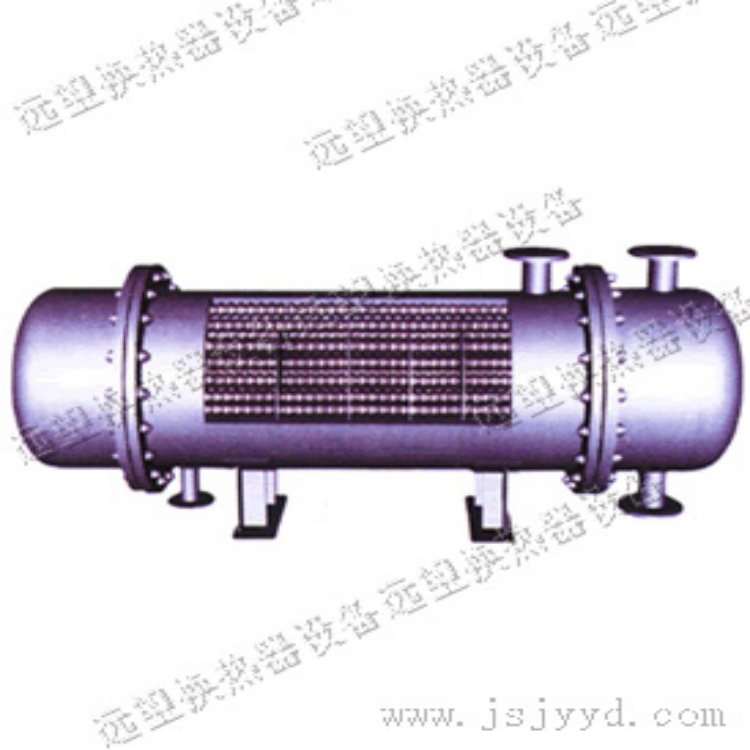

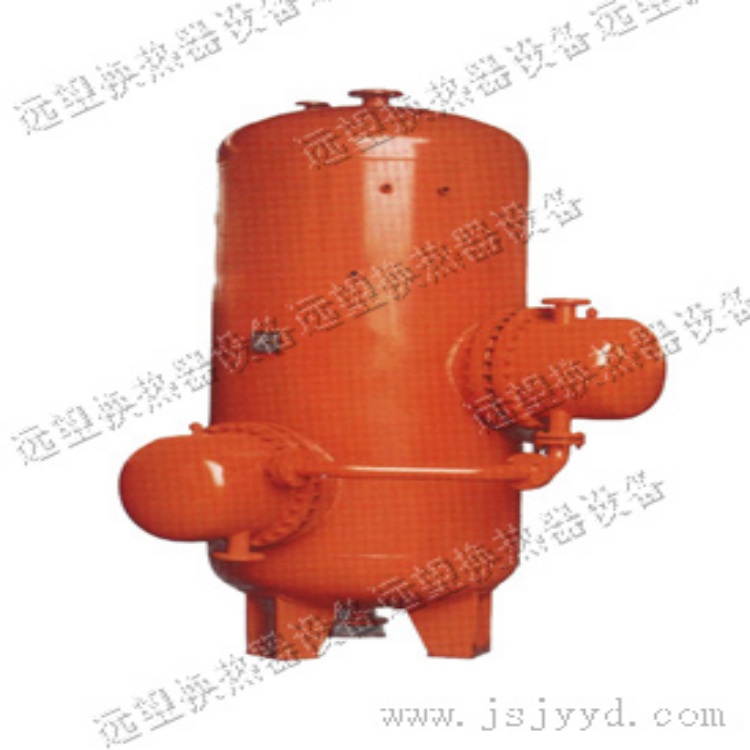

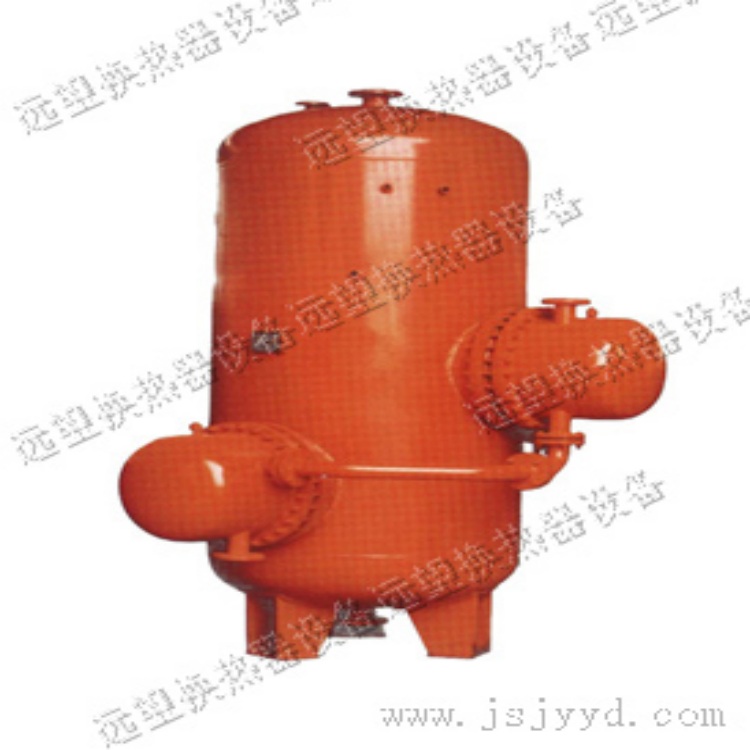
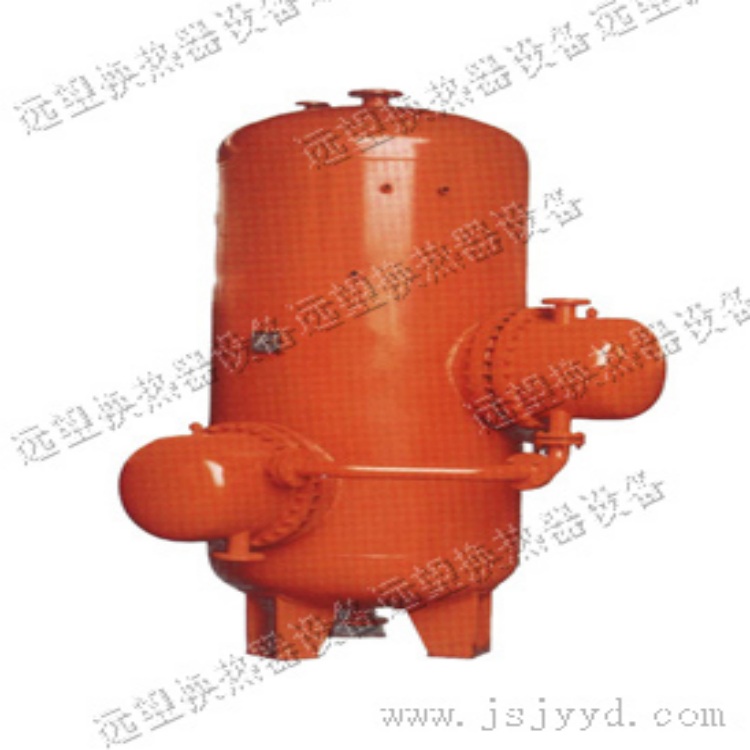
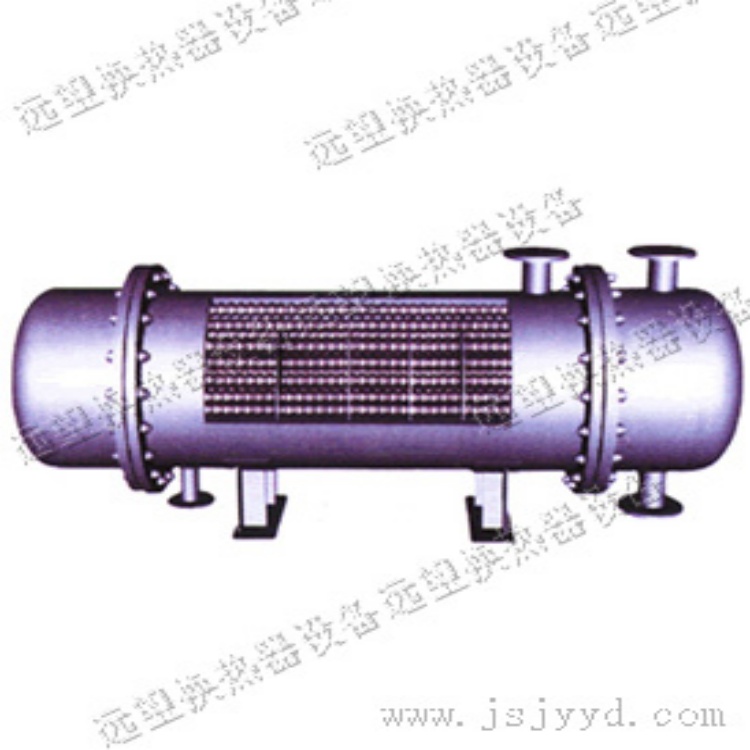











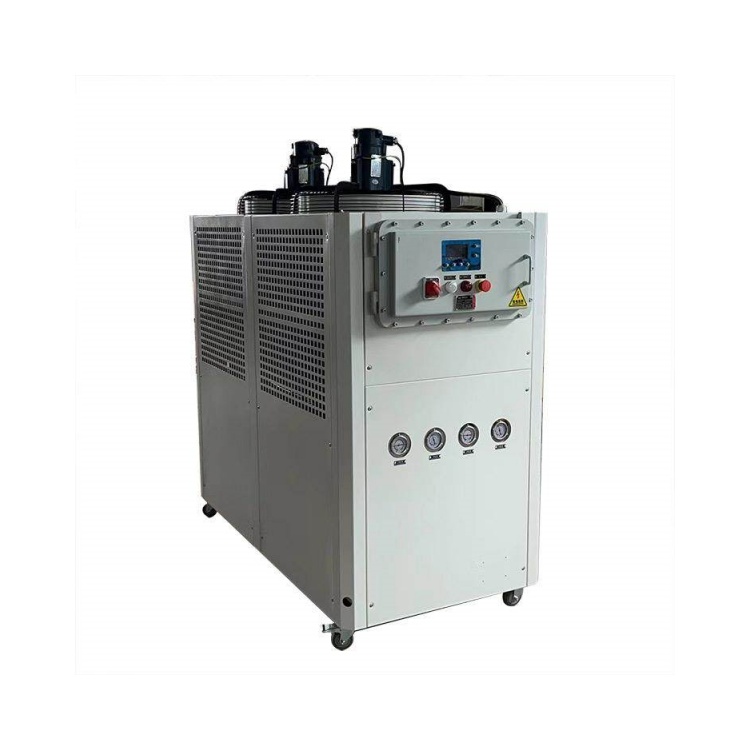
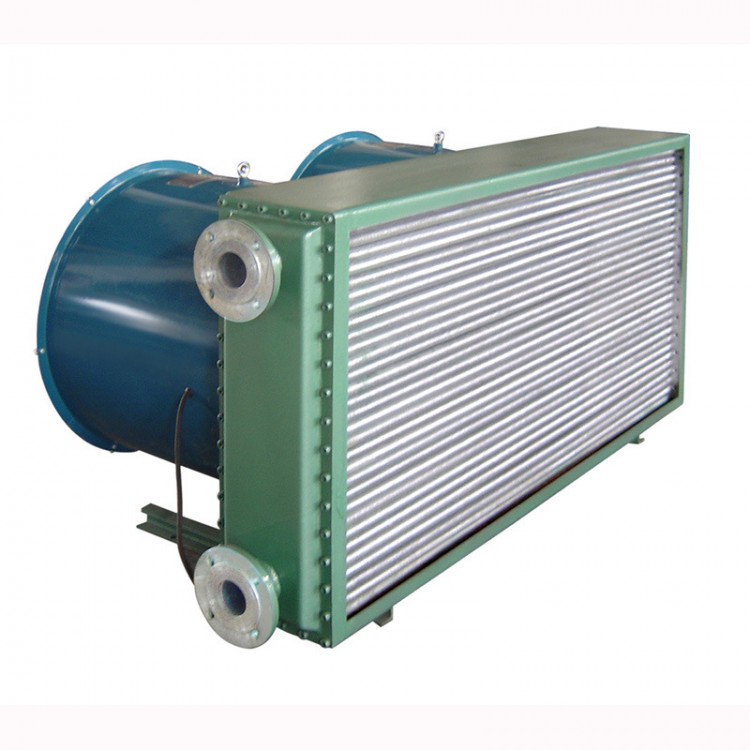
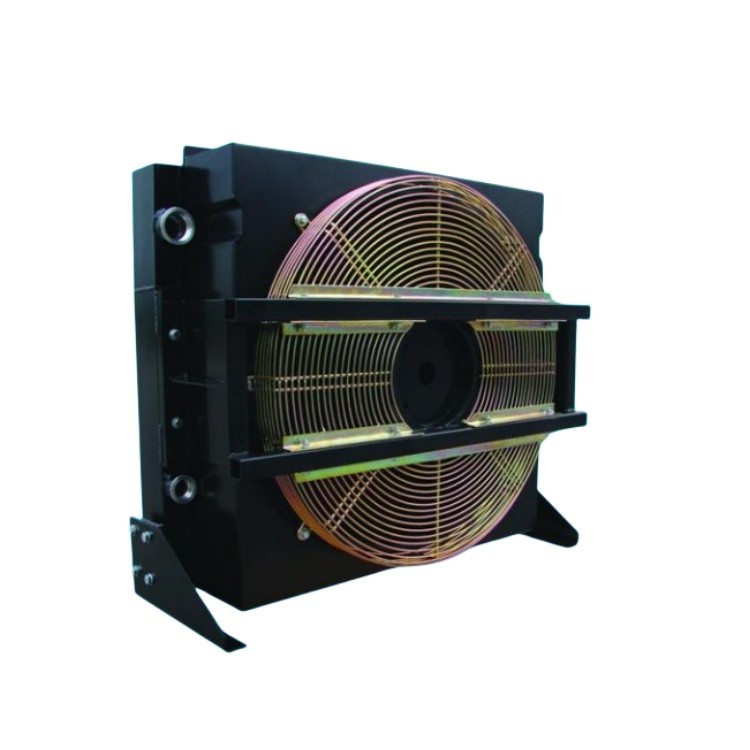
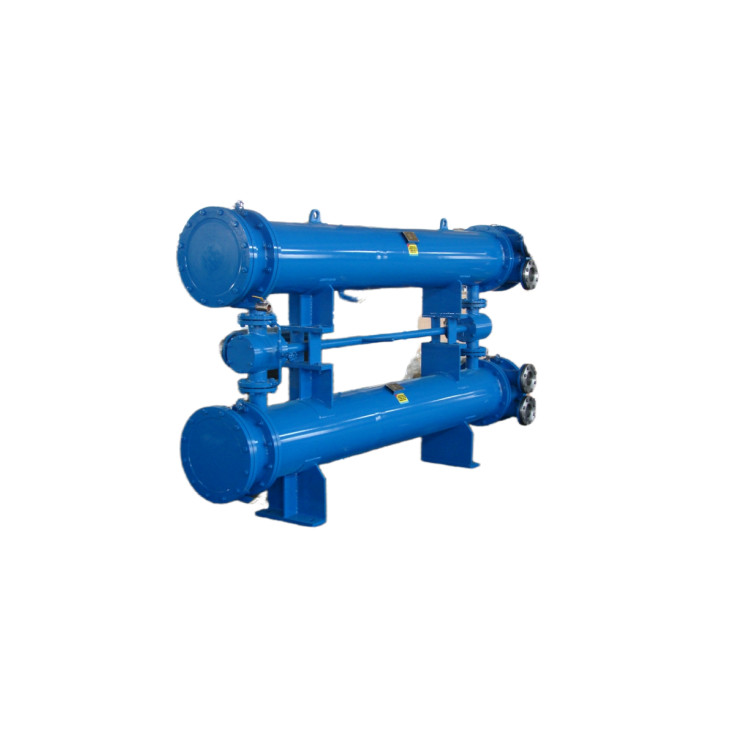
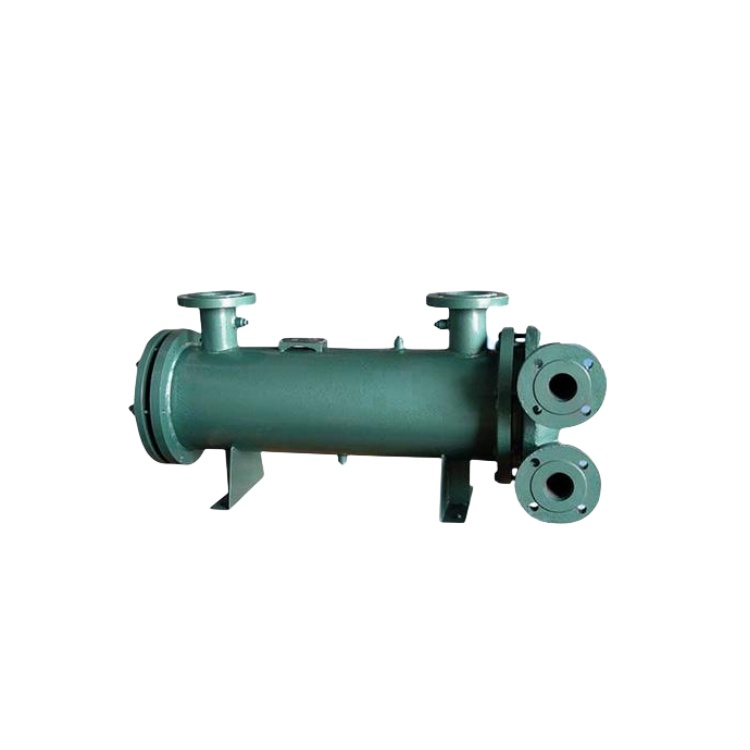
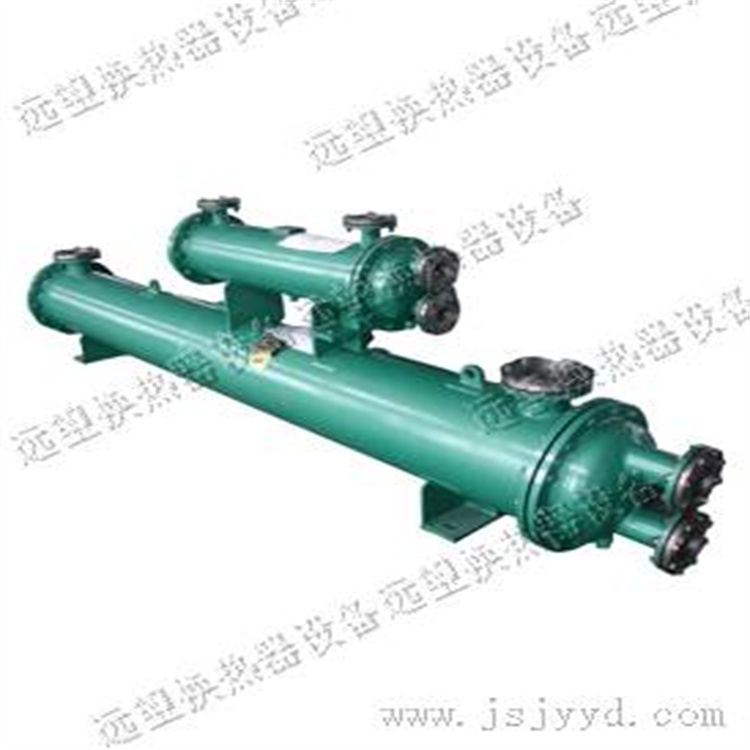
I. Product Overview
Volumetric heat exchangers utilize the alternating flow of cold and hot fluids over the surface of a heat storage medium (filler) within a storage chamber to exchange heat. They are also known as wall-type heat exchangers, where the cold and hot fluids in the heat exchangers are separated by solid walls and heat exchange occurs through these walls, hence the alternate name, surface heat exchangers.
The volumetric heat exchanger was developed by our factory through the introduction and absorption of advanced technology from countries like Germany and Canada, in collaboration with the Low Temperature Heat Transfer Technology Research Center of the Chinese Institute of Thermal Physics and other related institutions.
Volumetric heat exchangers are suitable for hot water supply systems in general industrial and residential buildings. They use steam or high-temperature softened water as the heat medium, offering advantages such as large heat exchange capacity, significant temperature drop of the heat medium, excellent heat exchange performance, minimal heat loss, energy saving, small cold water area, high volumetric utilization, low head loss, safe and stable water supply, ease of descaling, and convenient maintenance.
Section 2: Volume-type Heat Exchanger Heat Transfer Type
Steam-to-water heat exchange: Heat medium is steam.
2. Water-to-Water Heat Exchanger: Heat medium is high-temperature water.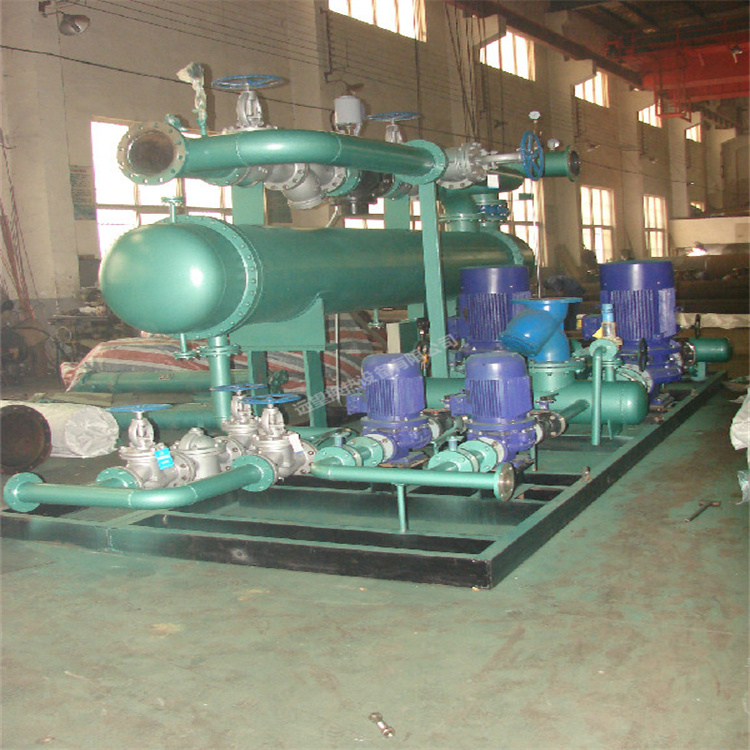
Section 3: Classification of Volume Heat Exchangers
Volumetric heat exchangers can be categorized into three types based on different heat transfer methods: mixed-flow volumetric heat exchangers, regenerative volumetric heat exchangers, and cross-wall volumetric heat exchangers.
Section 4: Volume Heat Exchanger Materials
Shell Material: Carbon Steel, Stainless Steel, Composite Panels
Heat Exchanger Material: Carbon Steel, (304 or 316L) Stainless Steel.
V. Product Description:
An automatic temperature control energy-saving type volumetric heat exchanger, which fully utilizes steam energy, is a new type of water heater that is efficient and energy-saving. Ordinary heat exchangers typically require a water-to-water heat exchanger to reduce the temperature of the steam condensate for reuse. In contrast, the condensate water temperature of the energy-saving heat exchanger is around 75℃, allowing it to be reused directly in the boiler room. This reduces equipment investment, conserves the area of the heat exchanger room, and thereby lowers the construction cost: hence, the energy-saving type volumetric heat exchanger is widely welcomed by design users.
2. Detailed illustration of the working principle of energy-saving volumetric heat exchangers. Available in both vertical and horizontal types.
3. This heat exchanger is suitable for the hot water supply systems in general industrial and residential buildings. The heating medium is steam, with the heating pipe operating pressure of <0.6MPa, the shell operating pressure of 0~1.6MPa, and the outlet hot water temperature of 65°C.
4. Energy-saving type shell-and-tube heat exchangers, available in three shell materials: carbon steel Q235-A, B; stainless steel IGr18Ni9Ti; internally lined with copper in carbon steel. U-tube materials include: T2 copper tubes and ICr18Ni9Ti stainless steel tubes, which can be selected as needed.
5. Horizontal energy-saving models are steel saddle-type supports. Same as international S154, S165. Vertical models are pedestal supports.
6. Heat exchangers must be equipped with a safety device. Among the following three types of safety devices, one can be installed on the exchanger:
(1) Install a safety valve at the top of the exchanger, ensuring the pressure of the safety valve matches the high working pressure of the heat exchanger (this must be stated when ordering from the safety valve manufacturer). The installation and use of the safety valve should comply with the provisions of the Ministry of Labor and Human Resources' "Technical Supervision Regulations for Pressure Vessel Safety."
(2) Install an outlet pipe to the atmosphere at the top of the switchgear (where conditions permit).
(3) Install an expansion tank connected to the water heater to release the expanded water volume.
7. If water contains hardness or salts, scale will form on the heat exchanger walls and tubes when in use, reducing heat exchange efficiency and increasing energy consumption, thereby affecting performance. Therefore, certain softening measures should be adopted.
Six. Construction Features of Volume Heat Exchanger
(1) A group of improved rapid heat exchangers are installed inside the storage tank, completely isolated from the container. They are connected within the container through an outlet pipe on the heat exchanger shell.
(2) The quick heat exchanger features a U-shaped tube design, which optimizes the K-value and increases the heat exchange area significantly, while maintaining an appropriate clear distance between the U-shaped tubes. The heated water side has a large cross-sectional area, resulting in minimal head loss and ease of descaling and maintenance.
Section 7: Performance Characteristics of Volume Heat Exchangers
(1) High heat exchange rate: The heat exchange sections of "HRV-01" and "HRV-02" feature an improved rapid heat exchange structure. They have a high heat transfer coefficient (K value) and a large heat exchange area, offering a single tank heat exchange capacity 1.5 to 2.0 times that of a similar volume conduit-type vessel heater.
(2) High volumetric efficiency; this series of products completely separates the heat exchange and storage sections. The storage section only stores the final hot water from the heat exchange section, with no cold or lukewarm water entering. Therefore, there are no cold or lukewarm water zones inside the tank, resulting in a high volumetric efficiency.
(3) The water head loss on the heated water side is ≤0.5m, maintaining the优点 of low water pressure fluctuations and low head loss in the volumetric water heater, which is beneficial for keeping the system's hot and cold water hydraulic balance.
(4) The heat storage section has an adjustable volume capable of storing ≥15 minutes of the design hourly heat consumption. The heat medium can be supplied according to the design hourly heat consumption without increasing the heat medium load. The temperature change of the heated water inside the tank is relatively smooth, and a reliable, more sensitive temperature control device can meet the requirements for automatic water temperature control.
(5) The heat exchange is quite sufficient. When using saturated steam with a pressure of ≤0.4 Mpa as the heat medium, the condensate outlet temperature is approximately 70~75℃, meeting the general steam boiler requirement of a condensate return water temperature of ≤80℃.
Section 8: Volumetric Heat Exchanger Installation
The foundation for installing the heat exchanger must prevent sinking of the exchanger or transfer excessive deformation to the exchanger's connection flanges through the pipes. The foundation typically comes in two types: one is a brick-built saddle foundation, where the heat exchanger is placed directly on the saddle foundation without saddle supports, allowing it to move freely with thermal expansion without being fixed to the foundation. The other is a concrete foundation, where the heat exchanger is securely connected to the foundation through saddle supports and anchored with foot bolts.
Prior to installing the heat exchanger, a rigorous quality inspection and acceptance of the foundation should be conducted. Key items include: the general condition of the foundation surface; the elevation, plane position, shape, and primary dimensions of the foundation, as well as whether the reserved holes meet the actual requirements; the correctness of the position of the anchor bolts, the condition of the threads, and whether the nuts and washers are complete; and whether the foundation surface for placing shims is level.
After the basic acceptance is completed, place shims on the foundation before installing the heat exchanger. The foundation surface where the shims are placed must be leveled to ensure good contact between them. The thickness of the shims can be adjusted to achieve the designed level height of the heat exchanger. The placement of the shims can enhance the stability of the heat exchanger on the foundation and evenly distribute its weight to the foundation. Shims are available in flat, inclined, and open types. Inclined shims must be used in pairs. Shims should be installed on both sides of the anchor bolts and should not hinder the thermal expansion of the heat exchanger.