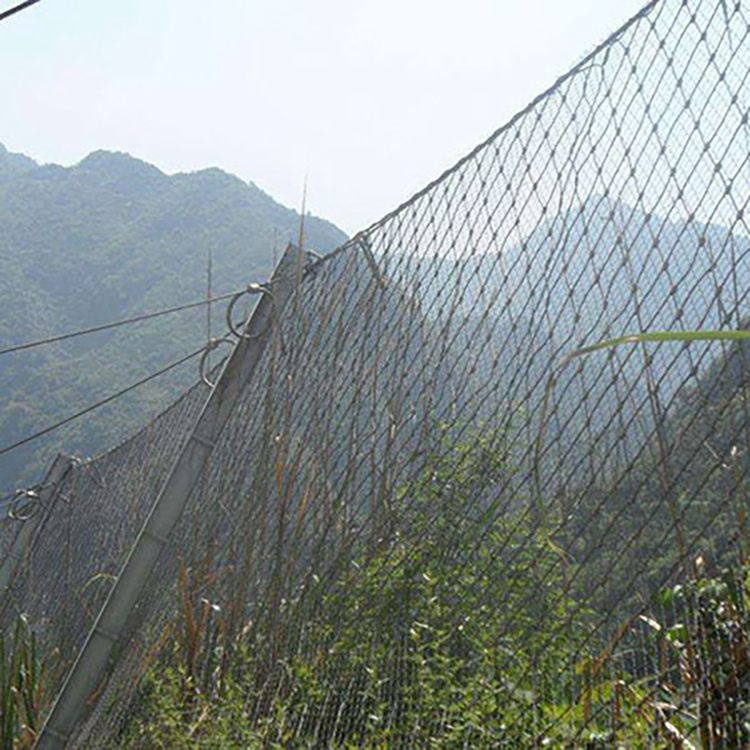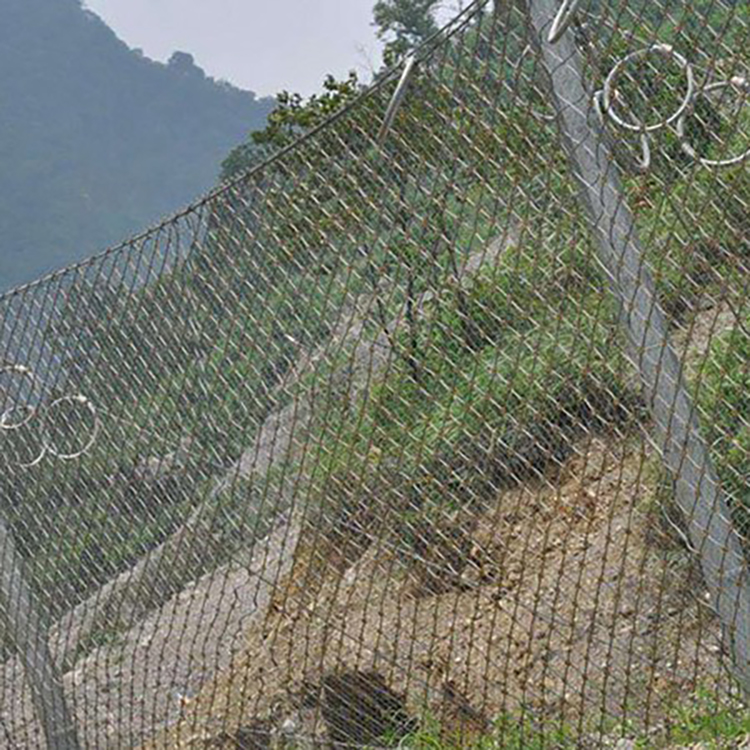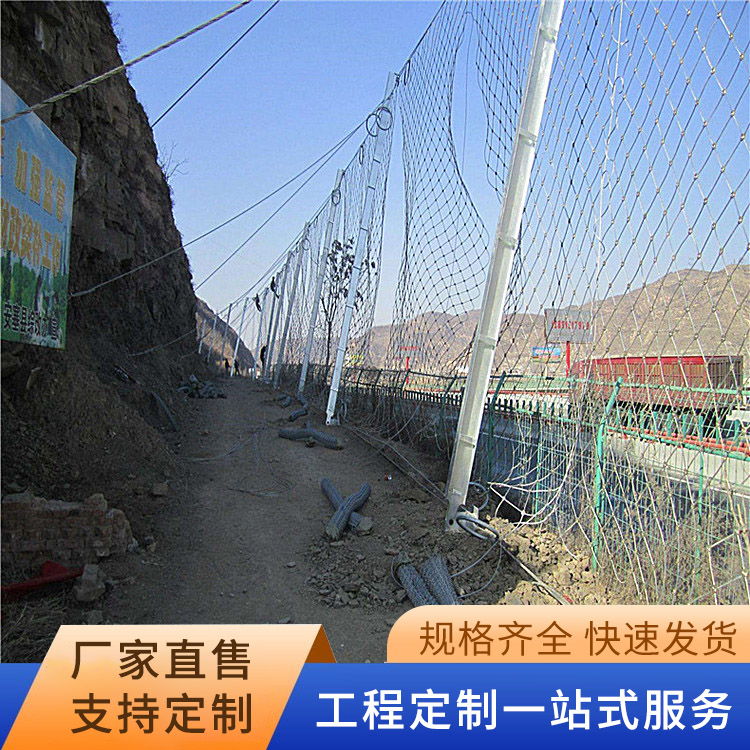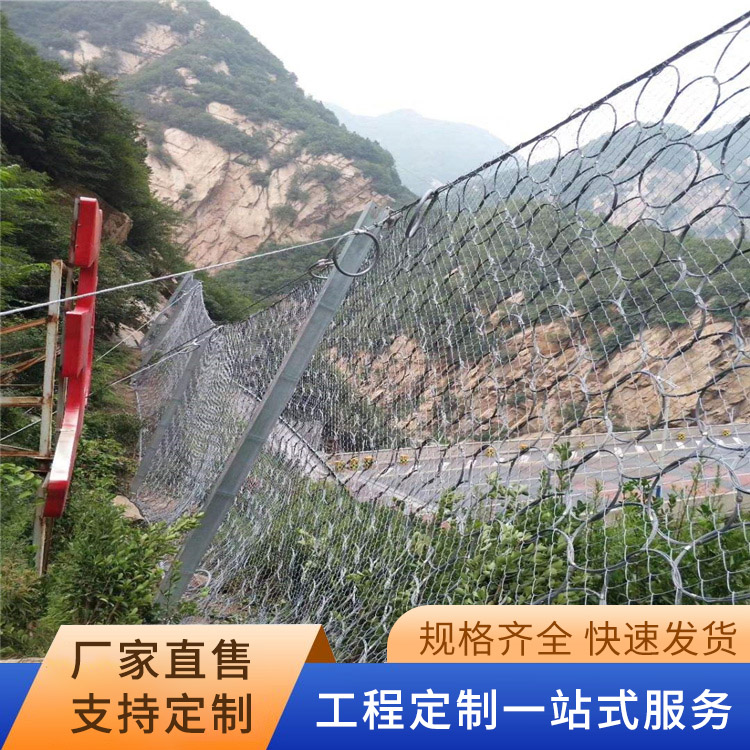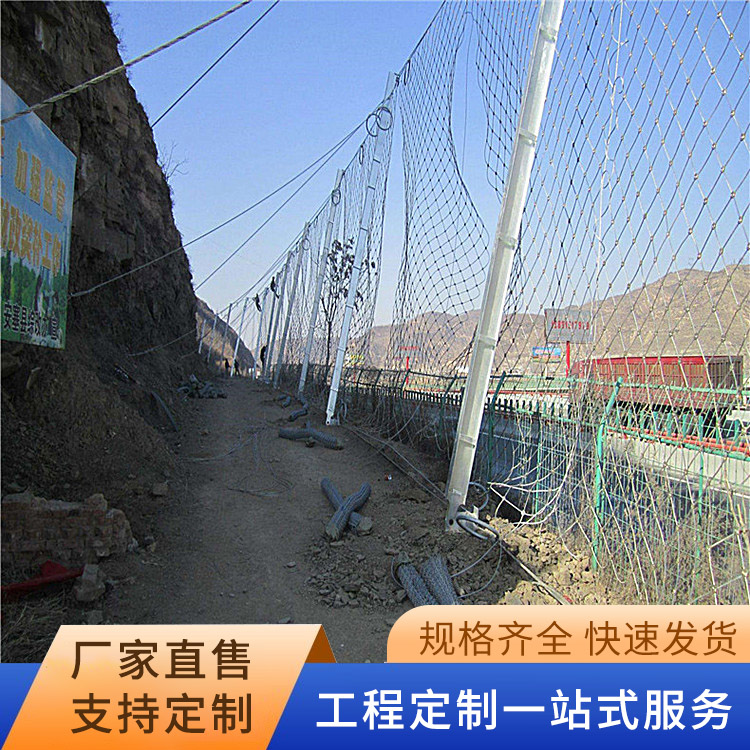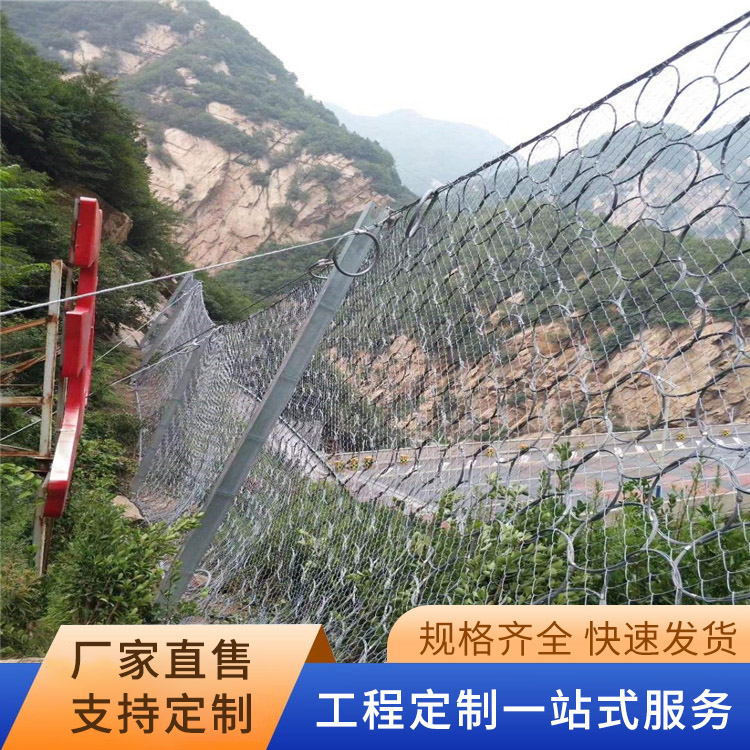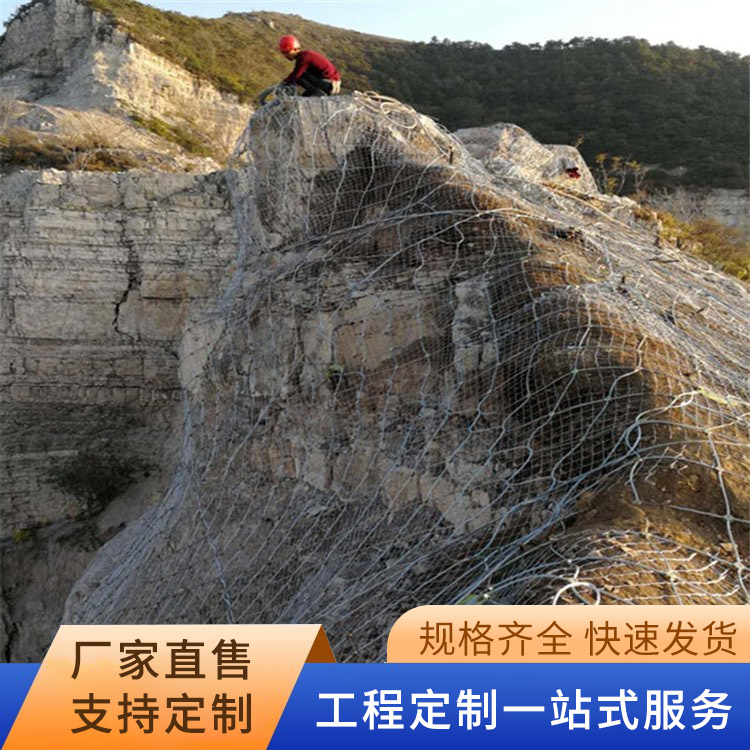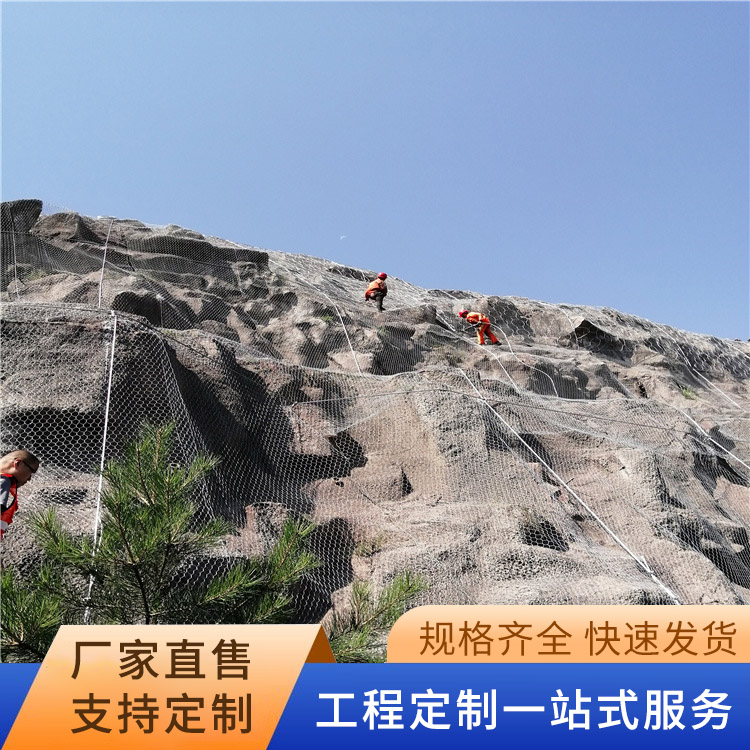

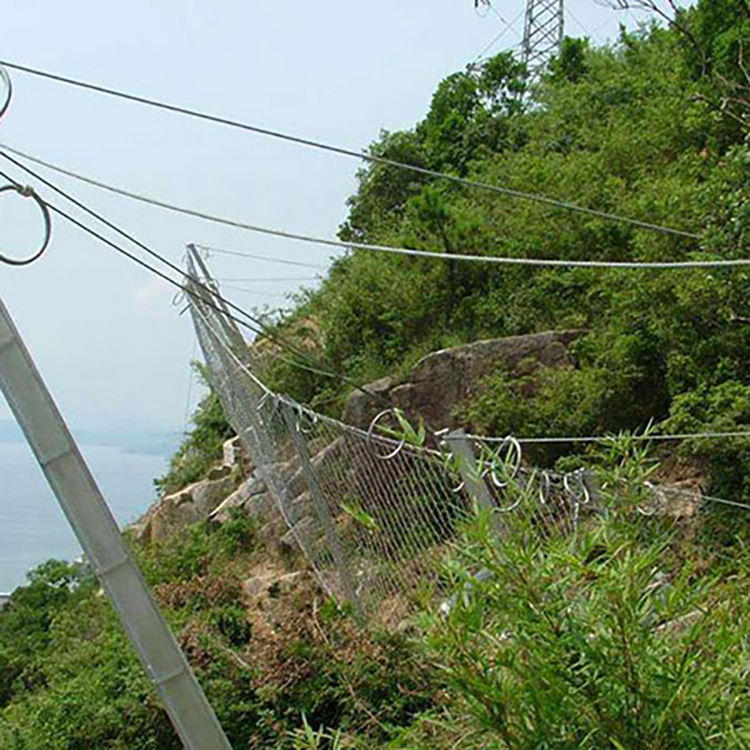

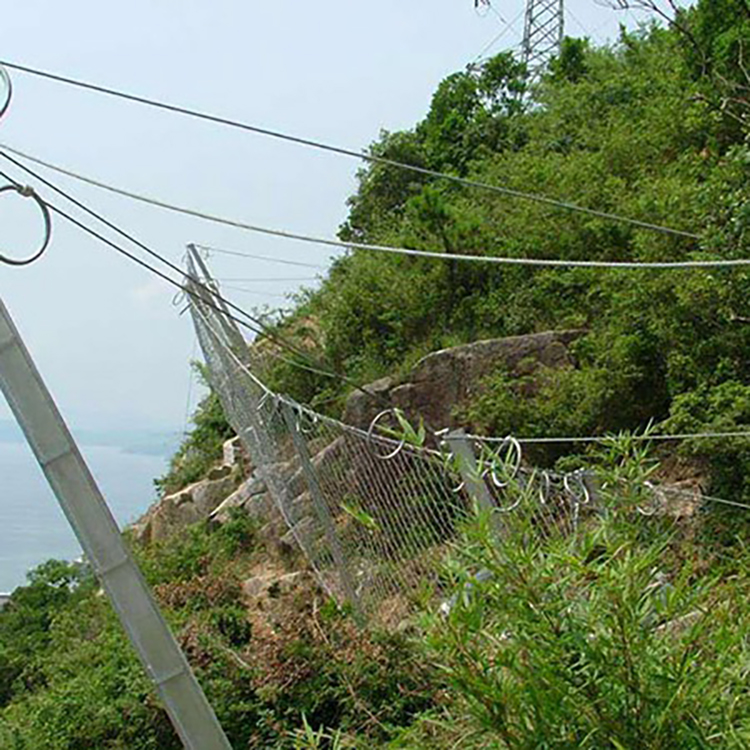
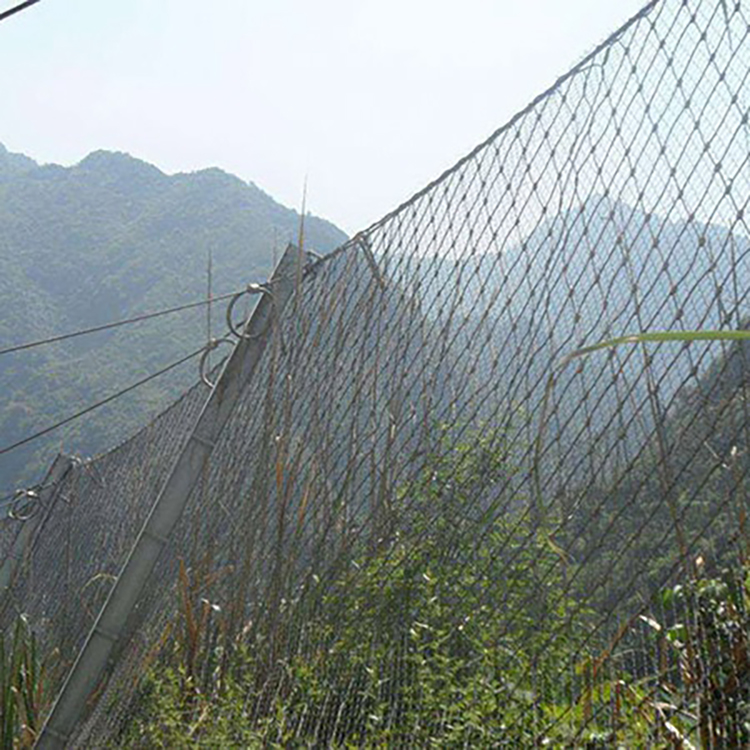


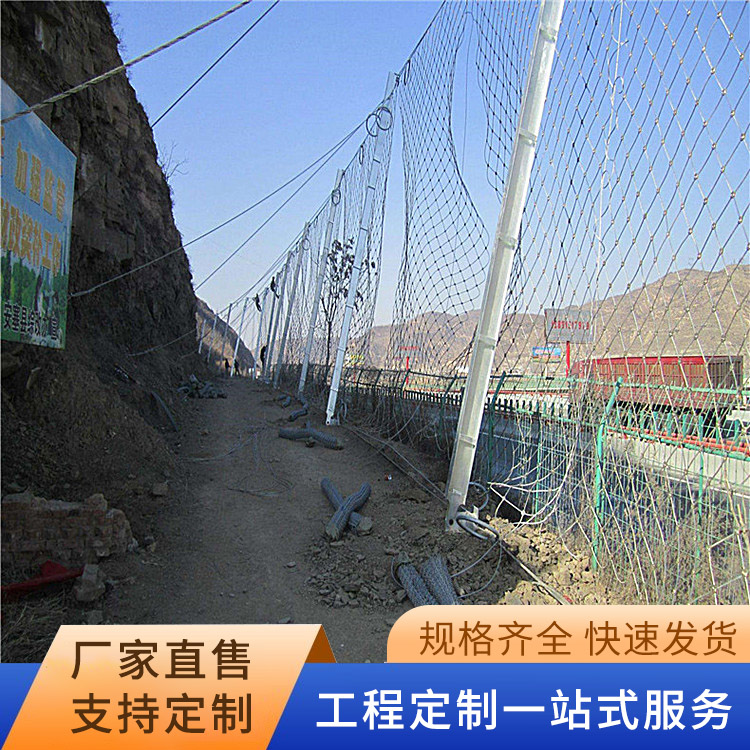
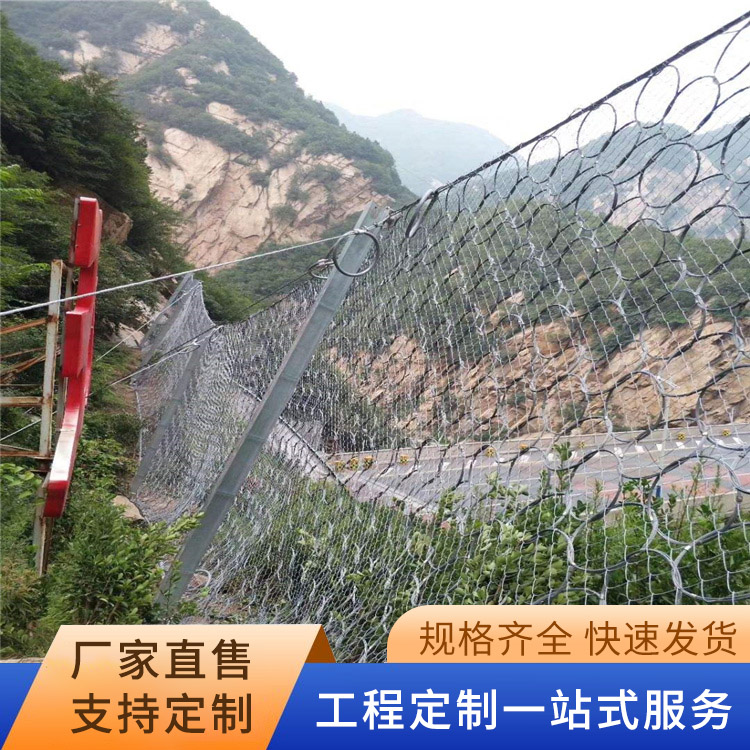





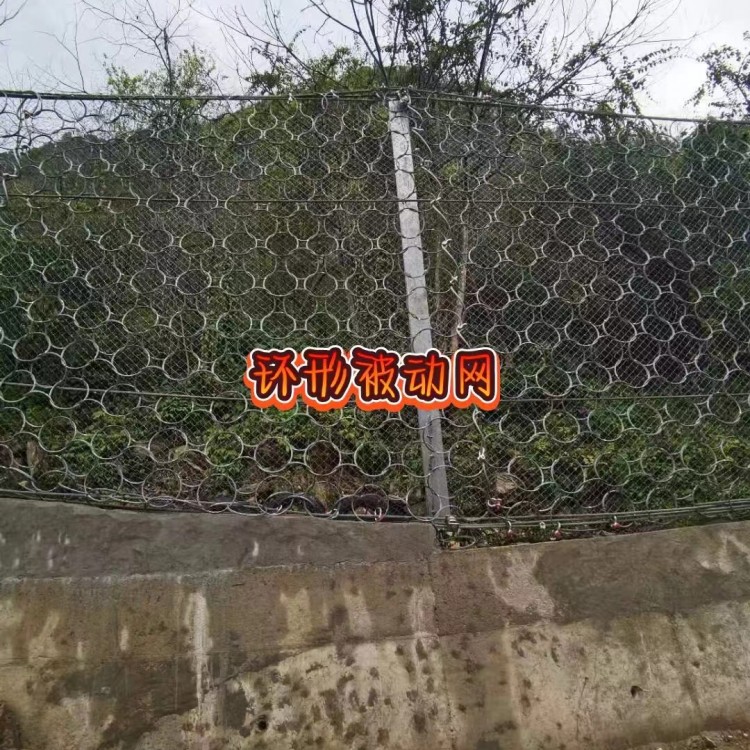


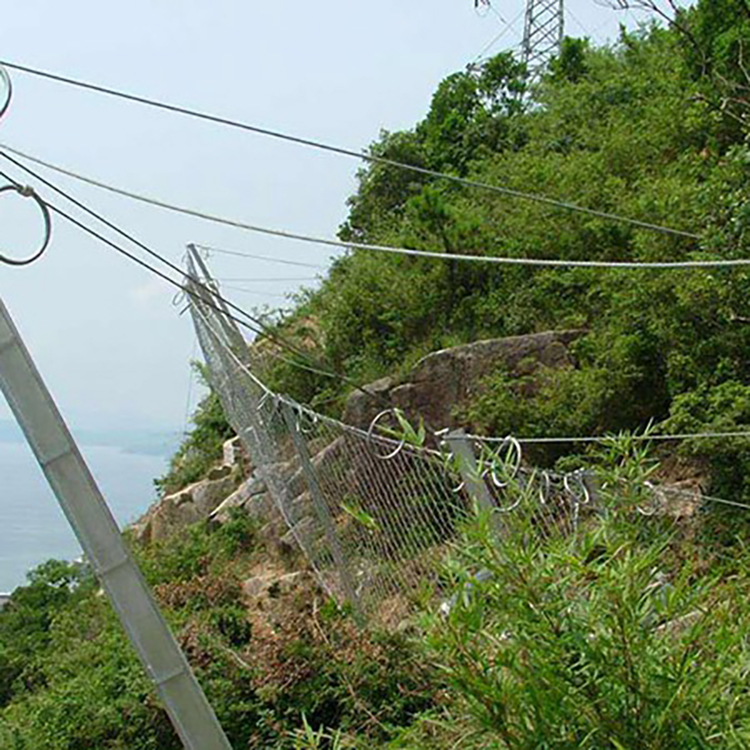
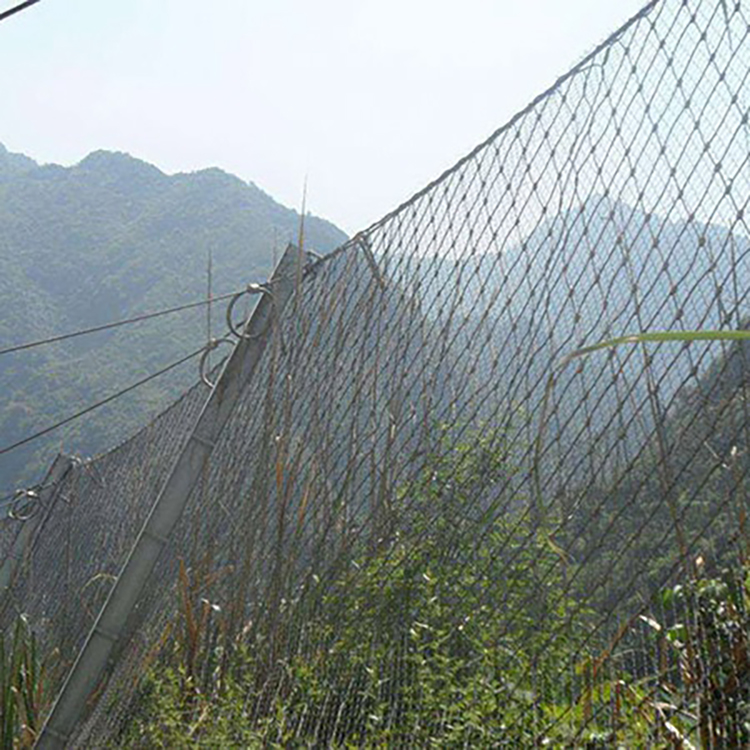
RX-050 Passive Protection Net: Primarily designed to intercept falling rocks with impact energy up to 750kJ, resembling the standard active protection system in appearance, yet primarily functioning through passive protection mechanisms.
Introduction
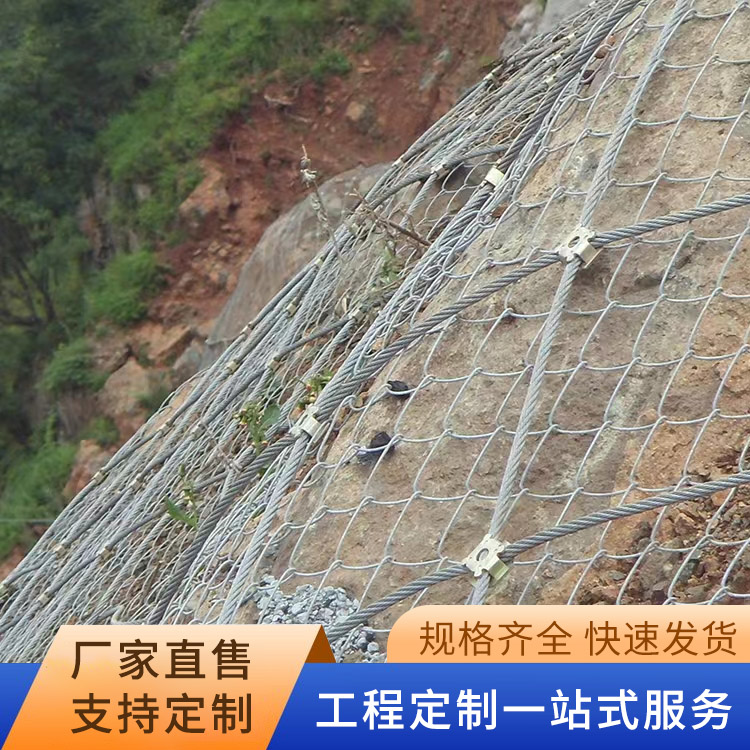
RX-050 Passive Protection Mesh: + Anchor Rope + Sewing Rope + Pressure Relief Ring [Steel Poles (10M Spacing), with Energy Absorption Ring, ∮18 Double Support Ropes and ∮16 "Human" Pull-up Anchor Ropes (10 Energy Absorption Rings per span), ∮18 Side Anchor Ropes (Single Rope), △/08/150/4*5㎡ Steel Wire Rope Mesh, ∮8 Sewing Rope, Grating Mesh]
Primary Functions
Impact-resistant to falling rocks with energy up to 750kJ
Product Features
The system's flexibility and interception strength are sufficient to absorb and dissipate the kinetic energy of expected falling rock impacts. The design and use of the energy-dissipation ring further enhance the system's shock resistance. Compared to rigid interception and concrete wall construction, it modifies the original construction method, reducing both project duration and funding. Product Application: Suitable for high mountainous areas with buffer zones adjacent to building facilities. It intercepts rockfalls, flying stones, avalanches, and mudslides outside the building facilities, thus avoiding damage to the structures from disasters.
The passive protection net is composed of wire rope mesh, high-strength steel wire mesh, anchor bolts, I-beam columns, upper and lower tension anchors, energy-dissipation rings, bases, and upper and lower support ropes. The system is formed by connecting steel columns and steel rope meshes to create an integrated structure, providing slope protection for the protected area, thereby preventing the descent of collapsing rocks and serving as a slope protection measure.
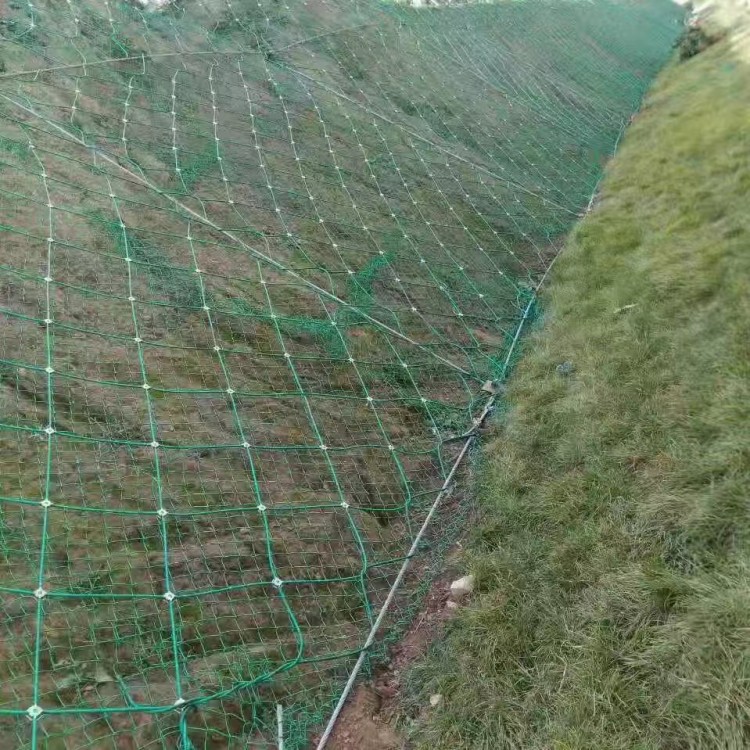
Passive protection netting (including GAR1, GPS1, GER1, GTC-65B), which resembles standard active protection systems in appearance but primarily serves a passive protective function. The main difference from the standard active system, which serves to reinforce, is that it does not require system anchoring and pretensioning to ensure the system is as tightly adhered to the slope as possible. Instead, it naturally covers (drapes) the flexible netting system over the slope with only local anchoring around the edges and inside, even using only the top edge anchoring and support rope for suspension. This forms a simple "curtain" structure. It provides a certain degree of stability and reinforcement to potential falling rocks by relying on the system's own weight, partially limiting the occurrence of collapses, and allows rocks to roll down the slope within a relatively confined space between the system and the slope, ensuring safe descent to the base of the slope or an upper platform without compromising safety. It is an effective and economic method for steep, high slopes with concentrated, frequent rockfall occurrences or difficult slope construction. Its main advantage over passive protection systems is the ease of cleaning or the absence of the need for cleaning, and it avoids the risk of rocks flying over when the protective height of the passive system is insufficient. This method is more economical when the slope height is not too high, and it can be used in conjunction with the passive system under certain conditions. In addition to rockfall protection, this system can also be used for blast rock protection.