

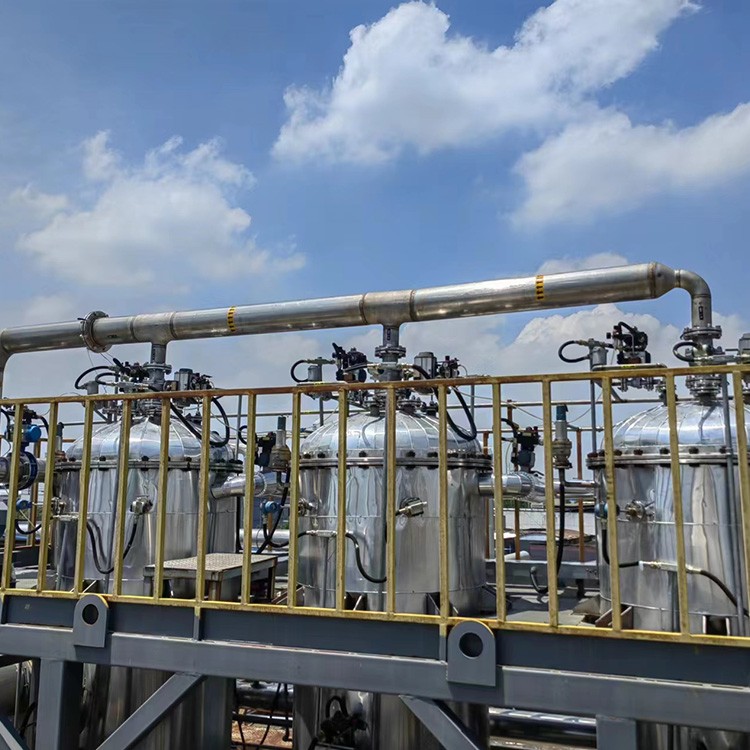
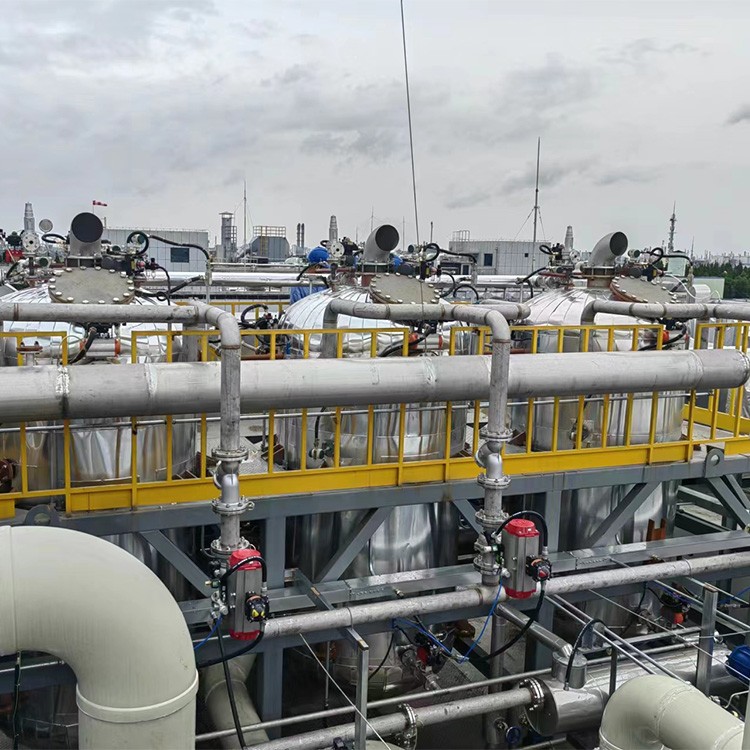
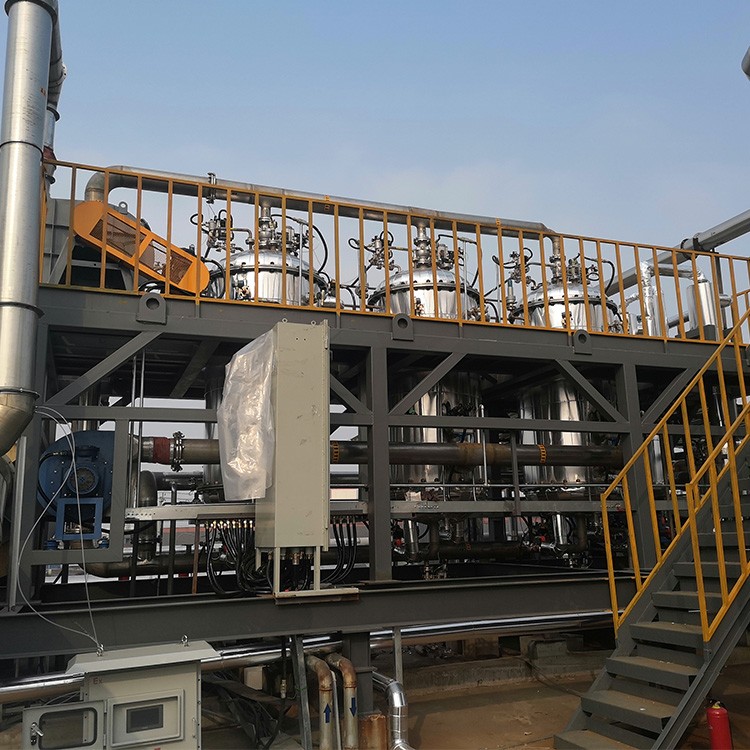














Traditional adsorption-desorption devices face various issues in complex operating conditions, primarily including incomplete desorption, low concentration multiples, and unstable discharge outlets. In response to these challenges and leveraging our company's strengths, we have developed a thermal-assisted vacuum desorption technology.
The thermal-assisted vacuum desorption technology combines thermal desorption and vacuum desorption, leveraging the respective advantages of both. It overcomes the issue of concentration multiplication in the condensation of low-boiling point substances, significantly increasing the concentration factor to over 5000 times. The desorption gas concentration can reach above 95% and is easy to condense. Specifically, dichloromethane (boiling point 39.5℃) can maintain stable operation at a system standard by using only 5℃ of refrigerant; at the same time, this process solves the problem of incomplete desorption in the adsorption-desorption of high-boiling point compounds, raising the applicable boiling point of the adsorption-desorption process to above 250℃, addressing the industry challenge of high-boiling point substances causing the inactivation of adsorbents.
This system achieves one-step compliance with emissions of average concentration below 50,000 mg/m³, with the exhaust outlet emissions stable at below 10 mg/m³. Components with boiling points below 250°C, such as halogenated hydrocarbons, alkanes, alcohols, aromatic hydrocarbons, esters, organic amines, and organic acids, are all applicable to this technology.
Technical Features:
1) High processing efficiency.
2) High desorption efficiency; desorption efficiency can reach over 95%.
3) High concentration ratio; the concentration of the condensed gas can reach above 95% (mass concentration).
4) Fast desorption rate; completes desorption and cooling processes within 120 minutes.
5) No wastewater generated; no steam introduced, no wastewater produced.
6) No risk of spontaneous combustion or explosion; desorption vacuum is high, the system lacks the conditions for combustion and explosion.
Application Fields:
1) High-concentration breathing exhaust from the tank area
2) Reactor exhaust gas discharge
3) Vacuum Pump Exhaust
4) Non-condensable gas in the condenser
5) Printing and lamination high concentration waste gas