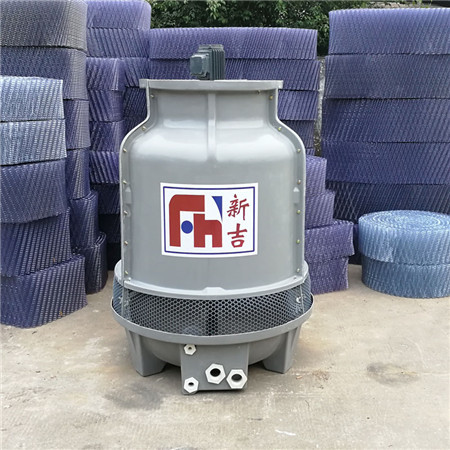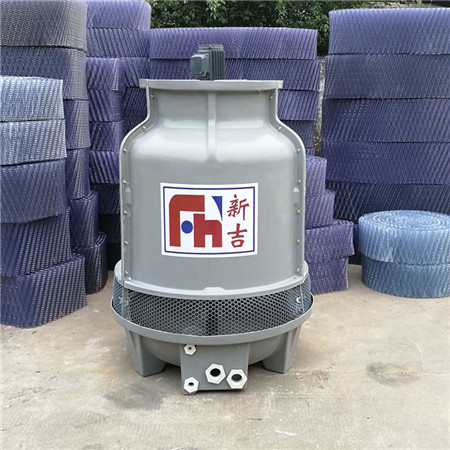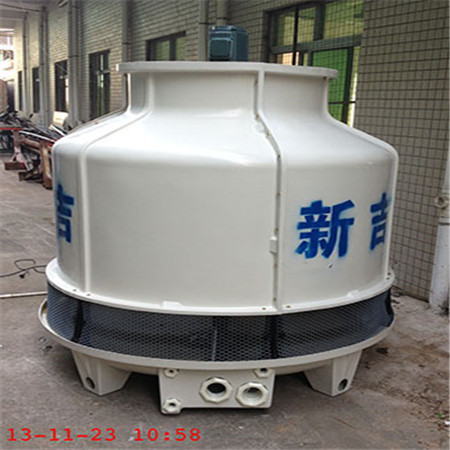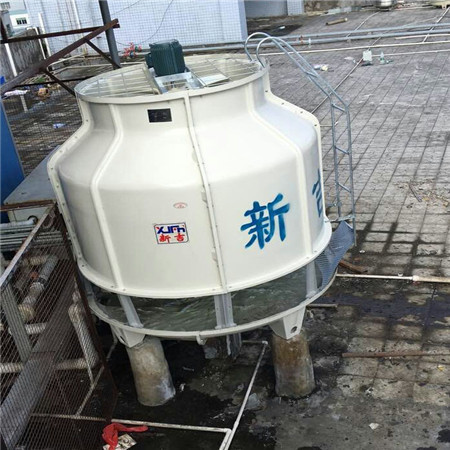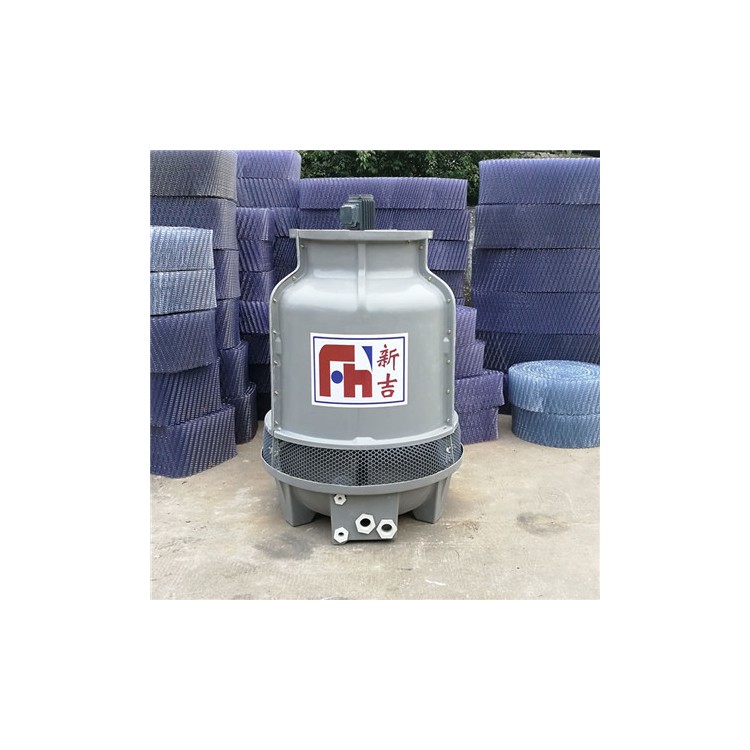

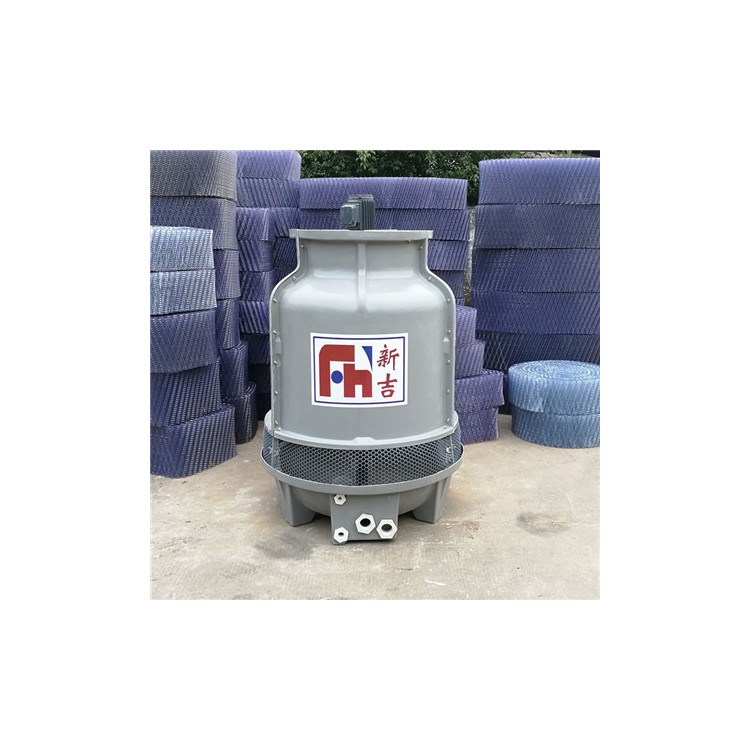

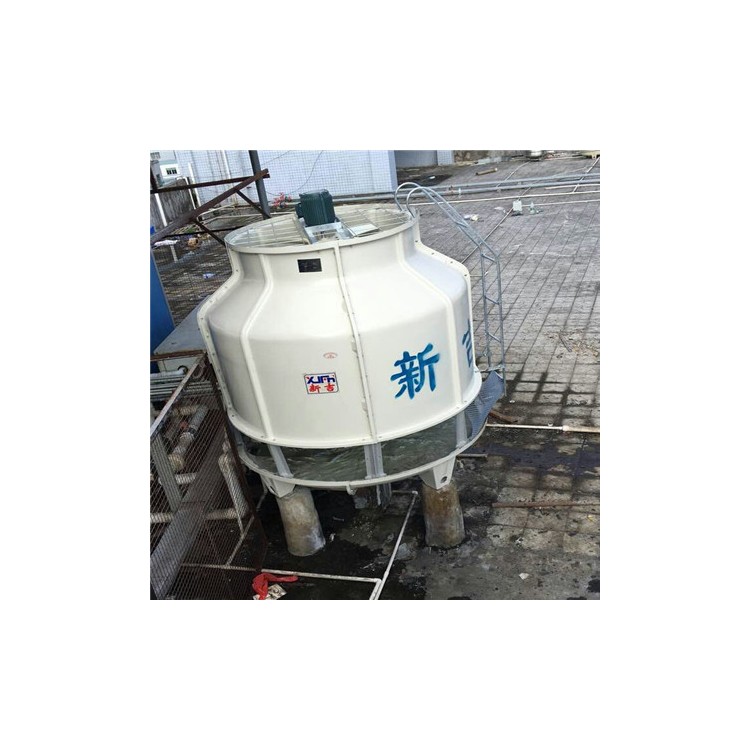












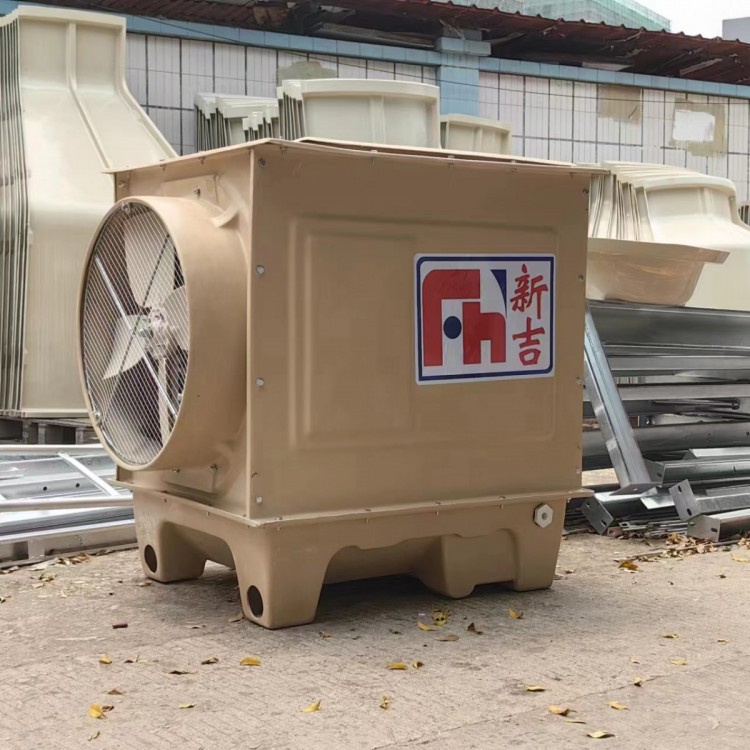
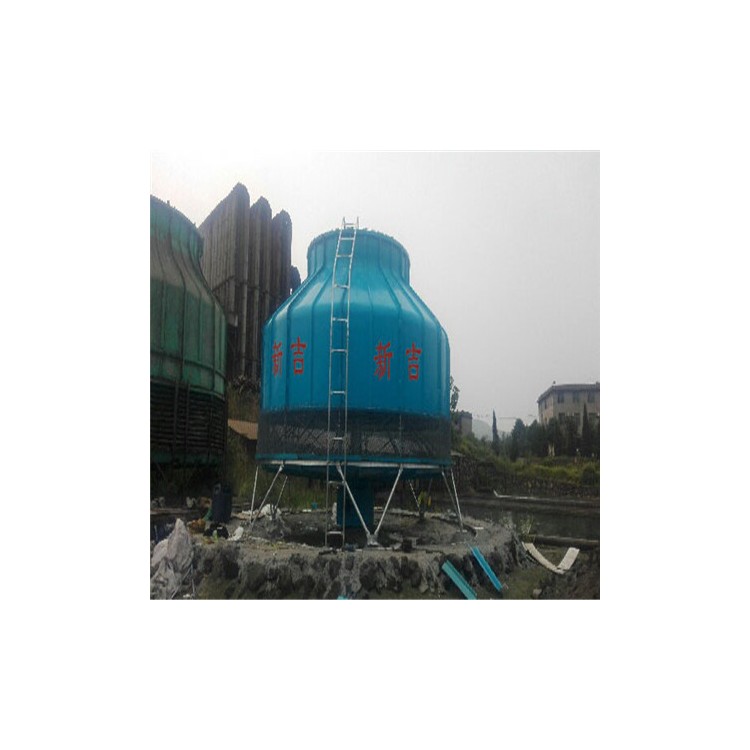
A circular cooling tower is a common cooling equipment with a round main structure, utilizing counterflow air-to-heat exchange technology. It is primarily constructed of steel, often featuring glass-steel panel enclosures externally to enhance durability and corrosion resistance. The interior of the circular cooling tower is equipped with a maintenance ladder, facilitating regular maintenance and management of the equipment on top of the tower.
The working principle of a circular cooling tower is to press hot water from the main room through a pump to the spray system of the cooling tower at a certain pressure. The hot water is uniformly sprayed onto the packing material through small holes in the spray pipes. At the same time, dry, low enthalpy air enters the tower from the bottom under the action of the fan. When the hot water flows over the surface of the packing material, it forms a water film that exchanges heat with the air. As a result, the high humidity, high enthalpy hot air is exhausted from the top, and the cooled water droplets fall into the sump, then returned to the main room through the outlet pipe.
The advantages of round cooling towers include reliable operation, relatively low cost, light weight, and low wind resistance, which contribute to their stability. Additionally, they feature a large collecting basin, are equipped with manual and automatic water replenishment systems, as well as drain and overflow pipes, eliminating the need for an additional water pool, thus providing convenience for users.
Circular cooling towers are widely used in various cooling applications, particularly in hotels and public buildings near residential areas with strict noise requirements. Their high efficiency and environmental-friendly features make them indispensable in these fields.
When selecting a circular cooling tower, the user needs to consider its performance, quality, price, and after-sales service. At the same time, the user should choose the appropriate model and specifications based on their actual needs and usage environment. For instance, in situations requiring the handling of large volumes of hot water, a cooling tower with higher processing capacity may be necessary; while in cases with strict noise requirements, a cooling tower with better noise reduction effects is needed.
In summary, circular cooling towers are a highly efficient, reliable, and widely-used cooling equipment. With continuous technological advancements and market development, the performance and quality of circular cooling towers will continue to improve, better meeting the needs of users.