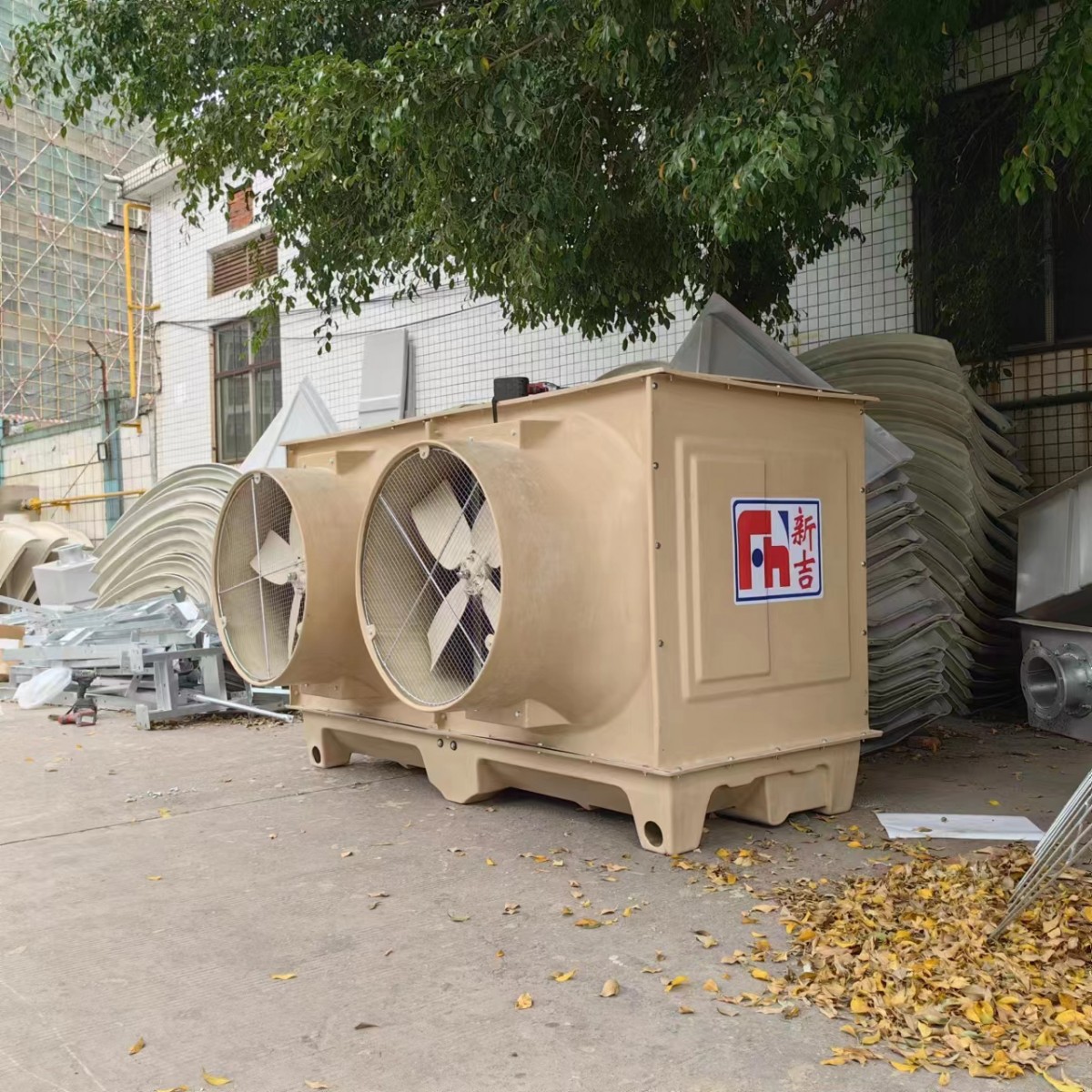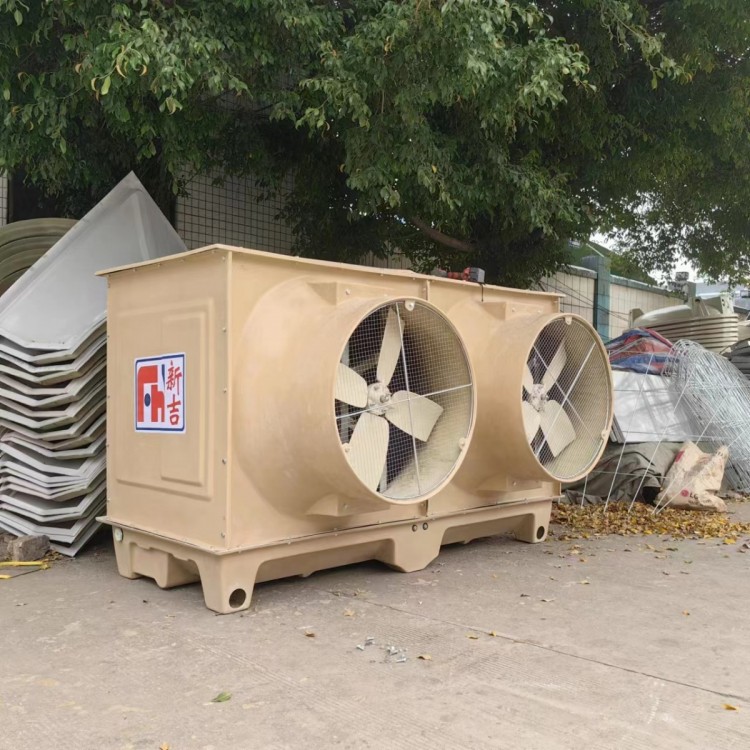
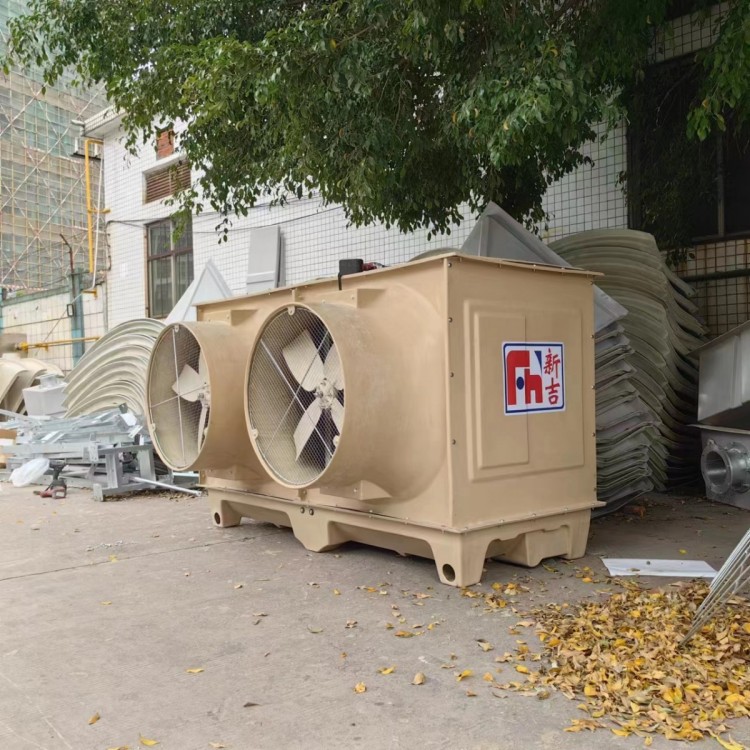
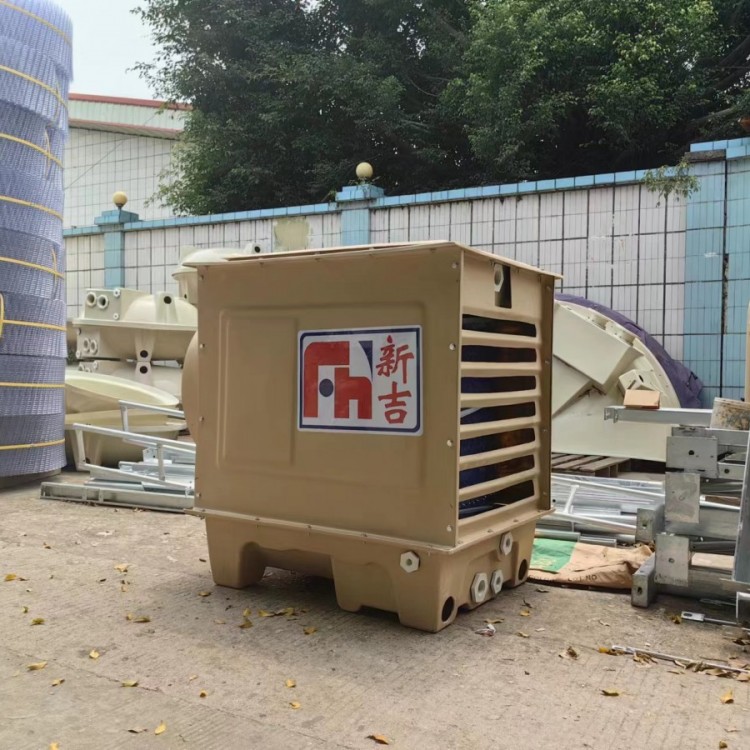












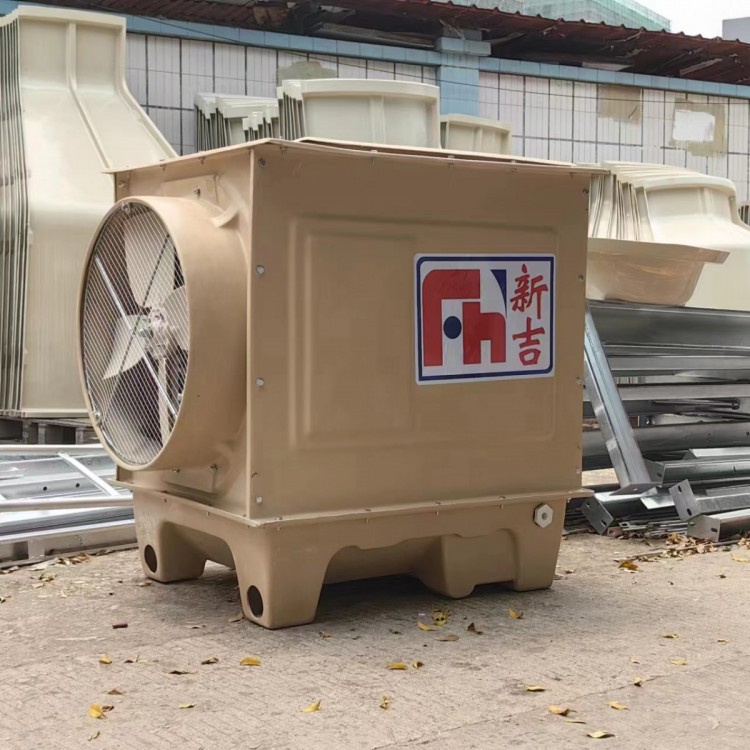
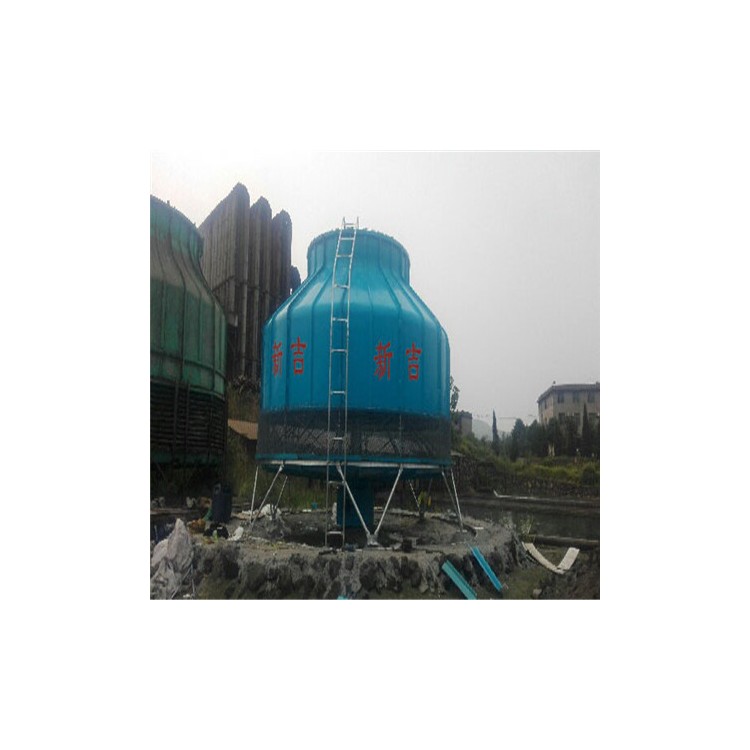
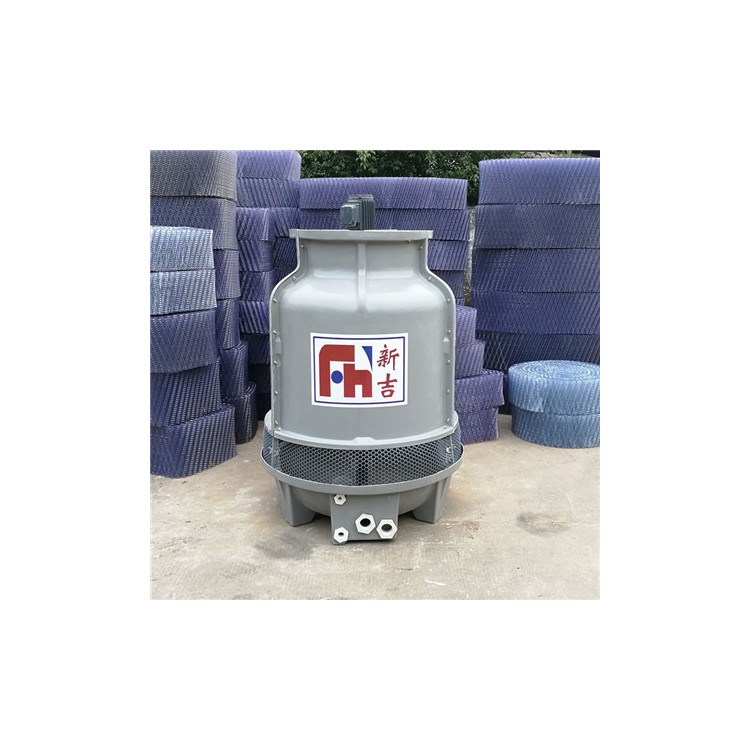
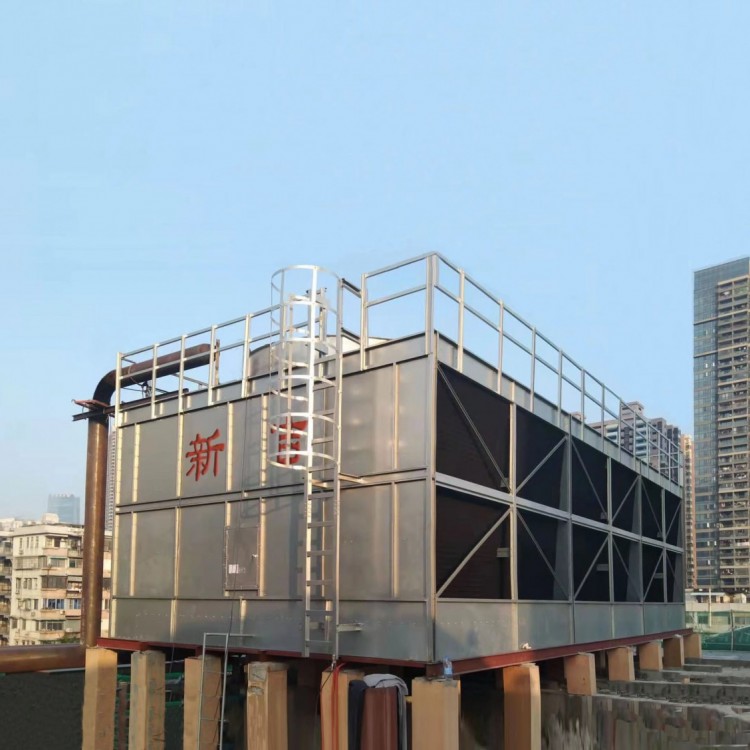
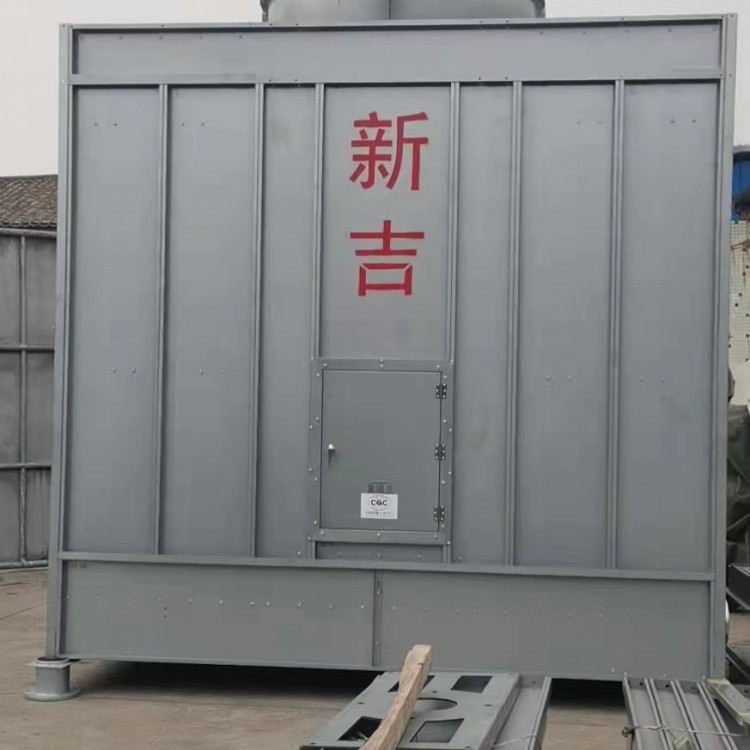
Side-exhausted wind small square tower, also known as side-blowing wind cooling tower, operates primarily based on the principles of heat exchange and air flow. Below is a detailed explanation of the working principle of the side-exhausted wind small square tower:
Heat exchange processIn the side-exhausted wind small tower, hot water or hot fluid is introduced into the tower through pipes or a spray system. These hot water or hot fluids come into contact with the packing material inside the tower, which increases the heat exchange area, allowing the water to better exchange heat with the passing air. Through heat exchange, the heat from the hot fluid is transferred to the passing air.
Side-blowing air systemThe distinctive feature of the Side Airflow Small Square Tower is its side-blowing air system. Unlike conventional cooling towers, the fan of the Side Airflow Small Square Tower is installed on the side of the tower, creating a side airflow. When the fan is activated, it generates a powerful air current, drawing in external air into the tower and passing it through the packing area.
Cooling effectAfter absorbing heat from hot water or hot fluid, the heated air through the filling material becomes warm and moist. The side-blowing air system exhausts this warm air from the side of the tower, effectively transferring and dissipating the heat. Simultaneously, new cold air is continuously drawn into the tower, continuing the heat exchange with the hot water to maintain the continuous cooling process.
Energy-saving and environmental protectionThe design of the side-exhausting small square tower typically takes into account energy-saving and environmental protection requirements. By optimizing the packing structure, fan configuration, and control system, energy consumption can be reduced and cooling efficiency improved. Additionally, some advanced side-exhausting small square towers are equipped with noise control devices to lower noise pollution during operation.
In summary, the working principle of the side-exhausted small square tower is primarily based on heat exchange and side-blowing air systems. It effectively transfers heat from hot water or hot fluids to the air and expels the hot air through the side-blowing system, achieving cooling effects. This design endows the side-exhausted small square tower with advantages of high efficiency, energy saving, and environmental protection in specific application scenarios.