












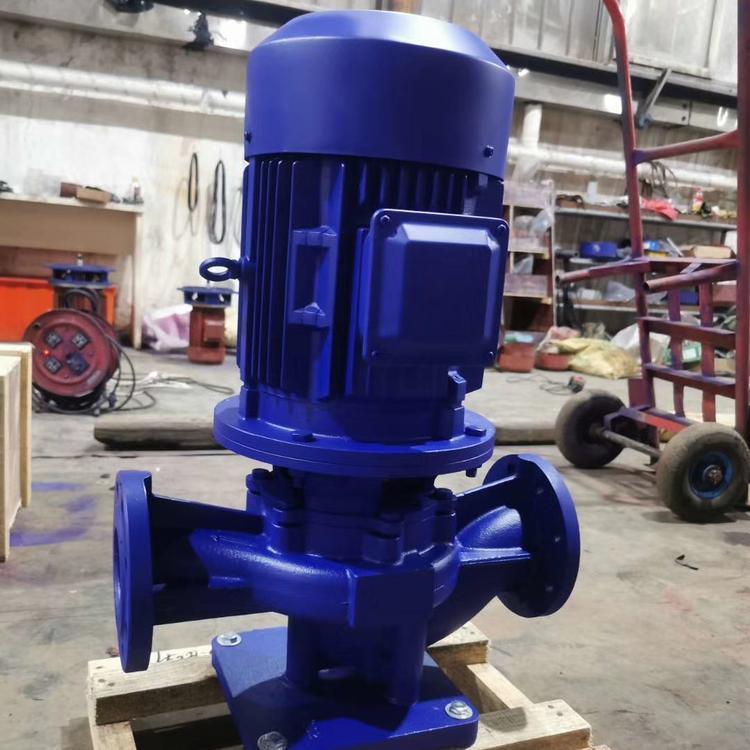
Submersible Pump Coupling Assembly
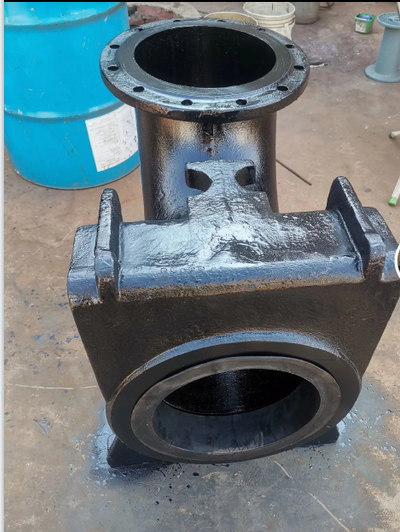
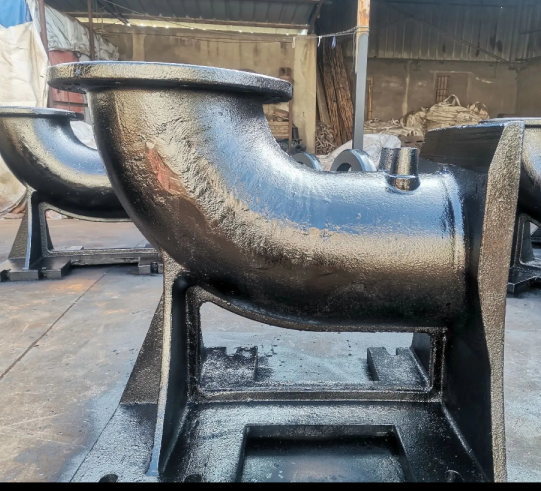
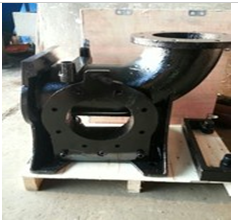
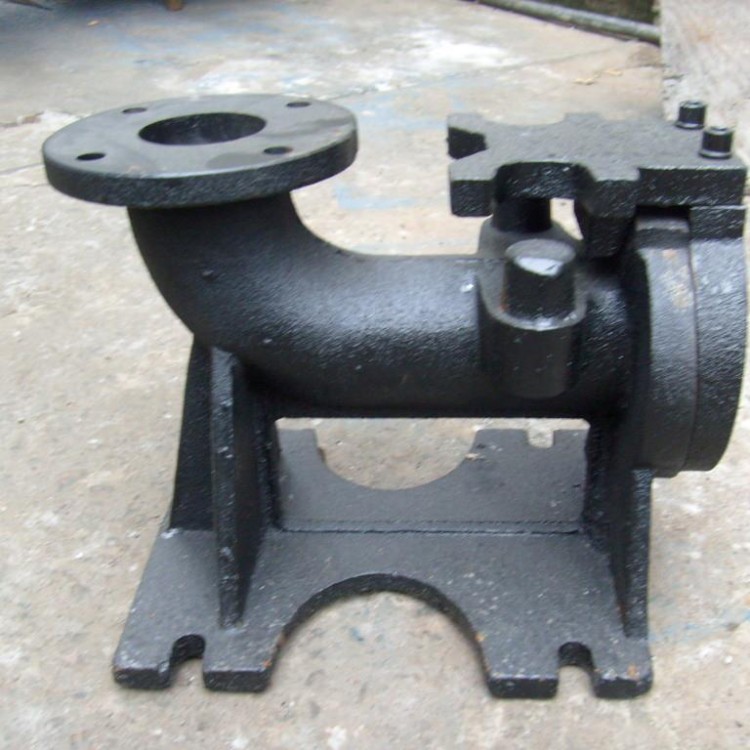
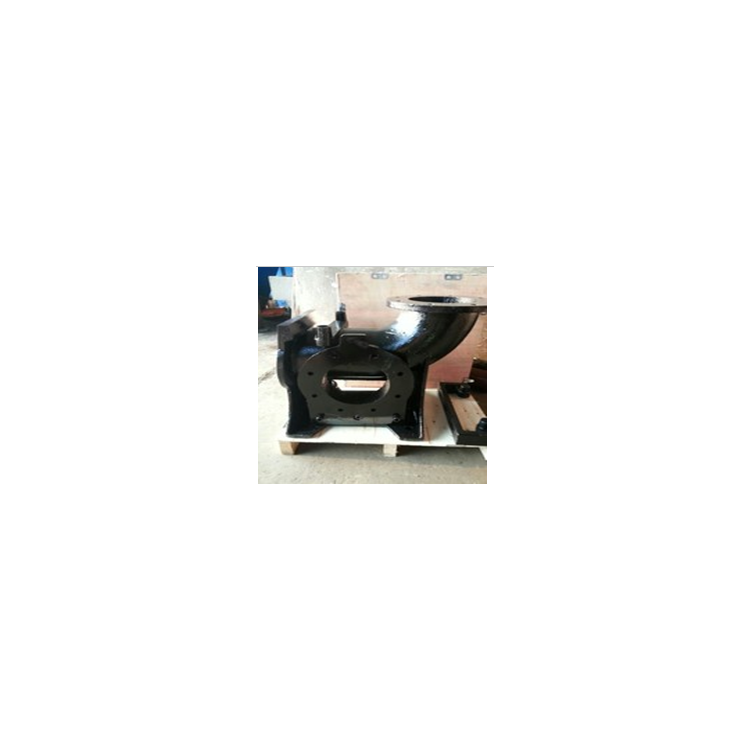
DN150 Coupling Assembly
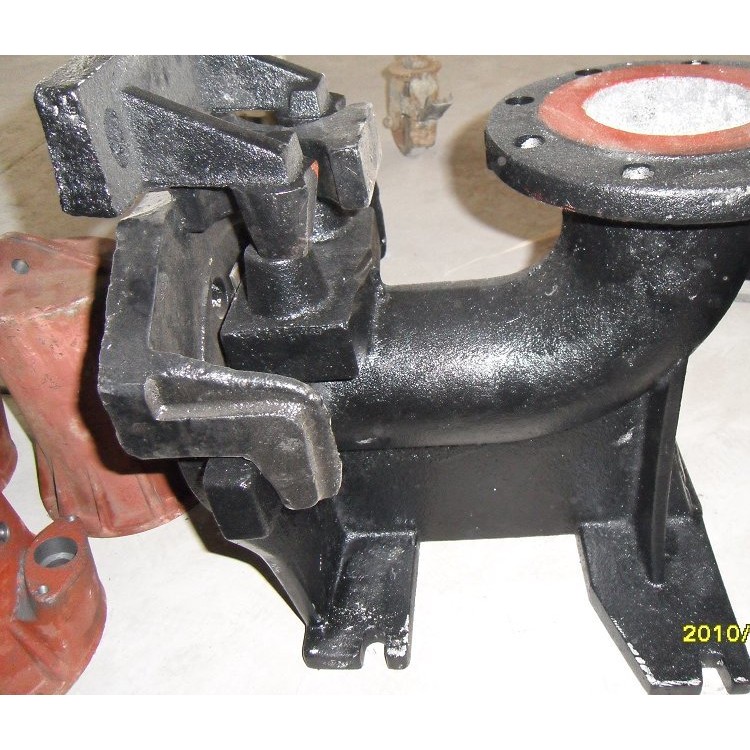
Coupling Installation Diagram
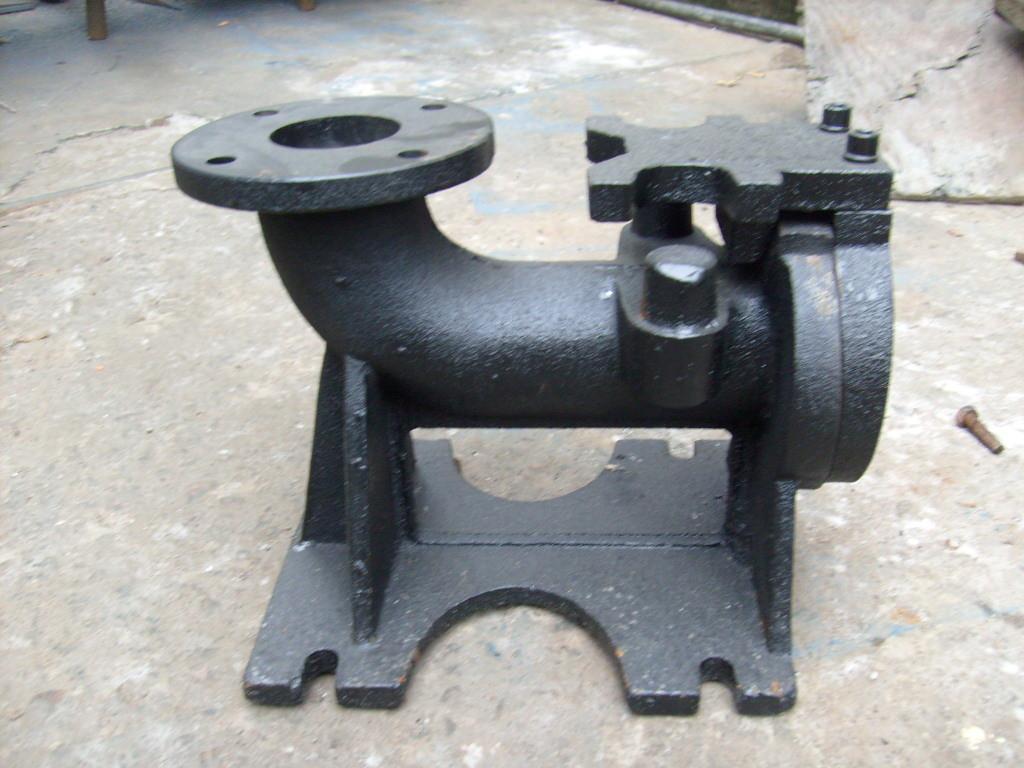
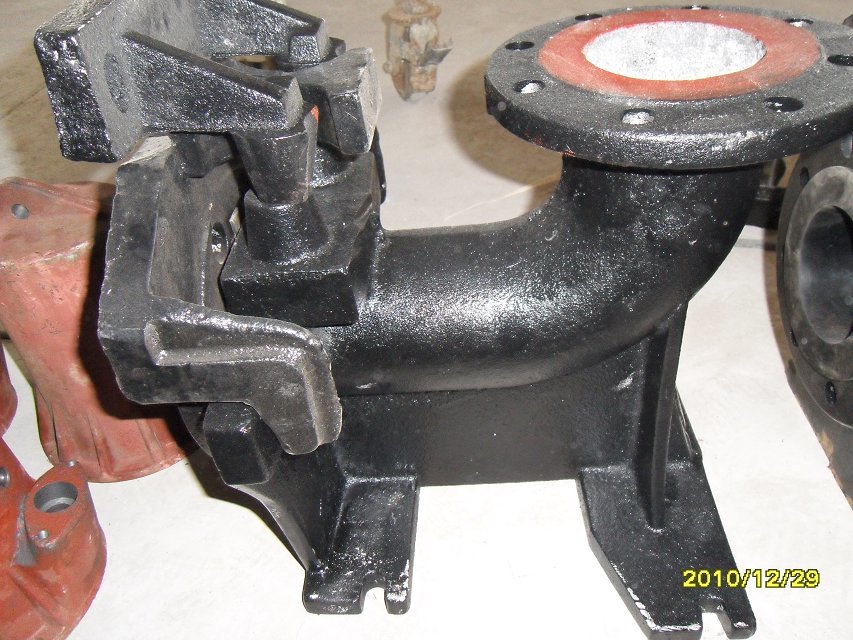
DN150 Submersible Sludge Pump Auto-Coupling Unit Structure Type:
The working principle of the submersible pump automatic coupling device is to accurately deliver the pump to the installation location through the guidance of a track, and then connect and tighten the pump's outlet to the drain base's auto-coupling interface using the pump's own weight. Although the basic structure is the same, upon closer inspection, domestic manufacturers' coupling device designs still have a certain gap compared to foreign products. Foreign coupling devices are stronger, more robust, easier to couple and uncouple, and offer more reliable pipe-to-pipe sealing.
International automatic coupling systems utilize a dual-rail assembly and a gripper-type positioning device, which smoothly guides the pump onto the mounting bracket of the base. During installation and disassembly, the separation of the two rails makes positioning extremely convenient and stable. For special hazardous environments, explosion-proof grippers are also available. To ensure a reliable and leak-free installation, replaceable elastic seals are used to seal the connection between the base bracket and the pump. These seals can be easily and inexpensively replaced whenever the pump is removed for maintenance. When the pump is in place, the connecting gripper, supported by the bracket's rotation, securely positions the pump. The mating surfaces of the bracket and gripper fit together stably. Thus, the automatic coupling device secures the pump installation more firmly, preventing tilting, leakage, and improper vibration. Additionally, it allows for easy and reliable disassembly when the pump needs to be removed.
Submersible Pump Auto-Coupling Device Product Overview:
Self-coupling installation for submersible污水pump is an automatic coupling device that automatically connects the submersible pump's outlet flange with the outlet pipeline system. It consists of the submersible pump's outlet flange, an additional coupling flange, and an outlet pipe saddle inlet flange. Each side of the additional coupling flange and the outlet pipe saddle inlet flange has a pair of wedge cards, with the wedge points located near the horizontal centerline of the flange. As the submersible pump descends from above the water pit, the wedge cards on both sides of the additional coupling flange and the outlet pipe saddle inlet flange lock together. Under the weight of the submersible pump and the action of the inclined surface of the wedge cards, the two flange surfaces are tightly pressed together, as if two flanges are tightly fastened with two bolts. Even with high water pressure from the submersible pump, the flange surfaces cannot be pushed apart and allow for extensive leakage. When the submersible pump is lifted out of the water pit, the two pairs of wedge cards can easily disengage along the inclined surface, thus functioning as an automatic coupling device. It allows for convenient automatic assembly and disassembly of the submersible pump while solving the issue of extensive leakage between the two coupled flanges, thereby saving energy.
Submersible sewage pumpDN150 Automatic Coupling Device, including the coupling base, coupling slider, guide rod, and top fixing plate. The contact surface between the coupling base and the coupling slider features annular grooves, with tightly fixed soft sealing gaskets. This structure ensures a secure seal between the coupling slider and the coupling base, thanks to the annular sealing grooves.
Submersible sewage pumps are designed with a soft seal gasket that is tightly fitted in a groove. When the coupling slide and base are coupled together, the gasket will not fall out of the groove due to relative movement between the two contact surfaces, ensuring the sealing integrity of the two interfaces. A submersible sewage pump is a type of pump that is integrated with an electric motor and operates submerged in liquid.
Advantages of潜水排污泵 with Automatic Coupling Device:
1. Compact structure with minimal land use. Waste pumps, as they operate submerged in liquid, can be directly installed in sewage ponds, eliminating the need for a dedicated pump house. This saves a considerable amount of land and construction costs. Easy installation and maintenance. Small waste pumps can be installed freely, while large models usually come with an automatic coupling device for easy installation and maintenance.
2. Long continuous operation time. The sewage pump, with the pump and motor on the same shaft and a short shaft, has a light weight of rotating parts, resulting in a relatively smaller load (radial) on the bearings, thus a much longer lifespan than general pumps. There is no cavitation damage or issues with filling and leading water. Especially the latter point greatly facilitates the operators.
3. Submersible sewage pumps, submerged drainage pumps, and vertical sewage pumps are used for building drainage.And horizontal sewage pumps, etc. Due to the generally smaller space inside buildings, with low drainage volume, submersible sewage pumps and submerged drainage pumps can be used for drainage pumps, among which the submerged sewage pumpGenerally used in important locations; vertical and horizontal sewage pumps require vibration-isolation foundations, self-priming suction, and occupy a certain amount of space, hence they are less commonly used in buildings. The flow rate of drainage pumps should be selected based on the design second flow rate for domestic wastewater discharge.
4. In cases where drainage volume adjustment is available, it can be adjusted for domestic drainage.Peak timeHourly flow selection. The drainage pump flow in the fire elevator sump should not be less than 10L/s. After the head lift and pipe loss are calculated for the drainage pump, an additional free water head is added. The free water head is preferably 0.02 to 0.03 MPa. The flow velocity of the suction and discharge pipes of the drainage pump should not be less than 0.7m/s and not exceed 2.0m/s. In public buildings, one standby pump should be set for each domestic drainage sump, and they should be alternately operated during normal times. For basement, equipment rooms, and garage floor washing drainage, no pump is required if there are two or more drainage pumps.
5. If an accident drainage pipe cannot be installed for the sedimentation basin, the pump should have a continuous power supply. If the inflow drainage pipe can be shut off, continuous power supply may not be necessary, but an alarm system should be set up.
6. When lifting wastewater with high levels of impurities, the discharge pipes from submersible sewage pumps in different sump chambers should not be combined for discharge.
7. When upgrading general wastewater treatment, consider merging the discharge pipes from different sump pumps based on actual conditions. When two or more pumps share a single discharge pipe, valves and check valves should be installed on each pump's discharge pipe. A check valve should be installed if there's a possibility of backflow when a single pump is draining. Combining pressure drainage with the gravitational drainage pipes within the building is not permitted.
8. When the submersible sludge pump elevates debris containing large solids, it is advisable to have a crushing device. When lifting wastewater containing a high amount of fibrous matter, a large-hatch submersible sludge pump should be used. A pump fixed self-coupling device can be adopted when the motor power is 7.5kW or greater, or when the outlet pipe diameter is DN100 or greater.
9. For submersible effluent pump motors with power less than 7.5kW or outlet pipe diameters less than DN100, a flexible hose mobile installation can be used. When using submersible effluent pumps to drain sewage collection ponds, a fixed self-coupling device for the pump should be installed for easy maintenance. The drainage pump should be capable of automatic start/stop and on-site manual start/stop. Multiple pumps can be connected in parallel for alternating operation, or can be operated in sections.
Quick-connection device for submersible sewage pumps, belonging to the pipeline connection field, is composed of guide rails, guide wheels, fixed outlet elbow, coupling plate, connection plate, limit rod, etc. Its characteristic is that the pump housing is connected and sealed with the fixed outlet elbow through these components without the need for bolts, ensuring the center alignment. This allows for pump maintenance without the need to descend into the well for disassembly, and the pump housing can be directly lifted up and the installation simply involves lowering it down along the guide rail.
Automatic coupling device, including the coupling base, coupling slider, guide rod, upper fixed plate, and type face washer, on the coupling base, bracket, and type face.
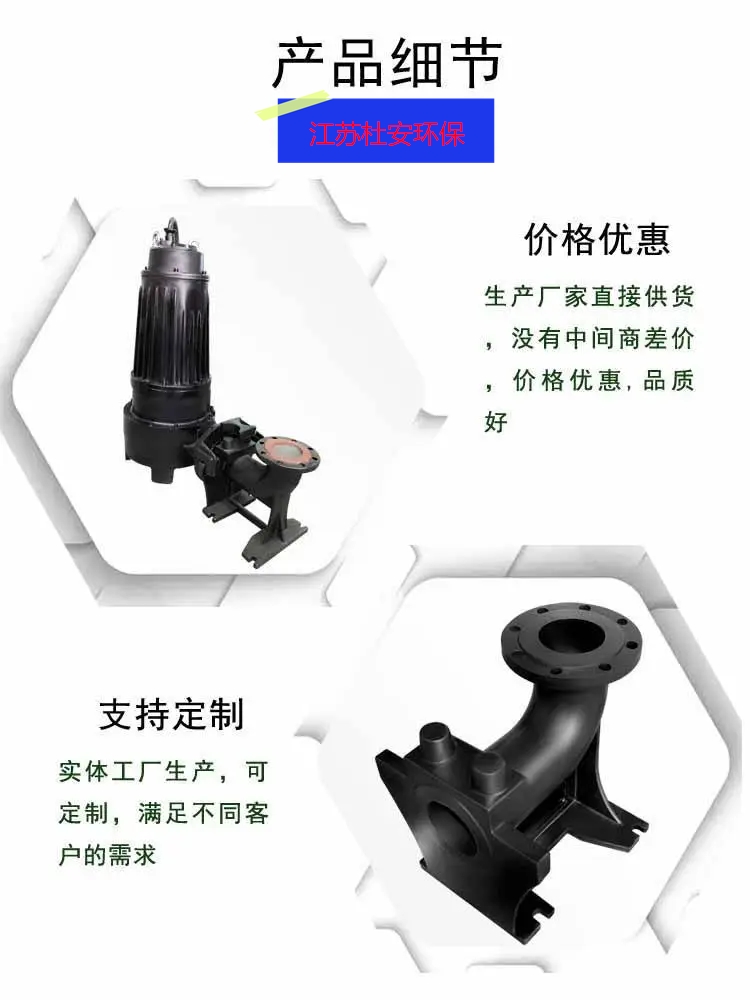
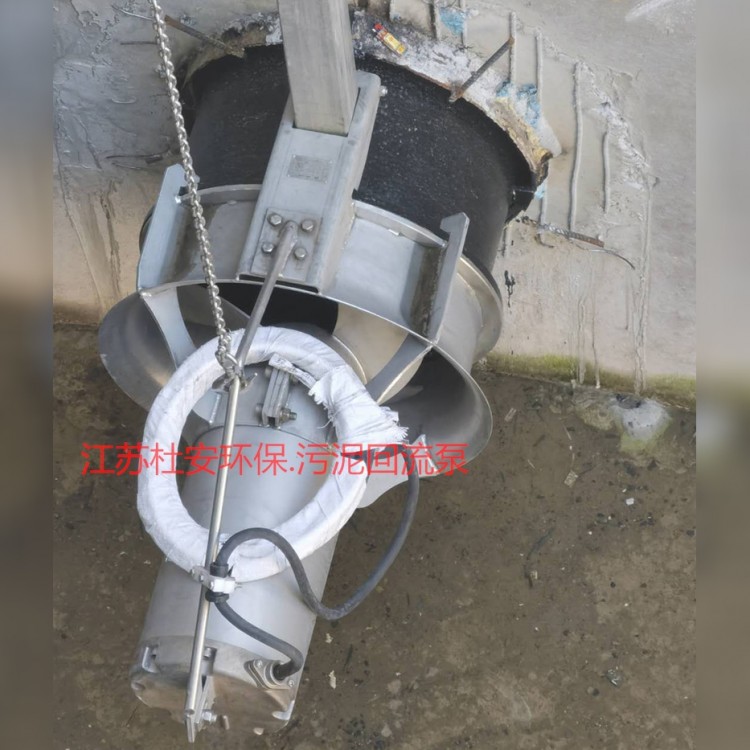
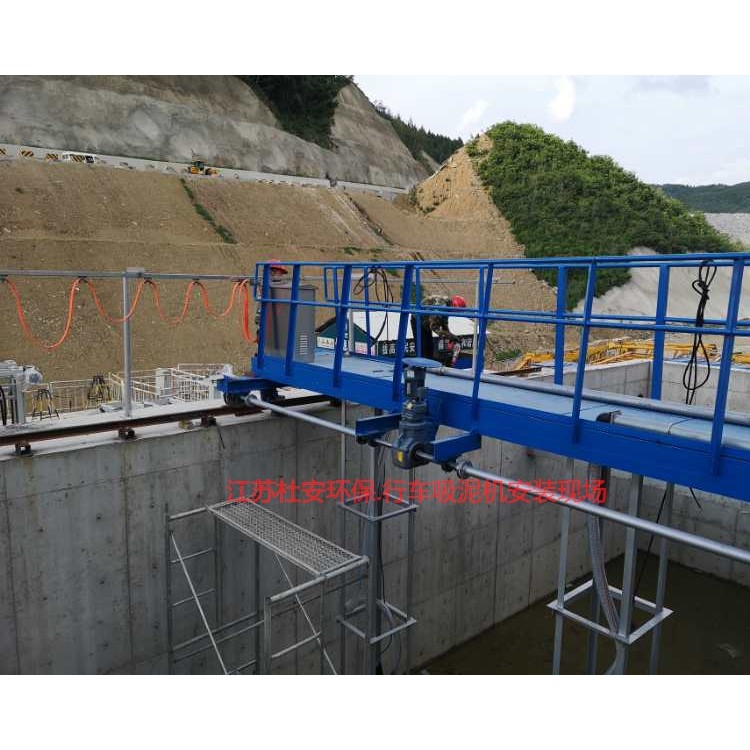
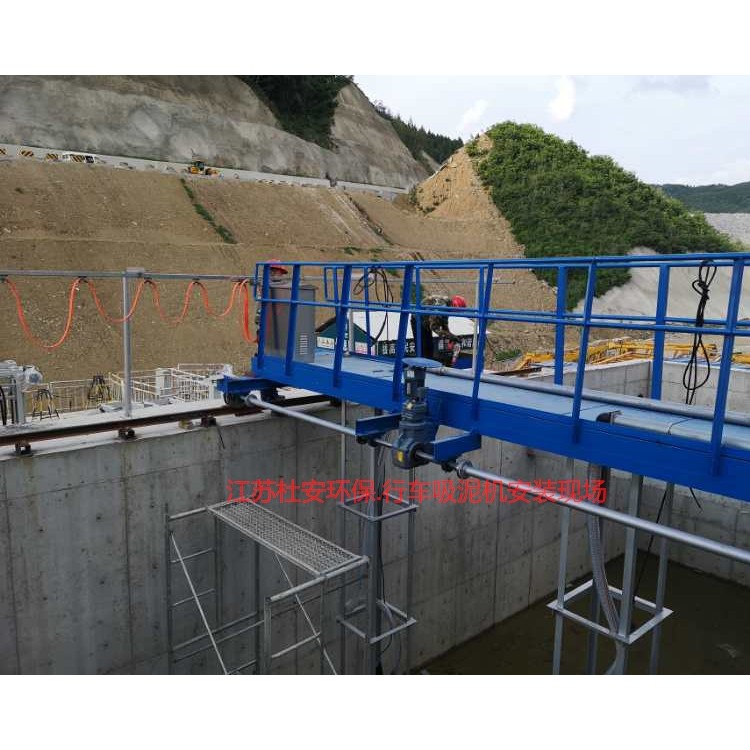
Jiangsu Du'an Environmental Protection Submersible Pump Automatic Coupling Installation:
Jiangsu Du'an Environmental ProtectionSubmersible pumps are typically installed using an automatic coupling (hereinafter referred to as "self-coupling") method. The self-coupling system mainly consists of quick connections, drainage bases, guide rails, and guide rail brackets. During installation, the pump body and quick connection are tightly connected with bolts. The drainage base is first fixed to the pool with anchor bolts, then the quick connection moves the pump along the guide rail and automatically couples with the drainage base through the self-coupling sealing surface. Once installed, the entire pump body and motor section are connected together by the pump's outlet and inlet flanges. The connection between the pump's outlet and the self-coupling base is sealed with a rubber gasket. The submersible pump is suspended in the air via the self-coupling system, and its own weight presses the gasket tightly, ensuring reliable sealing between the pipes.