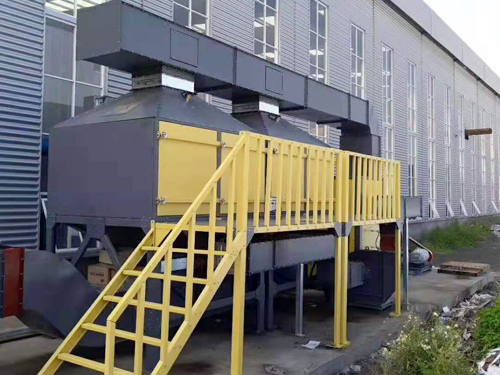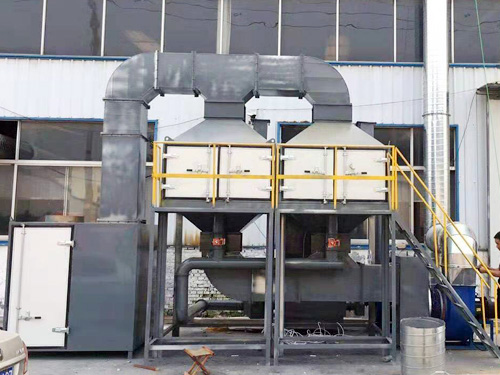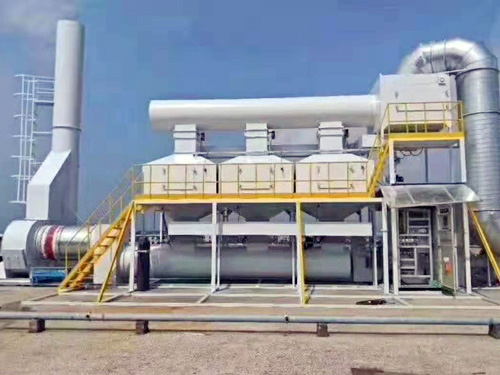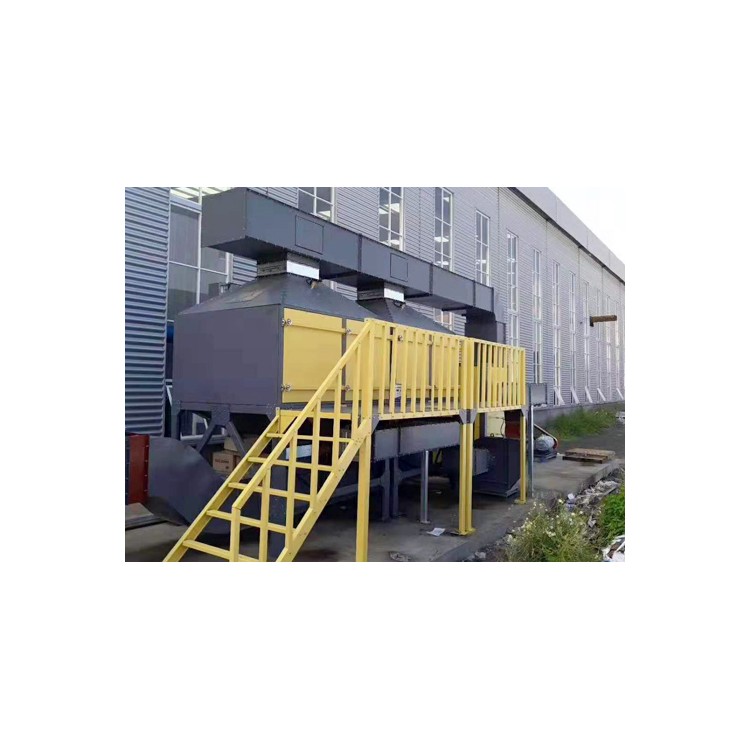

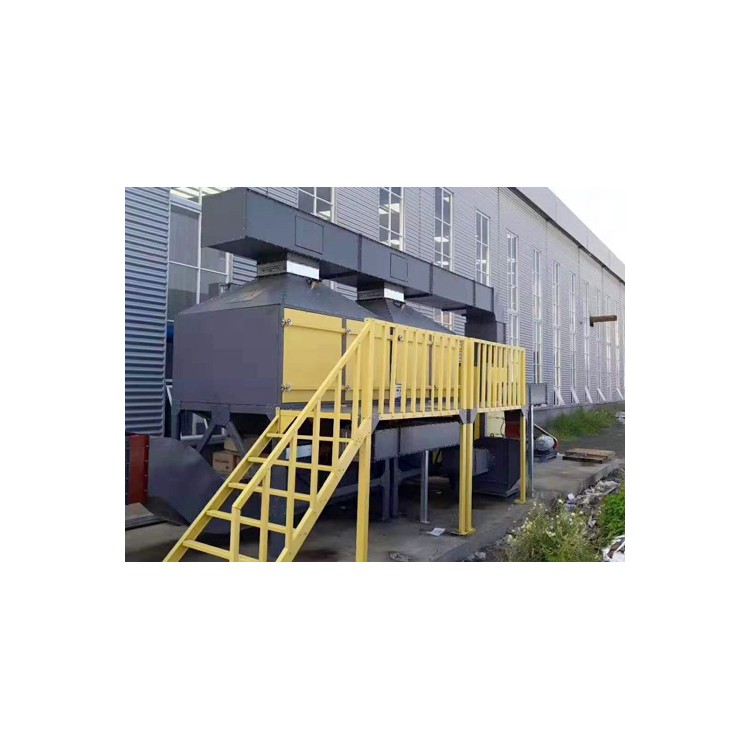
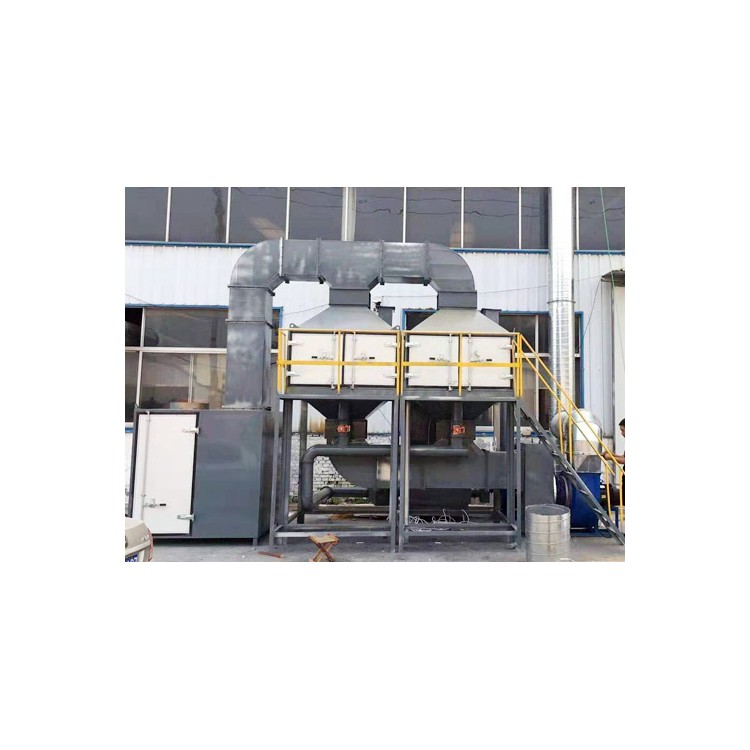
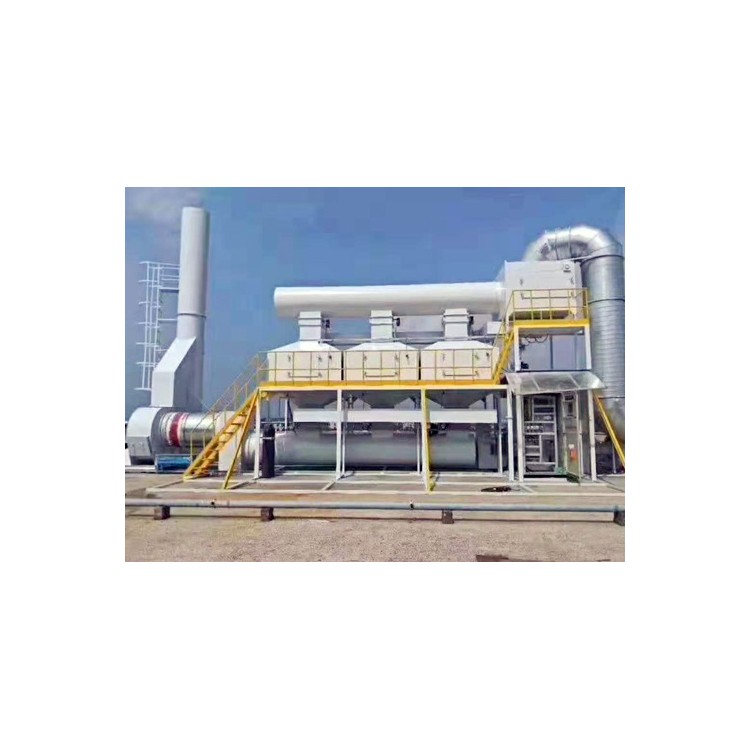








Catalytic combustion equipment process principle:
Catalytic combustion is a typical gas-solid phase catalytic reaction. Under the action of the catalyst, it reduces the activation energy of the reaction, allowing flameless combustion to occur at a lower ignition temperature of 250-350°C. Oxidation occurs on the surface of the solid catalyst, producing CO2 and H2O, while releasing a large amount of heat. Due to the low oxidation reaction temperature, it significantly reduces the formation of high-temperature NOx in the air. Moreover, because the catalyst has selective catalytic action, it may limit the oxidation process of nitrogen-containing compounds in the fuel, leading to the formation of molecular nitrogen in most cases.
Catalytic combustion process design:
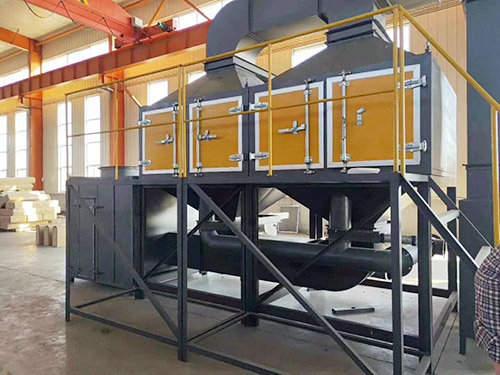
This study selects palladium as the catalyst and ceramic filler as the carrier, configuring a set of catalytic combustion equipment. The main research focuses on the impact of different catalyst dosages on the removal efficiency of VOCs, with a designed air handling capacity of 2500 m3/h and a designed combustion temperature of 250°C for catalytic combustion.
Waste gas enters the rotating four-way valve of the catalytic combustion unit via a fan, then passes through a ceramic material filling layer (bottom layer) to preheat to the temperature set for catalytic oxidation. At this point, some pollutants are oxidized and decomposed; the waste gas continues through the heating zone to increase in temperature and maintain the set temperature; it then enters the catalytic layer to complete the catalytic oxidation reaction, producing CO2 and H2O and releasing a large amount of heat, thus achieving the desired treatment effect.