


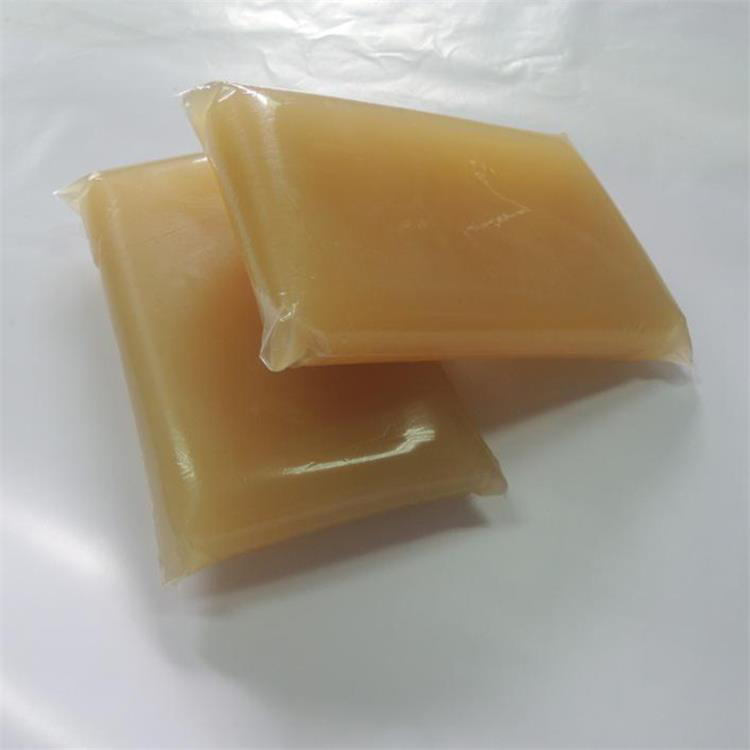












Guar gum, also known as guar bean gum or gum tragacanth, is one of the more affordable and widely used edible gels globally. It is a polysaccharide compound derived from the seeds of the guar tree. Guar gum is a natural, high molecular weight hydrophilic colloid, primarily composed of galactose and mannose polymers. It is produced by fiber manufacturers, falls under natural galactomannan, and is a stable source, relatively inexpensive, with high viscosity, and versatile in applications as a food gel. It is also a common food quality improver.
Many starch molecules form spiral structures, while guar gum molecules form linear chains. Therefore, the active groups of guar gum are more easily close to fibers than cationic starch, allowing a smaller amount of cationic guar gum to achieve the same effect as a larger amount of cationic starch. Currently, polyacrylamide and modified starch are widely used as retention and filtration aids in the papermaking industry. However, their effectiveness is limited.

Sodium carboxymethyl cellulose (CMC-Na) has a certain gelling effect, and hydroxyethyl cellulose helps food form gel better, thus it can be used in the production of jellies and jams, etc. It can also serve as an edible film material, when mixed with other thickeners and applied to the surface of food, it can significantly extend the shelf life of the product. Moreover, being edible, it poses no adverse health effects on humans. Therefore, food-grade CMC-Na, as an ideal food additive, is widely used in food production within the food industry.
This positively charged modified guar gum can interact with negatively charged chemical fibers and filler particles, enhancing retention, filtration assistance, and overall effectiveness. Moreover, an improved aspect is the elongation of the molecular chain of the guar gum, which increases its relative molecular mass and thereby its bridging capacity. Cationic guar gum dissolves in cool water and has a significant advantage over cationic cassava starch. In addition, many cassava starch molecules have a spiral structure, while guar gum molecules have a net-like straight-chain structure. Therefore, the active functional groups of guar gum are easier to approach chemical fibers than those of cationic cassava starch, allowing the cationic cassava starch in guar gum to achieve the application effects that a smaller amount of cationic cassava starch can.
Cellulose - Kunshan Jingkun Oilfield - Cellulose manufacturers provided by Kunshan Jingkun Oilfield Chemical Technology Co., Ltd. Kunshan Jingkun Oilfield Chemical Technology Co., Ltd. is a company specializing in "polysaccharide plant gum, guar gum, modified guar gum, hydroxypropyl, and hydroxypropyl guar gum." Since our establishment, we have adhered to the philosophy of "honesty as the cornerstone, and stable operation," actively participating in the healthy market competition, which has earned the "Jingkun Chemical" brand a good reputation. We uphold the principle of "customer service first, user satisfaction first," enabling Jingkun Chemical to gain the trust of clients and establish a positive corporate image. Special Note: The images and materials provided in this information are for reference only. Please contact us for accurate details. Thank you!