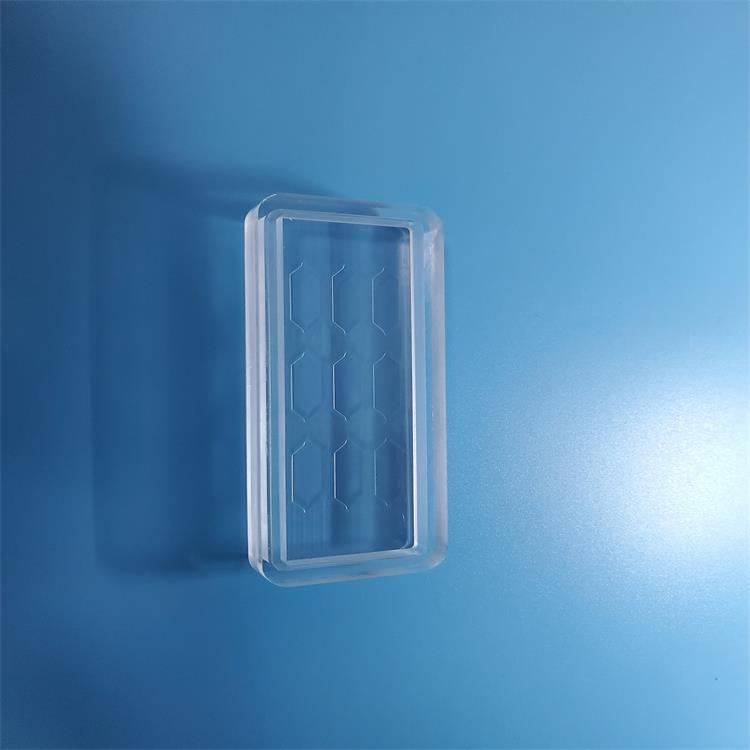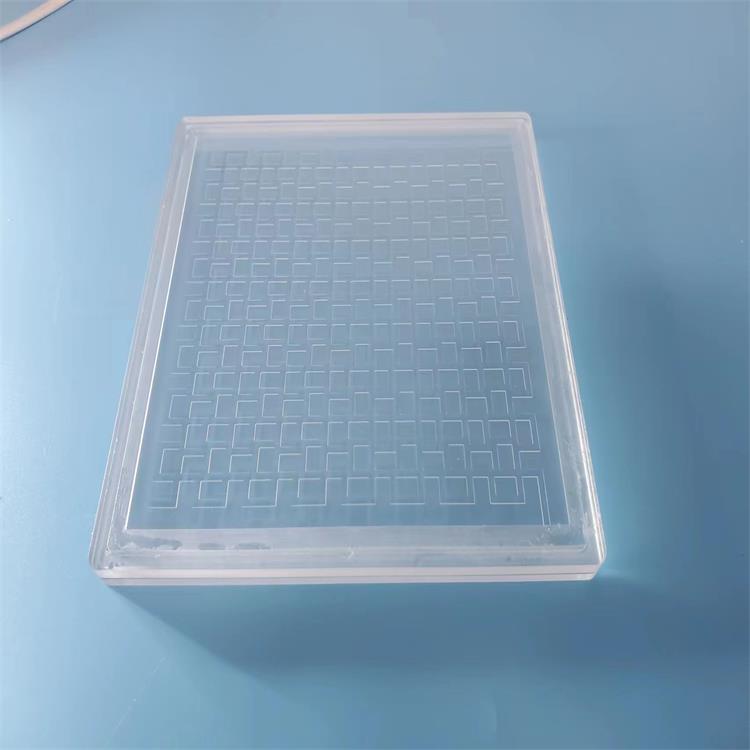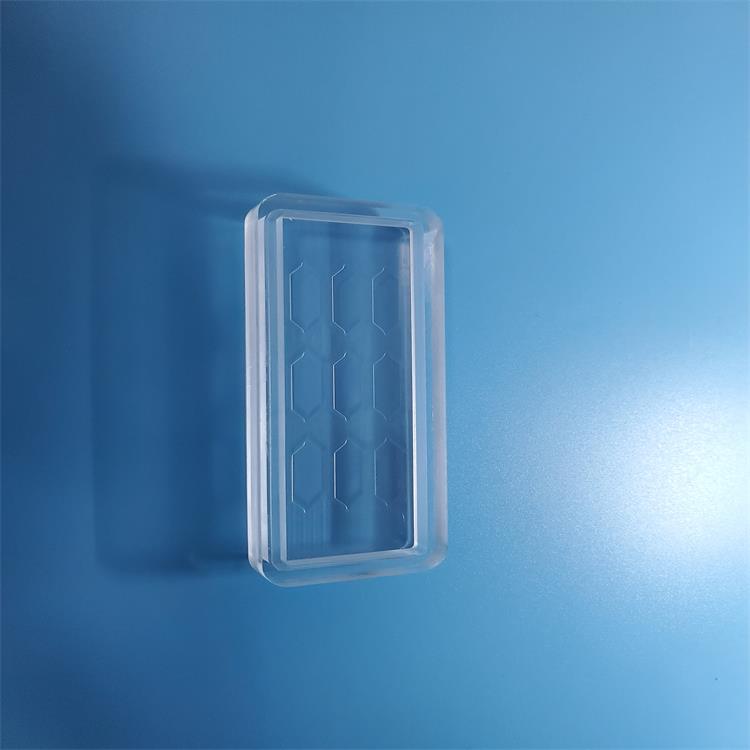
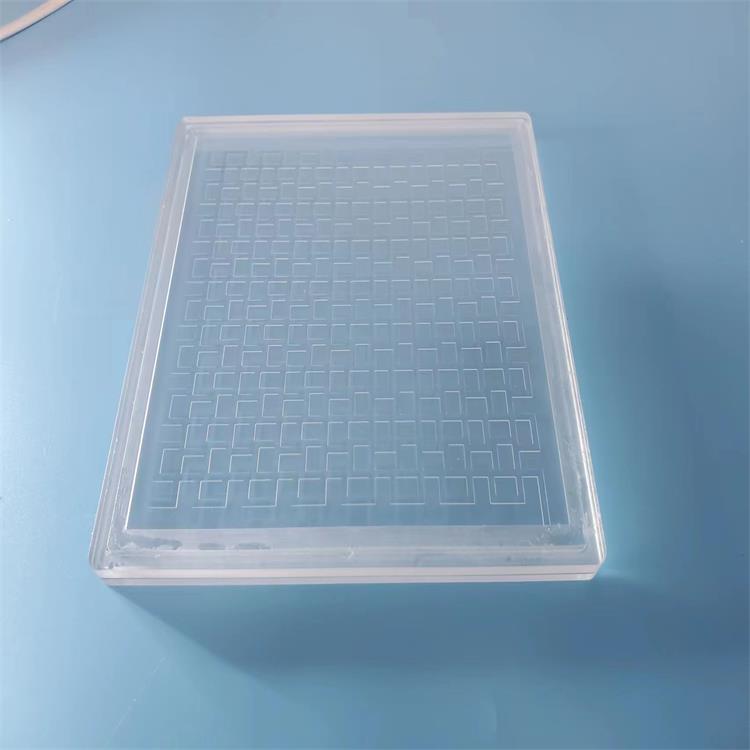








Advantages: Optical transparency, biocompatibility, inert, easy to process on the surface, suitable for mass production processes, high commercial viability, low cost, and quick bonding.
Disadvantages: Expensive equipment required for producing complex chips from this polymer, difficulties encountered during the thermal bonding step: more channels collapse when the width-to-height ratio is too high.
Molding Methods: Injection molding, heat stamping
Adhesive Method: Heat bonding, with plasma treatment to enhance bonding strength.
Glass transition temperature: 92-107°C.
Glass Chip Materials
1.1 Optical Glass
B270, easy to process, with excellent chemical and optical properties, commonly used in scientific instruments, eyewear, and microscopes.
1.2 Quartz Glass
Quartz glass with low thermal expansion coefficient, strong chemical resistance, high-temperature resistance (up to 900°C), and excellent optical properties such as uniformity and high UV transmission rate, suitable for microfluidic flow cells, microreactors, and microfluidic chips for UV spectrophotometric detection. Quartz glass also withstands thermal shock better than other types of glass.
1.3 Borosilicate Glass
D263 and Borofloat 33 offer a highly durable and flexible material that withstands extreme temperatures and many strong chemicals, including acids, salt solutions, chlorine, oxides, and corrosive substances. Common applications include high-precision lenses, laboratory equipment, and pharmaceutical containers.

TopSun Suzhou Micro-Control Technology - Taizhou Acrylic Chips, supplied by TopSun (Suzhou) Micro-Control Technology Co., Ltd. Strive for the future, forge ahead. TopSun (Suzhou) Micro-Control Technology Co., Ltd. is committed to becoming a strategic partner that wins together, grows together, and moves forward together with you, and is also determined to become a competitive enterprise in bioproducts. Let's soar together and achieve success!