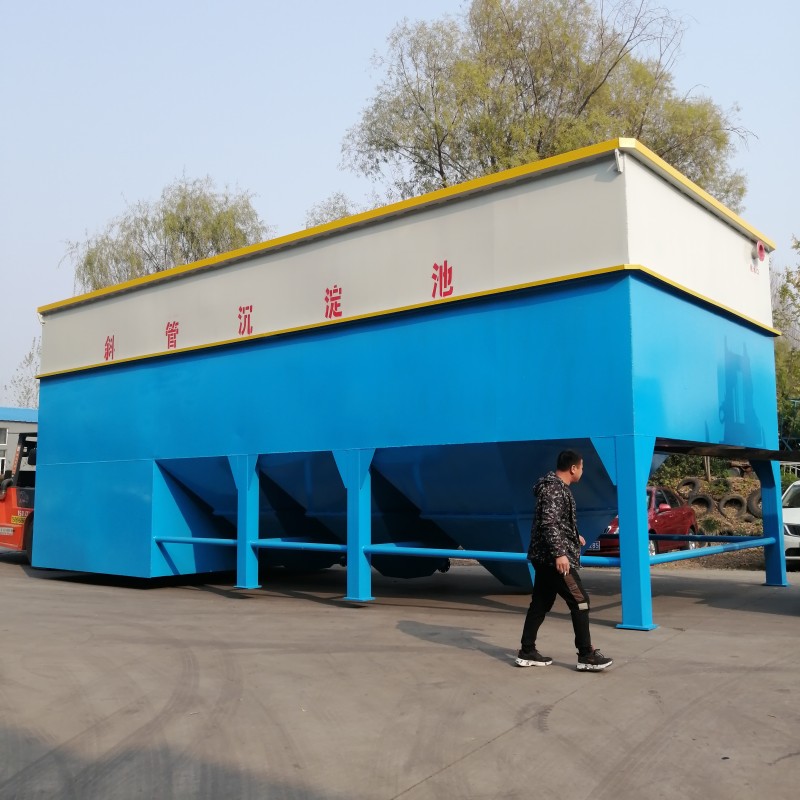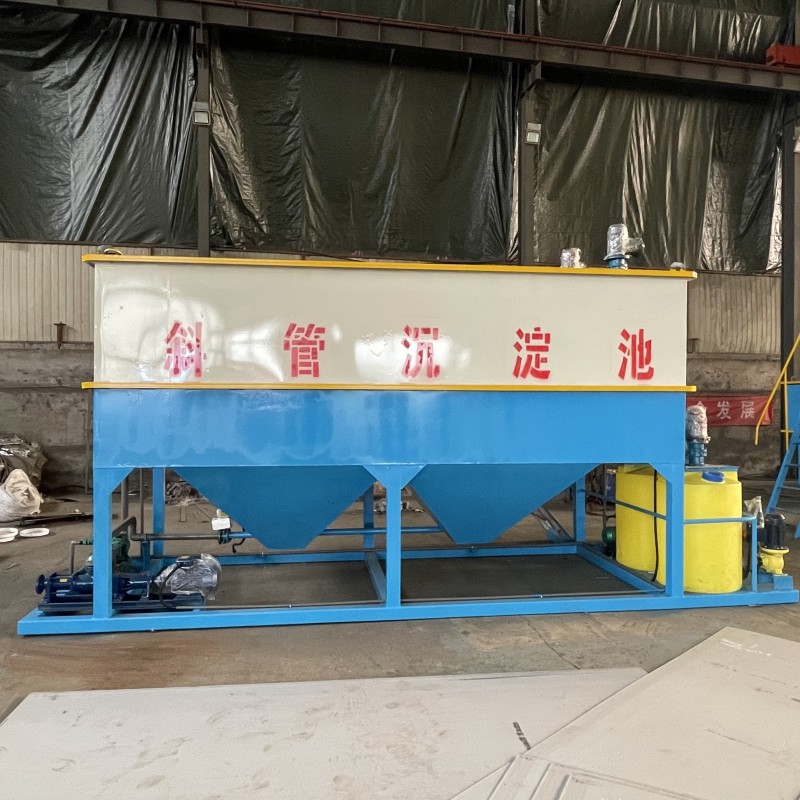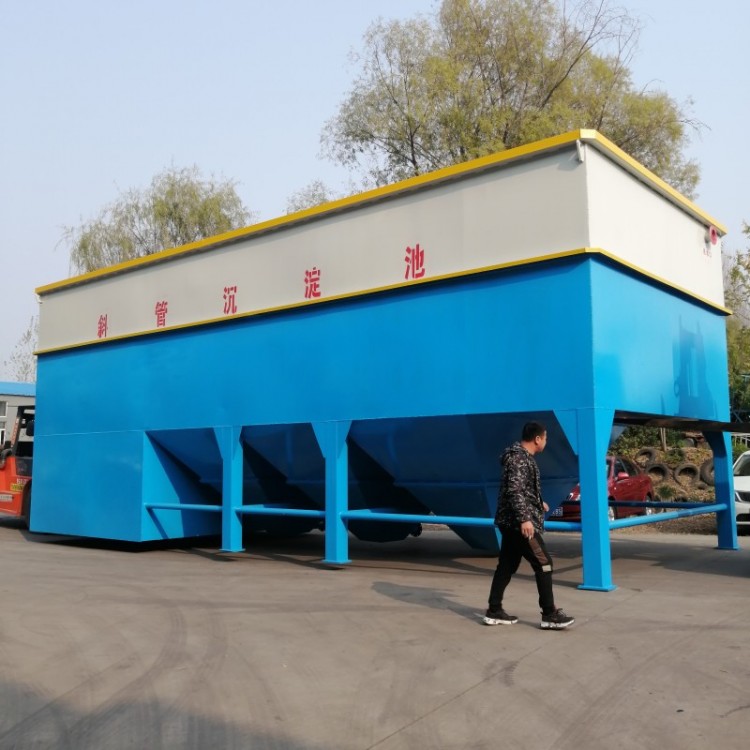

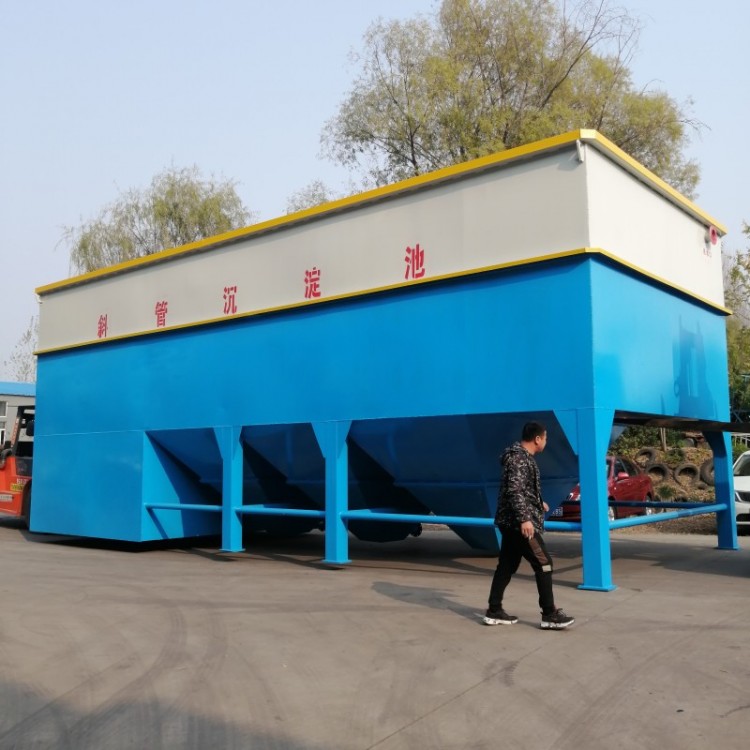








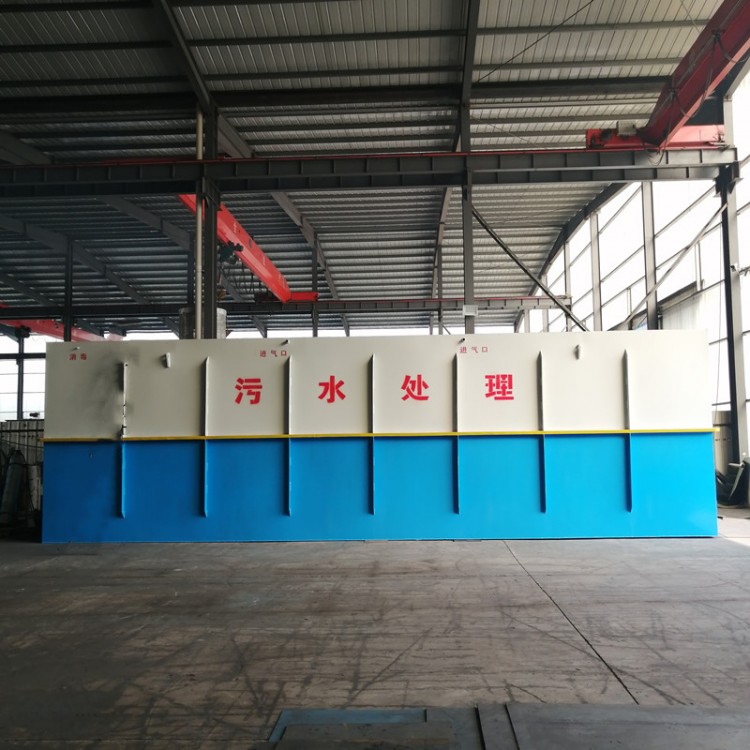
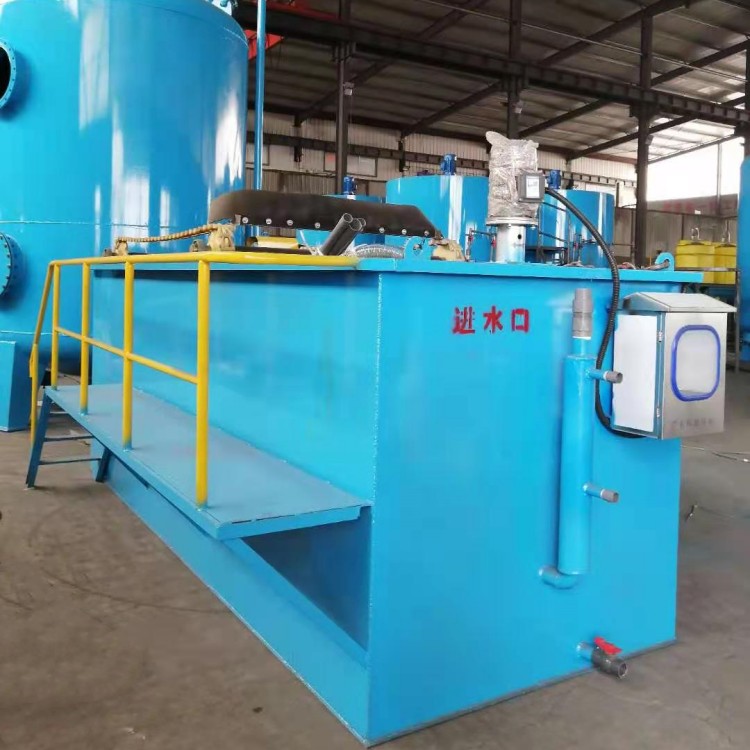
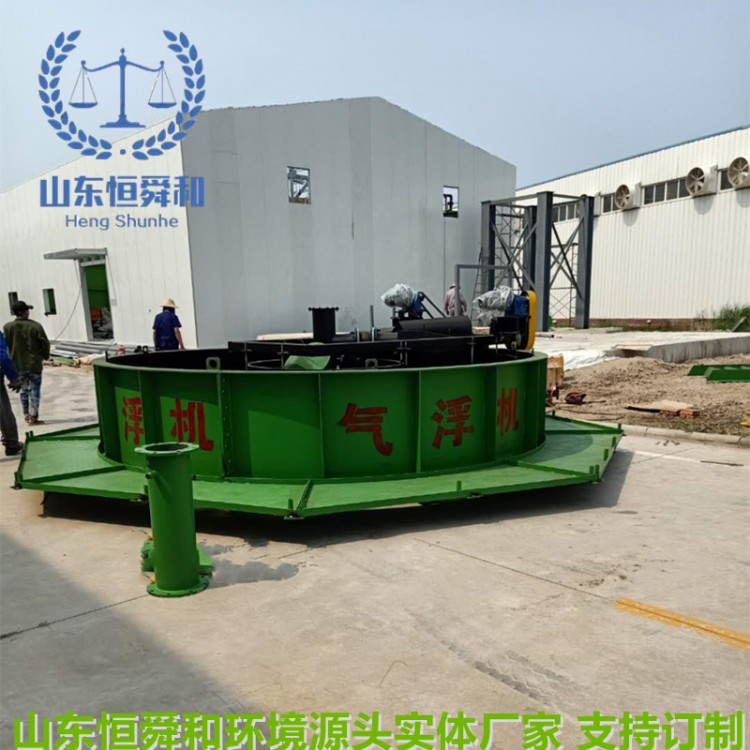


Vertical Flow Sedimentation Pond Overview
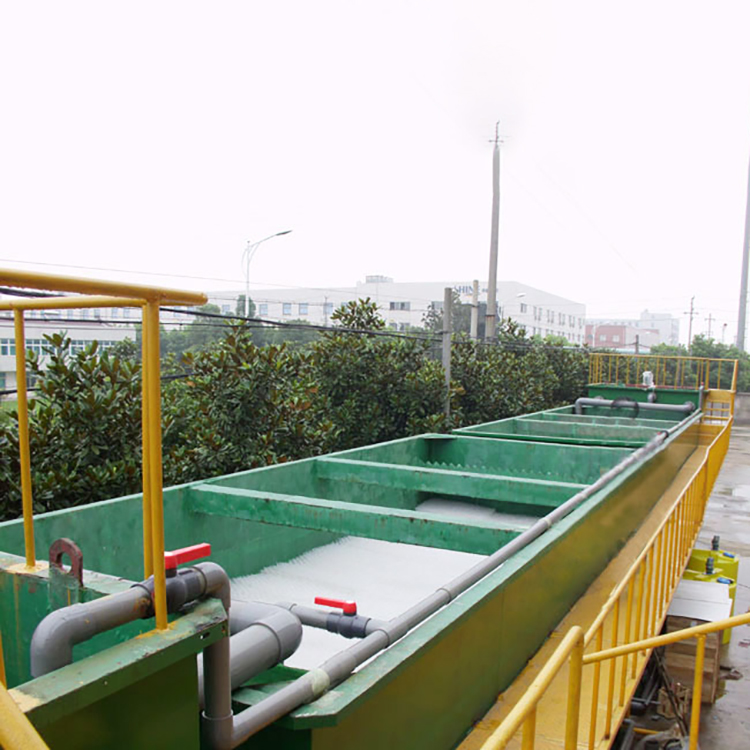
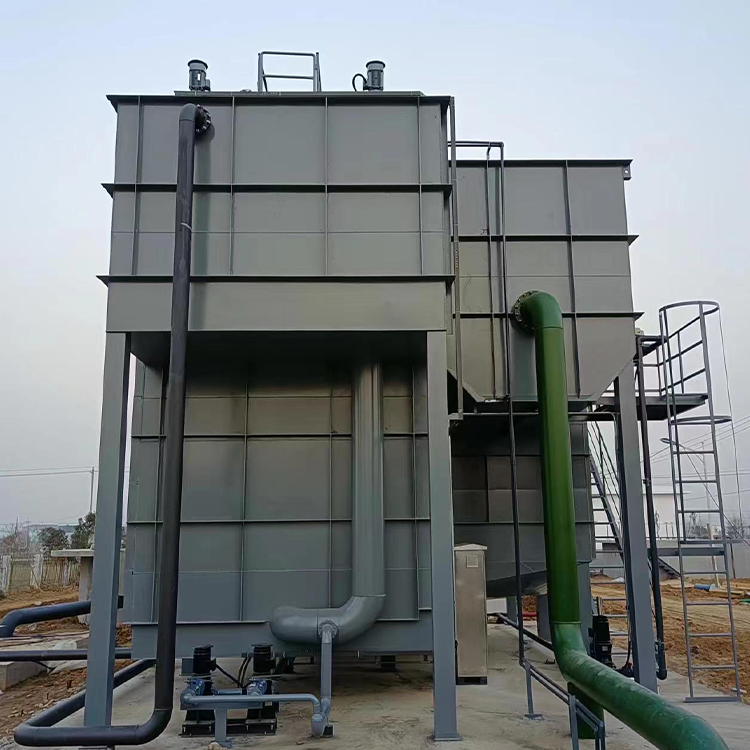
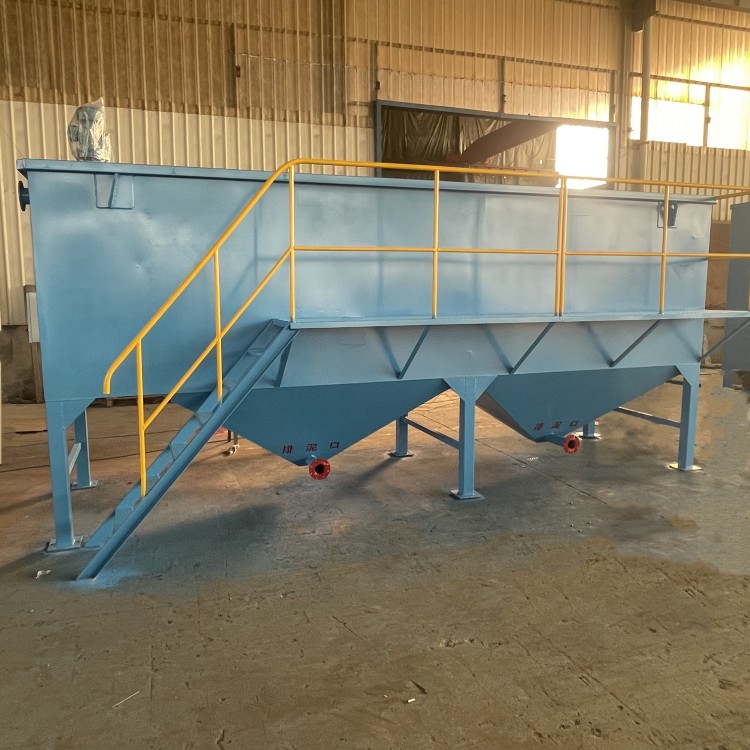
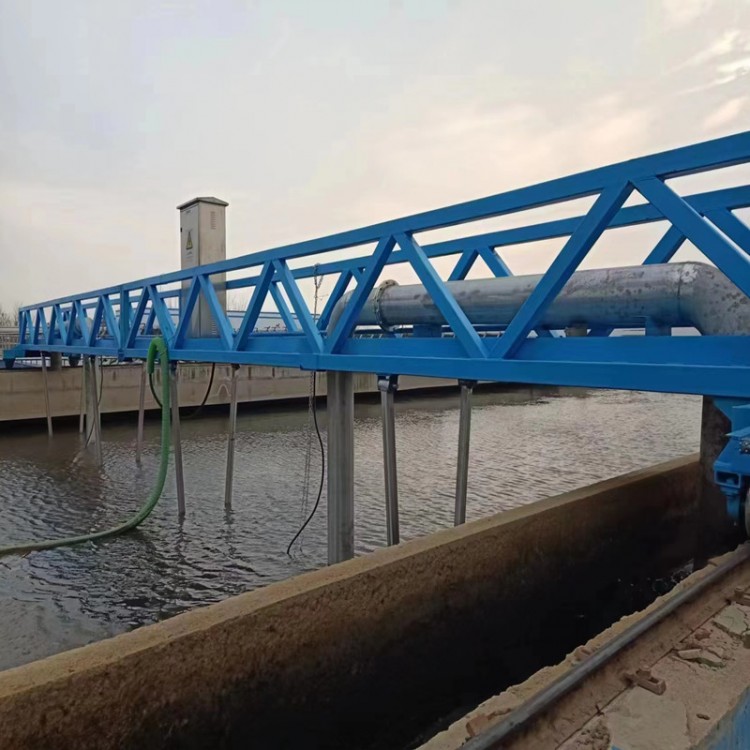
Vertical Flow Sedimentation TankAlso known as a vertical sedimentation tank, it is a sedimentation tank where wastewater flows vertically within the tank. The horizontal shape of the tank is circular or square, with water entering from the center of the tank through an inlet pipe (flow rate should be less than 30mm/s) and descending into the tank. Below the pipe, an umbrella-shaped baffle is installed to evenly distribute the wastewater in the tank, allowing it to rise slowly across the entire water cross-section (typically 0.5-0.7mm/s for domestic wastewater, with sedimentation time of 1-1.5 hours). Suspended solids settle into a conical sludge collection at the bottom of the tank, while clarified water overflows from the sides of the tank along the perimeter overflow weir. Baffles and scum traps are placed in front of the weir to retain scum and ensure water quality. A mud discharge pipe (diameter over 200mm) is set against one side of the tank wall, utilizing hydrostatic pressure to periodically discharge the sludge. The advantages of the vertical flow sedimentation tank include a small footprint, easy mud removal, but its disadvantages are its depth, difficulty in construction, and high cost. It is commonly used in wastewater treatment plants with a flow rate of less than 20,000m³/day.
Theoretical Basis: In a vertical flow sedimentation tank, the water flow direction is opposite to the particle sedimentation direction. The retention rate is equal to the upward flow speed, which is equal to the settling speed. Particles with upward flow speeds equal to settling speeds will remain suspended in the mixture, forming a suspended layer. This layer intercepts and filters the rising particles, making the vertical flow sedimentation tank more efficient than the horizontal flow sedimentation tank.
Working Principle
Vertical Flow Sedimentation Tank Operating Principle:In a vertical flow sedimentation tank, wastewater flows downward at a velocity of v, and the suspended particles in the wastewater exhibit three types of movement states:①When the settling velocity of the particle, u, is greater than v, the particle will settle downwards by the difference of u-v, allowing for the particle to be removed.②When u = v, the particles are in a random state, neither sinking nor rising.③When u < v, the particles will not settle but be carried away by the upward current.
Structure
Vertical flow sedimentation tank construction:The flat surface of a vertical flow sedimentation tank can be circular, square, or polygonal. To ensure even water distribution within the tank, the diameter should not be too large, generally ranging from 4 to 7 meters, not exceeding 10 meters. To reduce the total height of the tank, a multi-chamber sludge discharge method can be used in the sludge zone.
The diameter to effective water depth ratio of a vertical flow sedimentation tank is generally not greater than 3.
Model
Model | HSHGC- 5 | HSHGC- 10 | HSHGC-15 | HSHGC-20 | HSHGC-25 | HSHGC-30 | HSHGC- 40 | HSHGC- 50 |
Processing CapacityT/H) | 5 | 10 | 15 | 20 | 25 | 30 | 40 | 50 |
Dimension (m) | 2.5*2*3.5 | 2.5*2.5*4 | 5*2.5*4 | 6*3*4.5 | 8*3*4.5 | 9*3*4.5 | 10*3*4.5 | 12*3*4.5 |