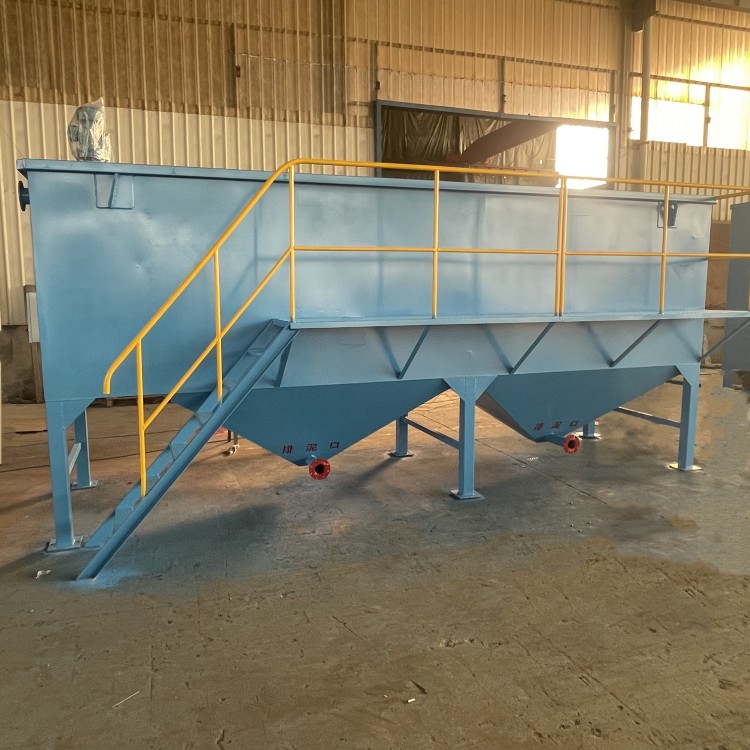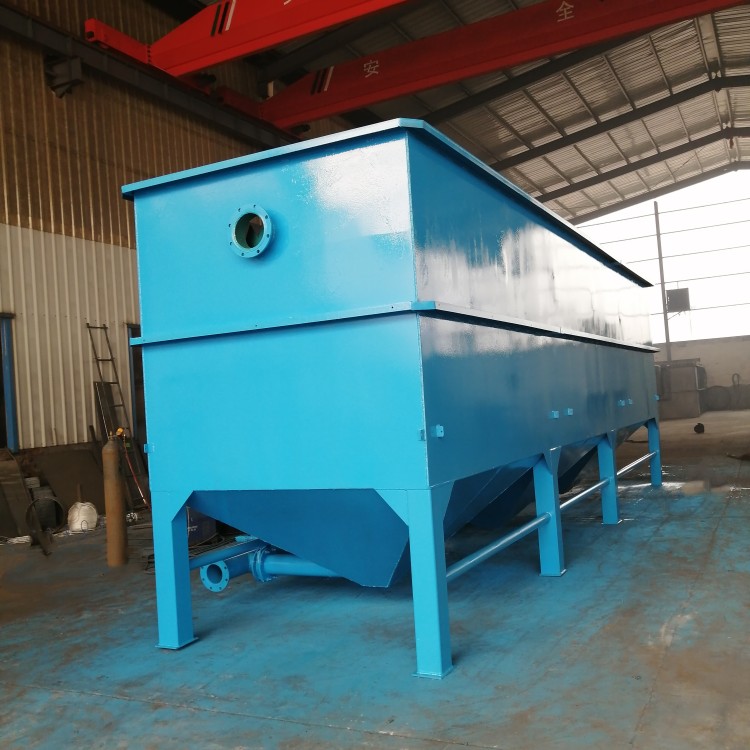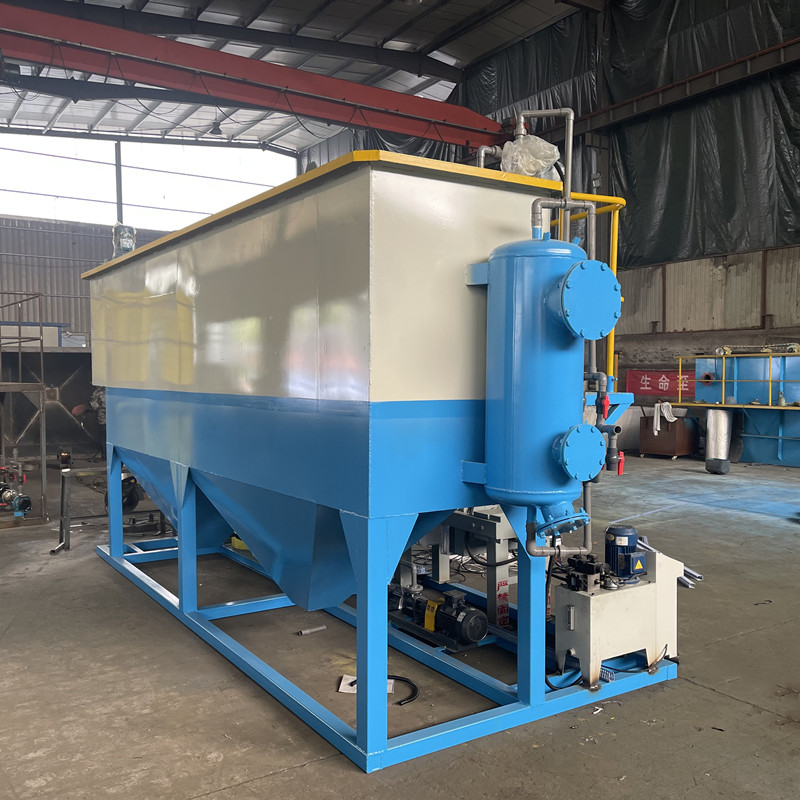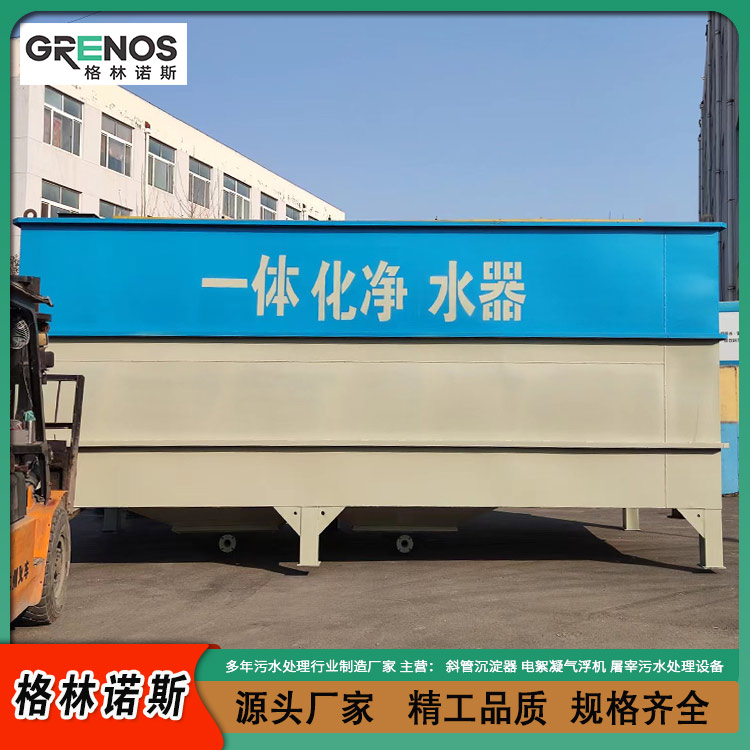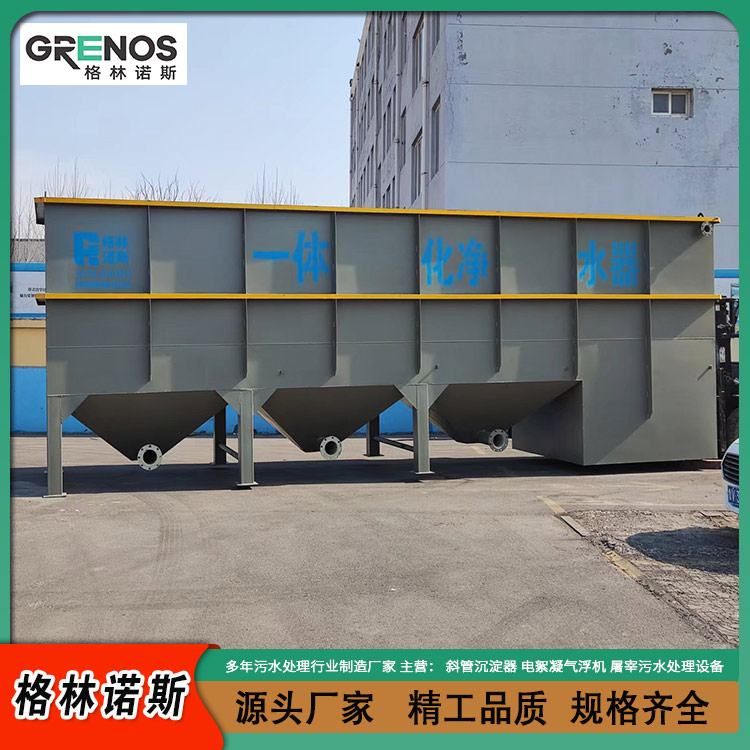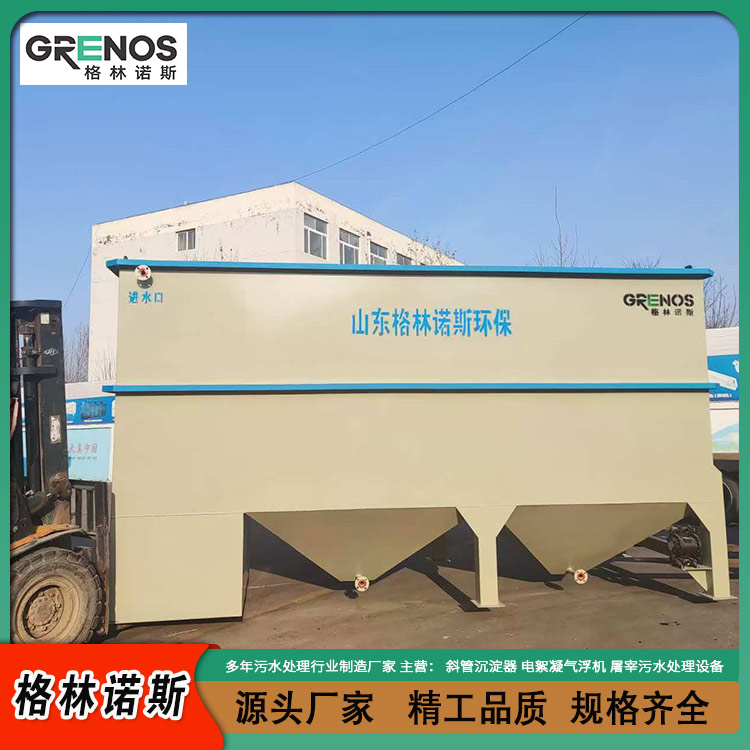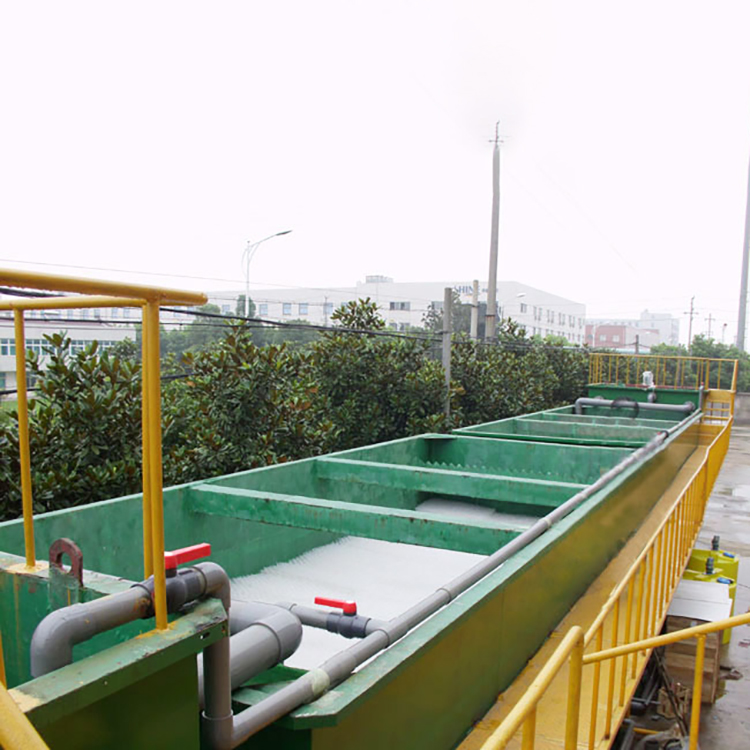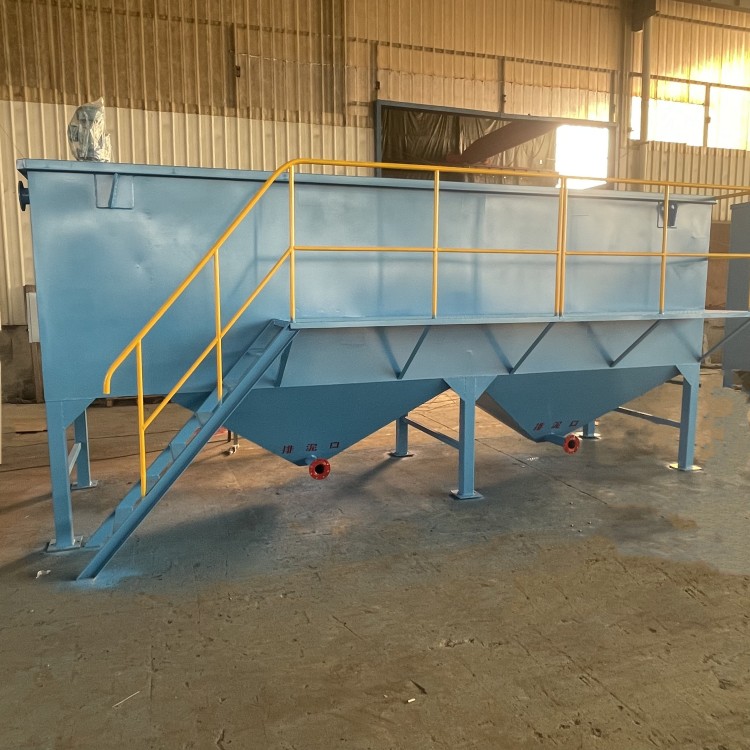

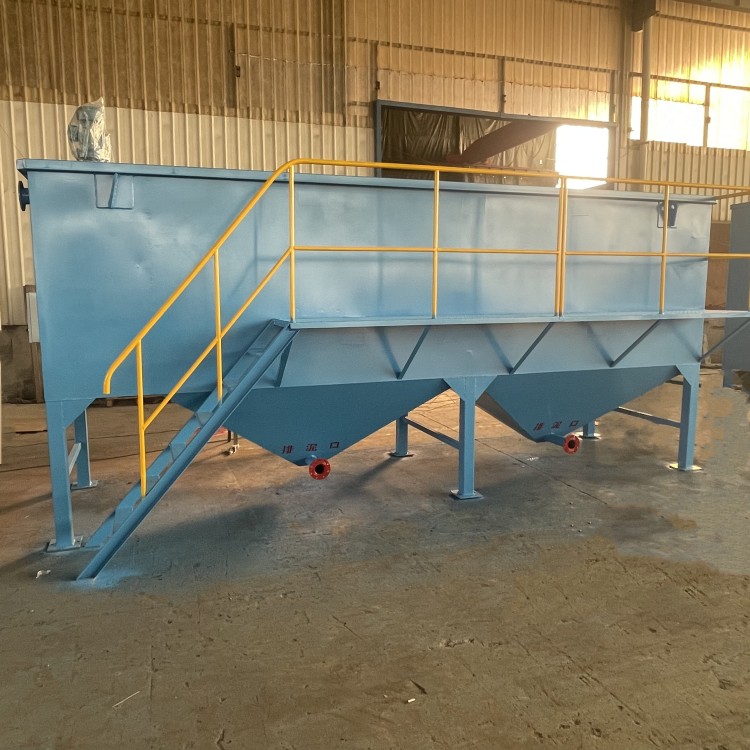
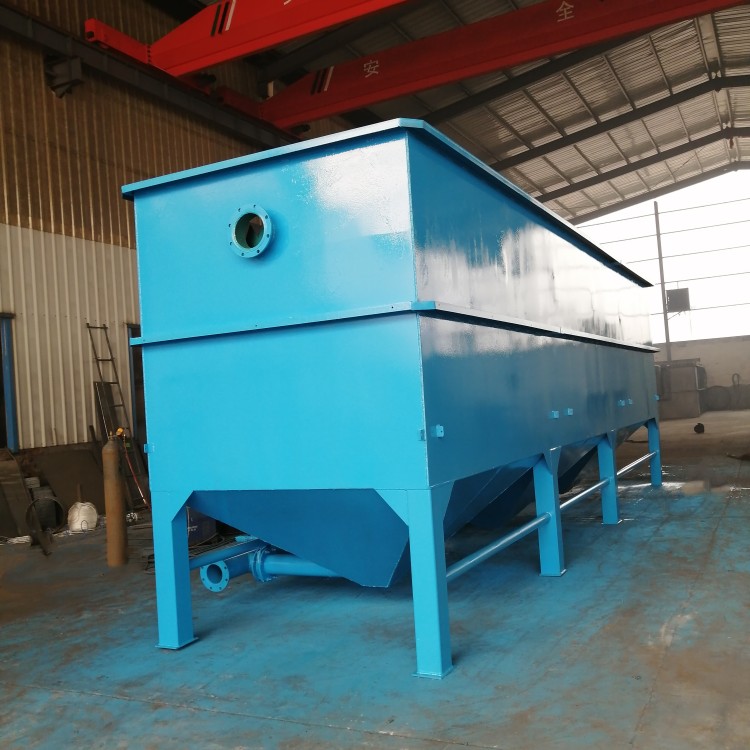
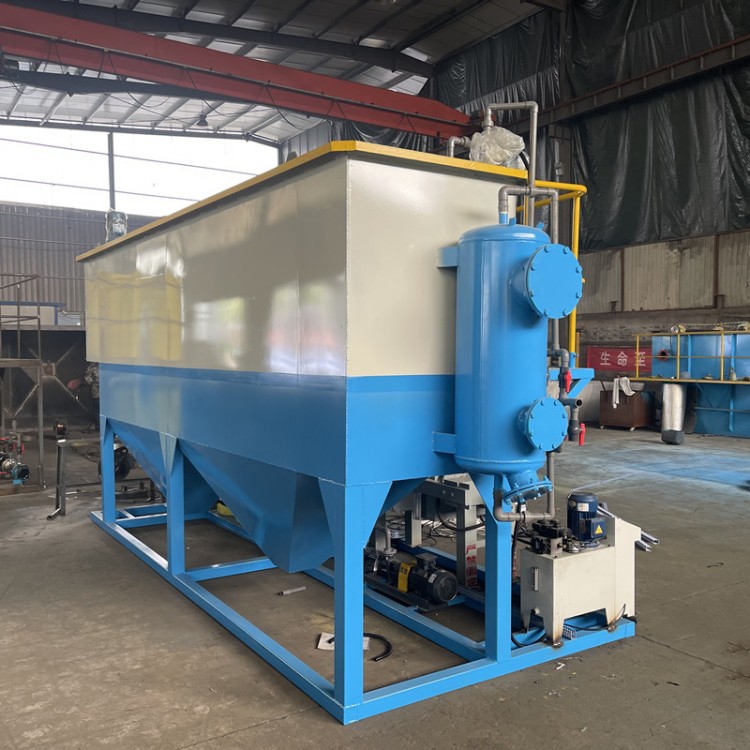


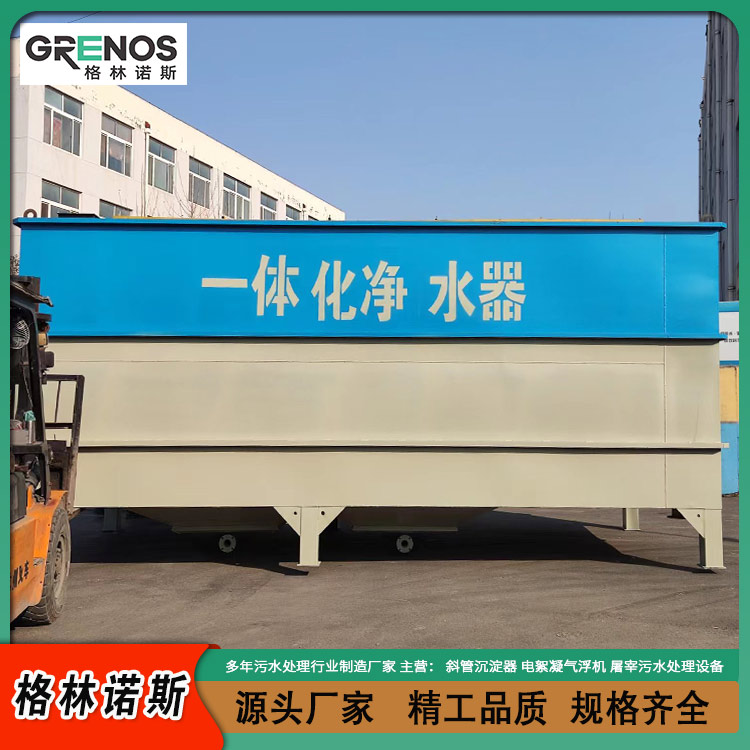
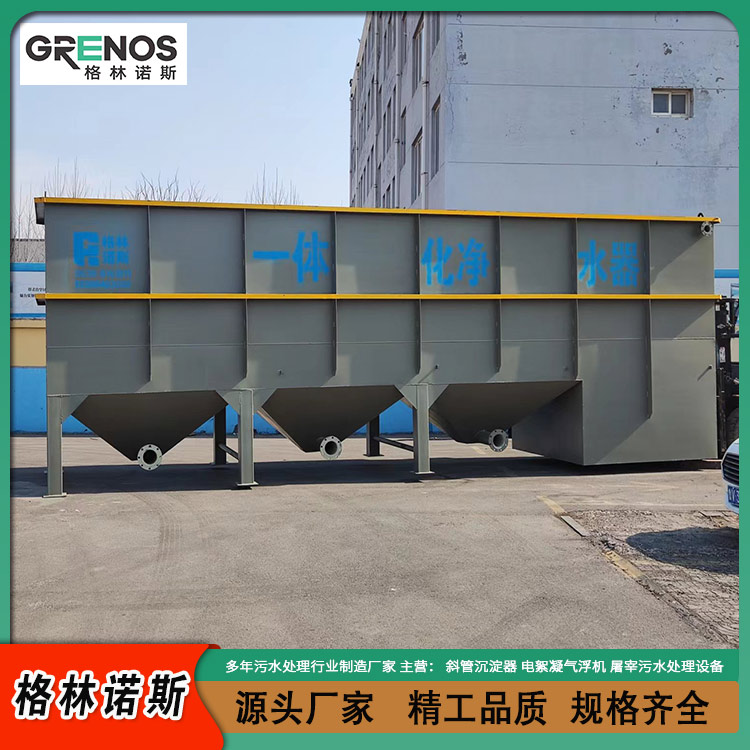
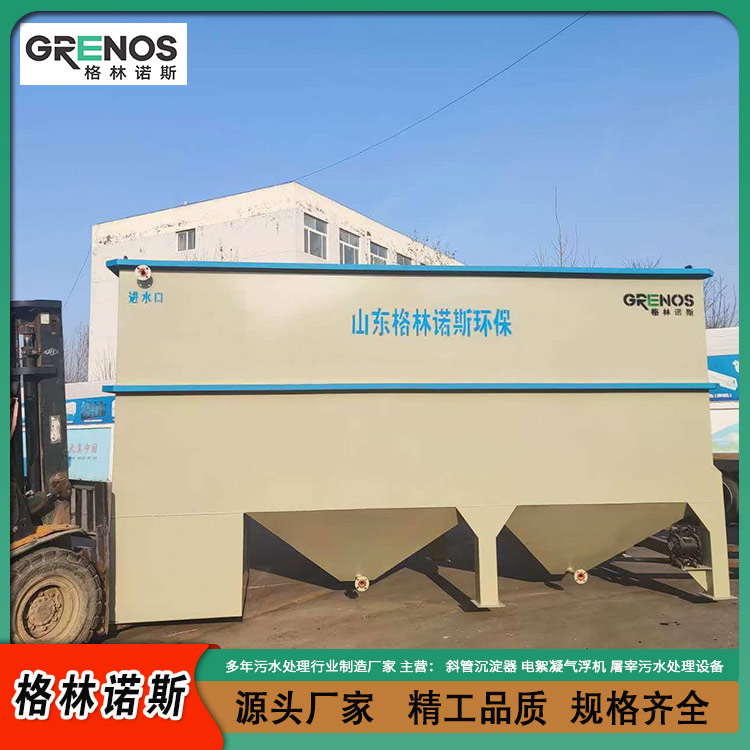

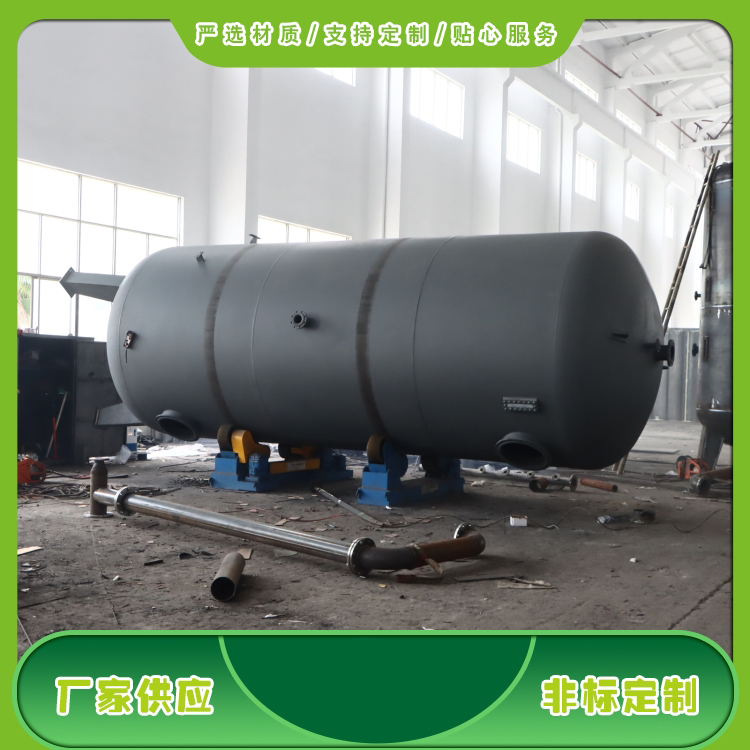





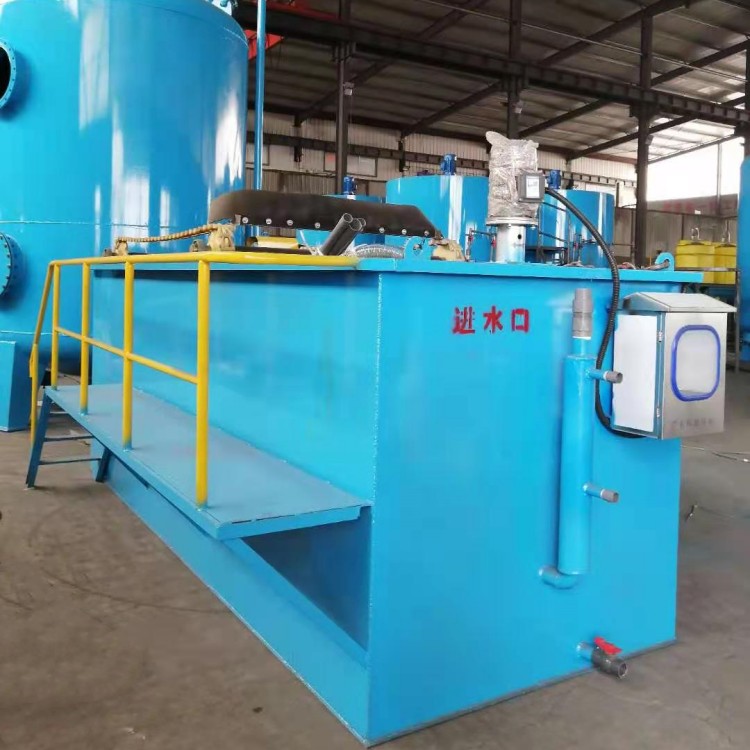
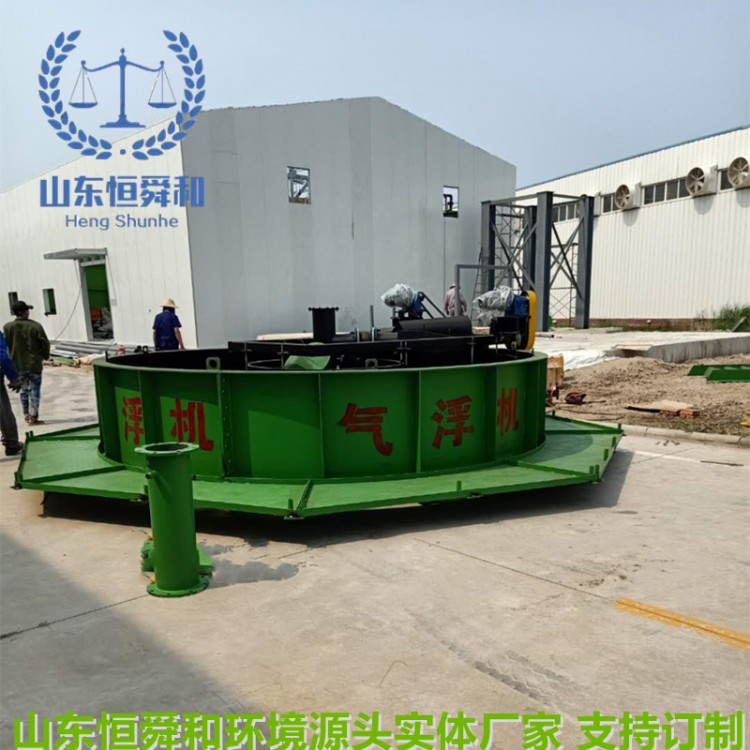


Wastewater Flocculation and Sedimentation Integrated Machine
I. Principle
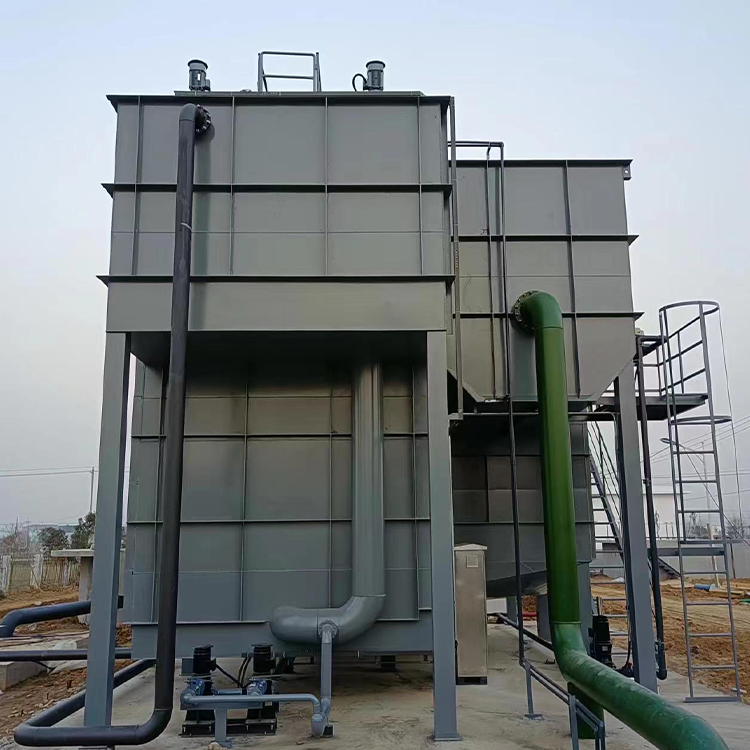
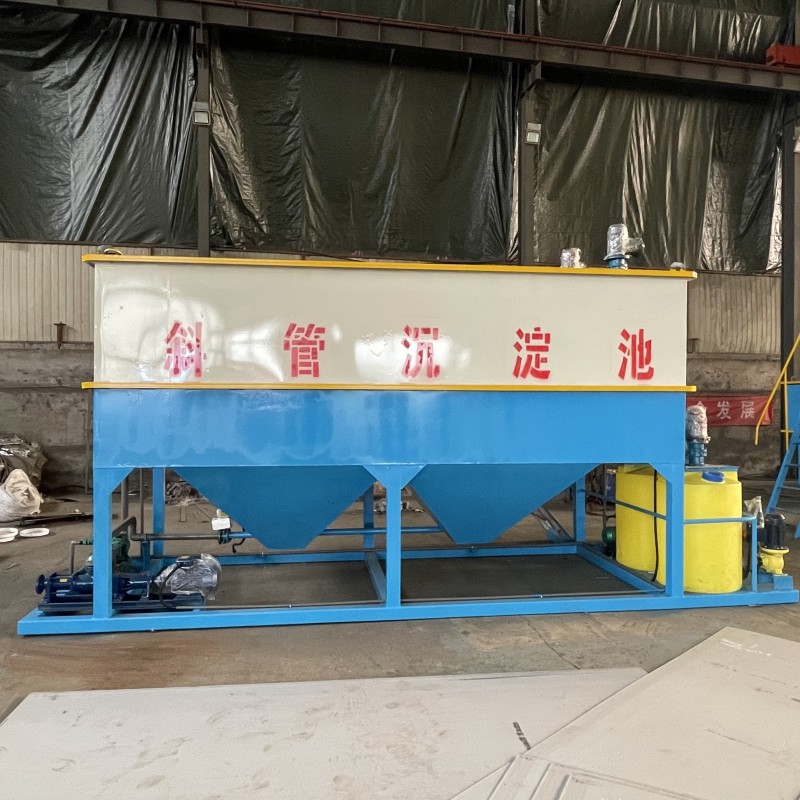
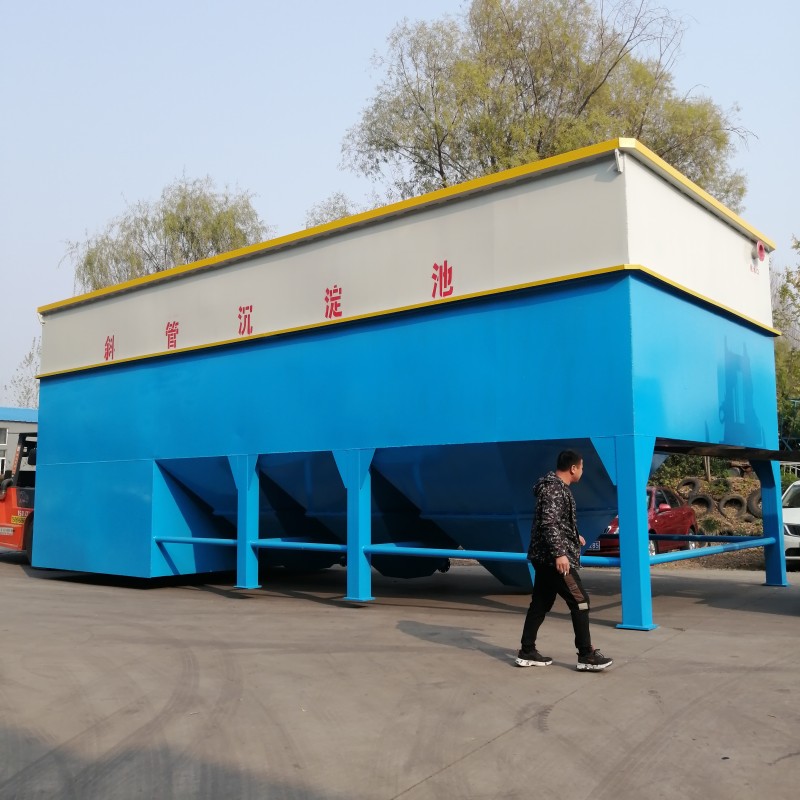
The inclined tube sedimentation water purification method involves installing inclined tubes at a 60-degree angle above the sludge suspension layer. The suspended matter, solid particles, or flocs formed by the addition of coagulant in the raw water accumulate as a thin sludge layer on the side surface of the inclined tubes. They rely on gravity to slide back into the sludge suspension layer and then settle into the sludge collecting sump. The sludge is then discharged through a drain pipe into a sludge pond for further treatment or comprehensive utilization. The clear liquid gradually rises to the collecting pipe and can be discharged directly or reused.
Part Two: Usage
Tangential flow settlers can be used as auxiliary equipment for processes like air flotation and clarification, and can also handle various wastewater types individually.
1The electroplating wastewater contains a mixture of various metal ions, such as铭, copper, iron, zinc, and nickel, with removal rates all being satisfactory. Generally, after treatment, the electroplating wastewater can meet the discharge standards.
2Coal mine and ore dressing wastewater treatment can reduce turbidity from 500-1500 mg/L to 5 mg/L.
3Dyeing and bleaching wastewater with 70-90% color removal efficiency and 50-70% COD removal.
4Removal of a large amount of organic matter from wastewater in industries such as leather, food, etc., with a COD removal rate of 50-80% and a solid impurity removal rate.
5The COD removal rate of chemical wastewater is 60-70%, color removal is 60-90%, and suspended solids meet the discharge standards.
III. Advantages
1Simple structure, no fragile parts, reduces maintenance.
2Stable operation, easy to handle.
3Low power consumption, energy-saving.
4Space-saving, low investment, quick to launch.