









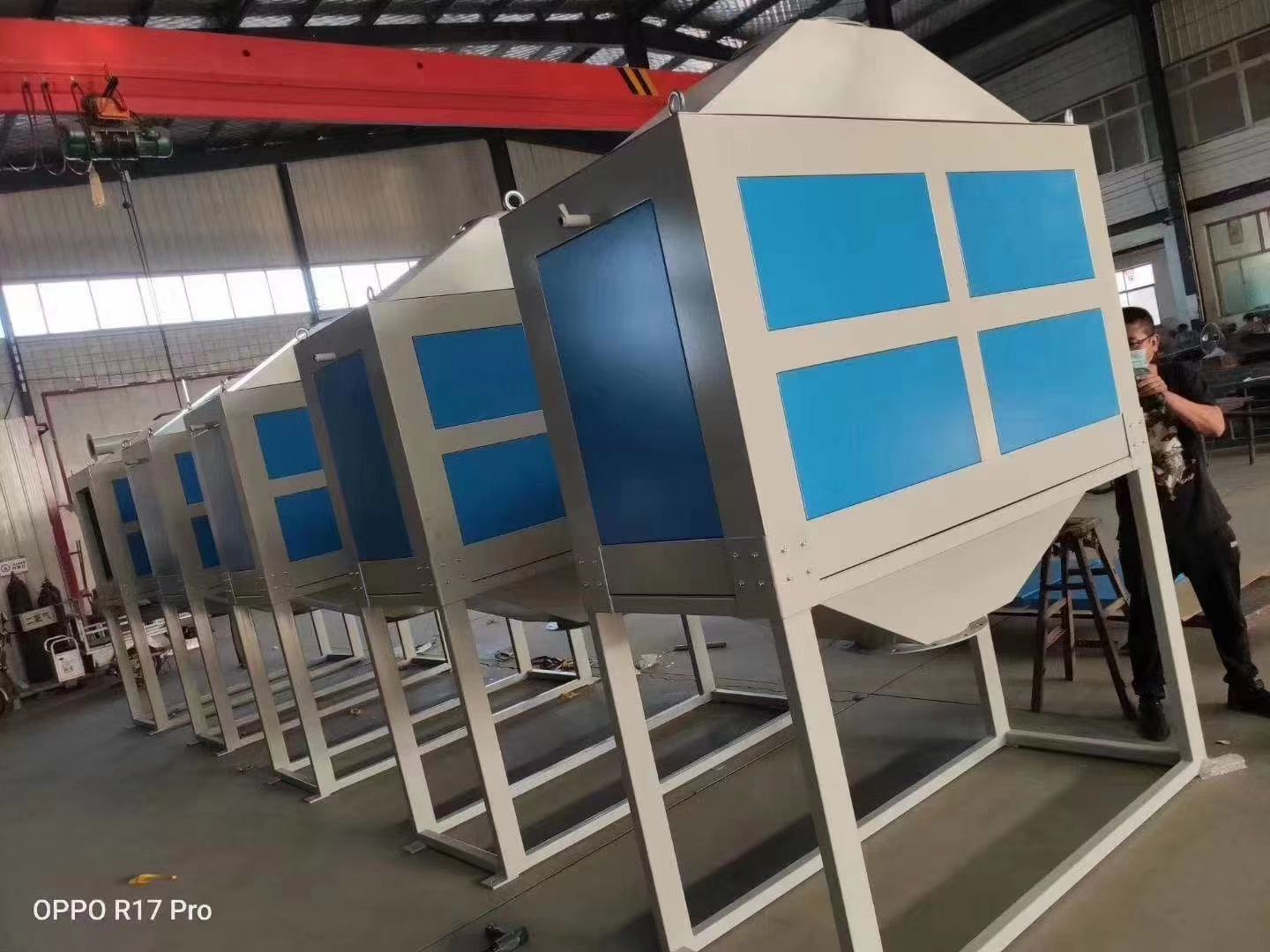

Guangdong Tianyuan Environmental Protection Technology Co., Ltd. - VOCs one policy for one enterprise, National Pollution Discharge Permit, Emergency Response Plan for Unexpected Environmental Incidents, Clean Production Audit, Environmental Impact Assessment, Completion Acceptance, Waste Gas Engineering, Waste Water Engineering, etc.
Clean Production Audit
1. Clean Production Audit Definition: Refers to the process of investigating and diagnosing the production and service processes according to a certain procedure, identifying the causes of high energy consumption, high material consumption, and severe pollution, proposing solutions to reduce the use and generation of toxic and harmful materials, lower energy and material consumption, and waste generation, and ultimately selecting clean production plans that are technically feasible, economically viable, and environmentally friendly as per the "Clean Production Audit Measures."
The entire production process requires the use of non-toxic or low-toxic raw materials, as well as pollution-free or minimal-pollution processes and equipment for industrial production; for the entire lifecycle of the product, it is required that the selection of raw materials, as well as the handling and disposal after use, do not pose or reduce harm to human health and the environment.
2. Clean Production Audit Targets: Companies
3. Corporate Clean Production Team: Composed of key leaders, production management (including department heads, workshops, and sections), technical processes, environmental protection, equipment, procurement, finance, and laboratory departments. It is a team effort involving all staff members.
4. Clean Production - Objective
Energy-saving (water, electricity, coal, oil, gas)
Reduce energy and raw material consumption, as well as intermediate products and other consumables.
Pollution Reduction (wastewater, waste gas, solid waste, noise, radiation, etc.)
Enhanced Efficiency (Environmental and Economic Benefits)
5. Clean Production Audit Classification
Voluntary Clean Production – Encourage and Promote
Mandatory Clean Production Supervision, Services, Guidance, and Urging
Three mandatory categories of enterprises: those emitting pollutants exceeding national or local standards or exceeding the total pollution control indicators approved by relevant local people; enterprises using toxic or harmful raw materials in production or emitting toxic or harmful substances during the production process; and energy-intensive enterprises.
6. Clean Production Audit Content
5 categories of objects (material consumption, energy consumption, water consumption, pollutants, and toxic and hazardous substances)
3 Levels (Approach)
8 aspects (throughout the process)
7 stages (approval process)
8 Key Goals (Energy Saving, Consumption Reduction, Pollution Reduction, Efficiency Enhancement)
Interpretation of Clean Production Definition:
Philosophical Essence: Environmental Strategy, Innovative Concept of Development
Basic Features: Strategic, Preventive, Comprehensive, Unified, Sustained
Core Elements: Source Reduction, Pollution Prevention, Continual Application -- Continuous Improvement
Applicable Objects: Production Process, Product, Service
Application Requirements: For the production process—energy saving and consumption reduction, replacement and elimination, and reduction of toxicity; for the product—consider the entire lifecycle; for service activities—integrate environmental factors.
Tactic: Environmental Design, Conservation, Substitution, Reuse, Source Reduction
Purpose: Enhance ecological efficiency while reducing risks to humans and the environment.
The Emergence and Development of Clean Production
1. Environmental challenges facing humanity
Environmental issues have evolved from local and regional problems to a global ecological crisis, including issues like the greenhouse effect (global warming), acid rain, ozone layer depletion, increasing desertification, freshwater scarcity, biodiversity loss, toxic chemicals and hazardous waste, marine and coastal pollution, deforestation, and energy resource shortages, all of which pose hidden dangers to human survival.
Regional environmental pollution issues
Mid-1980s status (Developed Countries)
Global environmental pollution issue (starting from the mid-1980s)
Acid rain, greenhouse effect, ozone layer depletion
Traditional environmental management measures
Pollution first, treatment later (end-of-pipe treatment)
Pollutants are continually increasing
Wastewater -- Production wastewater, domestic wastewater
Waste Gas – Industrial Waste Gas, Process Waste Gas
Waste Materials -- Offcuts, Packaging Materials, Office Waste, Domestic Waste
Noise – Machine and equipment noise, construction noise
Adopting the traditional model characterized by extensive resource consumption and operation, economic development is increasingly陷ing into two major dilemmas: resource scarcity and environmental pollution. Firstly, the traditional development model not only causes significant environmental damage but also wastes a large amount of resources, accelerates the depletion of natural resources, and makes sustainable development difficult. Secondly, industrial pollution control policies that focus on end-of-pipe treatment neglect the control of pollution throughout the process and cannot fundamentally eliminate pollution. Clean production, however, effectively addresses these issues and boasts the following distinct advantages:
a. In terms of clean production, we adopt energy-saving and cost-reduction measures to reduce pollution and lower production costs, enhancing product quality and the economic benefits of the enterprise, thereby strengthening the company's market competitiveness. On the other hand, this approach can significantly reduce the pollution load from end-of-pipe treatment, save a substantial amount of environmental protection investment (both one-time investment and operational costs), and boost the enterprise's proactivity and self-awareness in pollution control.
b. Clean production maximizes the use of resources and energy through recycling or reuse, converting raw materials into products to the fullest extent and eliminating pollution within the production process. By improving equipment or altering combustion methods, energy efficiency can be further enhanced, thereby reducing the generation and emission of pollutants, as well as conserving resources and energy. This approach yields higher returns with lower investment, offering significant economic benefits.
c. Clean production can prevent and reduce the one-time pollution resulting from incomplete transformation in end-of-pipe treatment, as it employs extensive source reduction measures. This not only reduces the consumption of raw materials containing toxic components but also improves the conversion rate of raw materials, decreases logistics loss, and minimizes the generation and emissions of pollutants, thereby reducing the opportunities for secondary pollution.
d. Clean production can moderately replace toxic products, toxic raw materials, and energy sources, substitute processes and equipment with high pollution discharge, improve operational techniques and management methods, thereby enhancing workers' labor conditions and work environment, and boosting their labor enthusiasm and efficiency.
e. Clean production can improve the relationship between industrial enterprises and environmental management departments, resolving the contradiction between the environment and the economy.
Effective Approaches to Achieve Clean Production
1. Minimize or avoid the use of toxic or harmful materials, which requires thorough consideration in the process design.
2. Utilize non-toxic and harmless intermediate products.
3. Reduce or eliminate various hazardous factors in the production process, such as high temperature, high pressure, low temperature, low pressure, flammability, explosiveness, strong noise, and strong vibration.
4. Low-waste or waste-free process
5. Utilize high-efficiency equipment.
6. Material recycling
7. Easy-to-use and reliable operation and control.
8. Necessary terminal treatment
(1) As a gatekeeper, it does not hold a priority position in reality.
(2) Pre-treatment measure for materials intended for off-site centralized processing.
Guangdong Tianyuan Environmental Protection Technology Co., Ltd. - Implementation of clean production for VOCs, national discharge permits, emergency plans, clean production audits, environmental impact assessments, completion inspections, waste gas projects, wastewater projects, and other aspects of clean production. Article 18: New construction, reconstruction, and expansion projects shall undergo environmental impact assessments, analyzing and justifying the use of raw materials, resource consumption, comprehensive utilization of resources, and the generation and disposal of pollutants. Priority should be given to clean production technologies, processes, and equipment with high resource utilization rates and low amounts of pollutants generated. Article 19: During technological transformations, enterprises should adopt the following clean production measures: (1) Use non-toxic, harmless, or low-toxic, low-hazardous raw materials to replace highly toxic and harmful materials; (2) Use processes and equipment with high resource utilization rates and low amounts of pollutants generated to replace those with low resource utilization rates and high amounts of pollutants generated; (3) Utilize or recycle waste, wastewater, and excess heat generated during production; (4) Adopt pollution prevention technologies that meet national or local standards for pollutant discharge and total pollutant discharge control targets. Article 20: The design of products and packaging should consider their impact on human health and the environment throughout their life cycle, prioritizing schemes that are non-toxic, harmless, easily degradable, or easily recyclable. Enterprises should ensure that product packaging is reasonable, with packaging materials, structures, and costs corresponding to the quality, specifications, and costs of the products inside, reducing the generation of packaging waste and avoiding excessive packaging. Article 21: Enterprises producing large-scale machinery and equipment, motorized transportation vehicles, and other products in industrial sectors shall mark the standard identification number of material composition on the main components of the products in accordance with technical specifications set by the standardization department or its authorized institutions. Article 22: Producers of agricultural products shall use fertilizers, pesticides, agricultural films, and feed additives scientifically, improve planting and breeding technologies, achieve the resource utilization of agricultural products and agricultural waste, and prevent environmental pollution in agriculture. It is prohibited to use toxic and harmful waste as fertilizer or for land reclamation. Article 23: Service-oriented enterprises such as catering, hotels, and guesthouses shall adopt energy-saving, water-saving, and other environmentally friendly technologies and equipment to reduce the use or non-use of consumer goods that waste resources or pollute the environment. Article 24: Construction projects shall adopt energy-saving, water-saving, and other environmentally friendly architectural design plans, construction and decoration materials, building components, and equipment. Construction and decoration materials must meet national standards. It is prohibited to produce, sell, or use construction and decoration materials containing toxic and harmful substances exceeding national standards. Article 25: Exploration and mining of mineral resources shall adopt exploration and mining methods and technologies that are conducive to the rational utilization of resources, protection of the environment, and prevention of pollution, improving the level of resource utilization. Article 26: Enterprises shall, under economically and technically feasible conditions, recycle and utilize waste and excess heat generated during production and service processes, or transfer them to other enterprises and individuals with the conditions to utilize them.
Guangdong Tianyuan Environmental Protection Technology Co., Ltd. - Our services include VOCs individualized solutions, national discharge permits, emergency environmental incident response plans, clean production audits, environmental impact assessments, completion inspections, waste gas projects, and waste water projects. These clean production audit assessments and inspections are crucial strategic measures for the country to implement the development of a "circular economy." While adhering to the philosophy of low exploitation, high utilization, and low emission, clean production effectively promotes resource conservation and recycling, and achieves harmony with the environment. To this end, the state has specifically promulgated the "Clean Production Promotion Law" to facilitate the implementation of relevant policies. This can effectively restrict enterprises with high emissions and pollution, and also promote continuous improvement in production processes, processing technologies, and environmental impact assessment standards, thereby achieving harmonious development between the economy and the natural environment.













