










Application Industry:
Automotive 4S Dealership
Maintenance Workshop
Quick Oil Change Center for Cars
Large Bus Maintenance Station
Construction machinery and truck maintenance stations
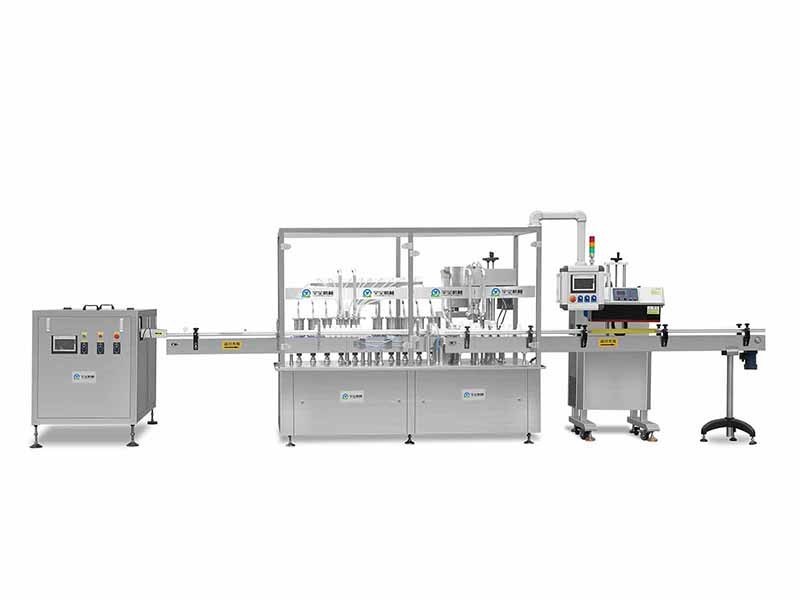
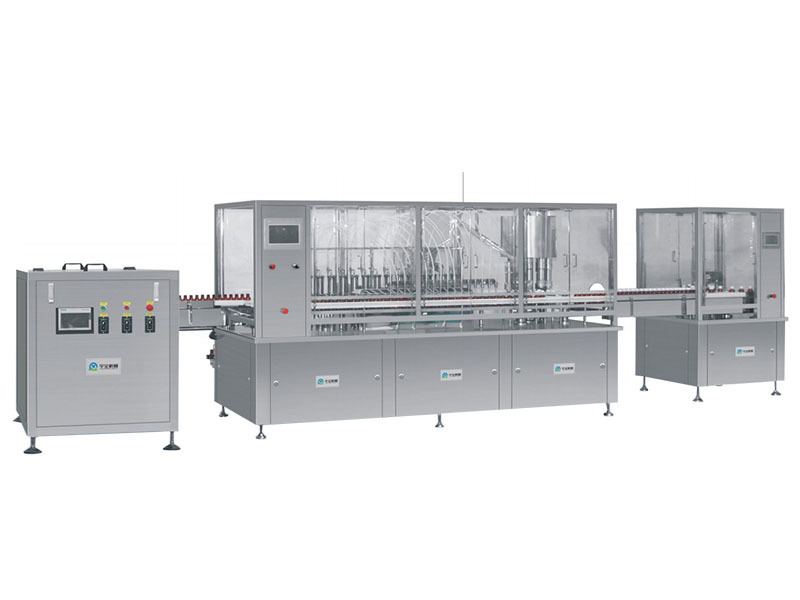
Production Line in the Workshop
I. Overview of Centralized Fuel Supply System:
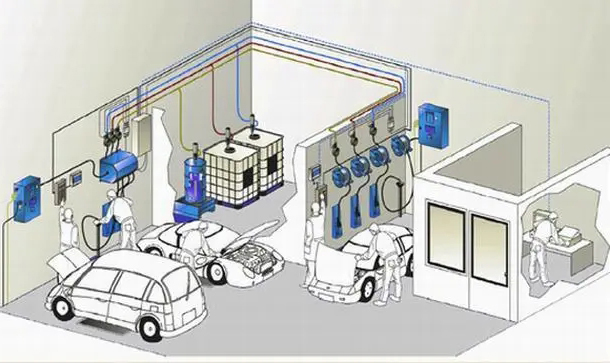
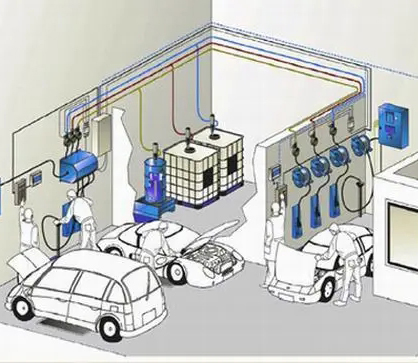
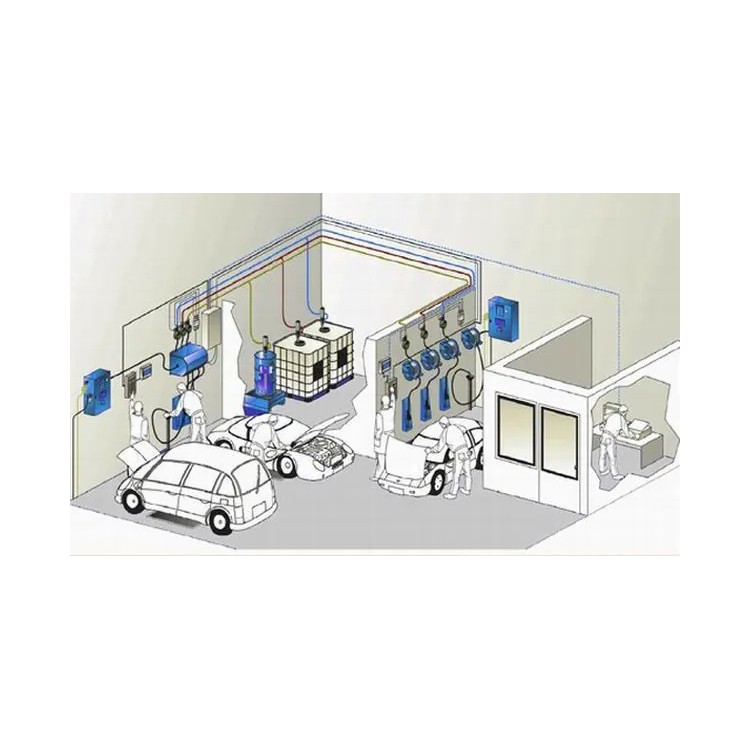
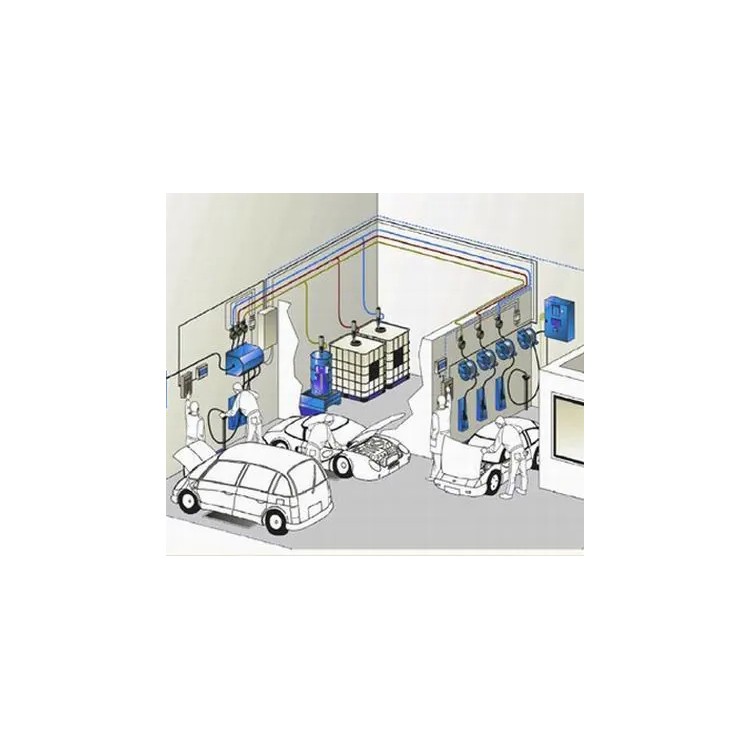
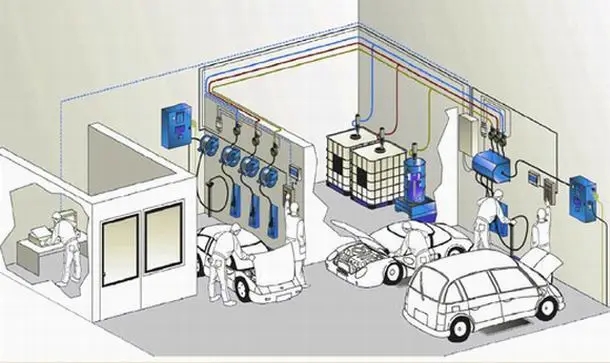
1. Automotive oil is stored centrally in the fuel storage, transported through pressure-resistant pipelines to various refueling stations, forming a comprehensive fuel supply system. This enables quick oil changes and centralized lubricant refueling, greatly convenience users, saves space, enhances efficiency, and maintains a clean environment.
2. Suitable for the precise filling of oils such as engine oil, transmission fluid, rear axle oil, fuel, coolant, power oil, and hydraulic oil under non-vacuum conditions.
3. The quantitative topping system utilizes high-quality components and structural design, ensuring excellent filling accuracy and reliability while also enhancing the on-site working environment.
Section 2: Composition and Main Functions of Centralized Fuel Supply System
1. Fuel Pump Room: Equipped with different specifications of pneumatic plunger pumps, capable of supplying lubricating oils of varying viscosities. The oil tanks, following international standards, ensure safety, environmental protection, and cleanliness. Power is supplied by clean compressed air, making it highly reliable and safe.
2. Fueling Station: Each station is equipped with a 10-15m flexible turntable and a metering display nozzle. The main feature is that it allows for fueling at any location within a certain range with ease of expansion and contraction, thus preventing damage to the hoses from dragging on the ground and maintaining a clean work site.
3. Fuel Supply Pipeline: Composed of high-pressure carbon steel pipes, high-pressure valves, and high-pressure fittings, this pipeline is designed for high pressure resistance, no leakage, and safety with an aesthetically pleasing appearance. The pipeline distance and location can be customized according to customer requirements. The pipeline diameter can be designed based on the actual length and height, among other specific circumstances.