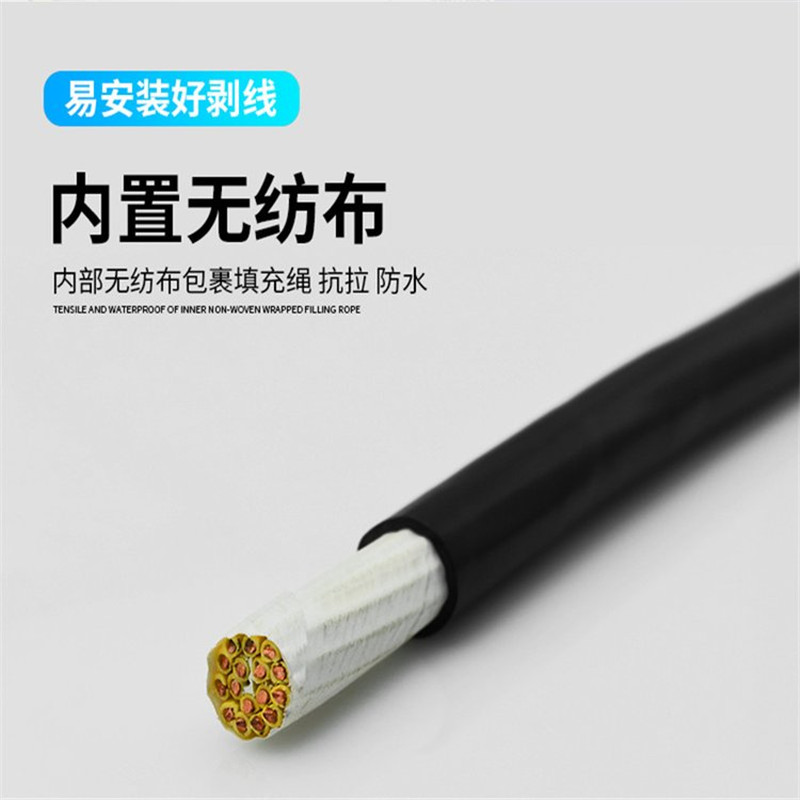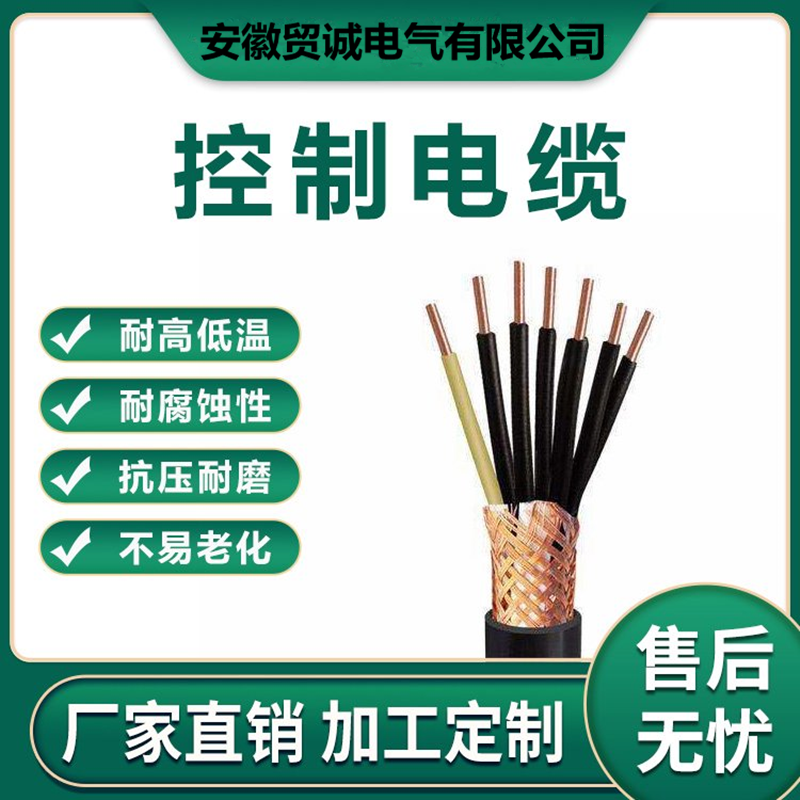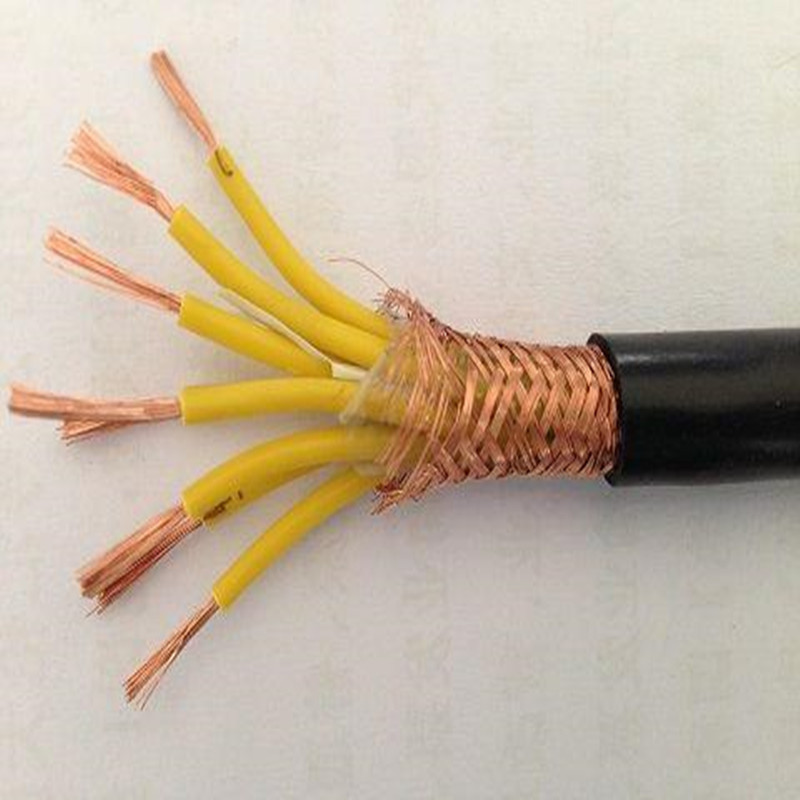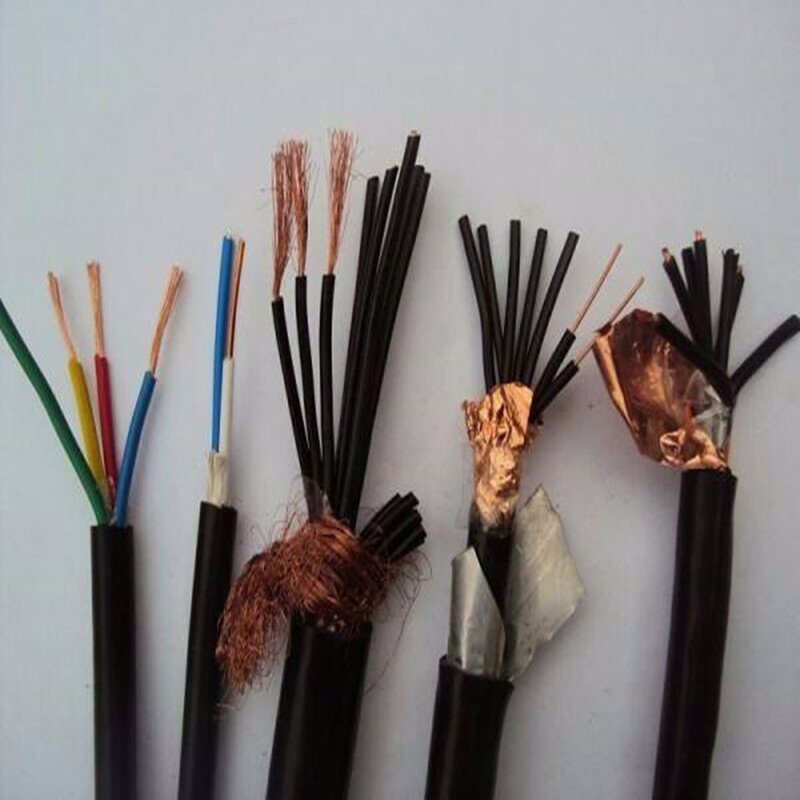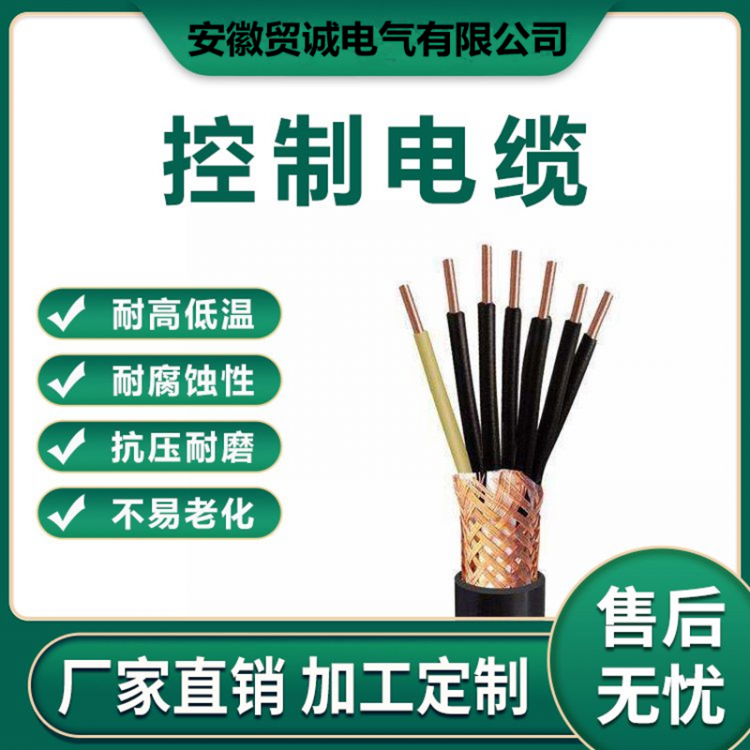

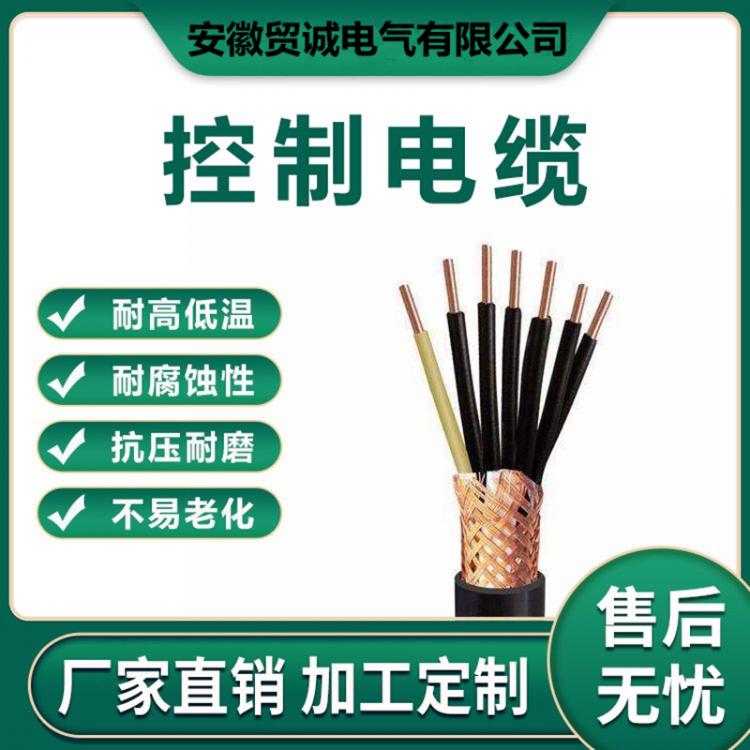












The primary use of control cables is for transmitting control and measurement signals.
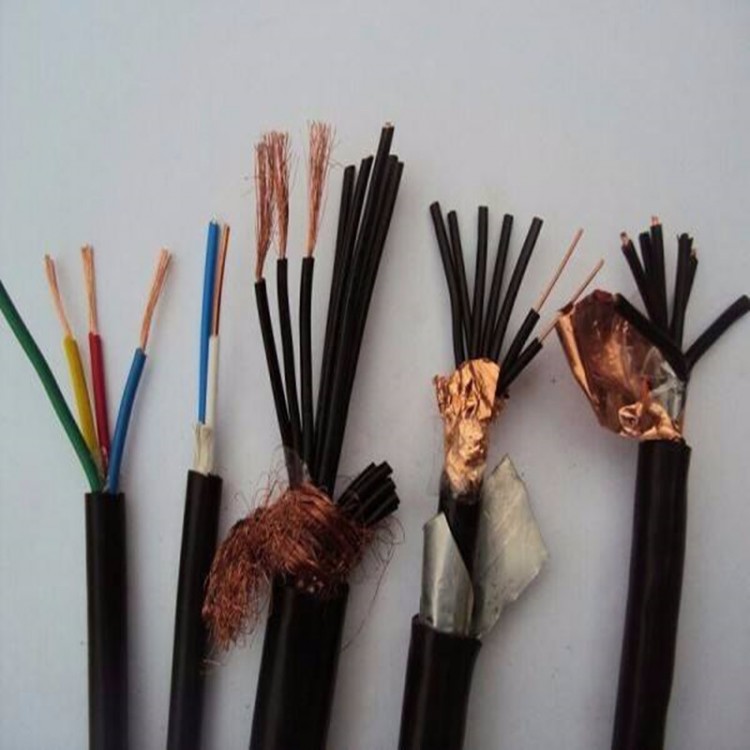
Control cables are a general term for cables used to power equipment and instruments.Cables for signal control use, complying with standard GB/T9330-2008. If the cables have other various combustion characteristics requirements, they should also meet the relevant test requirements specified in GB/T19666-2005. Control cables are a type of electrical equipment cable, with the nominal voltage primarily being Uo/U=450/750V. The standard specifies the nominal cross-sectional area for control cables to be under 10 square millimeters. Control cables are used for transmitting control signals, featuring a higher number of insulated cores, with up to 61 cores as per the standard, but can also be produced with more cores as needed.
Control cables for AC and DC applications50Hz, rated voltage 300/300V, and for operations, control of furnaces, signals, and protection measurement circuits at distances below 450/750V in industrial and mining enterprises, modern high-rise buildings, etc. It can also serve as a connecting line between various electrical appliances, instruments, and automation devices, transmitting various electrical signals, ensuring system safety, and enabling reliable operation.
Control cables can be used to connect control centers to various systems for transmitting signals or controlling operational functions. They are suitable for applications such as indicator lights, instrument readings, the operation of relays and switches, alarm interlock systems, and more.
Control cables can be categorized by their application into general control cables and flame-retardant (ZR Control Cables, Flame Retardant (NH/ZCN) Control Cables, Low Smoke and Halogen-Free (DW) Control Cables, Low Smoke and Low Halogen (DLD) Control Cables, High Flame Retardant (GZR) Control Cables, Temperature and Cold Resistance Control Cables, etc.