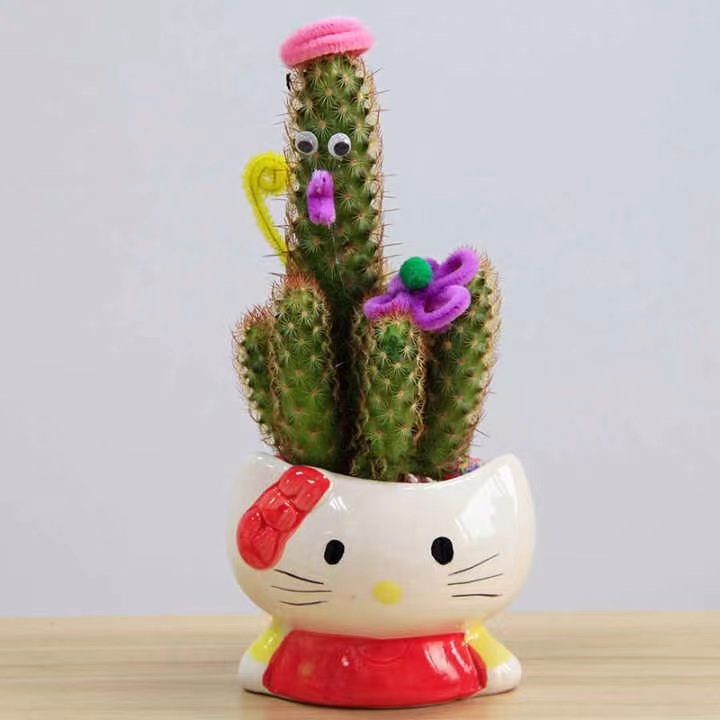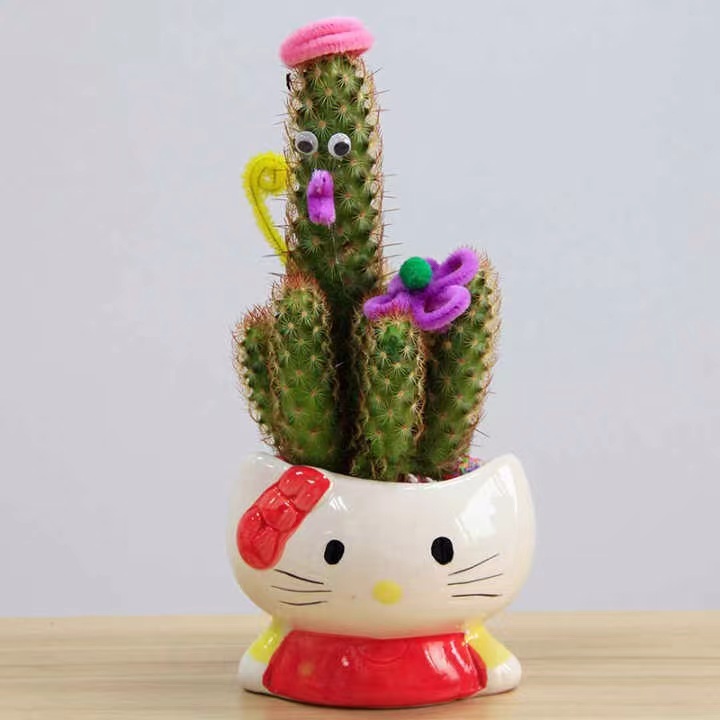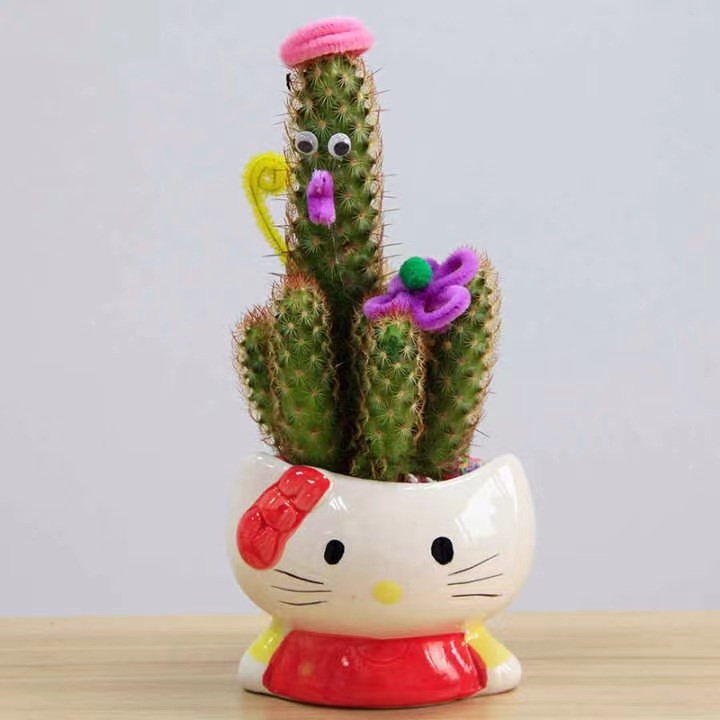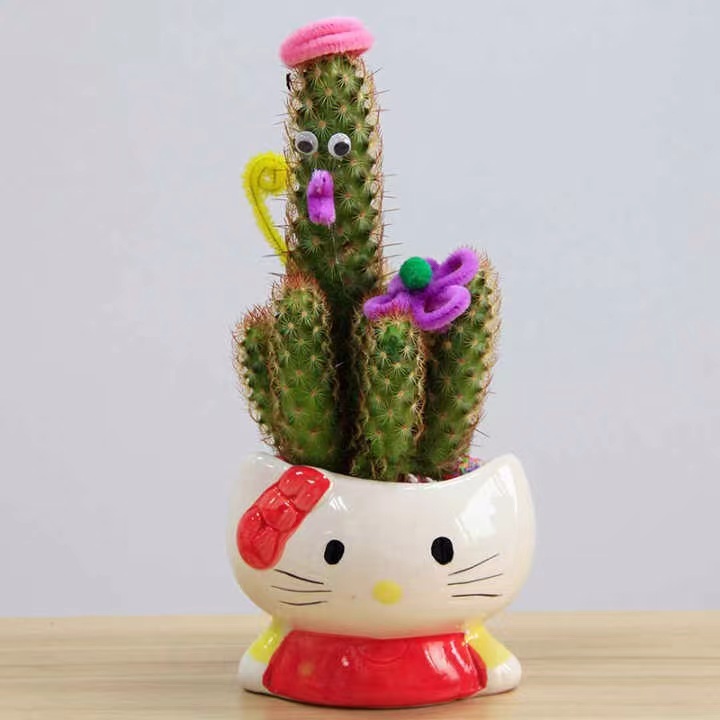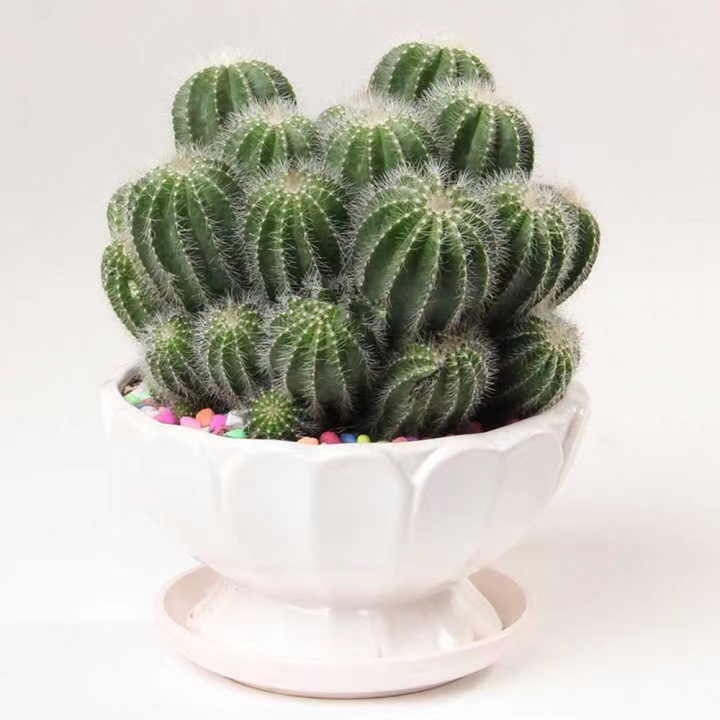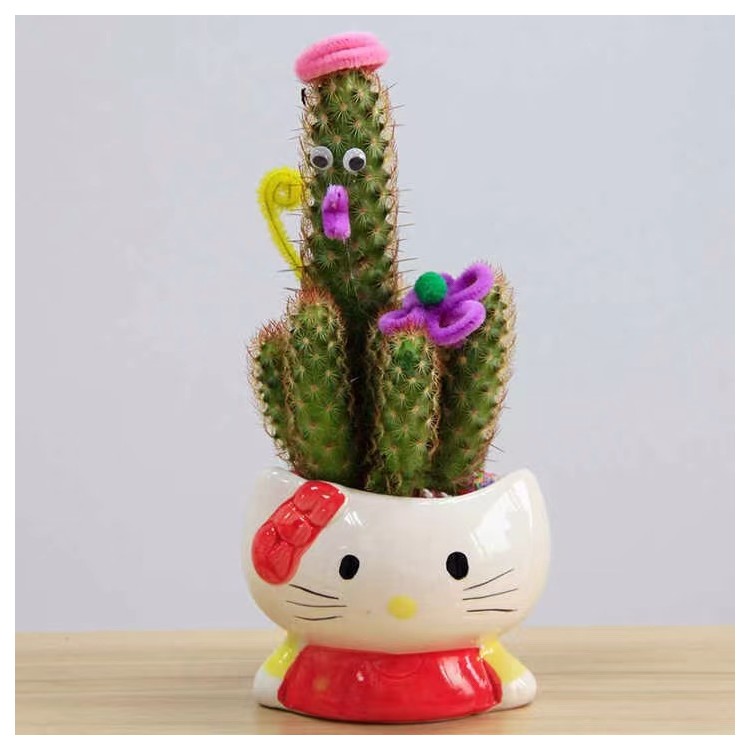

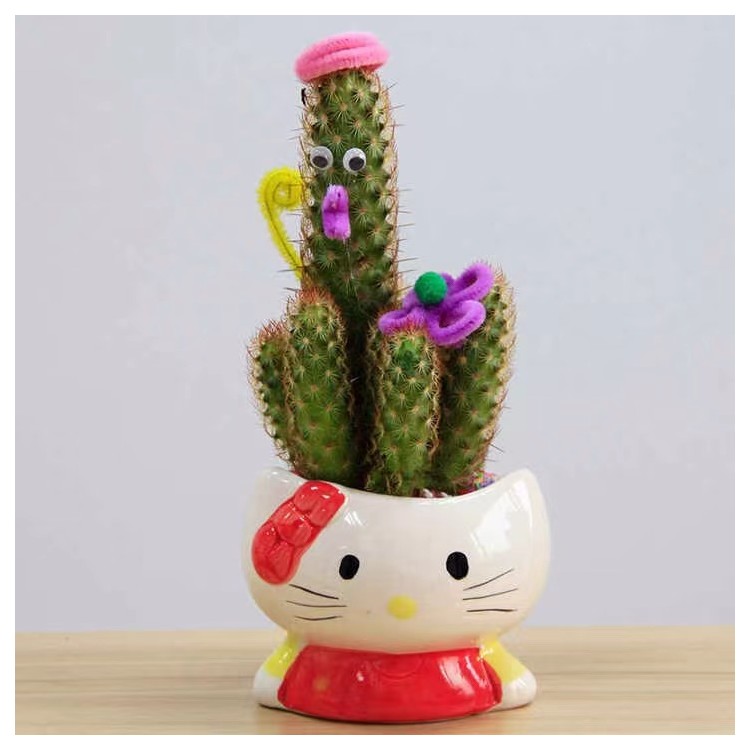











Cacti, also known as "Fairy Hand," "Guanyin Hand," "Bawang," "Fire Hand," and others, belong to the Cactaceae family. These are clump-forming succulent shrubs with branches that are broadly ovoid, ovoid-elliptical, or nearly circular at the top; their flowers are radiate, with an ovoid receptacle; seeds are mostly flat and round, with slightly irregular edges, hairless, and pale yellow-brown. Cacti thrive in intense sunlight, tolerate heat, drought, and poor soil, displaying strong vitality, and their optimal growth temperature ranges from 20-30°C. They are primarily distributed in arid regions of tropical and subtropical areas, such as the southern and southeastern coastal regions of the United States, the West Indies, the Bermuda Islands, northern South America, southern China, and Southeast Asia.
There are numerous types of cacti, with 70-110 genera and over 2,000 species worldwide. They can be categorized into: round fan cacti, segmental cacti, crab claw cacti (crab orchids), leafy forest cacti, and spherical cacti. They commonly grow in arid environments like deserts and are known as "heroes of the desert." They belong to the category of succulent plants.
What are the benefits of keeping a cactus at home?
1, Purify the air.
Growing cacti indoors can increase negative ions in the indoor air, making the air especially fresh and beneficial to health, and also 2, absorb dust.
Cacti are experts at trapping dust, and placing them in living spaces can greatly improve the air quality.
3, Nighttime Oxygen Bar.
Cacti adapt to the arid, hot climate of desert regions by closing their stomata during the day to prevent water evaporation, and then opening them at night to absorb moisture.CO₂Invigorate oxygen, known as the "Nighttime Oxygen Bar"