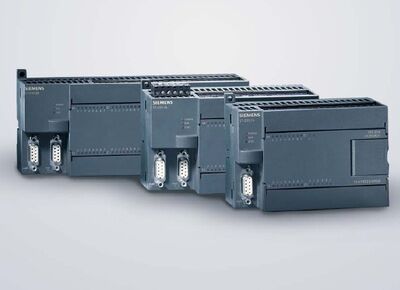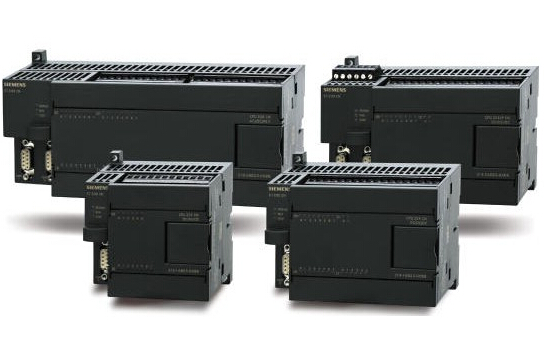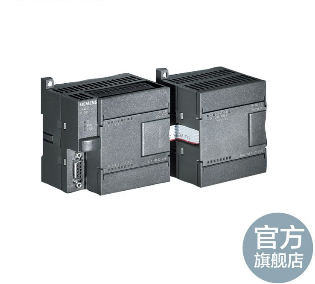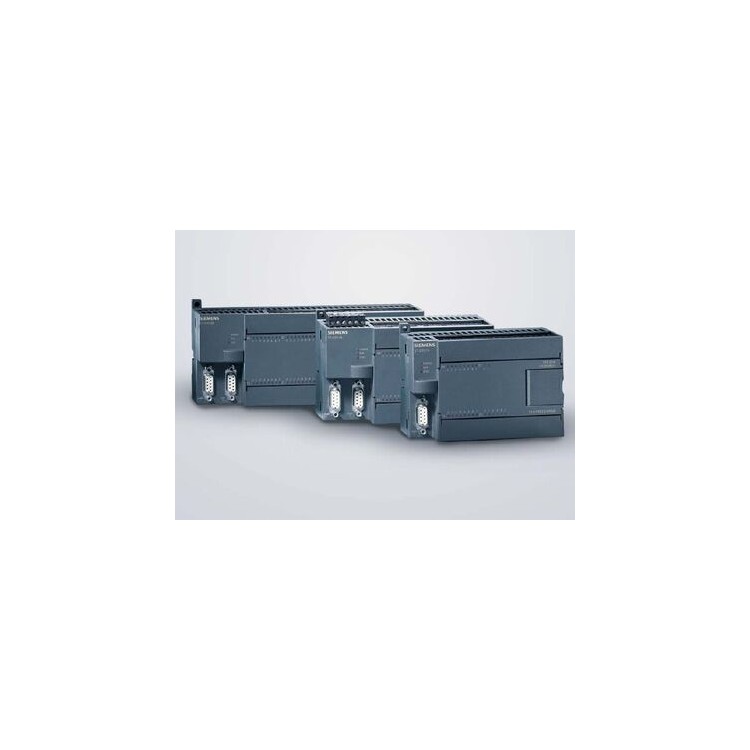

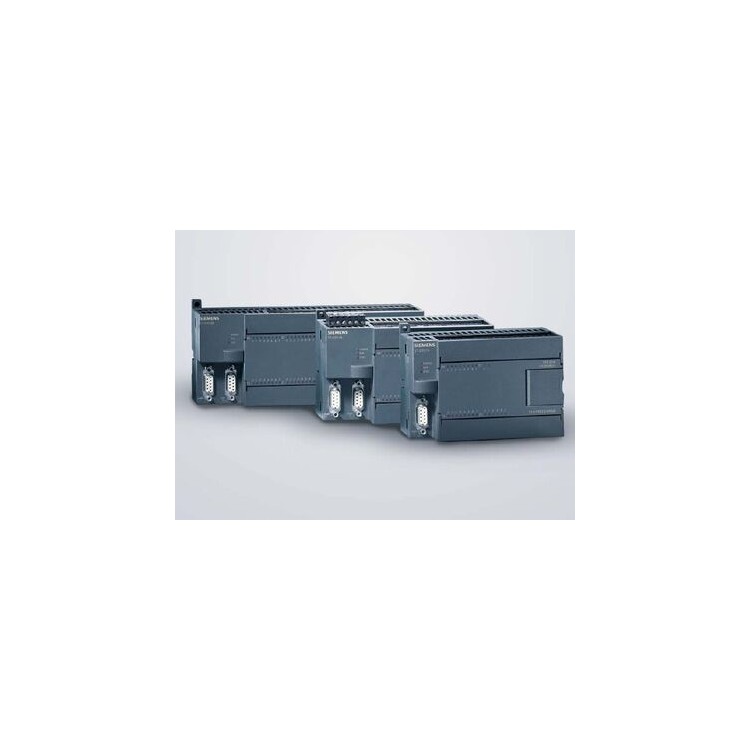
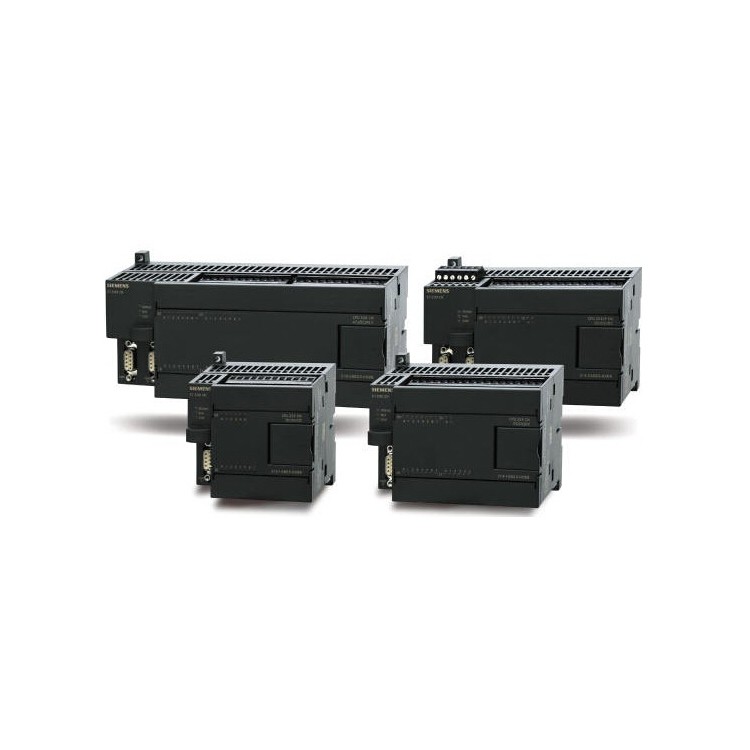











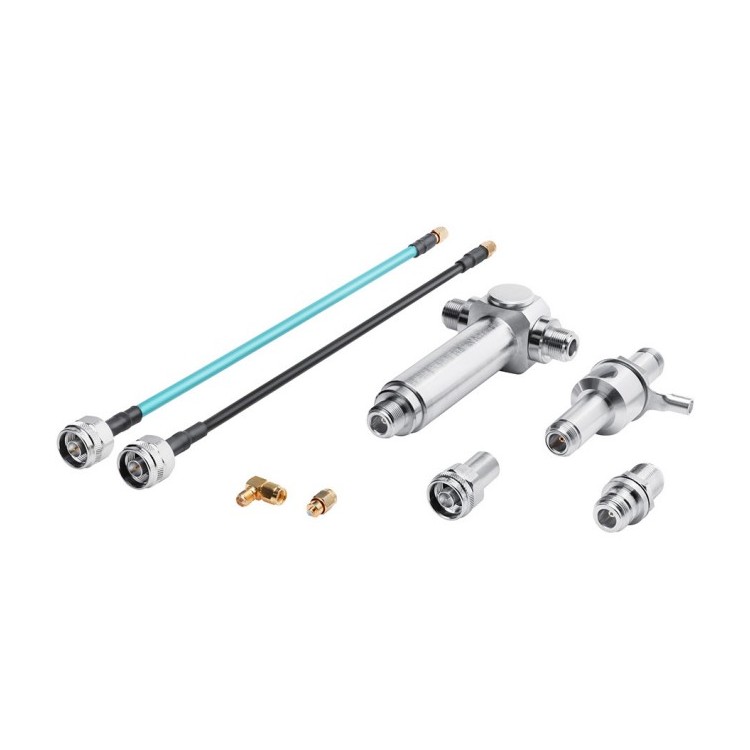
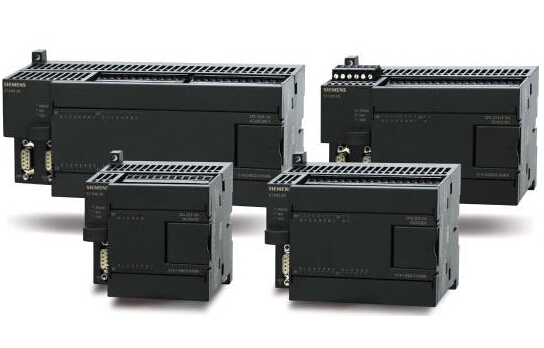
The Siemens S7-200 Communication Module Micro PLC offers communication functionalities.
Operate the integrated RS485 interface at data transmission rates of 1.2 to 187.5 kbaud.
· When the Profibus reaches 126 participants: programming devices, SIMATIC HMI products, and CPUs can be connected seamlessly. In a pure S7-200 network, this is achieved through the integrated PPI protocol. In a network composed of fully integrated automation devices, such as SIMATIC S7-300/400 or SIMATIC HMI, the S7-200 CPU is integrated as an MPI slave station.
· In the freely programmable mode at 115.2 kbaud, user-specific protocols such as ASCII are employed (which supports interconnection with modems, printers, barcode readers, personal PCs, third-party PLCs, and any other devices). Using USS protocol commands, up to 32 Siemens variable frequency drives can be controlled without additional hardware.
You can establish a connection with the Modbus RTU network using Modbus protocol commands.
To the top of the page
Dot
Modem Communication
Access to the S7-200 CPU is available almost anywhere in the world through modems connected to wired or wireless networks.
Remote Services: Modern communication options help avoid expensive service calls. Just two modems are needed to remotely access full functionality, such as program transfer, status, or control; various communications
All messaging tools are integrated as standard features. Local modems can be used as external modems.
· Remote Control: You can call messages and measured values via a modem, as well as define new set points or commands. In this case, a base station S7-200 can control almost an unlimited number of remote sites. You can freely choose the data transmission protocol, such as: text messages directly to a phone, error messages to a fax machine, or Modbus RTU.
Quick PROFIBUS connection
The EM277 communication module supports all CPUs above 222, operating as a standard slave station on the PROFIBUS DP network with a transmission rate of up to 12 Mbit/s. The S7-200's open features for higher PROFIBUS DP control levels ensure you can integrate a single machine into a production line. With the EM 277 expansion module, you can enable PROFIBUS capability for individual machines equipped with S7-200.
Large-function AS-Interface connection
On the AS-Interface network, the CP243-2 will transition from a CPU at 222 to a more capable master station. According to the new AS-V2.1 interface specifications, it can connect up to 62 stations, even with easy-to-integrate analog sensors. With AS-Interface, you can connect 248 DI+186 DO in the configuration. The large number of 62 stations can include up to 31 analog modules. The AS-Interface interface wizard supports the configuration of slave stations and reading/writing data.
To the top of the page
Design and Functionality
The built-in RS485 interface operates at data transmission rates up to 187.5 kbit/s and offers the following functions:
· As a system bus with a large network of 126 sites, it is capable of connecting programming devices, SIMATIC HMI products, and SIMATIC CPUs without any issues.
Integrated PPI protocol is used for a network supporting multiple hosts from a single port for pure S7-200. In a network composed of other Siemens devices (such as SIMATIC S7-300/400 and SIMATIC HMI), the S7-200 CPU is integrated as a slave station for MPI.
· In Freeport mode (up to 115.2 kbaud), using a user-defined protocol (e.g., ASCII protocol) means that the SIMATIC S7-200 is open to any connected device, such as a modem, barcode scanner, PC, non-Siemens PLC, and more. With the USS protocol via the driver, up to 32 Siemens inverters can be controlled without additional hardware.
The Modbus RTU library included in this package can also be used to connect as a master or slave to a Modbus RTU network.
OPC Driver with PC Access
PC Access serves as an ideal foundation for data exchange between the S7-200 and the connected PC—regardless of the communication link choice (PPI, Modem, Ethernet/IT CP). As an OPC server, PC ACCESS allows you to write or read S7-200 data using Microsoft Excel, or any other OPC client application.
As an OPC client, it is capable of handling up to 8 connections for ProTool Pro, WinCC flexibleRT, and Win CC, allowing for configuration, programming, and monitoring from a single location, saving time. It enables a simple universal connection to PLCs on different computers via FTP, HTTP, Java, and email. The CP243-1 IT module provides quick access features. The CP243-1 Ethernet module allows for fast access to S7-200 process data over Ethernet for archiving or further processing. STEP 7-Micro/WIN configuration support ensures simple debugging and convenient diagnostic solutions.
To the top of the page
Integrated PPI Interface
Integrated PPI interface as an S7-200 system bus or free programming interface - for connecting printers, barcode scanners, etc.
To the top of the page
PROFIBUS DP Slave Station EM 277
Through the PROFIBUS DP slave module, PROFIBUS above CPU222
To the top of the page
AS-Interface Master Station CP 243-2, with 2 additional modules
Through the AS-Interface module, functioning as a master station CPU222 or above
To the top of the page
Modem Module EM241
The EM 241 modem module features full functionality for PLC communication, including remote maintenance, remote control, remote diagnostics, reporting, and remote data transfer.
To the top of the page
Internet Technology module CP243-1 IT, plus 1 module
CP 243-IT, the Internet Technology module is used for communication via FTP, email, or HTTP.
To the top of the page
GSM/GPRS Modem SINAUT MD720-3
SINAUT MD720-3 GSM/GRPS Modem; IP communication via GSM NET; Quad Band
To the top of the page
Ethernet module CP243-1, additional 1 module