










Grouting construction
Basic processing
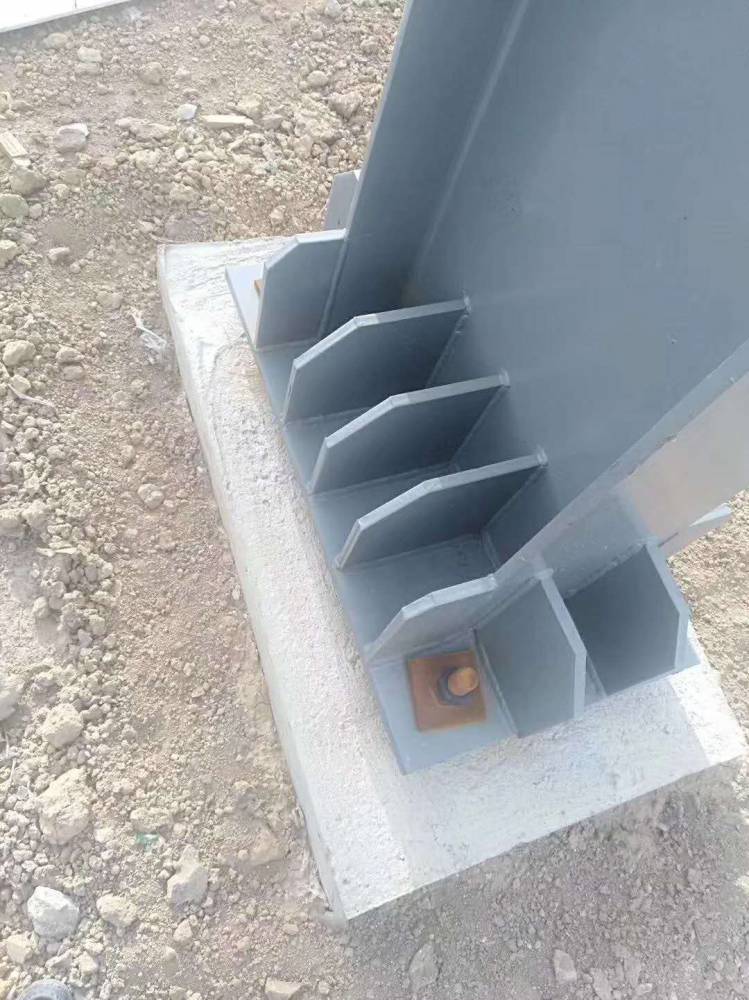
1. Clean the surface of the foundation without any debris such as crushed stones, floating slurry, floating ash, oil stains, and release agents.
2. 24 hours before grouting, the foundation surface should be fully wetted, and 1 hour before grouting, any accumulated water should be removed.
Support grouting material manufacturer wholesales Gushi early strength grouting material
The positions with serious dust hazards are mainly concentrated in the areas of large sawing, manual polishing, special-shaped processing, and bridge cutting operations; The positions with serious noise hazards are mainly concentrated in large sawing, irregular processing, circular sawing, bridge cutting, and manual polishing operations; The positions with serious chemical toxicity hazards are mainly concentrated in the brushing positions of repairing marble with glue containing benzene. The main occupations involved in the production process of stone processing enterprises include pneumoconiosis, noise induced hearing loss, and occupational poisoning. The main occupational hazard in stone processing and production enterprises is silica dust. Because the main mineral component of stone processing is silicon dioxide (SiO2), a large amount of silicon dust (silicon dust refers to dust with a free silicon content of more than 1%) is generated during the production process. If workers inhale silicon dust, they will suffer from silicosis.
: Support mold
1. Set up templates according to the grouting construction drawing. The joints between templates and foundations, as well as between templates, shall be sealed with cement slurry, tape, etc. to achieve the degree of overall template waterproofing.
2. The horizontal distance between the template and the equipment base should be controlled at around 100mm to facilitate grouting construction.
3. The top elevation of the template should be 50mm higher than the surface of the equipment base.
4. If there is grout leakage during grouting, it should be dealt with in a timely manner.

So, when choosing these decorative materials, in addition to paying attention to the quality of the materials themselves, attention should also be paid to the level of radioactivity. However, the level of radioactivity in the product cannot be observed with the naked eye, and must be detected by professional instruments. Therefore, when choosing materials, requesting the radiation report of the product from the distributor is the most direct, accurate, and effective way. Compared with other products, the determination of radioactive products is not simply based on whether they are qualified or unqualified, but is divided into three categories: C. ”Ma Fangkui said that the country has defined and classified building materials in the "Limits of Radionuclides in Building Materials" GB6566-21 standard. With the continuous improvement of people's living standards, laying natural stone in the bathroom has gradually become a fashion. The color, pattern, and texture of stone are often selected based on the subjective feelings of the owner. The commonly used decorative stones in bathrooms are marble and granite. Nowadays, people generally prefer to use marble as a decorative countertop for washbasins, while the floors and walls of bathrooms are decorated with natural stone, adding a touch of elegance to the bathroom atmosphere. Marble is also known as metamorphic or recrystallized limestone. True marble is a metamorphic rock of calcite and has a crystalline structure.
Step 3: Preparation of grouting material
1. The general reinforced type is mixed with water at a standard of 12-13%, while the pea gravel reinforced type is mixed with water at a standard of 9-10%.
2. It is recommended to use mechanical stirring method, and the stirring time is generally 1-2 minutes. When using manual mixing, 2/3 of the water should be added first and mixed for 2 minutes, then the remaining water should be added and mixed evenly
When the temperature in the water storage tank does not meet the set requirements during the automatic operation of the electric boiler, the boiler will frequently shut down and then start on its own; When manually controlled, the boiler starts boiling after continuous heating for 3 minutes. Existing problems and solutions 3.1 Insufficient flow rate of circulating water pump According to the information provided by the boiler manufacturer, the heating method of this electric boiler is indirect heating, and the internal circulating water of the boiler (hereinafter referred to as furnace circulation) is the primary heating medium. Due to the fast instantaneous temperature rise rate of electric heating, the circulating water temperature in the furnace must be controlled below 8 ℃ (under normal circumstances, vaporization begins when the water temperature exceeds 85 ℃). In the case where the heat carried away by the circulating flow rate (referred to as secondary circulation) of the hot water supply system is less than the heat obtained by the primary circulating water of the boiler, the operation of the boiler can only rely on intermittent heating to ensure that the circulating water temperature inside the furnace does not exceed the standard.
3. The amount of mixing each time should be determined based on the amount used to ensure that the material is used up within 30 minutes.
4. During on-site use, it is strictly prohibited to add any admixtures or external additives to the grouting material.
Step 4: Grouting Construction Method
1. Long equipment or track foundations should be constructed in sections.
2. During secondary grouting, grouting should be carried out from multiple points on one side or adjacent sides until it overflows from the other side, in order to facilitate exhaust during the grouting process. Grouting shall not be carried out simultaneously from all four sides
Compared to buying new flooring, old flooring adapts to indoor environments and has better stability; The renovation cost is also much cheaper. According to Gao Zhihua, the chairman of the Flooring Committee of the Wood Circulation Association, not all flooring can be renovated. The surface of the reinforced floor has a wear-resistant layer of aluminum oxide, and renovating the floor will damage its wear-resistant layer, causing the floor to age more severely, so the reinforced floor cannot be renovated. Only solid wood flooring, solid wood composite flooring, and bamboo flooring with a surface thickness of 4 millimeters can be renovated. Because the surface of the floor will be polished off by 1-2 millimeters after several rounds of polishing, if the surface of the floor is too thin, an intermediate layer will be polished, affecting the service life of the floor. Therefore, it is necessary to ensure that the thickness of the surface of the floor is greater than 4 millimeters.
3. After grouting begins, it must be carried out continuously without interruption. And shorten the grouting time as much as possible.
4. Vibration is strictly prohibited during the grouting process. If necessary, a grouting booster can be used to push the grouting material along the bottom of the grouting layer. It is strictly prohibited to push it from the middle or upper part of the grouting layer to ensure its uniformity.
5. After the equipment foundation grouting is completed, a 45 degree oblique angle should be cut outward along the edge of the equipment 3-6 hours after grouting to prevent cracks from forming at the free end. If edge cutting is not possible, the surface of the grouting layer should be smoothed with a trowel 3-6 hours after grouting.
6. The thickness of each grouting material should not exceed 100mm.
Giant stones can be placed separately or combined with small stones to create a dry riverbed. Uncut stones: Any small or medium-sized stones are collected from the surface, not excavated; Uncut stones are more suitable for building walls. Stone slab: Flat stones excavated with natural cracks, usually used for irregular wide edges, flat stones; Usually used as a wide and irregular slab with large edges, stone slabs are a good choice for laying beautiful courtyards and sidewalks. Classification of stones: flat pieces that are split in a manner similar to stone slabs, but are divided into more delicate rectangular shapes suitable for edge stacking. It is also known as stacked stone. Large ones can be used for walls, while narrow stone pieces can be used to create wall veneers.
7. When the grouting volume of the equipment foundation is large, the mixing of pea gravel reinforced grouting material should be done by mechanical mixing to ensure grouting construction.
Step 5: Maintenance
1. Within 30 minutes after grouting is completed, a wet grass curtain or rock wool blanket should be immediately covered and kept moist.
2. During winter construction, maintenance measures should also comply with the relevant provisions of the current GB50204 standard.
3. After the grouting material reaches the demoulding time, equipment installation can be carried out. For specific time, please refer to the "Relationship Table between Demoulding and Curing Time and Environmental Temperature".
4. After the grouting of the equipment foundation is completed, if any parts need to be removed, they can be gently removed with a spatula or shovel tool 3-6 hours after the grouting is completed, before the grouting layer hardens.
5. The vibration of the running machine should not be transmitted to the equipment foundation. After the secondary grouting, the machine should be stopped for 24-36 hours to avoid damaging the uncured grouting layer.
Strange stones are art, with a beautiful appearance that requires renovation and maintenance. This is probably known to those who are beginners in playing with stones. However, not all enthusiasts of rare stones know or have many knowledge about how to rectify and maintain them. The remediation of rare stones mainly refers to the surface treatment of newly mined raw stones. A newly excavated stone has both mud and sand on its surface, calcareous foreskin, as well as soaked mottled moss and other substances. Some river stones and sea stones are covered with moss, scale, seaweed, shellfish, etc., all of which require surface treatment. Especially the spirit wall stones need to be renovated. According to Du Wan's "Yunlin Stone Manual", people often use iron blades to scrape and scrape.
Recommended dosage
Calculate the actual usage based on a reference dosage of 2.28-2.4 tons/cubic meter.
Packaging, storage and transportation
1. Packaging specifications: 50kg ± 1kg per bag, stored in a ventilated and dry place and protected from direct sunlight.
2. The shelf life is 3 months. If it exceeds the shelf life, it should be retested and qualified before use.
3. Does not contain components such as benzene derivatives, halogenated hydrocarbons, heavy metals, etc., non-toxic, odorless, pollution-free, non flammable and non explosive, and can be transported as general cargo













