








Additional features of the mold temperature control machine:
1. Easy installation;
2. Simple operation, no personnel required; just a brief training for the operator to get started, or they can follow the manual instructions.
3. The heating method is a recirculating heating, therefore, there is no medium loss.
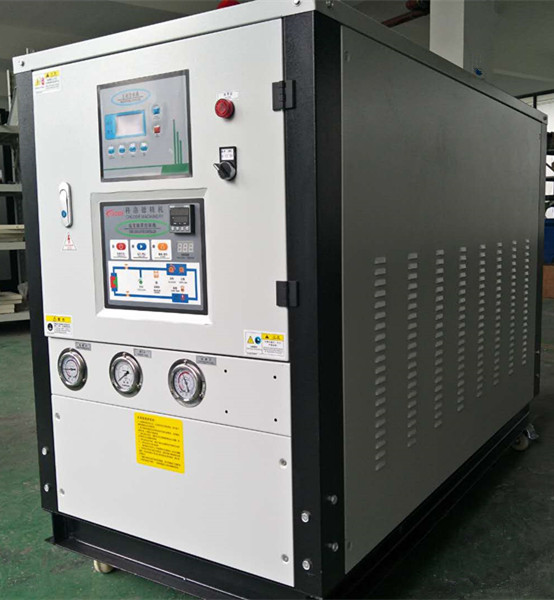
Mold temperature control machines, also known as mold temperature regulating units, were initially used in the plastic injection mold temperature control industry. With the development of the machinery industry, their applications have become increasingly widespread. Nowadays, mold temperature control machines are generally categorized into water temperature machines and oil temperature machines, with temperature control accuracy reaching ±0.1°C.

The advantages of a mold temperature controller:
1. Operates at a high working temperature of ≤320℃ under the specified operating pressure, reducing the pressure grade of the heat-using equipment and enhancing the system's safety.
2. Uniform heating, featuring PID self-tuning intelligent control for temperature regulation, with an accuracy of ±1°C, capable of meeting the stringent requirements of high-precision process standards.
3. Compact and space-saving, suitable for installation near heating equipment; no need for a dedicated boiler room or dedicated staff; reduces equipment and operation costs; quick recovery.
4. Equipped with complete operation control and safety monitoring devices, the heating process is fully automated, operation is simple, and installation is convenient.
5. Closed-loop heating system with minimal heat loss, energy-efficient, environmentally friendly, and widely applicable.
6. Available in low-temperature models ≤180°C, medium-temperature models ≤300°C, and high-temperature models ≤350°C, with a full range of product specifications and wide user selection.

Important Notes: The following points are key considerations when selecting a mold temperature controller.
1. Pump size and capacity;
2. Internal tube diameter
3. Heating capacity
4. Cooling capacity
5. Control Forms