








Mold Temperature Controller Applications:
1. Injection Molding Molds Thermal Balance Control The thermal conduction between the injection molding machine and the mold is crucial for producing injection molded parts. Within the mold, heat generated by the plastic (such as thermoplastic) is transferred to the mold's steel material and to the conductive fluid through conduction. Additionally, heat is transferred to the atmosphere and the mold frame. The heat absorbed by the conductive fluid is removed by the mold temperature control unit.
2. Purpose of Mold Temperature Control and Its Impact on Injection Molding Parts In the injection molding process, the primary objectives of controlling mold temperature are to heat the mold to operating temperature and to maintain a constant temperature at work. If these two points are successfully achieved, it can optimize the cycle time, thereby ensuring stable high-quality injection molded parts. Mold temperature affects several aspects, including surface quality, fluidity, shrinkage rate, injection cycle, and deformation.
Mold temperatures that are too high or too low can have different effects on various materials. For thermoplastic plastics, a slightly higher mold temperature generally improves surface quality and flowability, but extends cooling time and injection molding cycles. A slightly lower mold temperature reduces shrinkage within the mold, but increases the shrinkage rate of the molded parts after demolding. For thermosetting plastics, a slightly higher mold temperature typically reduces cycle time, with the duration determined by the cooling time of the parts. Additionally, in the processing of plastics, a slightly higher mold temperature can also reduce plasticization time and decrease the number of cycles.
3. The temperature control system for effectively regulating mold temperature consists of three parts: the mold, the mold temperature machine, and the heat-conducting fluid. To ensure that heat can be added to or removed from the mold, each part of the system must meet the following conditions: Firstly, within the mold, the surface area of the cooling channels must be sufficient, and the diameter of the channels must match the pump's capacity (pump pressure). The temperature distribution within the cavity has a significant impact on part deformation and internal pressure. Properly setting the cooling channels can reduce internal pressure, thereby improving the quality of the injection molded parts.
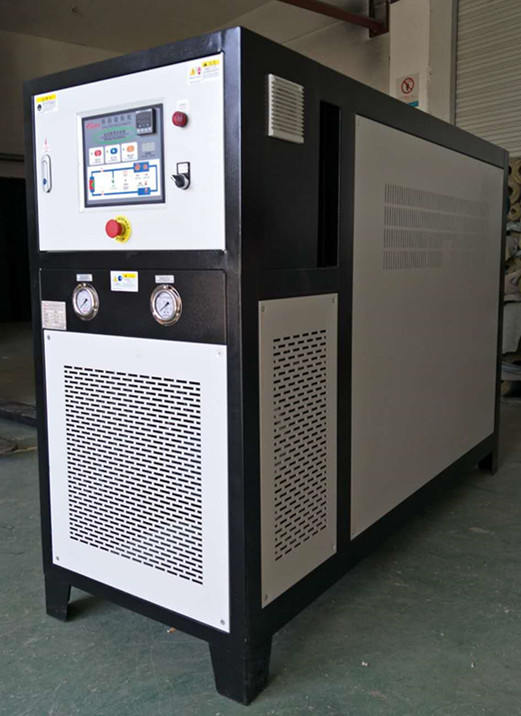
It's clear that oil recirculation temperature control units are highly versatile. Among all current temperature control devices, none have such a broad range of applications as the oil recirculation temperature control units.
Advantages of the oil recirculation temperature control unit:
The oil circulation temperature control unit is aptly named as a high-end temperature control device for a reason. Firstly, its temperature control range is exceptionally high, capable of reaching up to 350 degrees, even 400 degrees, which is challenging for conventional heating and temperature control equipment. Secondly, due to its use of liquid thermal oil as the heat transfer medium, the application scope of the oil circulation temperature control unit is extremely broad. There are several benefits to using thermal oil as the heat transfer medium: 1) even heating, 2) cooling effect, and 3) modular design. It is precisely because of these characteristics of thermal oil that the oil circulation temperature control unit also possesses these qualities.

Mold temperature control machine maintenance:
1. We have purchased a new mold temperature control machine. Please check if the cooling water is circulating before use to prevent damage to the machine due to insufficient cooling water. We must maintain a clean working environment for the mold temperature control machine, avoiding dust, which can greatly extend the lifespan of the electrical components.
2. New mold temperature control machines require different maintenance measures based on the heat-conducting medium used. For water-based mediums, we must maintain clean water sources to prevent scaling and avoid pipeline blockages. For oil-based mediums, we need to change them regularly based on the operating temperature; for temperatures above 200°C, we should replace them every one to two months, while for temperatures below 200°C, a replacement every quarter is sufficient to prevent inadequate temperature addition.
3. In terms of piping, we need to assess for blockage based on the relationship between the pump and pressure. If the pressure is too low, we can remove the heating tube and clean it with tools, especially the filter screen of the system, which should be cleaned once a month.
4. Regularly inspect the mold temperature control machine's water pump and oil pump for oil leakage. If necessary, the pump shaft seal can also be replaced periodically.
5. In electrical components, we can replace them as needed based on their lifespan, and conduct regular testing to ensure safety.

Engineering plastics like PC, PA, PBT, etc., have high temperature requirements. The heat generated by the injection molding machine alone cannot meet the optimal temperature needed for the molding process. The mold temperature control function of the plastic mold can quickly raise the mold temperature and can freely adjust and ensure the stability of the mold temperature according to the temperature requirements of different materials, reducing the occurrence of defective products.