








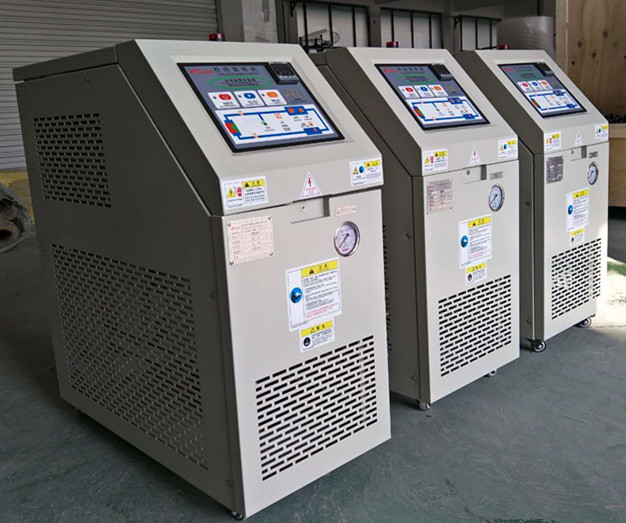
The mold temperature control machine heats oil or water to the optimal temperature required for product molding, then circulates it into the mold to rapidly increase the mold temperature, enhancing molding efficiency and shortening demolding time. The heating and cooling elements within the plastic mold temperature control machine can adjust the temperature of water or heat transfer oil, and quickly circulate to maintain a stable temperature during the molding process, improving product quality and efficiency. The mold temperature control machine supply effectively accelerates production进度, reduces energy consumption, and saves energy. Made by the original factory, it offers guaranteed quality and high cost-effectiveness, making it a worthwhile purchase.
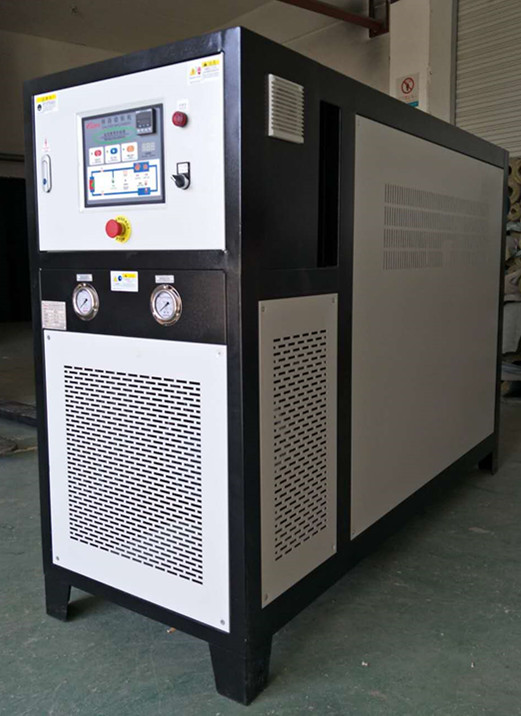
The oil circulation temperature control unit integrates the heating element, oil pump, temperature control components, program board, piping system, and oil tank into one. The oil pump, heating element, and user equipment end all belong to the same piping system. The heat-conducting oil is continuously forced to circulate by the oil pump, absorbing heat from the heating element, which gradually raises the oil temperature. As the oil temperature increases, it directly raises the temperature at the user equipment end. In this way, the program board detects the oil temperature through the temperature control system and only stops the heating request of the heating element when the oil temperature reaches the set temperature value. This is also the working process of the oil circulation temperature control unit.
Mold Temperature Controller Applications:
1. Heat balance control in injection mold The thermal conduction of injection molding machines and molds is crucial for producing injection parts. Inside the mold, heat brought by the plastic (such as thermoplastic) is transferred to the mold steel through heat conduction and to the heat-conductive fluid through convection. Additionally, heat is transferred to the atmosphere and mold frame. The heat absorbed by the heat-conductive fluid is carried away by the mold temperature control machine.
2. Purpose of Mold Temperature Control and Its Impact on Injection Molding Parts In the injection molding process, the primary objectives of controlling mold temperature are: first, to heat the mold to the working temperature, and second, to maintain the mold temperature constant at the working temperature. If these two points are successfully achieved, the cycle time can be optimized, thereby ensuring the stability and high quality of the injection molded parts. Mold temperature affects several aspects, including surface quality, fluidity, shrinkage rate, injection cycle, and deformation.
Mold temperatures that are too high or too low can have different effects on various materials. For thermoplastic plastics, a slightly higher mold temperature typically improves surface quality and flowability, though it extends cooling and injection molding cycles. A slightly lower mold temperature reduces shrinkage within the mold, but increases the shrinkage rate of the molded part after demolding. For thermosetting plastics, a higher mold temperature usually reduces cycle time, with the duration being determined by the cooling time required for the parts. Additionally, in the processing of plastics, a slightly higher mold temperature can reduce plasticization time and cycle次数.
3. The temperature control system for effectively regulating mold temperature consists of three parts: the mold, the mold temperature machine, and the heat-conducting fluid. To ensure that heat can be added to or removed from the mold, each component of the system must meet the following conditions: Firstly, within the mold, the surface area of the cooling channels must be sufficiently large, and the diameter of the channels must match the pump's capacity (pump pressure). The temperature distribution in the mold cavity has a significant impact on part deformation and internal pressure. Properly setting the cooling channels can reduce internal pressure, thereby improving the quality of the injection molded parts.
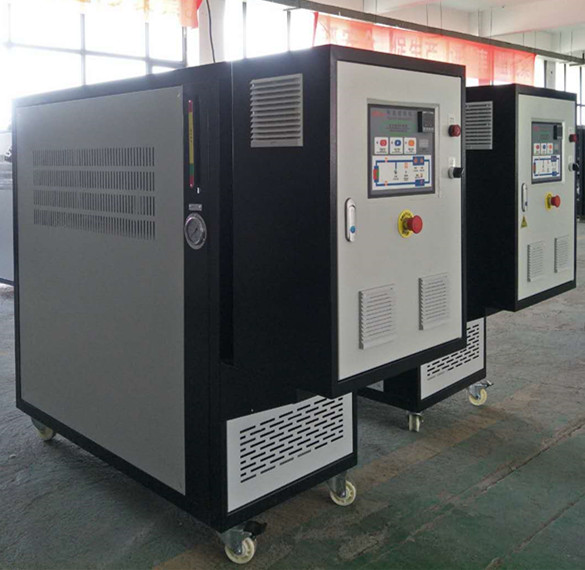
The oil circulation temperature control machine, as the name implies, is a mold temperature control machine that uses heat-conducting oil as the heat transfer medium. The machine is equipped with an oil storage tank, where the heat-conducting oil enters the system during operation, pumped into the mold or other temperature-controlled equipment by the circulation pump. After the heat-conducting oil exits the temperature-controlled equipment, it returns to the system, repeating the cycle. The heat-conducting oil is heated by the heater, and the heater stops when the temperature probe detects the medium temperature reaches the set value. When the temperature falls below the set value, the heater starts working, and stops again once the temperature reaches the set value. This cycle continues.