








Industry professionals in the production sector are well aware that temperature control machines are primarily used for temperature regulation during the production process. Besides temperature control,
In the plastic industry, improving the molding efficiency of plastic products, the control of temperature by mold temperature machines during the production process can facilitate rapid molding of plastic products, thereby enhancing the molding efficiency of plastic products.
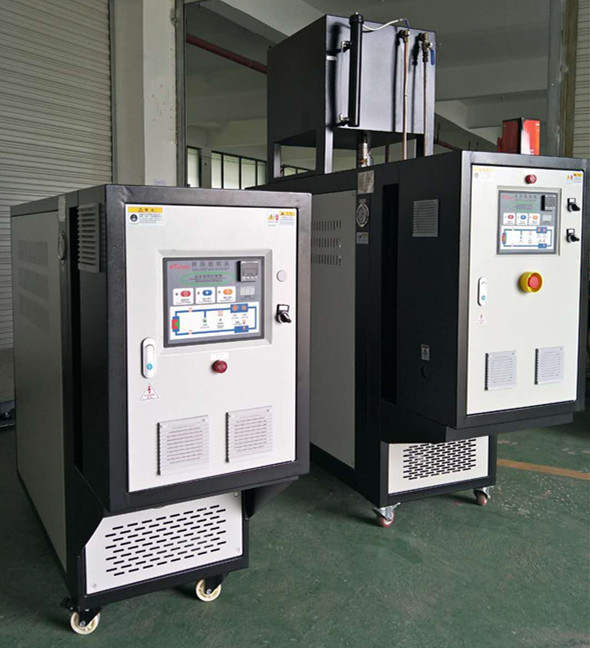
The mold temperature controller is a balanced mold gauge used for adjusting mold temperature, capable of both heating and cooling. It utilizes a high thermal conductivity medium to quickly remove excess heat from the mold. After setting the thermal balance temperature, it can automatically control the temperature within an extremely small margin of error, maintaining a constant value.
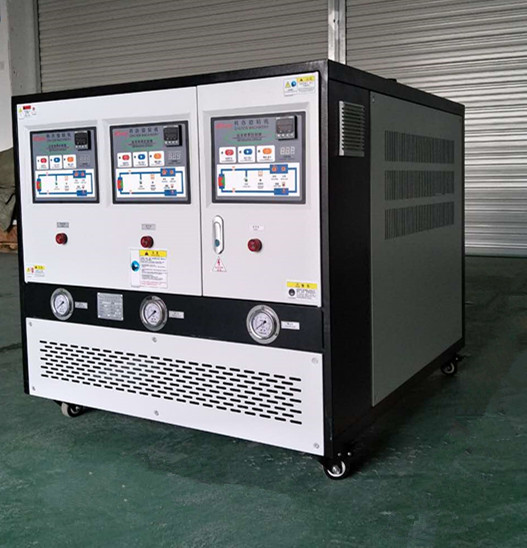
Steps for using the mold temperature machine:
1. Inspect and set up before machine testing. Check if the oil, electricity, gas, and pipelines of the mold temperature machine are normal. Turn on the control panel, enter the operation interface, and set the temperature. However, note that the set temperature should be lower than the outlet temperature.
2. Perform operational checks, start the oil pump, verify the direction of rotation for the oil pump and fan, and confirm that the fan and oil pump are functioning normally before proceeding to the next step.
3. Fill up. Add thermal conducting oil to the expansion tank reservoir, circulate the oil to distribute it throughout the various parts of the oil carrier, and then proceed with mechanical operation.
4. Check for any leakage gases and leaks in the pipeline. Additionally, ensure the model thermometer operates with normal pressure and temperature, as well as the safety of the surrounding environment during operation.

Mold temperature machines are commonly used in die casting and injection molding processes. For instance, in die casting, uneven or inappropriate mold temperatures can significantly lead to unstable casting dimensions, resulting in casting deformation during production, and defects such as thermal stress, sticking, surface concave, shrinkage holes, and thermal blisters.