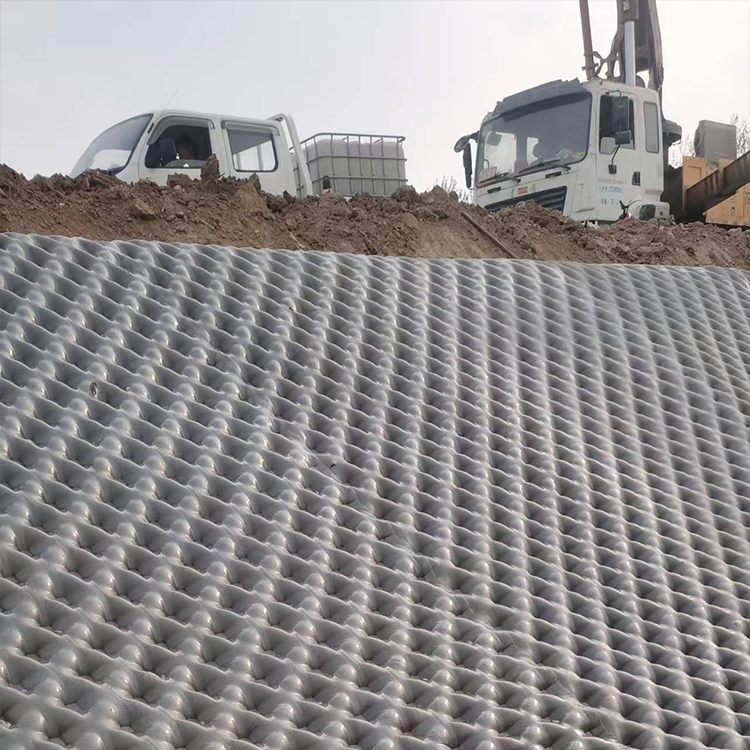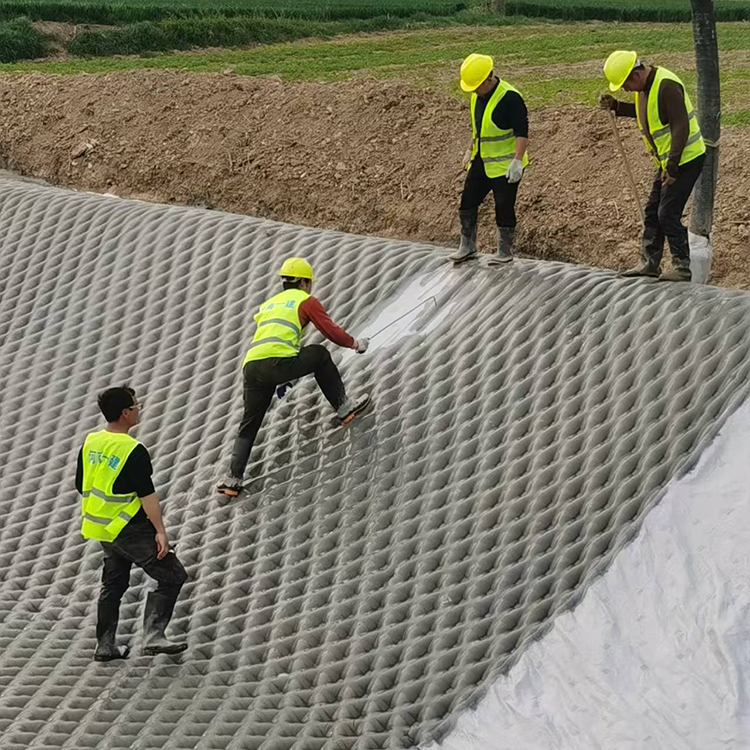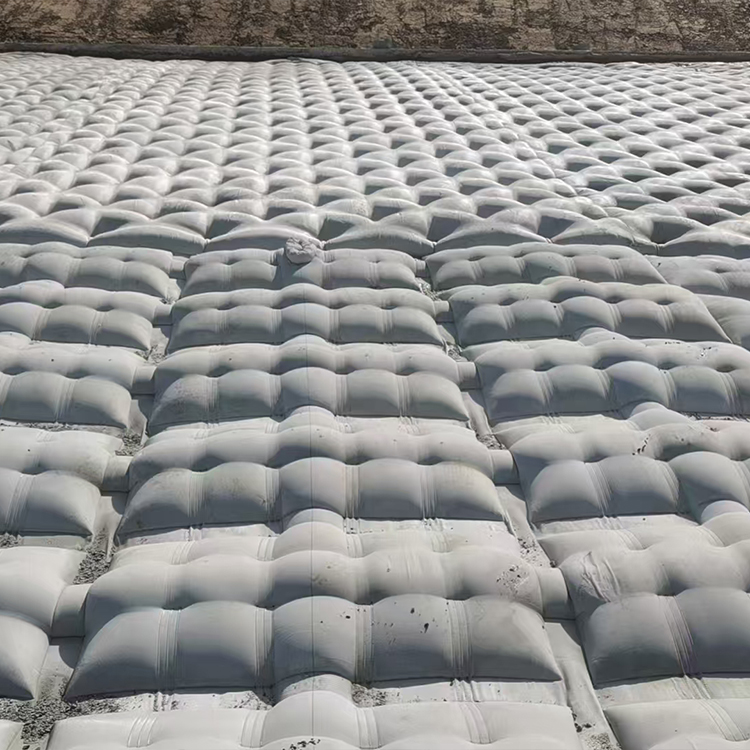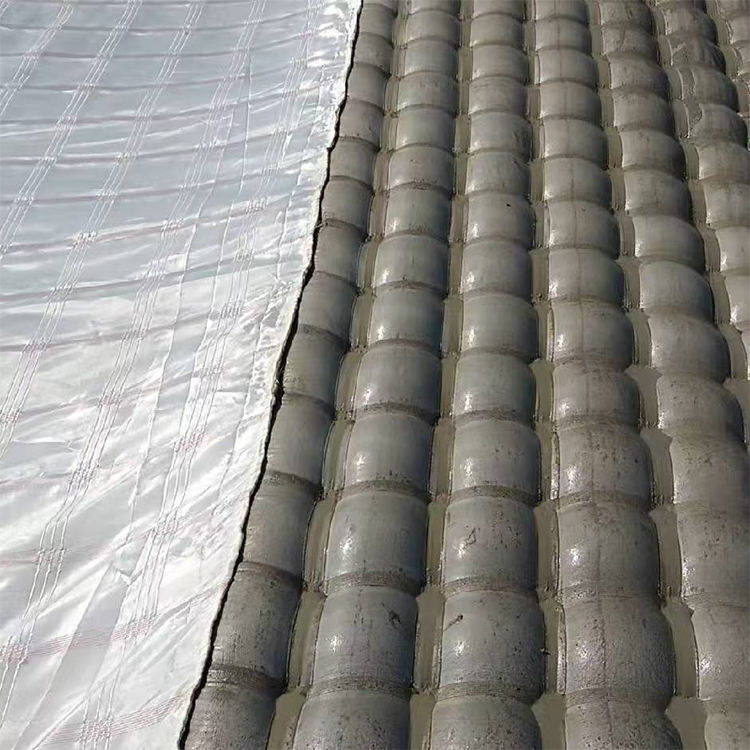
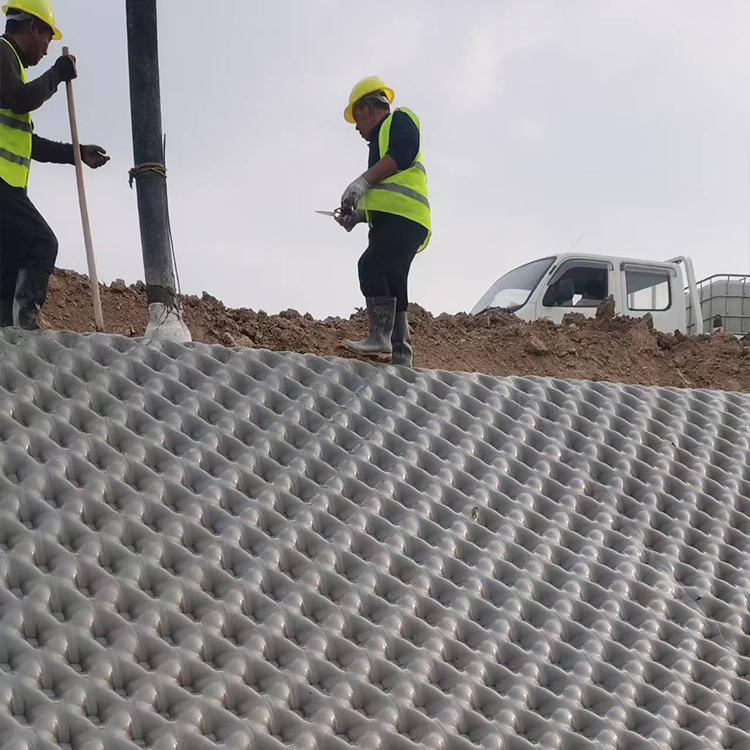







Xiangyang Slope Protection 3D Vegetation Mesh Price, Slope Protection 3D Vegetation Mesh, Soil Stabilization 3D Vegetation Mesh, 3D Vegetation Mesh Price, 3D Vegetation Mesh Manufacturers
Three-dimensional Vegetation Net Slope Protection refers to a new technology that constructs a self-growing protective system on the slope by utilizing active plants combined with engineering materials such as geosynthetic materials. It reinforces the slope through the growth of plants, taking into account the topography and geomorphology of the slope.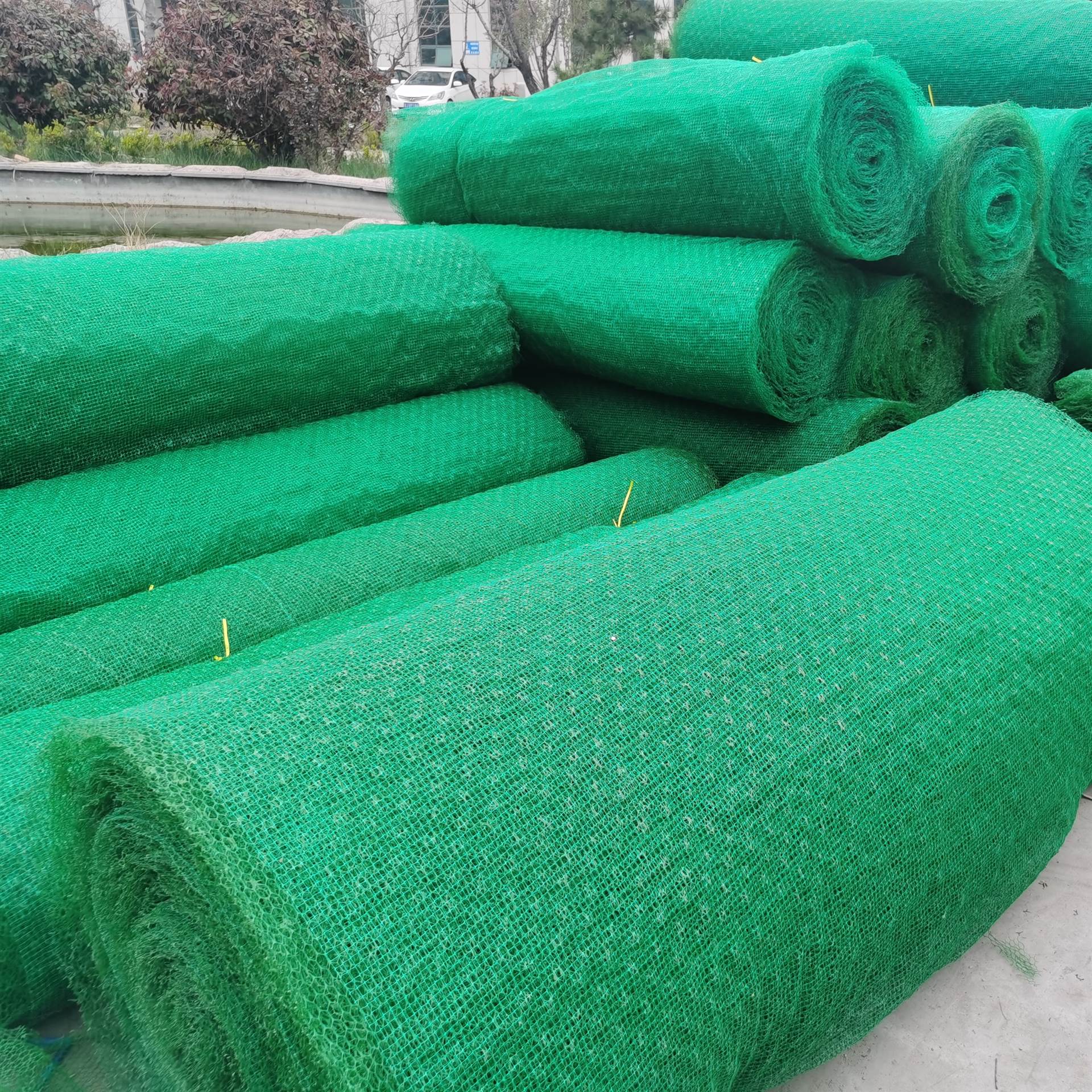 Soil and regional climate characteristics are taken into account when a layer of geosynthetic material is applied to the slope surface and a variety of plants are planted in specific combinations and spacing. The vegetation's anti-erosion effect is achieved through its three main components: Firstly, the growth layer of plants (including petals, sheaths, leaves, and stems), which prevents the direct erosion of the slope surface soil by rainwater through its dense coverage, reducing the scouring energy of heavy rain runoff and the speed of surface runoff, thereby reducing soil loss; secondly, the humus layer...
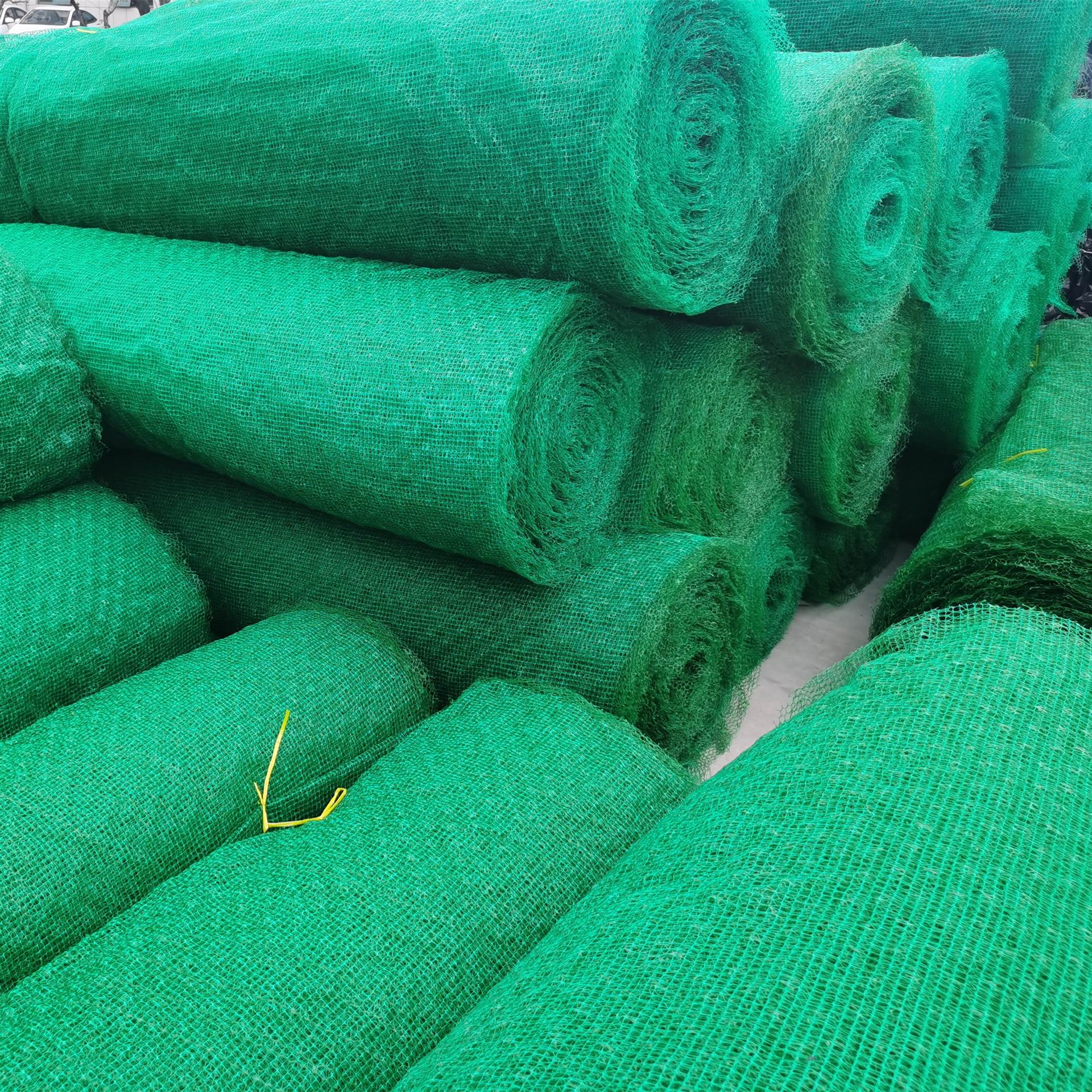 The surface soil of the slope is protected by a layer formed at the interface between the litter layer and the root system; secondly, the root zone reinforces and anchors the surface soil on the slope, providing mechanical stability. Generally, during the early stage of plant growth, the individual root systems are loosely intertwined without a sprawling network, making them prone to separation from the soil layer and rendering them ineffective as a protective barrier. Through the growth activities of the plants, the root reinforcement and leaf stem erosion prevention are achieved. After undergoing ecological slope protection techniques, a dense vegetation cover can be formed on the slope, with a tangled root system in the surface soil layer, effectively inhibiting the erosion of the slope by heavy rain runoff, increasing the shear strength of the soil mass, reducing pore water pressure and the self-weight of the soil, thereby significantly enhancing the stability and erosion resistance of the slope. The application of three-dimensional netting is precisely to achieve a more comprehensive shallow protection by enhancing the effects of the above three aspects. Firstly, within a certain thickness range,
 Enhanced protection and mechanical stability; secondly, due to the presence of the three-dimensional mesh, the extensive root system of the plants is interconnected with the mesh, forming a plate-like structure (equivalent to reinforcing the surface soil of the slope), thereby increasing the tensile and shear strength of the protective layer. This limits the spread of the "gradual destruction" phenomenon (erosion can directly damage individual plants, with the damaged area increasing over time) and ultimately restricts the occurrence of shallow slope surface sliding and upheaval.