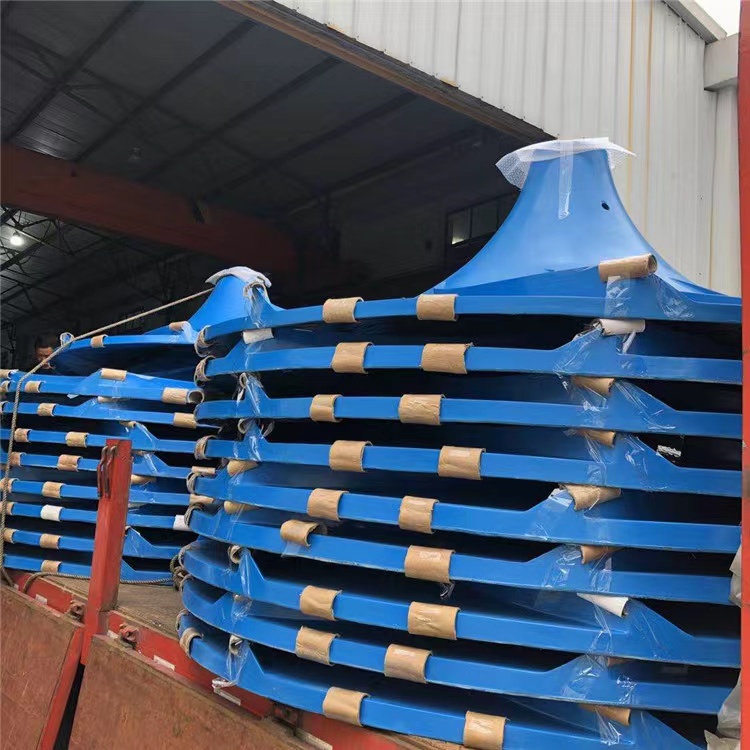

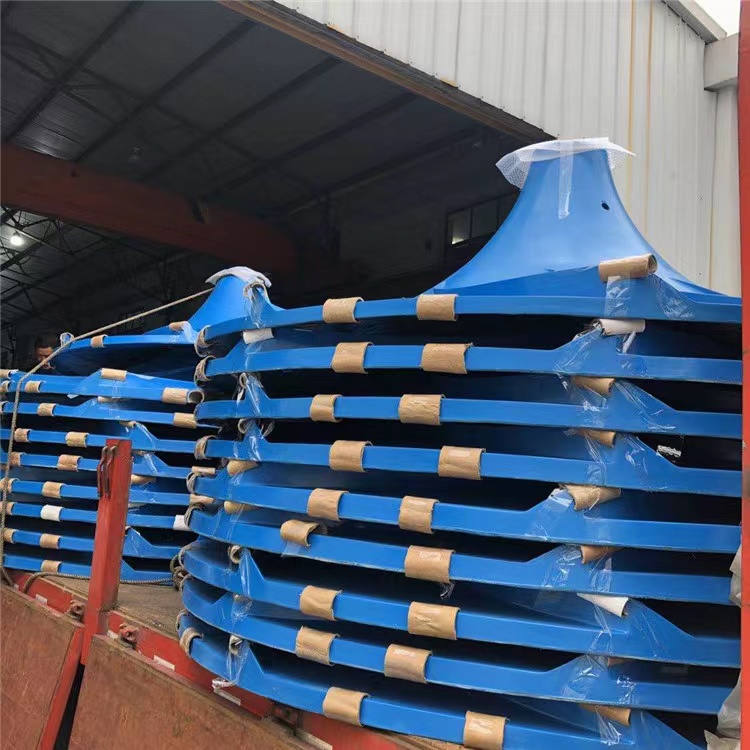








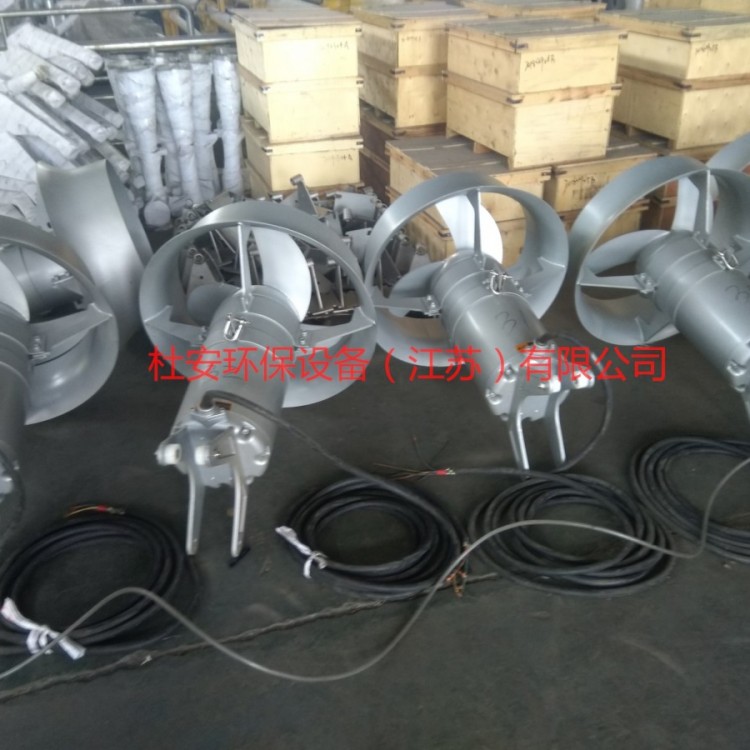
Duo-curved mixer
Diving Bi-conical Blender
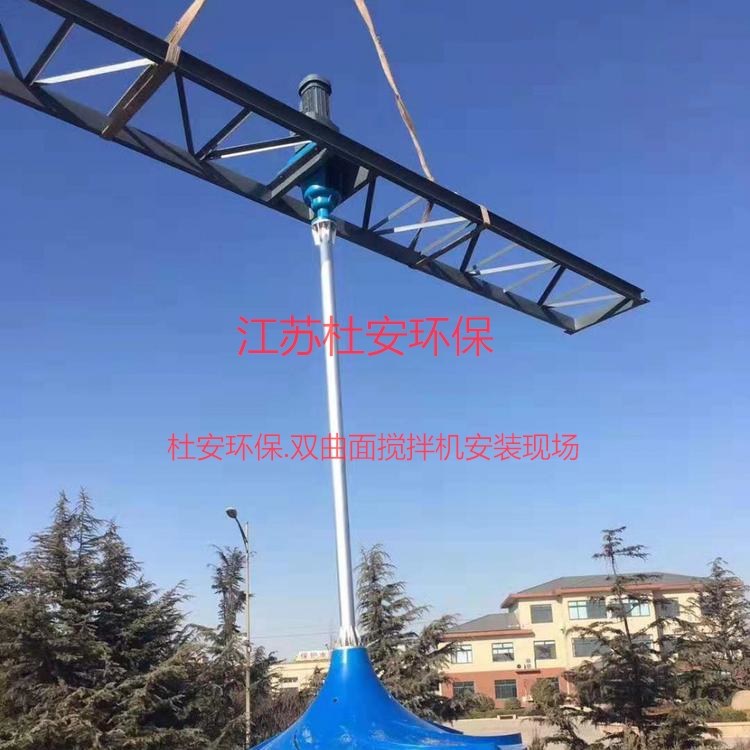
Installation Instructions for Bi-curved Blender

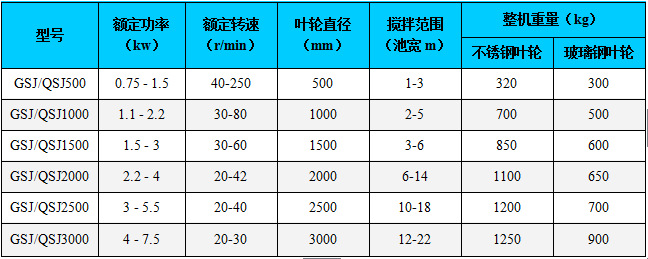
Duwan Environmental GSJ-3000 Double Concave Blender Application Range :
It is widely used in industries such as environmental protection, chemical, energy, and light industry, where solid-liquid-gas exchange of liquids is required, especially suitable for sedimentation tanks, equalization tanks, anaerobic tanks, aeration tanks, nitrification and denitrification tanks in wastewater treatment processes, as well as for mixing and blending of various corrosive mediums.
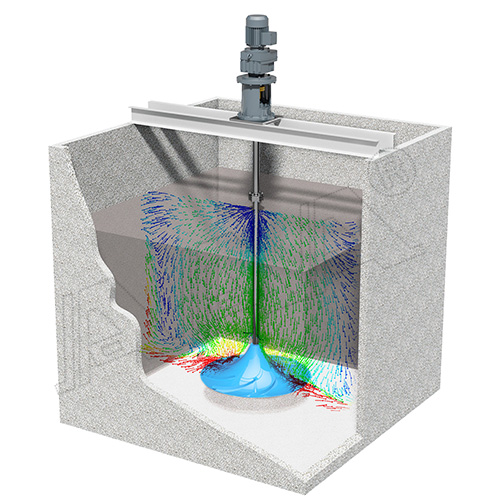
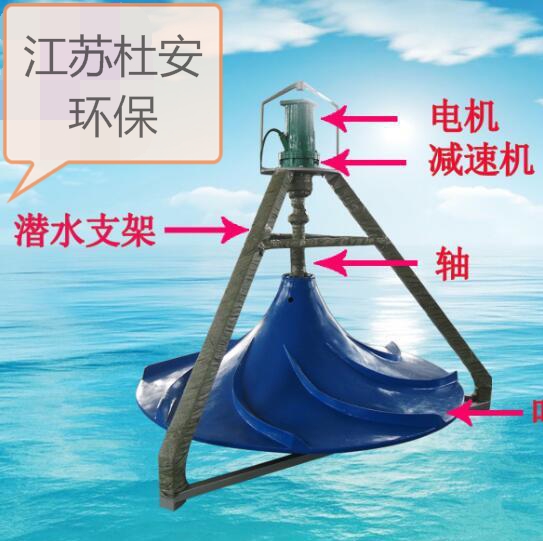
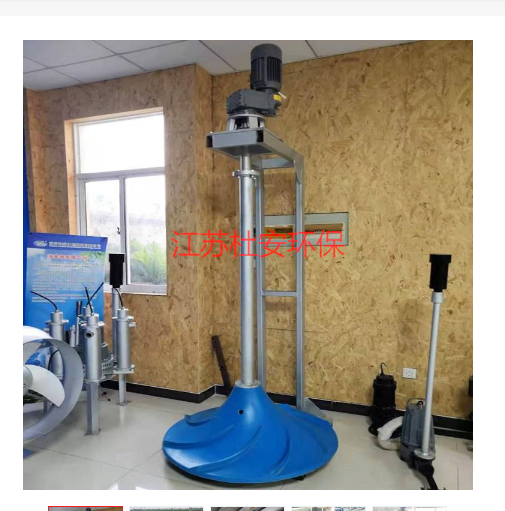
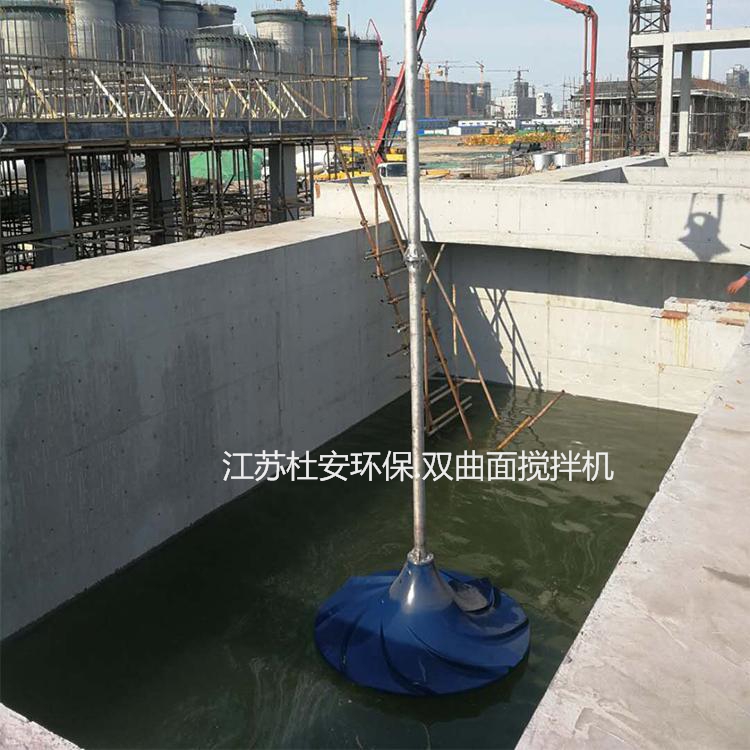
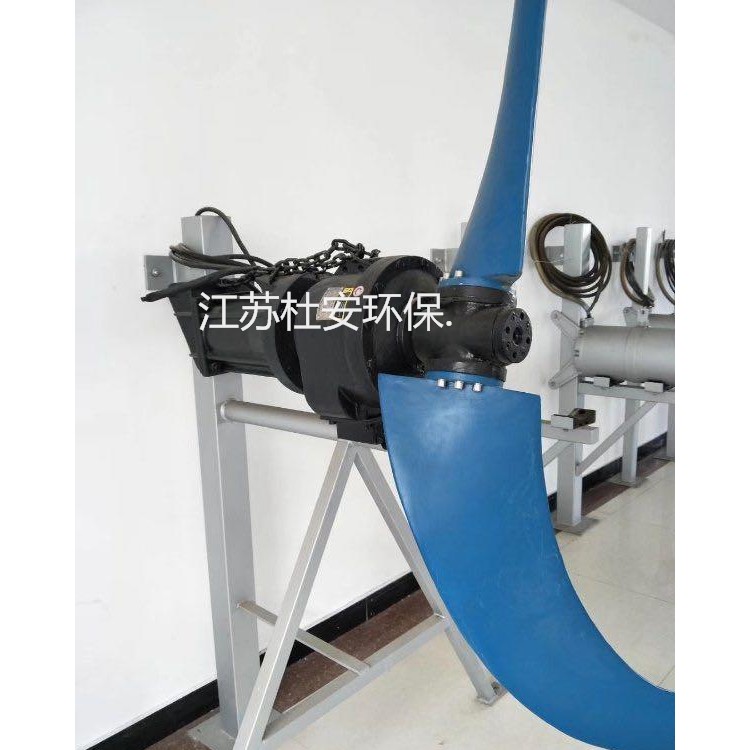
Brief Introduction to the Structure of the Biconvex BlenderThe double curved agitator consists of a reduction motor, shock-absorbing base, agitator shaft, double curved impeller, electric control box, bridge架(user supplied),as shown in the following diagram:
Duwan Environmental Double Concave Agitator Transportation and Storage :
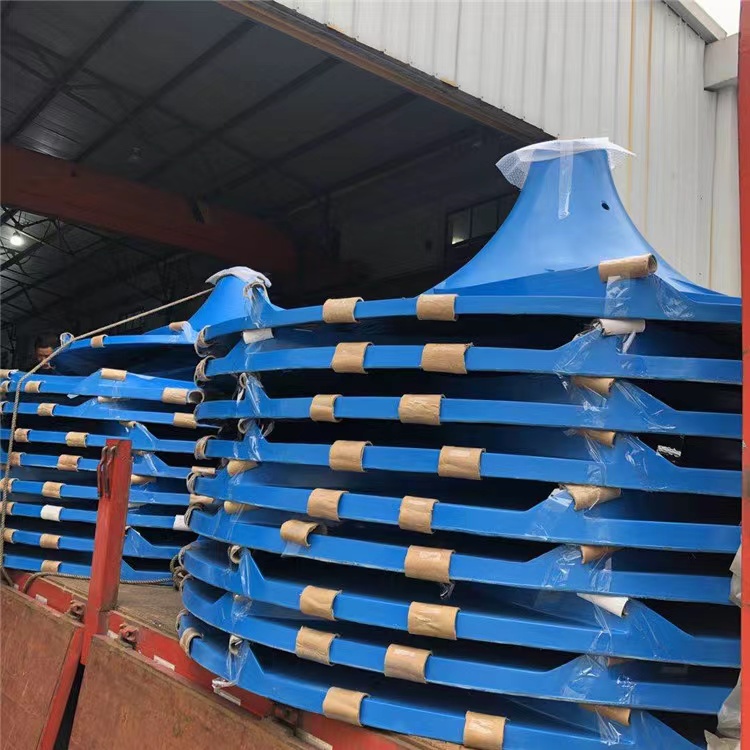
1. During transportation, the agitator shaft and impeller must not be subjected to pressure or collision. They must be loaded and unloaded using lifting equipment, and the impeller surface should be protected from scratches.
2. Avoid high temperatures and high humidity when storing long-term. The agitator shaft should be hung vertically, and the impeller should be placed on a flat surface to prevent deformation.
Duwan Environmental GSJ-2500 Submersible Bi-curved Agitator Installation:
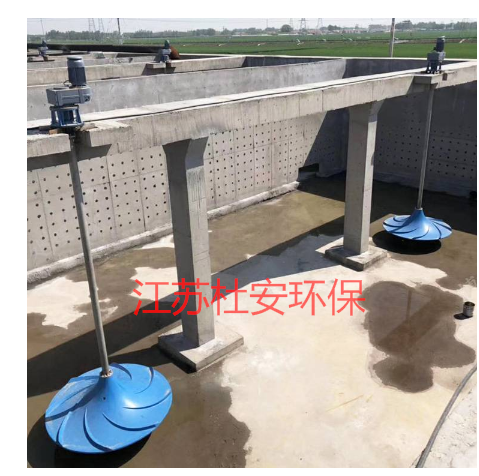
1. The bridge should be leveled, and the half-bridge uprights should be plumb. The anchor bolts and connection points should be sturdy and reliable.
2. Place the shock absorber bracket flat in the designated position on the bridge, level it, and then connect and secure it to the bridge.
3. The减速motor is mounted on a vibration-dampening base and securely connected.
4. Secure the impeller to the mixing shaft flange with bolts and tighten them.
5. Place the impeller and agitator shaft into the pond, connect and secure the agitator shaft to the reducer output shaft.
6. After installation, the stirrer shaft must be perpendicular to the horizontal plane. The deviation should be less than 1/1000 and not exceed 5mm.
7. After installation, remove the motor end cover and manually rotate the fan blades to check if the blender rotates smoothly and normally. The swing deviation of the mixing shaft should be less than 3/1000.
8. After powering on, observe the rotation direction of the stirrer shaft by pressing the start button. The correct rotation direction, viewed from above, is counterclockwise. If it's the opposite, simply swap the positions of any two power lines.
9. Electrical equipment installation must be carried out in accordance with national regulations and safety procedures.
Dual-curved mixer operation:
After equipment installation is complete, a trial run must be conducted. Prior to the trial run, it is necessary to inject approximately the volume of the pool into the pond.70% water content. Do not operate the equipment without water to prevent uneven stress on the agitator shaft, which may cause it to bend. After trial operation, check: 1. For any abnormal noises and temperature rise in the reducer motor. 2. Whether the motor current is within the rated value range (short-term overcurrent during startup is normal). 3. The swinging condition of the agitator shaft.
Dual-curved mixer maintenance and care1. The new machine requires changing the reducer lubricating oil and cleaning internal oil污 after 200-300 hours of operation. Thereafter, a replacement should be done every 6 to 12 months; for details on the use and maintenance of the reducer motor, refer to the manufacturer's user manual. 2. Regularly inspect the locking nuts of the agitator shaft and all connecting bolts for looseness. 3. Regularly check the swing condition of the agitator shaft. 4. Regularly inspect for any abnormal sounds or temperature rise in rotating parts. 5. Regularly check for any abnormal changes in current.
Dual-curved impeller mixers are commonly used in industrial production, and choosing the right reducer for these mixers has become a headache for most users. Below, we share the knowledge that dual-curved impeller mixer users need to grasp when selecting a reducer.
Commonly used double曲面 mixers have fixed reducers and motors, which are forced to mix by the mixing blades (impellers) uniformly placed on the mixing shaft (rotary shaft). Such double曲面 mixers are highly efficient in production, of course, with high quality requirements for the reducer.
Reducers are commonly used in chemical and environmental protection equipment, such as dosing mixers and wastewater treatment mixers; when designing a reduction gear box reducer for mixers, it's first necessary to determine the composition of the mixing liquid and the dimensions of the mixing pool or tank, followed by selecting the type of reducer for the hyperbolic mixer.
Each dual-surface mixer is equipped with a reducer. Common reducers on the market include helical gearboxes and cycloidal pinwheel reducers. Helical gearboxes offer higher transmission efficiency and greater load-bearing capacity, while cycloidal reducers have many more meshing teeth, which can distribute impact loads more effectively during shock loading. Compared to cycloidal reducers, helical gearboxes produce much less noise and are easier to maintain.The motor is an integrated structure composed of an AC squirrel-cage induction motor and a parallel shaft helical bevel gear reducer (hard tooth surface). All bearings of the bi-surface agitator have a service life of not less than 100,000 hours. The motor is designed for outdoor use with an IP68 protection rating and F-grade insulation. The gear box of the bi-surface agitator has an oil level checking hole, operating for 24 hours a day.