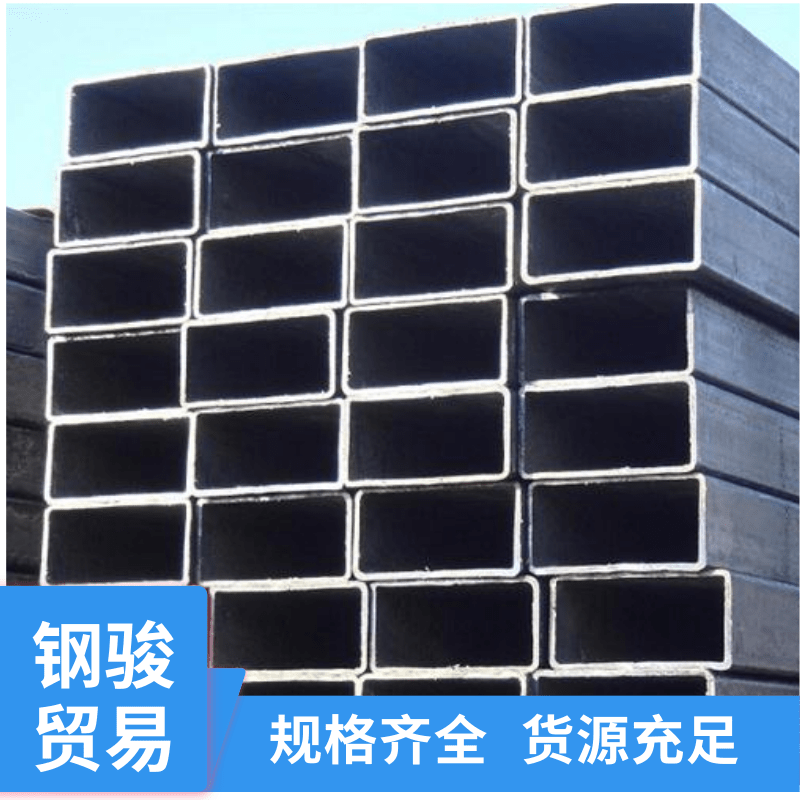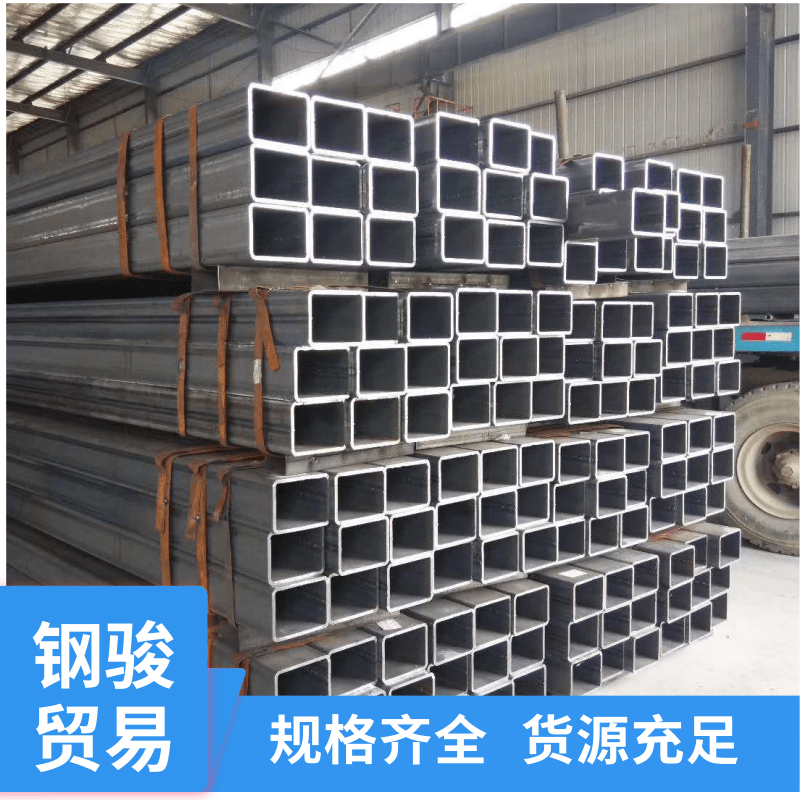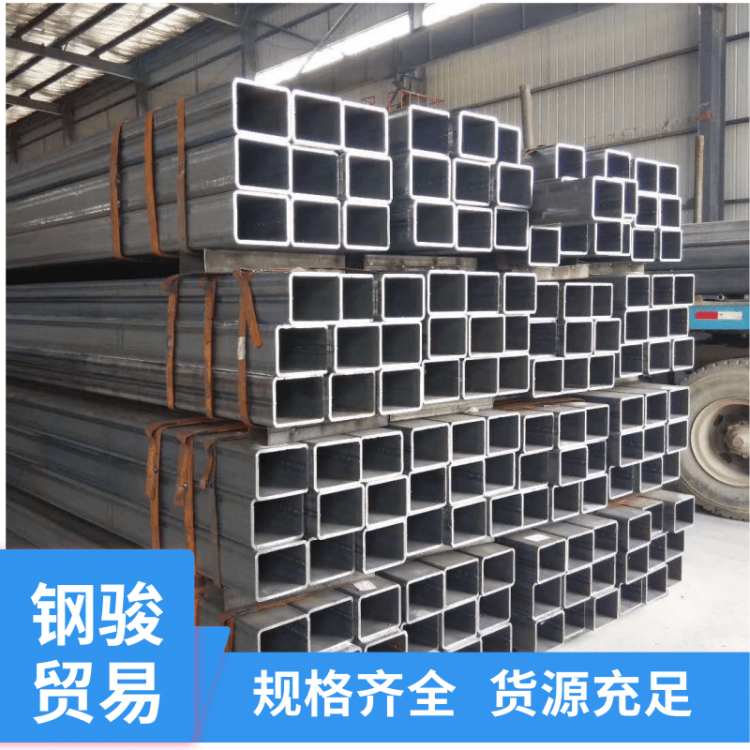

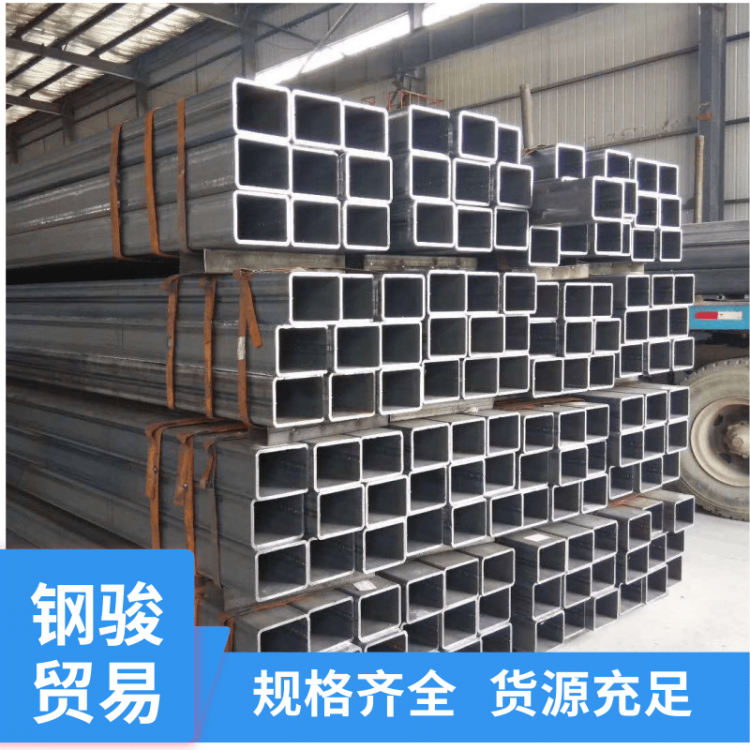













Rectangular tube applications
Square tubes are used in construction, machinery manufacturing, steel construction projects, shipbuilding, solar power generation supports, steel structure engineering, and electrical applications.
Square tube products (3 photos) for engineering, power plants, agricultural and chemical machinery, glass curtain walls, car chassis, airports, boiler construction, highway guardrails, building construction, pressure vessels, oil storage tanks, bridges, power station equipment, lifting and transportation machinery, and other welding components with high loads.
Edit Section - Rectangular Tube Categories - Process Classification
Square tubes are categorized by production process: hot-rolled seamless square tubes, cold drawn seamless square tubes, extruded seamless square tubes, and welded square tubes.
Among them, the welded square tubes are further divided into:
(a) By welding process - Arc Welded Square Tube, Resistance Welded Square Tube (High Frequency, Low Frequency), Gas Welded Square Tube, Furnace Welded Square Tube
(b) Seam Type - Straight Seam Square Pipe, Spiral Seam Square Pipe
Material Categories
Square tubes are categorized by material: carbon steel square tubes and low-alloy square tubes. Carbon steel includes: Q195, Q215, Q235, SS400, 20# steel, 45# steel, etc.; low-alloy steel includes Q345, 16Mn, Q390, ST52-3, etc.
Production Standard Classification
Square tubes are categorized according to production standards: square tube, Japanese standard square tube, British standard square tube, American standard square tube, European standard square tube, and non-standard square tube.
Section Shape Classification
Square tubes are categorized by cross-sectional shape:
Simple Section Square Tube - Square Tube, Rectangular Tube
(2) Complex Section Square Tubes - Flower-shaped Square Tubes, Open-ended Square Tubes, Wavy Square Tubes, and Special-shaped Square Tubes
Surface Treatment Categories
Square tubes, categorized by surface treatment: Hot-Dipped Galvanized Square Tubes, Electro-Galvanized Square Tubes, Oiled Square Tubes, Pickled Square Tubes
Usage Category
Square tubes categorized by use - Decorative Square Tubes, Machining Equipment Square Tubes, Mechanical Industry Square Tubes, Chemical Industry Square Tubes, Steel Structure Square Tubes, Shipbuilding Square Tubes, Automotive Square Tubes, Steel Beam Column Square Tubes, Special Purpose Square Tubes
Wall thickness categories
Square tubes are categorized by wall thickness — thick-walled square tubes, medium-walled square tubes, and thin-walled square tubes.
Edit Section: Square Tube Performance Plasticity
Plasticity refers to the ability of metallic materials to undergo plastic deformation (deformation) under load without being destroyed.
Hardness
Hardness is a measure of the degree of softness or hardness of metal materials. Currently, the indentation hardness test method is commonly used in production to determine hardness, which involves pressing a head of a certain geometric shape into the surface of the metal material being tested under a specific load. The hardness value is determined based on the degree of indentation.
Common methods include Brinell hardness (HB), Rockwell hardness (HRA, HRB, HRC), and Vickers hardness (HV).
Fatigue
The discussed strength, plasticity, and hardness are indicators of the mechanical properties of metals under static load conditions. In reality, many machine parts operate under cyclic loads, where fatigue in the parts can occur under such conditions.
Impact toughness
Load acting on machinery at a high speed is called impact load; the ability of metal to resist damage under impact load is known as impact toughness.
Strength
Strength refers to the ability of metal materials to resist failure (excessive plastic deformation or fracture) under static load. Since the mode of action of the load can take the form of tension, compression, bending, and shearing, strength is also categorized into tensile strength, compressive strength, bending strength, and shear strength, among others. There is often a correlation between various strengths.A certain correlation exists, with tensile strength generally being used as the basic strength indicator during use.