










Most substances are composed of molecules, which are made up of atoms, and atoms consist of atomic nuclei and electrons. Within an atom, electrons spin and orbit around the atomic nucleus. Both of these movements generate magnetism. However, in most substances, the directions of electron movements are varied and chaotic, causing the magnetic effects to cancel each other out. Therefore, most substances do not exhibit magnetism under normal circumstances.
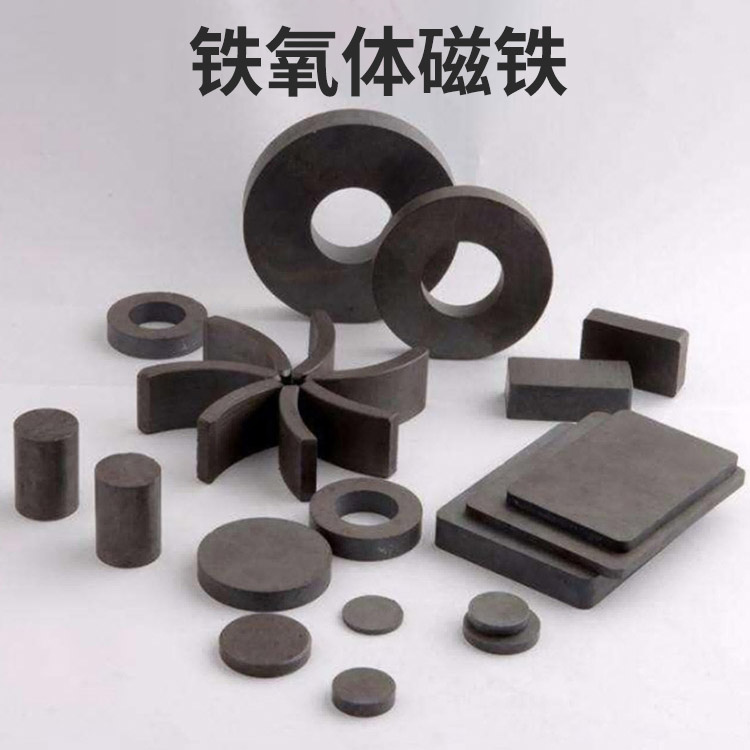
Iron, cobalt, nickel, or ferrite and other ferromagnetic materials differ in that their internal electron spins can spontaneously align within a small range, forming a spontaneously magnetized region known as a magnetic domain.
After magnetization, ferromagnetic materials have their magnetic domains neatly arranged in a uniform direction, which strengthens their magnetism, thereby forming a magnet. The process of a magnet attracting iron is the same as the magnetization of the iron block. The magnetized iron block and the magnet, with opposite poles, generate an attractive force, causing the iron block to firmly adhere to the magnet. We say the magnet has magnetic properties.