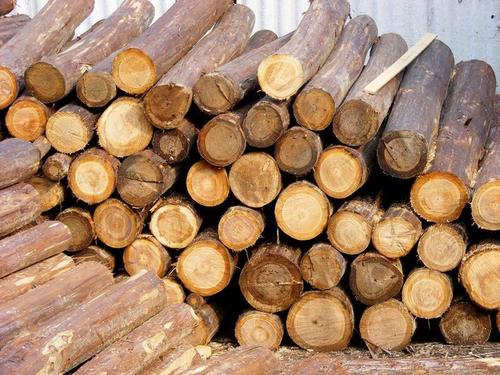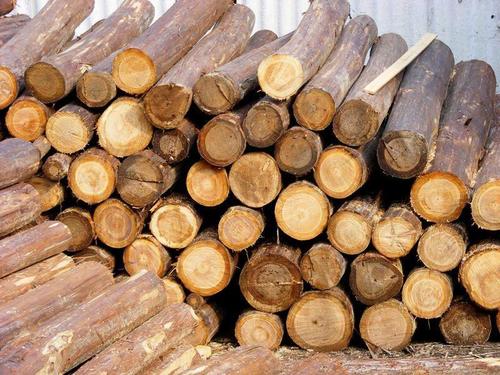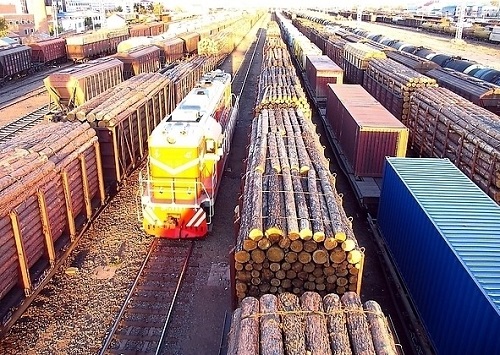


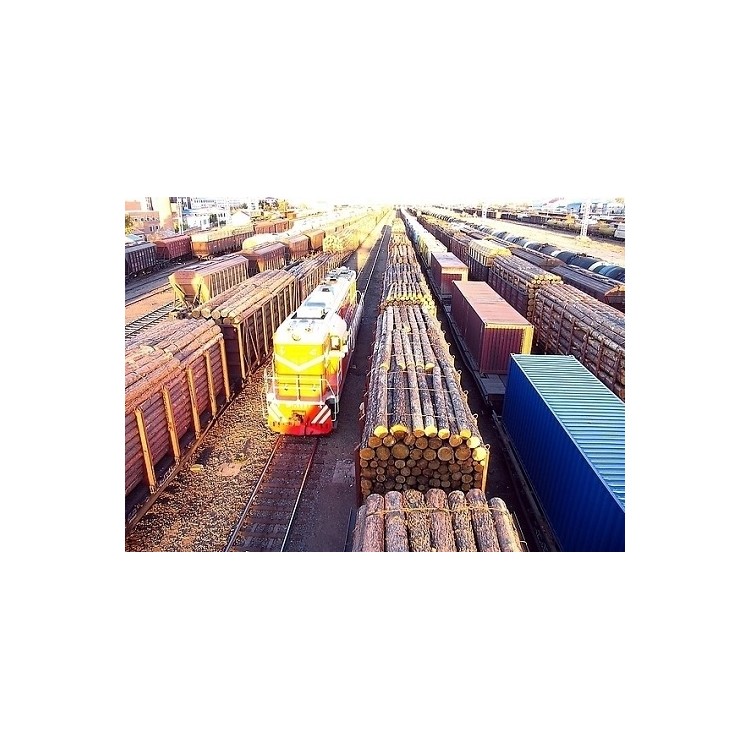







Issues to Consider When Importing Wood:
The Latin and English names of imported wood, which are relevant to the customs valuation.
Wood of different names should be imported through suitable ports.
All timber imports are duty-free; however, there are differences for solid wood and wooden furniture: Solid wood: 13% of the goods value; Wooden beams and furniture: 17% of the goods value).
Wood import fees:
1. Shipping Company Fees: Freight, inland terminal fees, document handling fees, document fees, demurrage and container rental, container damage fees, etc.
2. Import Clearance Costs: Customs declaration fee, inspection fee, inspection regulation fee, customs inspection fee, tax, etc.
3. Terminal Fees: Terminal Handling Charges, Port Construction Fees, Storage Fees, etc.
4. Delivery Costs: Trailer fees, loading/unloading charges, etc.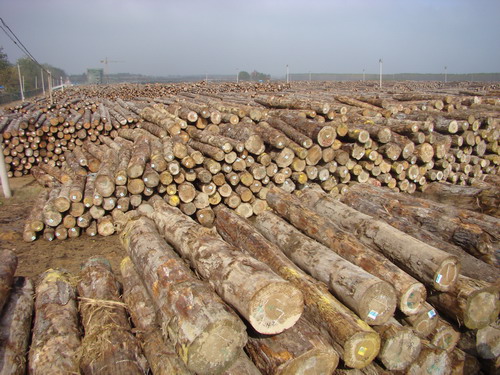
Required documents for customs declaration and inspection for timber imports:
1. Ocean Bill of Lading (provided by the shipping company)
2. Packing List (specific details of the goods' packing)
3. Commercial (the value of goods provided by foreign suppliers)
4. Trade Contract (Purchase Agreement Signed Between Domestic Consignee and Overseas Supplier)
5. Certificate of Origin (document provided by the exporting country certifying that the goods are of that country's origin)
6. Phytosanitary Certificate (Plant Inspection and Quarantine provided by the exporting country)
7. Fumigation Certificate (fumigation and disinfection service available both internationally and upon return; fumigation can be done abroad or after returning home)
8. Bill of Quantities (detailed record of the specific conditions of the timber within the container, such as number of pieces, diameter, length, volume, etc.)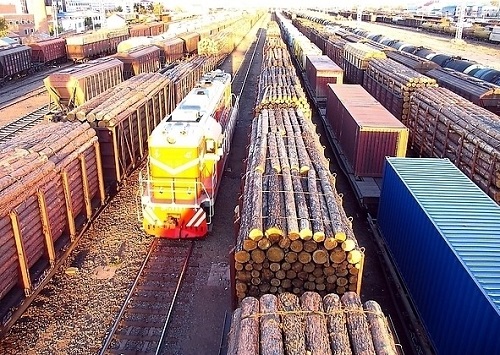
Importing Wood: Cautionary Notes
1. Initially provide the Latin name to determine the customs code for the wood and get a rough assessment, and confirm if a species permit is required. If needed, process it in advance to avoid discrepancies or mismatches between the declared item name and the actual goods during customs clearance.
2. Certificate of Origin and Plant Inspection from West Africa, Suriname, and Guyana are mostly handwritten, leading to frequent alterations. These documents may be rejected during import declarations, requiring the importer to provide new, clean certificates.
3. The Certificate of Origin and Phytosanitary Certificate must clearly state the volume. The inspection fee and additional tax are based on the volume stated on the Certificate of Origin and Phytosanitary Certificate by the customs and inspection authorities.
4. Ensure accurate packing lists and manifests during loading, with precise data for weight, cubic measurement, and quantity. Weight accuracy is crucial; some may ask, isn't customs based on volume for additional duties? Why the emphasis on weight accuracy? It's because after import duties are paid, goods still require customs inspection. Verify the goods' quality and weight (volume is proportional to weight). If the weight exceeds a few tons, fines and additional taxes may apply, and in severe cases, the goods could be sent to the anti-smuggling department.
5. Conduct pre-shipment fumigation to avoid detection of pests at domestic ports, which would necessitate terminal fumigation and increase costs.
6. Please note the weight for wood board materials: There are two sizes for wood boards, the selling size in the industry and the cutting size. During customs and inspection, the actual weight and size of the goods are checked and weighed. Therefore, the weight must be filled out based on the cutting size.
7. Caution for wooden pallets: Wooden blocks and wooden pallets must have an IPPC mark or be made of compressed board and plastic boards.
8. Prior to the goods' arrival at the port by seven days, have the customs clearance company arrange for the supplementary materials. Ensure a seamless connection between the arrival of the goods and the customs clearance process to avoid incurring storage and container rental fees.
9. Do not under-declare, understate, or misstate prices.
Wood Import Customs Clearance Process, Wood Import Clearance Time, Wood Import Documentation Requirements, Wood Import Cost Breakdown, Wood Import Declaration and Inspection Procedures, Wood Import Agent
1. Timber Import Tax Rate:
Wood, as a resource-based commodity, is encouraged for import by the country, thus there are no tariffs; only
Tariff Rate: 0
Solid Wood: 9% Lumber: 13%
The tax for importing wood is calculated as the product of the CIF (Cost, Insurance, and Freight) value of the goods and the tax rate. Customs measures wood in cubic meters.
Section 3: Detailed Explanation of Wood Imports
1. Confirm Trade: Establish trade terms between buyer and seller (e.g., FOB, CIF), payment methods, delivery time, and buyer's location
2. Document Preparation: Instruct the overseas shipper to cooperate in providing original certificate of origin, fumigation certificate, plant inspection certificate, packing list, contract, and other documents. (Documentation and Latin names for wood customs clearance)
3. Chartering Ships and Booking Cargo Space: Different regions have varying strengths among various shipping companies, but in general, the differences are not significant. Overall, Maersk is slightly more stable, although the prices are slightly higher.
4. Material Replenishment and Order Change: Seven days prior to the goods' arrival at port, the shipping agent will send a material replenishment notice. This replenishment must be completed by the timber import customs clearance company, involving details of port customs clearance to ensure smooth and quick customs clearance. After the replenishment is completed and the goods arrive at the dock, provide a guarantee letter or endorse the bill of lading to the customs clearance company using the shipping company's original bill of lading to exchange for the delivery order, then collect the goods and arrange for inspection and customs declaration.
5. Import Inspection: Provide the inspection authorization letter, ensuring all documents are complete and accurate. For wood, pay close attention to the consistency of the phytosanitary certificate and origin certificate information. If there are errors in the origin certificate or phytosanitary certificate, or if they are missing, you can apply for fumigation, but it requires the director's approval. After the customs inspection fee is paid, the customs clearance document will be issued. (During this time, the customs inspection is involved, mainly checking for pathogens and pests.)
6. Import Customs Clearance: Submit documents such as delivery orders, customs clearance certificates, bills of lading, contracts, and customs agency letters to the customs. The customs will review the documents, and once approved, submit the customs declaration. The customs will issue tax invoices, arrange for payment, and if selected for customs inspection, arrange for inspection. (During this process, customs inspections may occur, mainly checking the weight, volume, and contents of the goods, as well as for any false declarations.)
7. Release and Delivery: Take the release note to the shipping company to obtain the container release form, settle all fees, pay what is due, and then arrange for trucking to pick up and deliver the container.
Section 4: Wood Import Costs:
1. Shipping Company Fees: Freight, inland terminal fees, rebooking fees, document fees, demurrage, container rental fees, and container damage charges, etc.
2. Import Clearance Costs: customs declaration fee, inspection fee, inspection regulation fee, inspection cargo fee, customs inspection fee, taxes, etc.
3. Terminal Fees: Terminal Handling Charges, Port Construction Fees, Storage Fees, etc.
4. Shipping Costs: Trailer fees, loading/unloading charges, etc.
Wood Import Customs Clearance Process, Wood Import Clearance Time, Wood Import Documentation Requirements, Wood Import Cost Breakdown, Wood Import Customs and Inspection Procedures, Wood Import Agency
What types of imported wood are available?
Ash: It has a slightly hard texture, straight grain, coarse structure, beautiful patterns, good resistance to rot and water, easy to work with but not easy to dry, high flexibility, and good bonding, painting, and coloring properties. It possesses excellent decorative qualities and is widely used in furniture and interior decoration.
Laurel: With moderate weight, straight or slightly slanted grain that interlaces, and a slightly coarse structure, it is easy to process and has good adhesive properties. Slight warping and cracking may occur during the drying process.
Poplar: A commonly used wood in northern China, known for its fine texture, stability, and affordability. Often used as an auxiliary material for Elm furniture and as the frame for lacquerware in antique furniture. This type of Poplar, also known as "Small-Leaf Poplar," has a luster resembling segments, hence also referred to as "Brocade Poplar," and is not the one introduced from the Soviet Union in the mid-20th century.
Golden Pineapple: The wood has a glossy finish, straight grain, coarse structure, and distinct, even growth rings. It is soft, dries easily, and has good processing properties. The wood color and patterns are aesthetically pleasing, with good paint and adhesive performance. The nail holding power is moderate and it is not prone to cracking. It has excellent resistance to decay, making it suitable for furniture and plywood.
Ash: The wood has a high specific gravity, is dense, and has significant shrinkage and high strength. The structure is compact, difficult to saw, with smooth cutting surfaces, prone to cracking and warping, and not easy to dry. It is resistant to moisture and wear, not easy to glue, and has good coloring properties. Currently, it is widely used in decorative hardwood flooring.
Cinnamomum camphora: The wood has a fragrant aroma, is anti-corrosive and insect-resistant. It is slightly lightweight, not prone to warping, easy to process, with a smooth and glossy cut surface, excellent durability, and good adhesive properties. The painted finish is beautiful.
Birch: Its material is slightly heavy and hard, with fine structure, high mechanical strength, and good elasticity. It is prone to warping and cracking during drying, has good bonding properties, and offers a smooth cutting surface. Poor resistance to corrosion, but good paint performance.
Birch: Grown in Northeast and North China, the wood is fine, light, and slightly yellow, with poor shear resistance, prone to "clean breakage." The root and node areas have many patterns. Anciently, it was often used for door cores and other decorations. The bark is flexible and beautiful. The people of the region have a strong affection for it, commonly inlaying it in scabbards and bow backs. However, due to the sap-rich nature of the wood, it tends to warp after maturation, hence it is extremely rare to find furniture entirely made of birch.
Cedar: Its material is light and soft, dries easily, has minimal shrinkage, does not warp or crack, has good durability, is easy to work with, has a coarse texture, moderate strength, and is prone to splitting. It has good adhesive properties and is the most commonly used mid-range wood for furniture and decoration in southern provinces.
Ash: Beautiful grain, coarse structure, good workability, finishing, and adhesive properties; poor drying characteristics, prone to cracking and warping.
Ash: Hardwood with straight grain, fine structure, wear-resistant, glossy, and not prone to warping when dry. Good for processing, finishing, and gluing.
Cinnamomum camphora: Abundant in the southern provinces of China, particularly in Jiangnan and Taiwan Fujian. These trees have large diameters and wide wood sections, with beautiful grain patterns and a strong aroma that repels insects. Chinese camphorwood boxes are renowned worldwide, including clothing chests, lying chests (for formal attire), and top cabinets. Most commonly used for tables and chairs. The old furniture trade categorizes camphorwood into several types based on its appearance, such as Red Camphor, Tiger Skin Camphor, Yellow Camphor, Mahogany Camphor, Saddlewood Camphor, White Camphor, and Shipboard Camphor.
Walnut Wood: Abundantly produced in the mountainous regions of Shanxi, such as Lüliang and Taihang, walnut wood is a premium choice for making furniture in Shanxi. After being water-polished and waxed, it acquires a hard wood-like luster, with fine texture and is easy to carve, having a soft, pale gray color. Products made from this wood are of high quality throughout the Ming and Qing dynasties and are both usable and collectible. Its wood features a dense, needle-like pattern of brown eyes and thin, yellowish rings. Its weight is similar to elm wood. Chiu Wood: Also known as the fruitless walnut wood, chiu wood has plain and unadorned brown eyes, dark color, soft texture, and lacks luster. However, it has low shrinkage and is suitable for use in door cores and desktop cores. It is often paired with Korean wood and walnut wood. Chiu wood is lighter, darker, softer than walnut wood, with larger and more scattered brown eyes.楠 Mu: A type of wood with a light orange-yellow hue, slightly gray, with elegant and tranquil grain patterns, and a soft, supple texture. It does not shrink and emits a fragrant aroma when it rains.楠 Mu is produced in all southern provinces, with the best quality coming from Sichuan. The Ming Dynasty palace used it extensively. Today, the Forbidden City and many superior ancient buildings in Beijing are constructed from楠 Mu.楠 Mu is rot-resistant, has a delicate fragrance, and is used in royal libraries, gold lacquered thrones, interior decoration, and more, such as the Wen Yuan Pavilion, Le Shou Hall, Taihe Hall, and Changling.
Duzhou features Mahogany for decoration and furniture, often paired with Zitan. Unfortunately, many people today do not recognize it, often viewing it with a worship of objects, thinking it lacks durability and weight, and its color is not deep or bright, so they discard it. Those in the trade refer to its quality as: Jinsīnán, Dàobànnán, Xiāngnán, and Nán. Additionally, in the folk areas of Shanxi and other places, hardwoods like Hongmu and Huangli are commonly called "Nánmù," which originally meant wood from the south. At first glance, it may be confused with this "Nánmù," but it is important not to misunderstand.
Maple: Moderate weight, fine grain, easy to process, smooth cutting surface, good for finishing and gluing, tends to warp during drying.
C樟: Moderate weight, fine grain, aromatic, not prone to warping when dried, good for processing, finishing, and bonding.
Laurel wood: Moderate material, slightly coarse structure, easy to process, good glue and painting properties. Slight cracking and warping may occur during drying. Plywood made of laurel wood is known as Philippine plywood.
Rosewood: Hard material with rich grain, moderate structure, resistant to decay, not prone to drying, smooth cutting surface, good finishing and adhesive properties.
Zitan (Red Wood): Hardwood with distinct grain patterns, coarse texture, strong durability, luster, and smooth cut surfaces.
Laminates, commonly used include plywood, multi-ply board, fiberboard, particleboard, and honeycomb panels. Due to the varying composite structures of these laminates, they can overcome the drawbacks of wood such as expansion, warping, and cracking, thus offering many advantages in furniture applications.
Red Pine: Lightweight, soft texture, moderate strength, good drying properties, water and rot resistance, good for processing, finishing, coloring, and bonding.
White pine: Lightweight, soft, elastic, fine and even structure, good drying properties, water and rot-resistant, good for processing, finishing, coloring, and adhesive bonding. White pine is stronger than red pine.
Cypress: Cypress wood is fragrant and suitable for use, with cypress seeds known for their heart-nourishing properties. Cypress wood is yellowish, fine-grained, aromatic, and water-resistant, often featuring knots, hence it is commonly used to make "cypress buckets" in folk traditions. High-quality coffins also utilize cypress for its resistance to decay.
Paulownia: Very light and soft material, coarse structure, uneven surface when cut for water and electricity, good drying properties, does not warp or crack.
Linden wood: Light and soft in texture, with a fine grain and silky luster, it is not prone to cracking and has good processing, finishing, coloring, and adhesive properties. It is not resistant to rot and may slightly warp when drying.
WeChat Official Account

Scan to follow Official Account