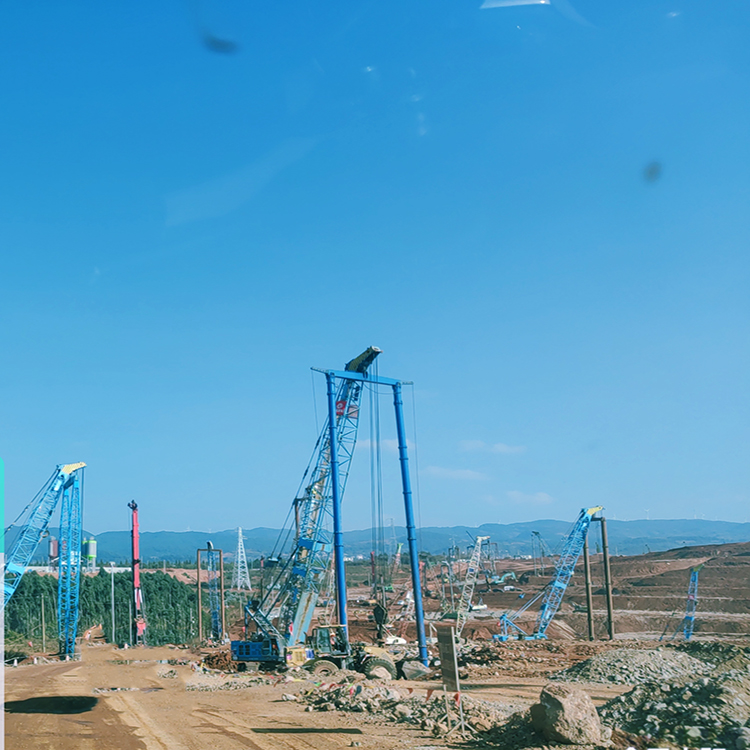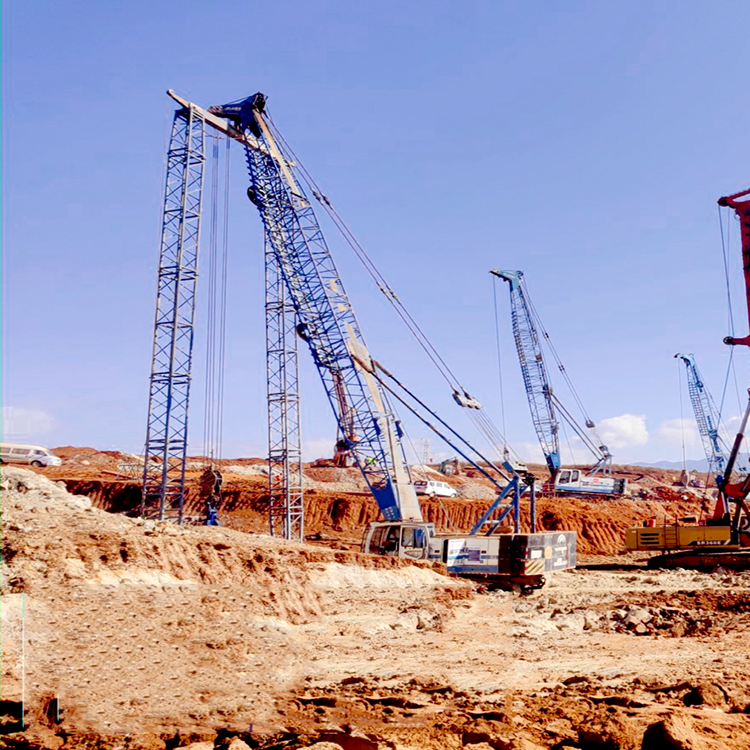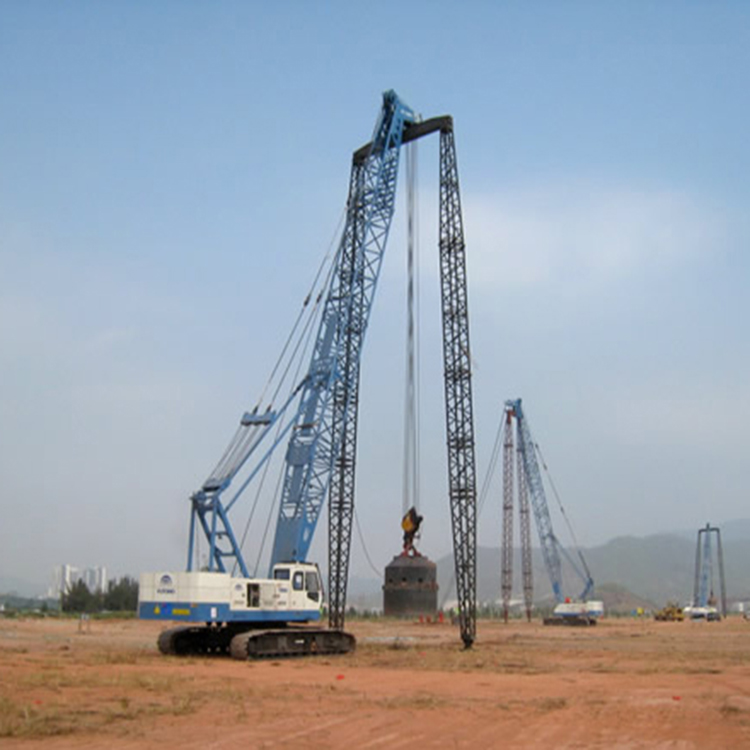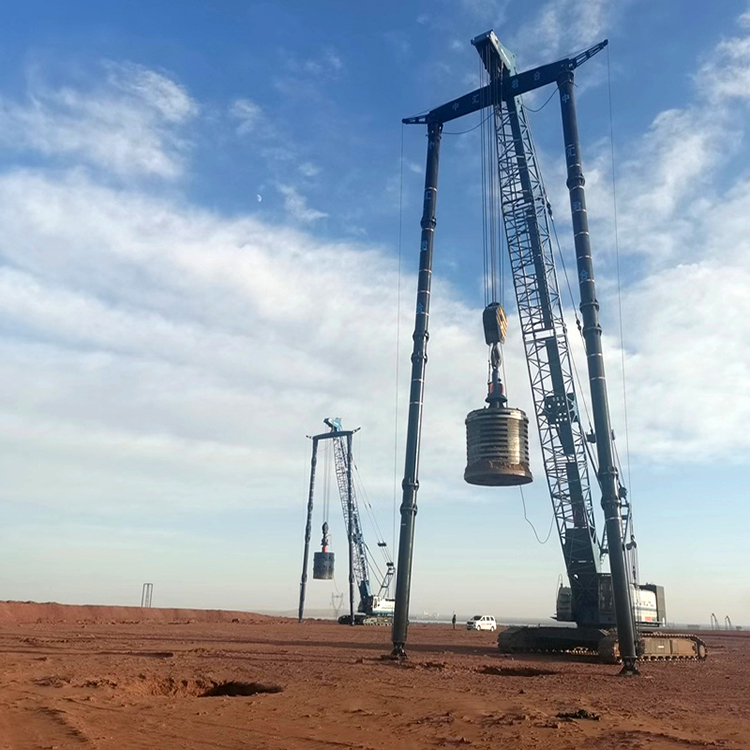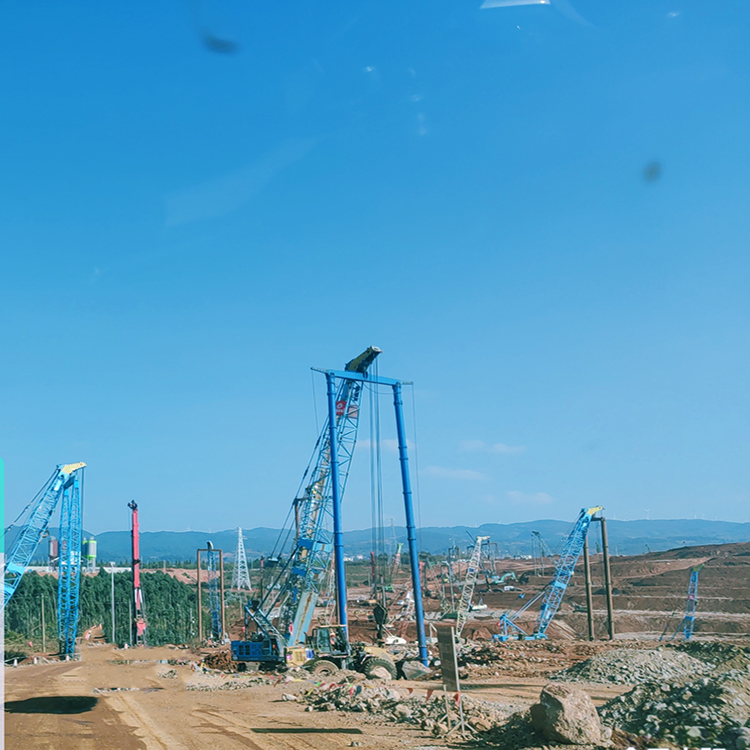
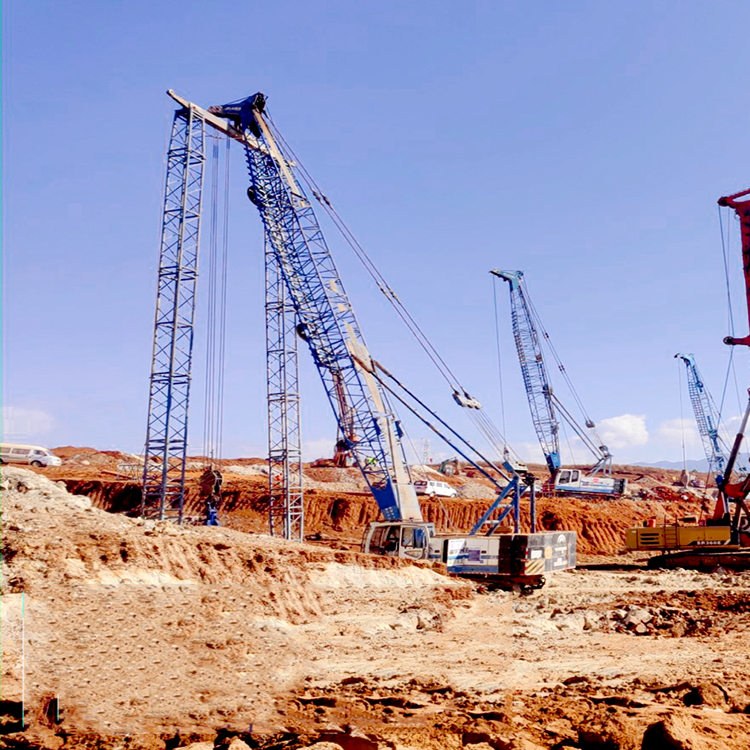








What is the application range of the dynamic compaction method?
The dynamic compaction method is suitable for treating foundations such as gravelly soil, sandy soil, low-saturation silt and clay, collapsible loess, unconsolidated fill, and mixed fill. The treated foundation not only enhances the strength of the soil but also reduces its compressibility, while also improving its resistance to vibration-induced liquefaction. Therefore, dynamic compaction is often used to treat foundations with liquefiable sandy soil, among others.
The dynamic compaction method is simple to operate, widely applicable to soil types, and significantly enhances reinforcement, allowing for higher bearing capacity, typically increasing the ground strength by 2 to 5 times; it reduces deformation settlement and compressibility by 2 to 10 times; soil particles are tightly bound, offering high structural strength; it is highly efficient, with rapid construction speed, cutting the construction period in half compared to soil replacement and backfilling; it saves reinforcement materials; has low construction costs, reduces investment; saves 60% of costs compared to soil replacement and backfilling, and 50% to 70% of investment compared to precast pile reinforcement, and 40% to 50% compared to sand piles.