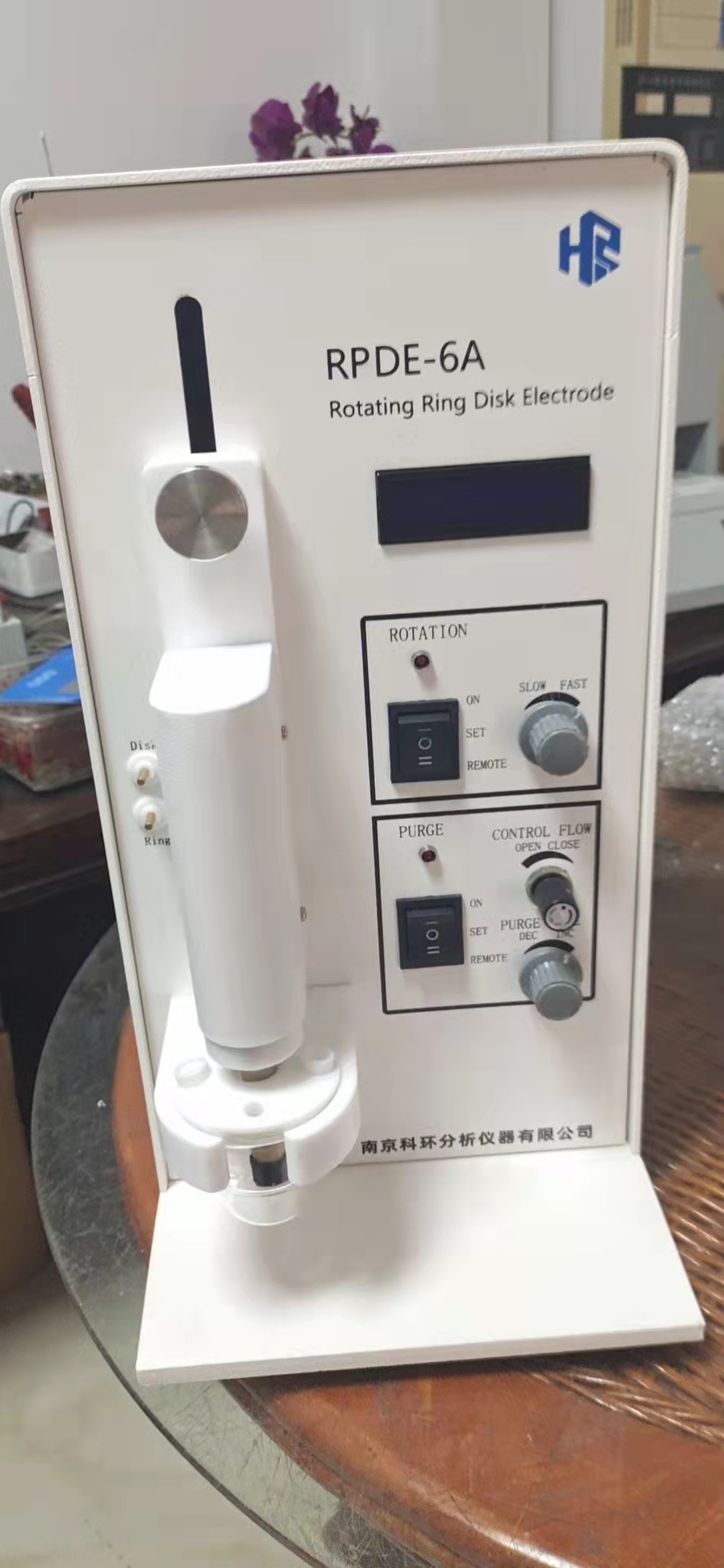











Rotating ring-disk electrodes are widely used in modern electroanalytical chemistry and research on electrode processes and homogeneous chemical reactions. As the rotating disk electrode spins, it allows the solution to move regularly (i.e., in a laminar flow) across the electrode surface, and the thickness of the diffusion layer on the electrode surface varies with the rotational speed. Consequently, this leads to a precise decomposition of the convection-diffusion equation.
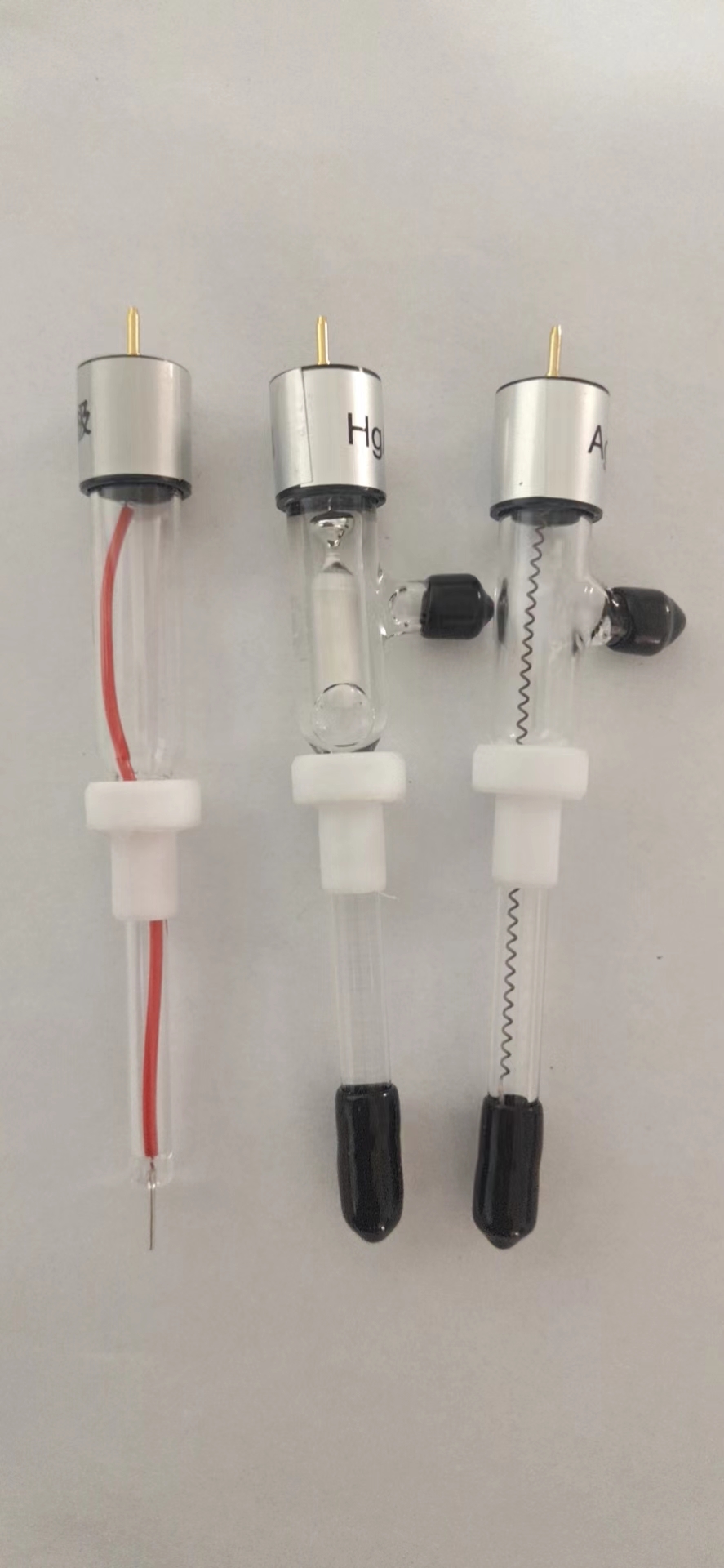
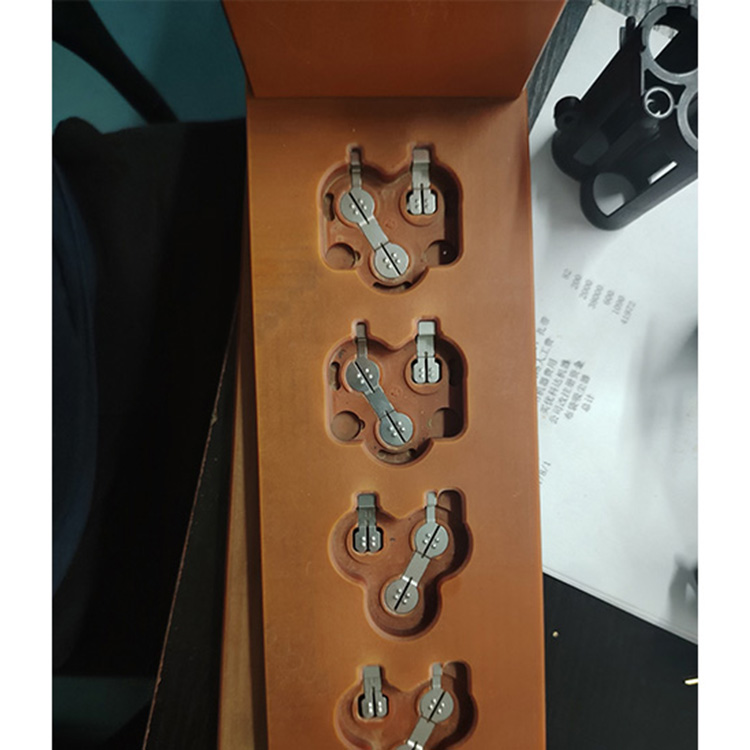
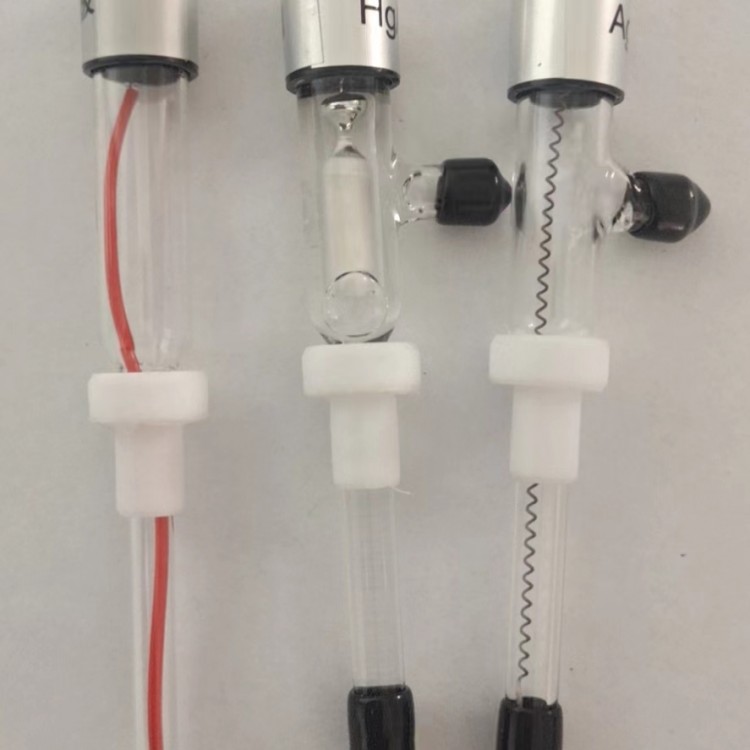
RRDE-6ATypeRotary ring disk electrode, developed and manufactured by Nanjing Keyuan Analytical Instrument Co., Ltd.It is an electrochemical instrument featuring a miniature rotary system for maintaining constant rotational speed and fluid dynamic tuning of the rotating annular disk. The system consists of a short stainless steel shaft and a set of electrodes with a few millimeters in diameter, forming a concentric electrode system.
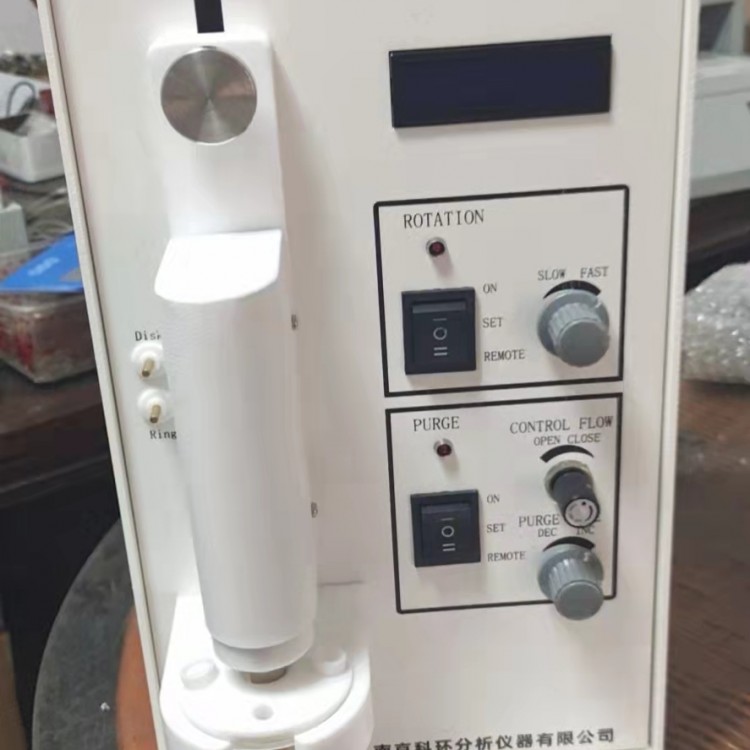
RRDE-6AThe device is controlled by a proportional-integral closed-loop circuit driven by a DC servo motor. The electrodes are compact in size and can be quickly interchangeable. The unit also features an adjustable valve control system for regulating the flow of inert gas used to purify the electrolyte.
RRDE-6AOperates as a standalone unit or can be directly controlled by electrochemical analyzers such as ALS/CHI/XJP, or other instruments. At the start of analysis, the built-in gas control device can clean the sample. Additionally, the glass electrolytic cell is convenient to use, easy to flush, clean, and replace. Moving and replacing the electrolytic cell is quite straightforward.
Primary Technical Performance and Specifications
1Equipment starts up and powers on, rotating30After minutes, continuous use is possible in the following environments:
① Environmental Temperature: 0~40℃
Relative humidity: ≤80%
Power: 220V ± 10%, 50Hz
④ No significant vibration and strong electromagnetic field.
2RPM:
RPM Setting: 0-9999 RPM
② Speed Range: 50 to 9,000 RPM
③ Speed Stability: 50-200 RPM; Relative Error <1%
≥200 RPM Relative Error < 0.5%
3Washing and purification time:
① Time Setting: 0-499 seconds
②Time Display Mode: Local Control - Decreasing, Remote Control - Increasing
4Electrode tip radial跳动≤0.05mm; No axial movement
5Insulation resistance between electrode and other parts > 10MΩ
6Results show: 1602 fully automatic real-time display of rotation speed, deoxygenation time, and 9 working states
7Swivel shaft: Stainless steel
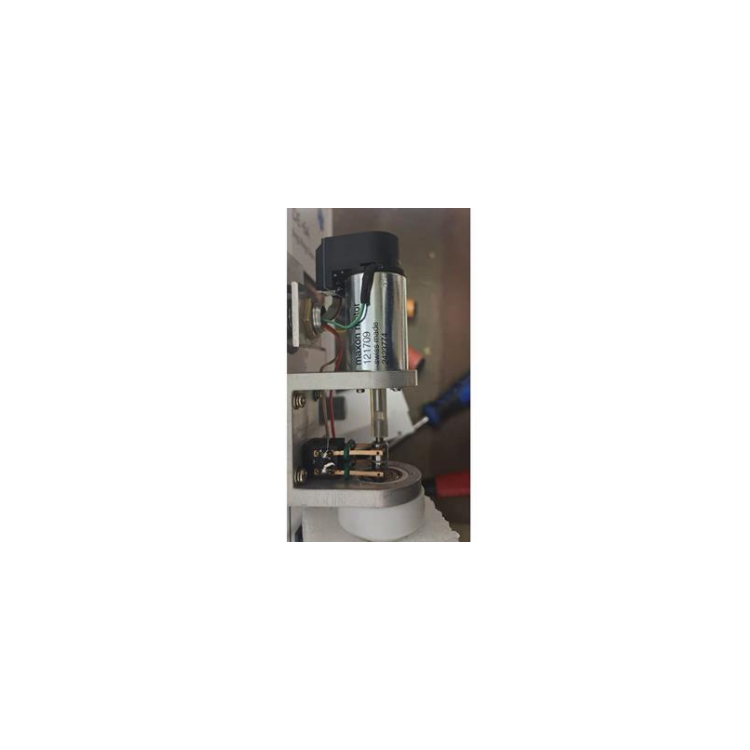
8Motor: 24V, coreless, MAX low inertia DC servo
95 psi intake pressure
10RemoteRemote Control:1 VComparable to 1000 rpm, the output voltage is proportional to the speed.
11RemoteRemote Level: TTL High Level Trigger
12Please provide the Chinese content to be translated.Dimensional shape:210×240×320
13Weight: 7.6 Kg
14Power Consumption: <25W
Basic working principle
Rotating disk electrodes are widely used in modern electroanalytical chemistry and electrode kinetics research. Extensive studies have been conducted on the fluid dynamics models and mass transfer equations of rotating disk electrodes since the 1940s, with their strict, limiting diffusion current equation being:
Id=0.62nFAD2/3ω1/2γ-1/6C
In the formula:
IdThe ultimate diffusion current of the disc electrodeA/Cm2
nNumber of electrons involved in electrochemical reactionsCm2/Instantly.FFaraday's constant.
Dynamic viscosity of the solution.Cm2/Second.
ω: Rotational speed of the electrode. Radians per second.
CConcentration of the ion being tested.
The equation shows that the limiting diffusion current (Id) of the rotating disc electrode is well-proportioned to the square root of the rotational speed (V). Plotting Id against N^(1/2) yields a straight line with a slope of 0.62nFAD^(2/3)γ^(-1/6)C, from which the diffusion coefficient (D) of the reacting particles can be determined.
δ=1.61D1/3ω-1/2γ-1/6
In the formula:
δ: Diffusion layer thickness.
DDiffusion coefficient of the tested electrically conductive material. Cm2/second.
Dynamic viscosity of the solution. Cm2/second.
ω: Rotational speed. RPM per second.
Thus, the effective thickness δ of the diffusion layer on the rotating disk electrode surface is a quantity that can be accurately calculated. Once D, γ, and ω are known, δ can be determined. The effective thickness δ of the diffusion layer on the rotating disk electrode surface possesses these advantages, making it widely applicable in electroanalytical chemistry and industrial production.