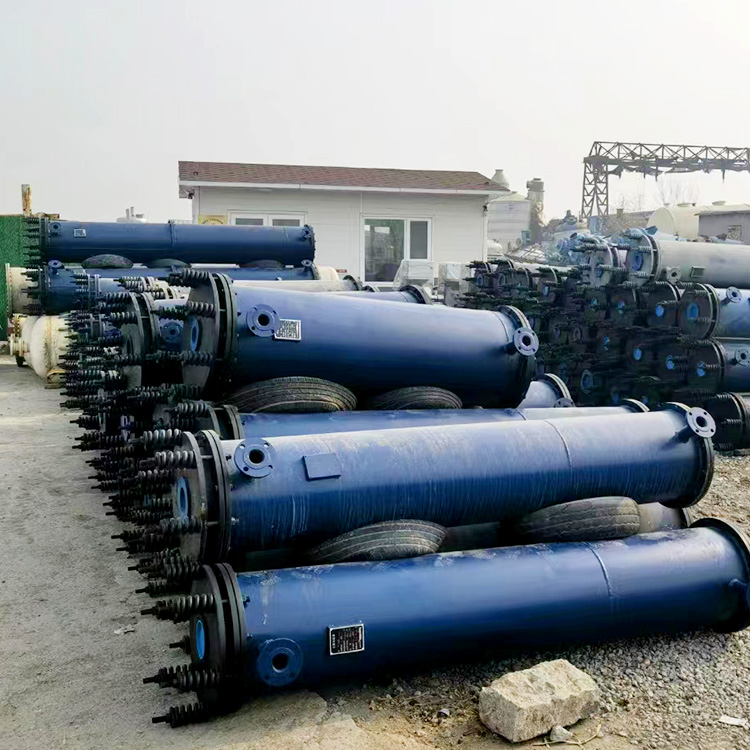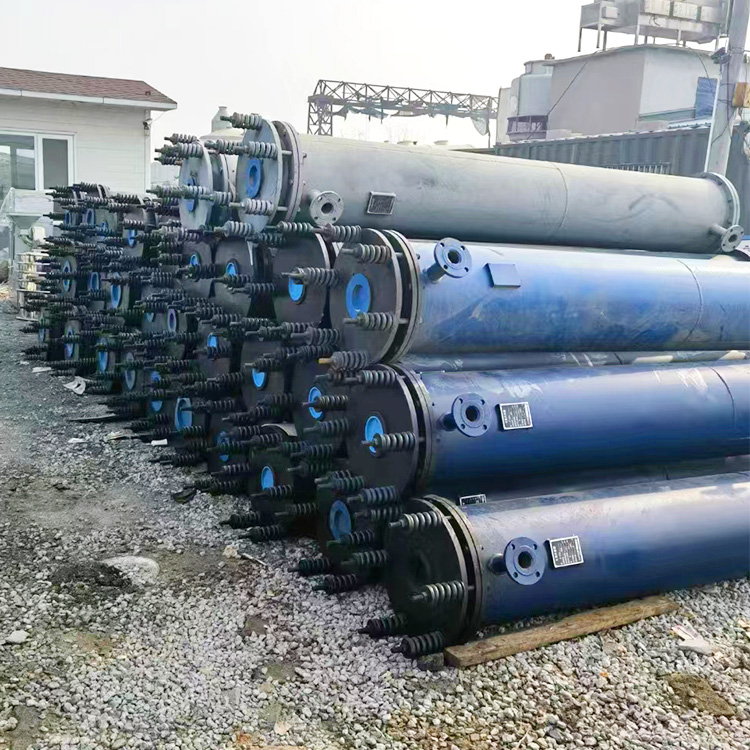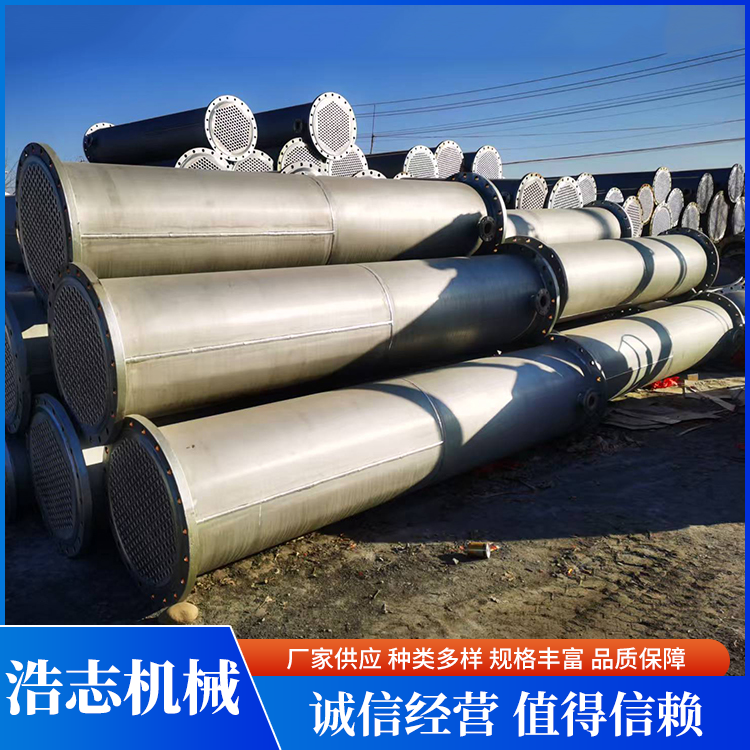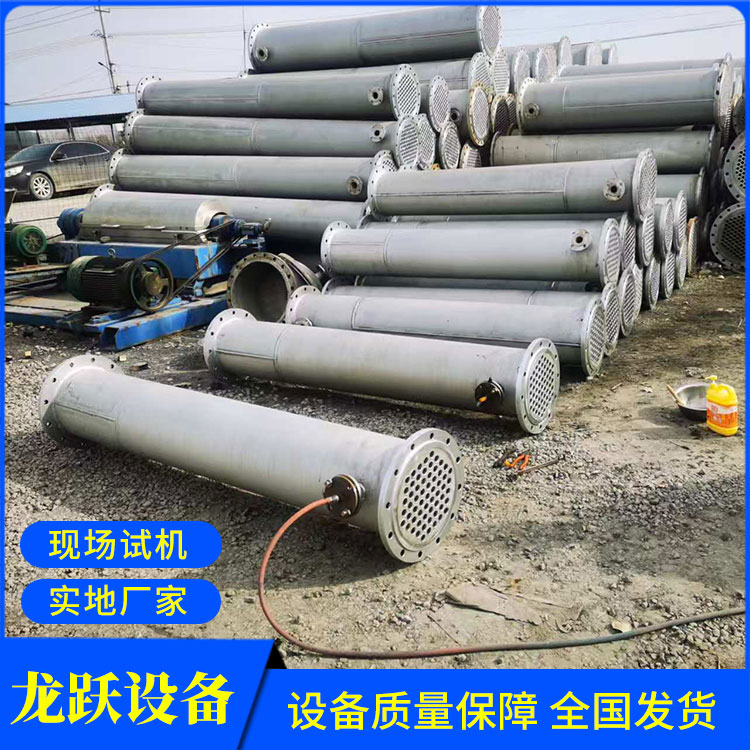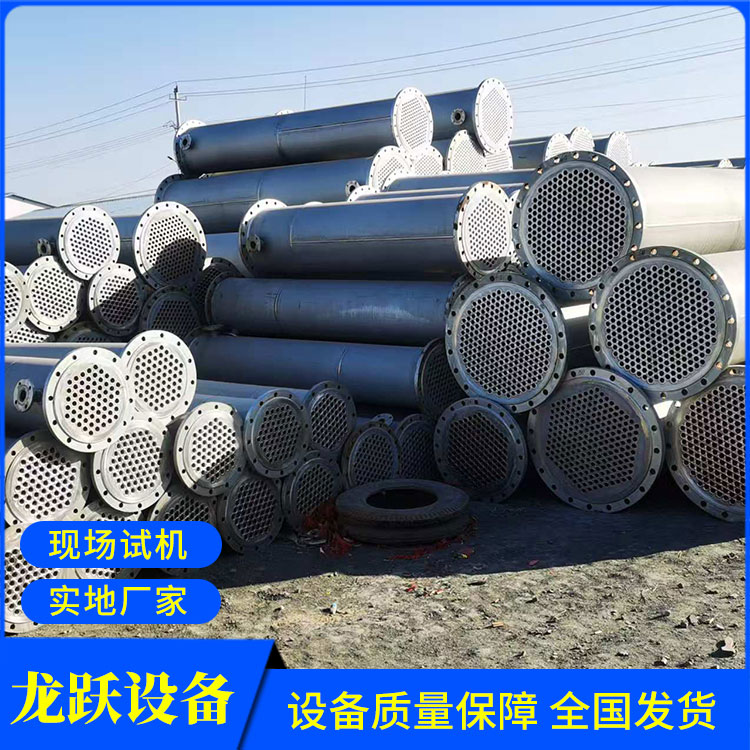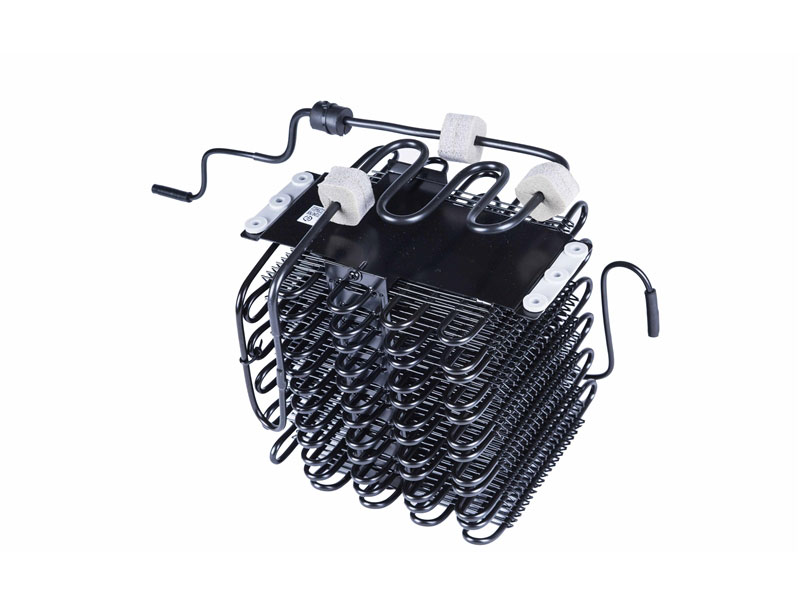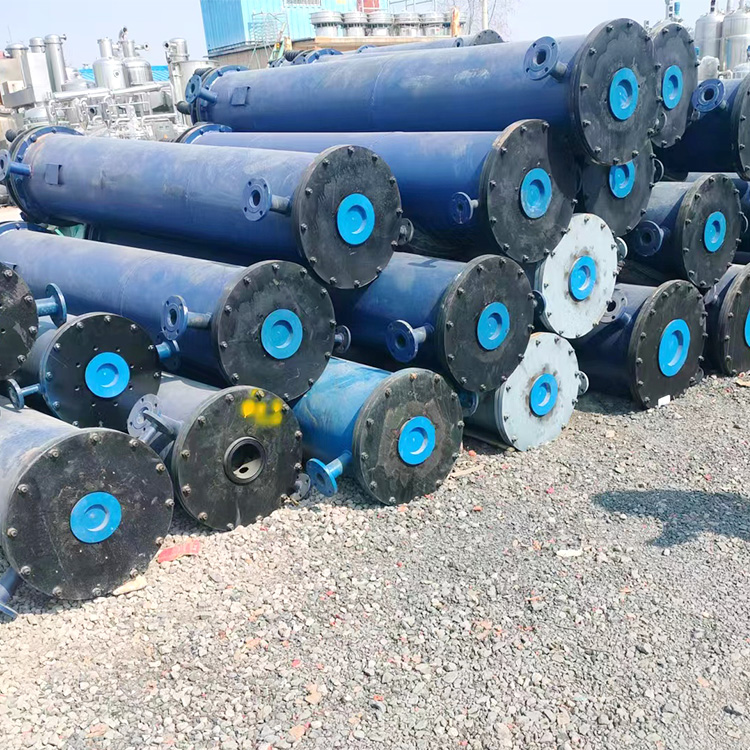


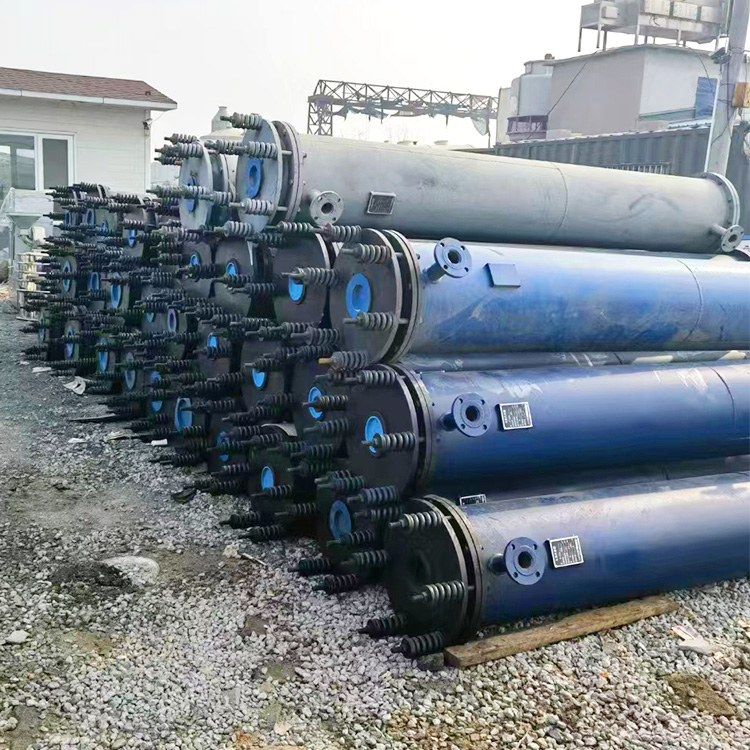


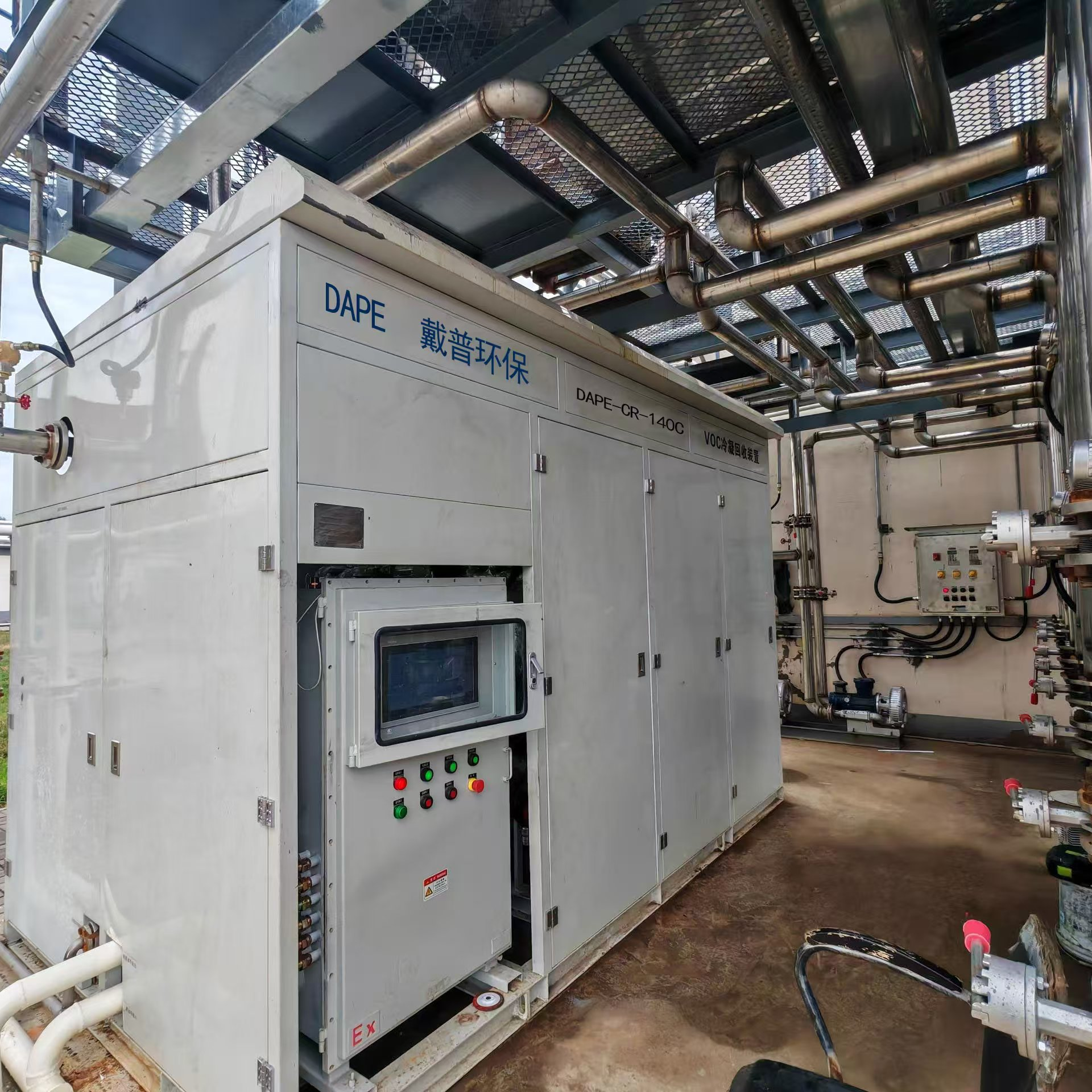
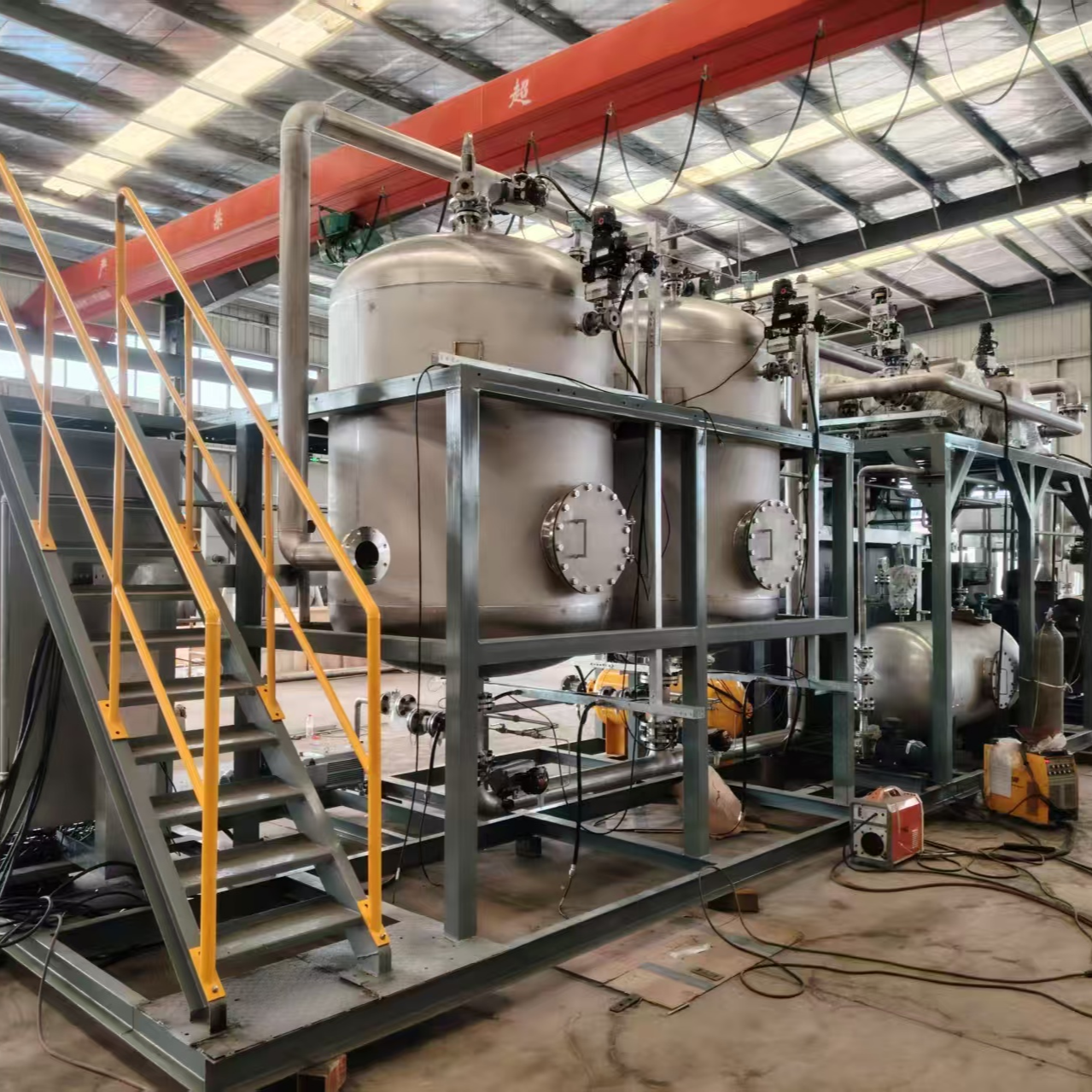
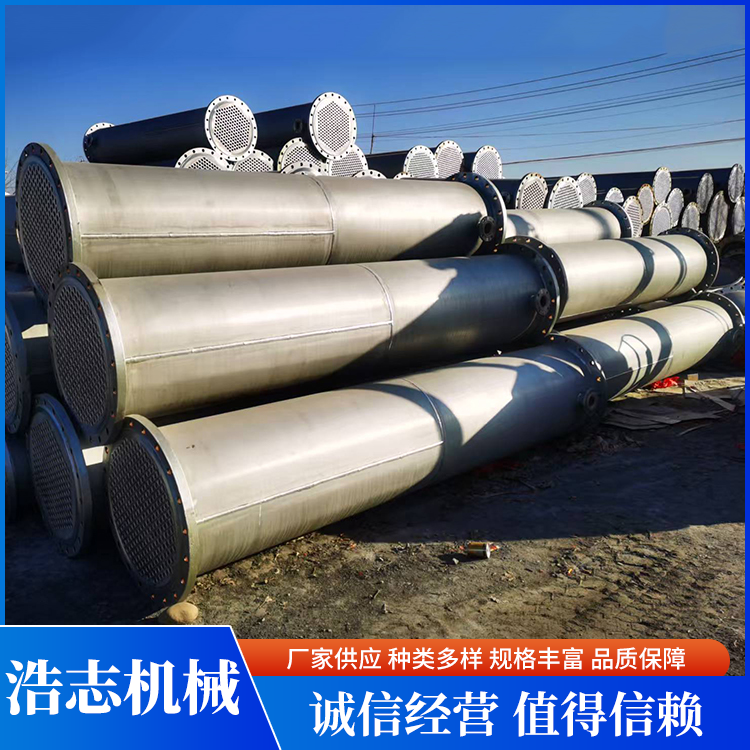
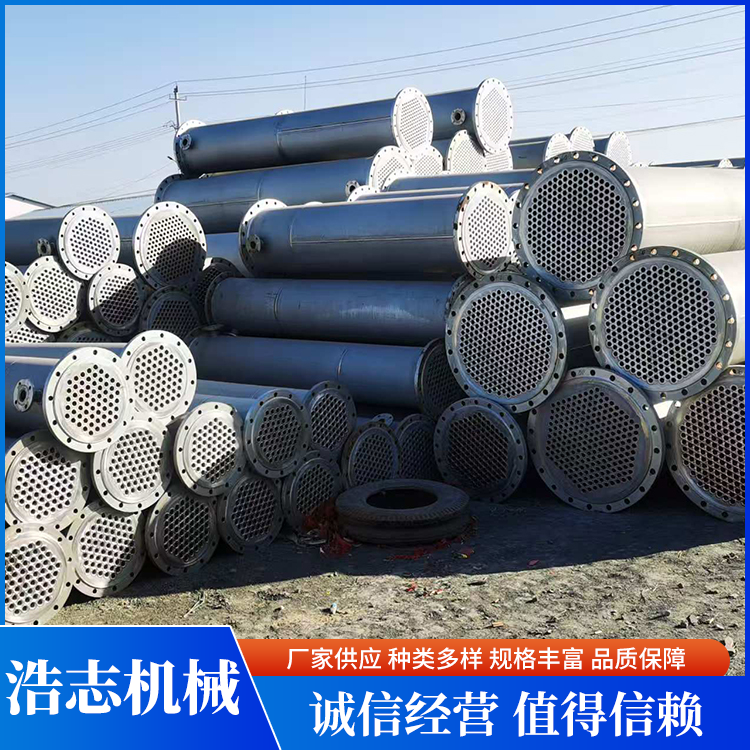
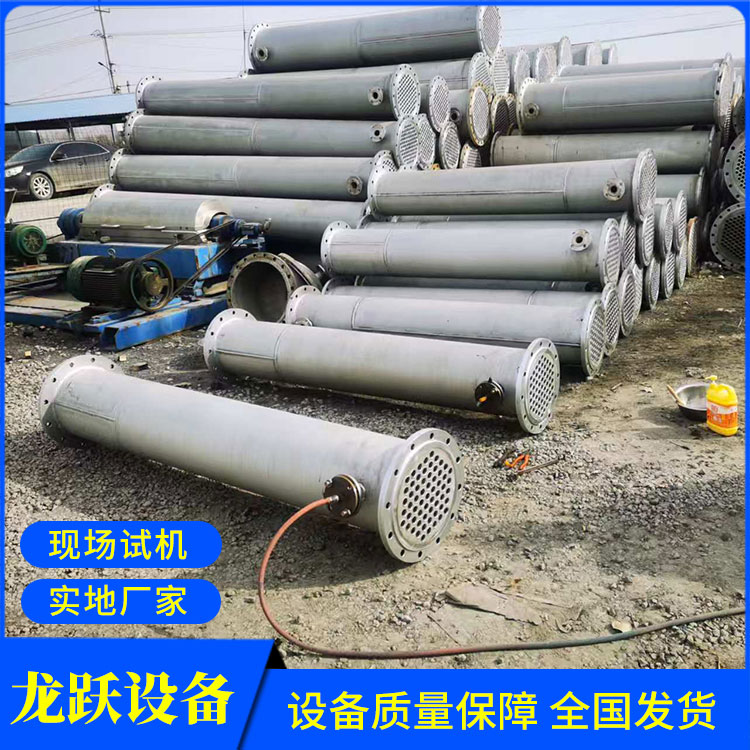





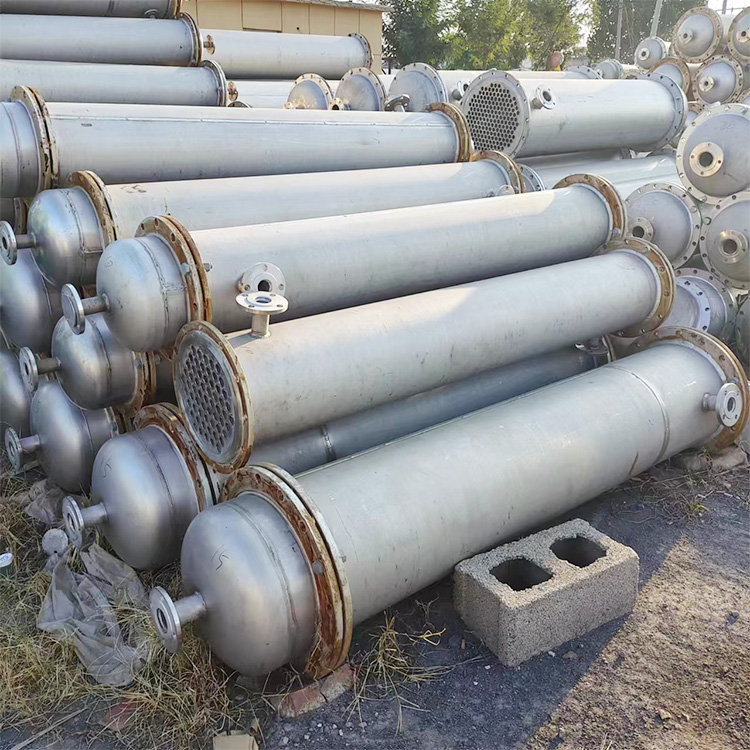
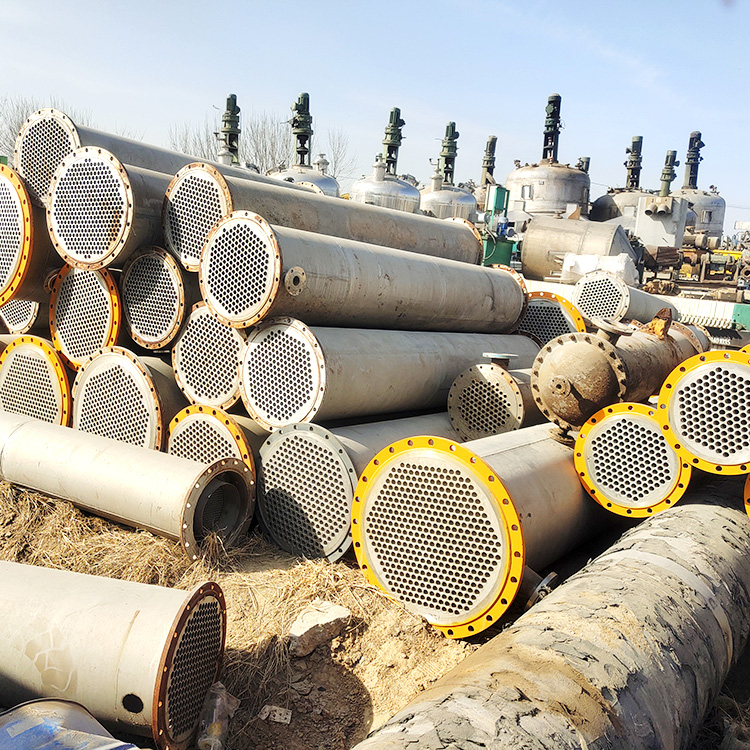
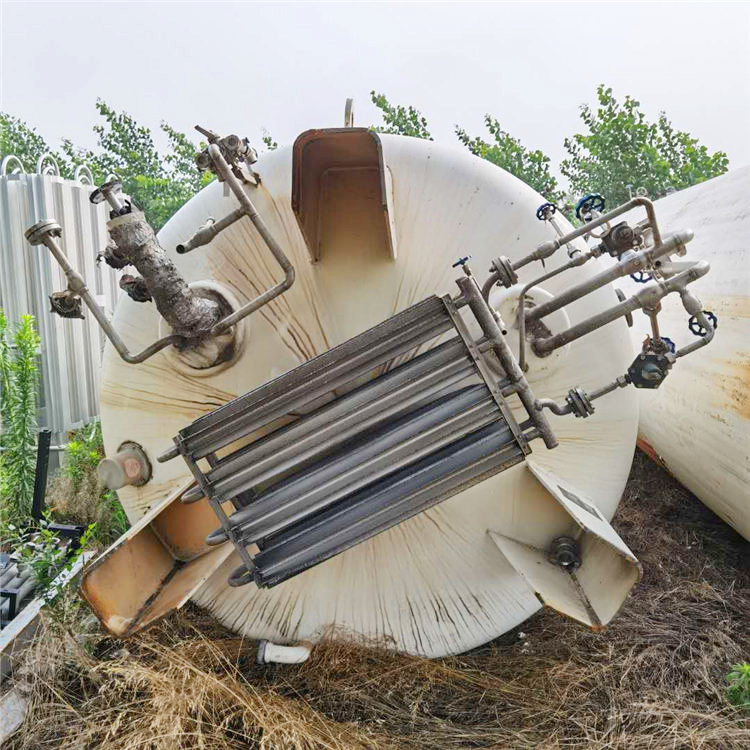
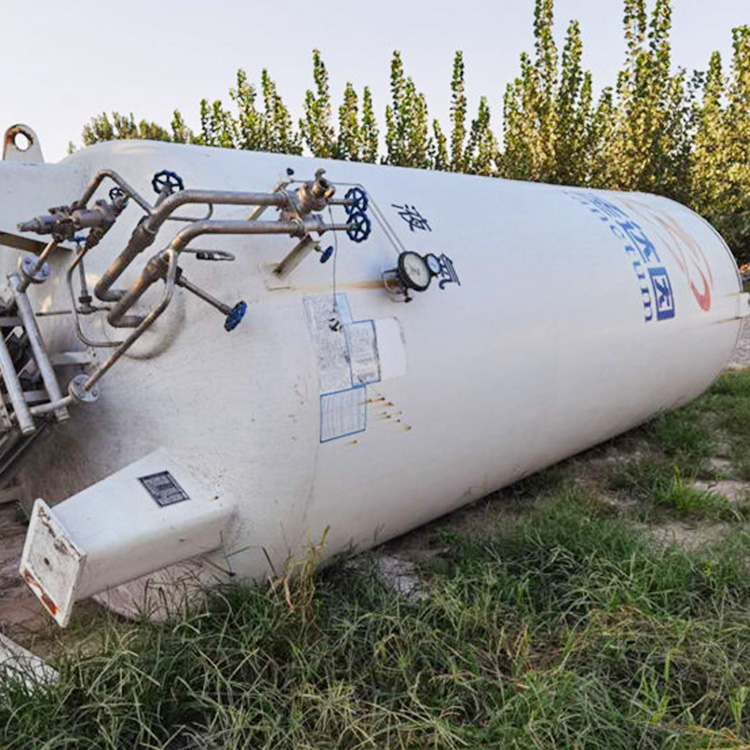
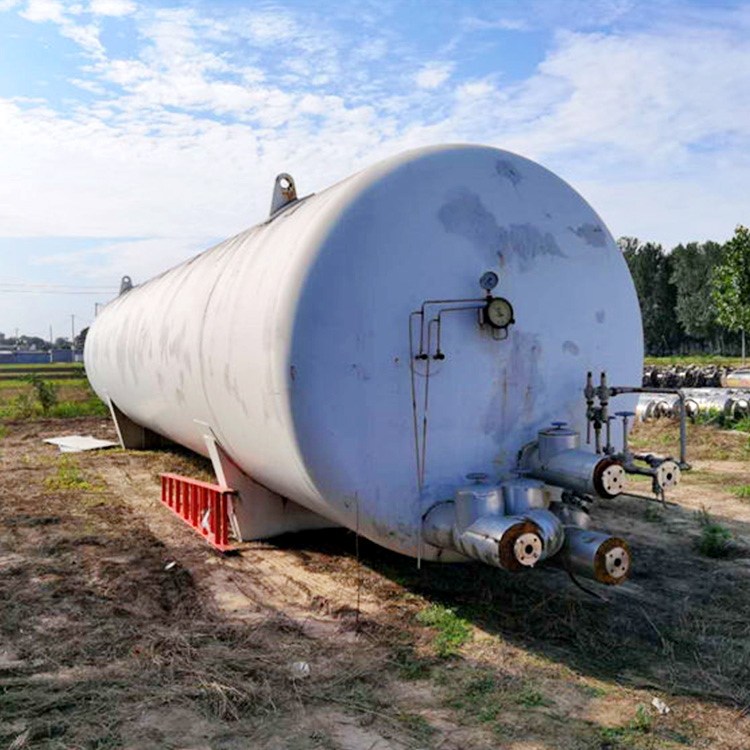
Graphite heat exchangers are heat exchange components made of graphite. The graphite used to manufacture heat exchangers should be impermeable, commonly using impregnated impermeable graphite and molded impermeable graphite.
Graphite heat exchangers offer excellent corrosion resistance and are less prone to scaling on the heat transfer surface, ensuring good heat transfer performance. However, graphite is brittle and has low bending and tensile strength, thus suitable only for low-pressure applications. Even in block-like structures with good pressure-bearing capacity, the working pressure is generally only 0.3 to 0.5 MPa.
Graphite heat exchangers are costly, bulky, and not widely used. They are primarily employed for heat exchange in corrosive media such as hydrochloric acid, sulfuric acid, acetic acid, and phosphoric acid, such as condensers for acetic acid and acetic anhydride. They are mainly used in industries such as chlor-alkali chemicals, petrochemicals, fluoride salts, titanium dioxide, zirconium industry, chloroacetic acid, chlorinated paraffin, and single crystal silicon fluoride chemicals.