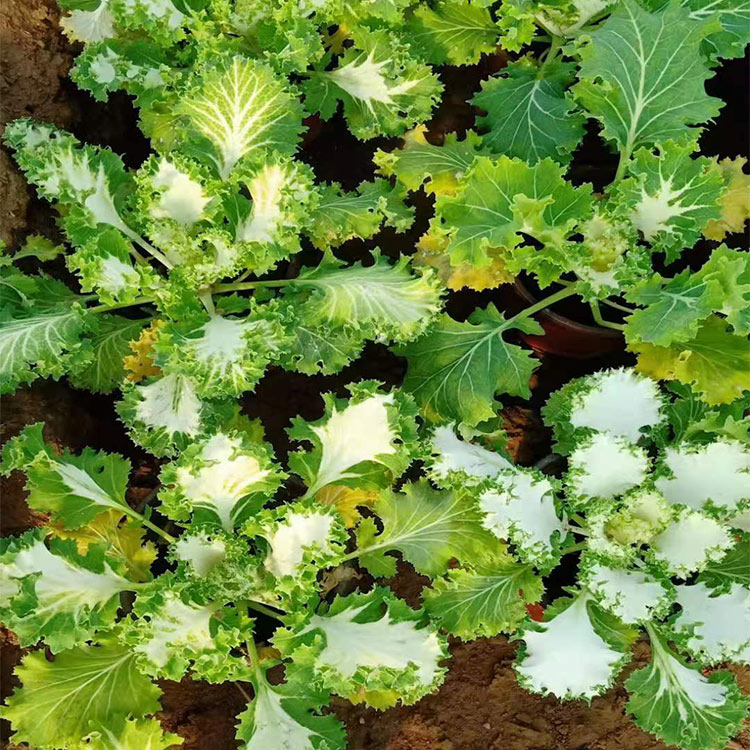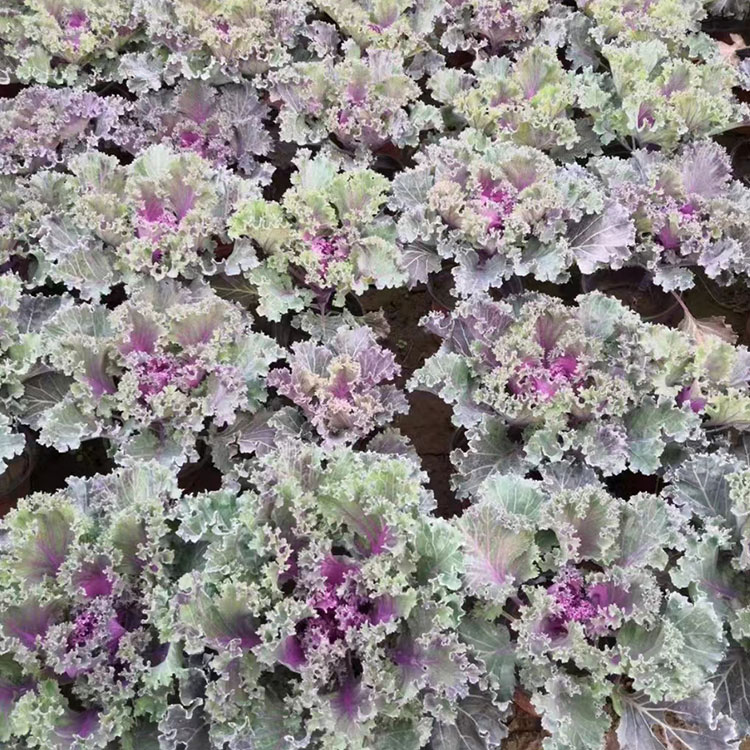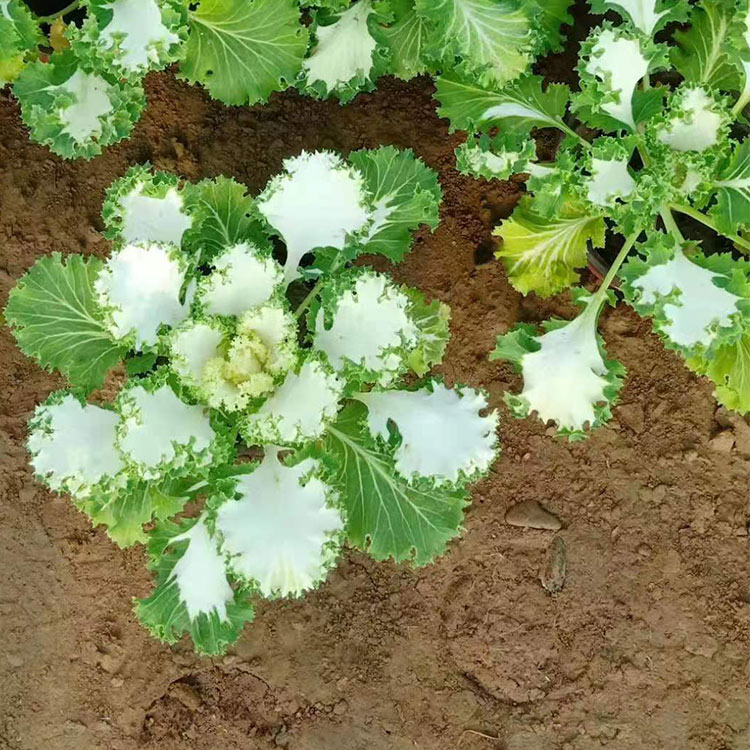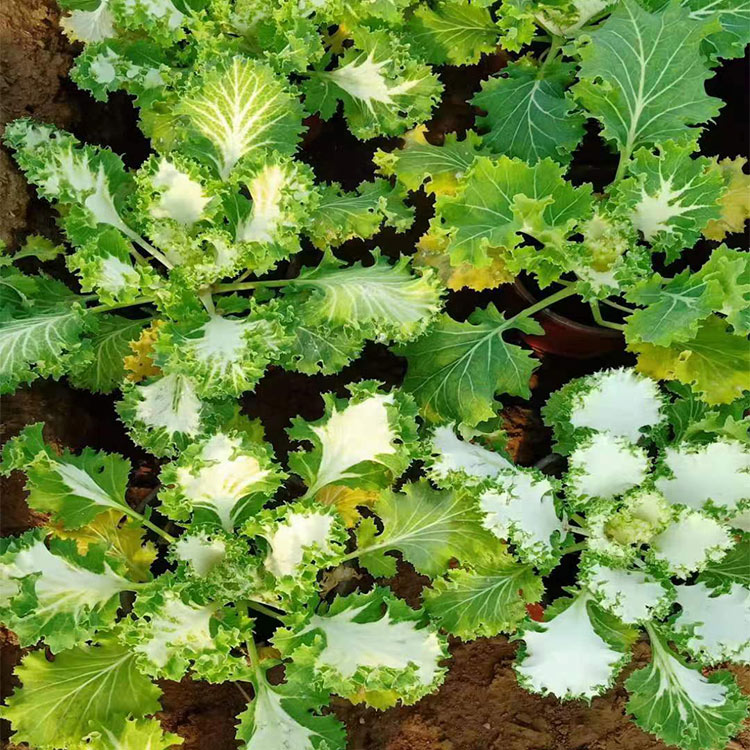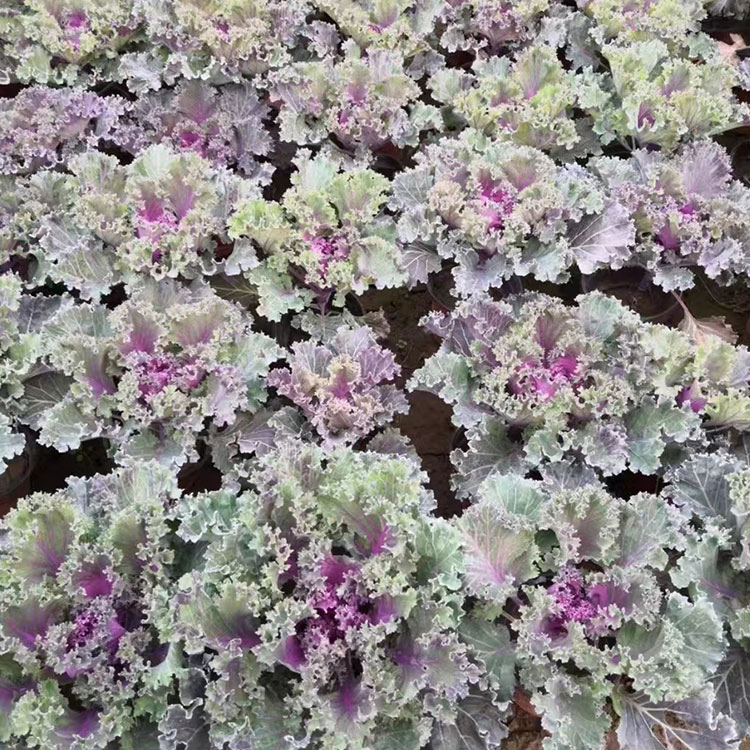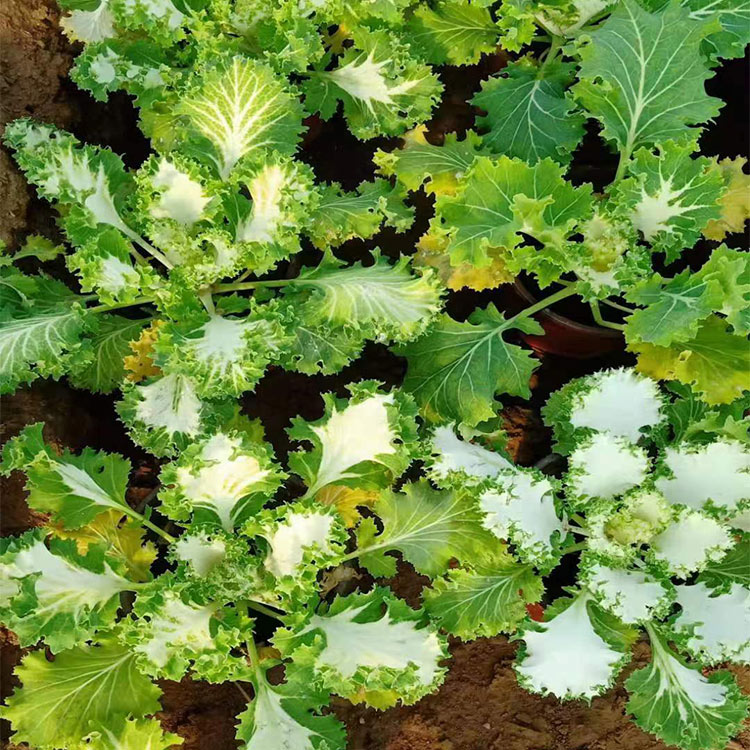

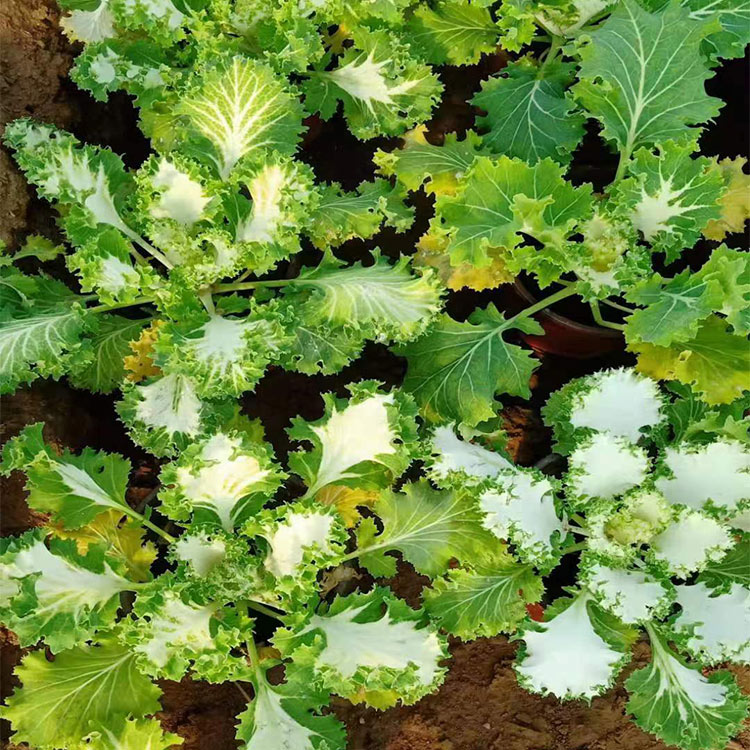
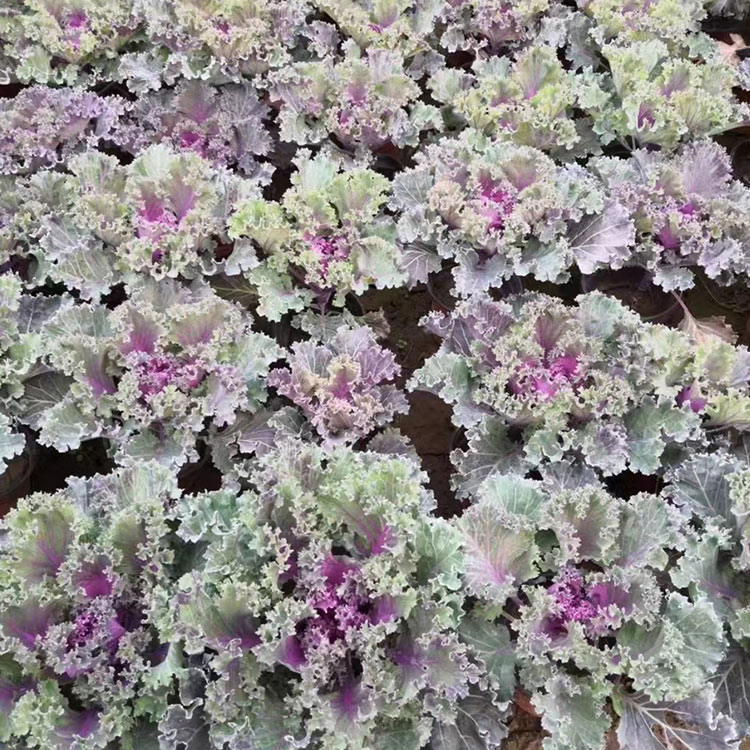
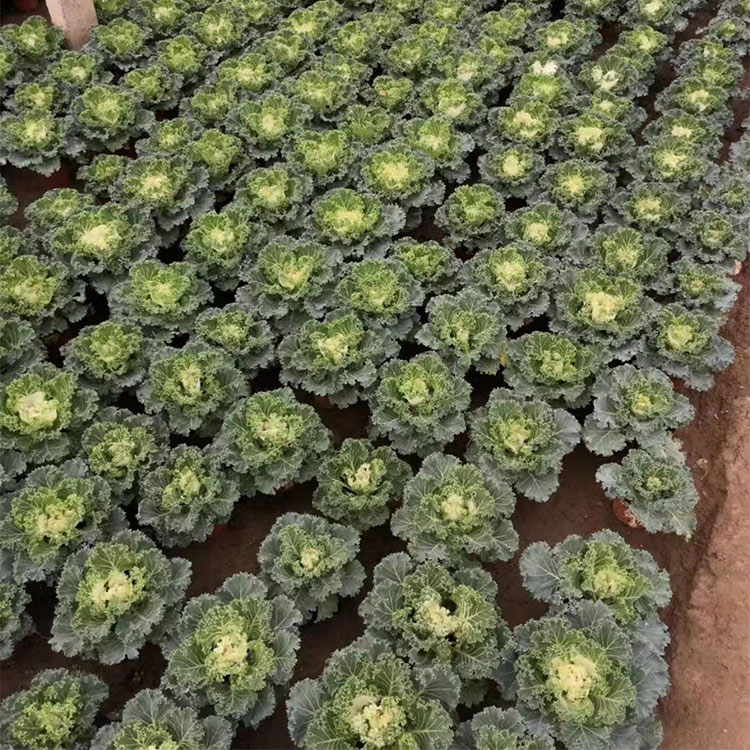









Kale is a biennial herb, a horticultural variety of the edible cabbage. Its structure and shape are very similar to cabbage, but the center of kale does not curl into a ball. After one year of cultivation, the plant forms a rosette of leaves. After a cold winter, it blooms and sets seeds the following year. The raceme is terminal, flowering from April to May, and is pollinated by insects. The fruits are siliques, oblate, and the seeds are spherical, brown, with an average weight of about 4 grams per thousand. Horticultural varieties are diverse in form, classified by height into tall and dwarf types; by leaf shape into crinkled, non-crinkled, and deeply lobed varieties; and by color, with marginal leaves in emerald, deep green, gray-green, and yellow-green, and central leaves in pure white, pale yellow, flesh-colored, rose red, and purple-red, among others.