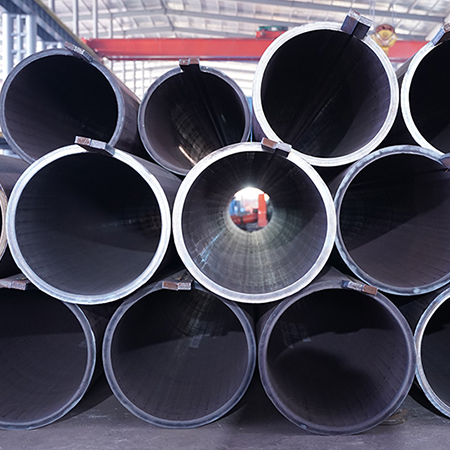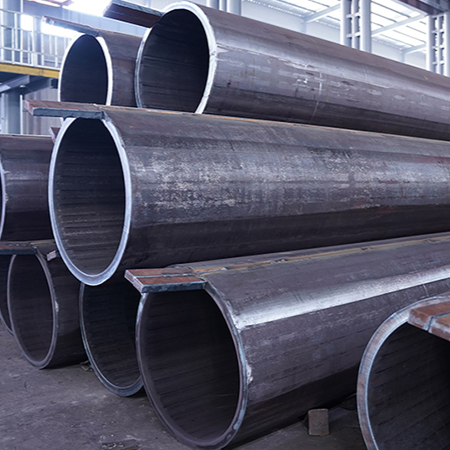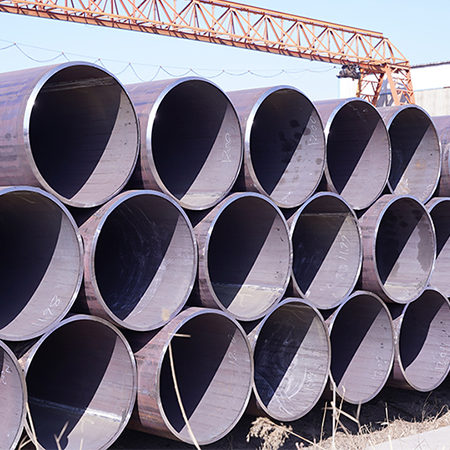
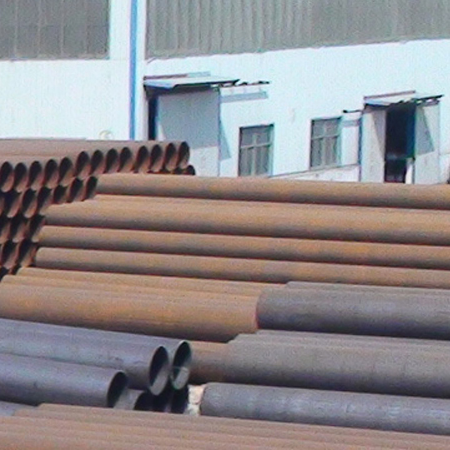
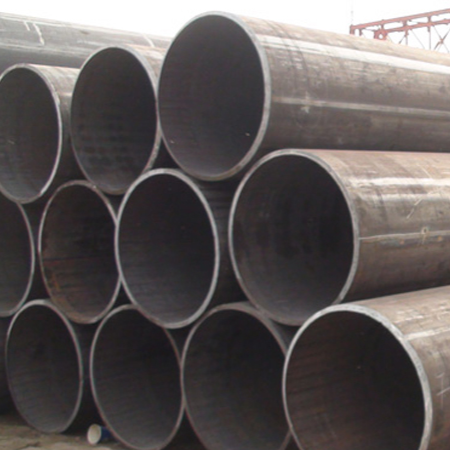
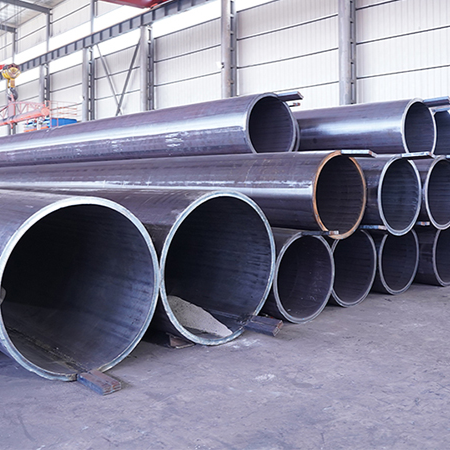
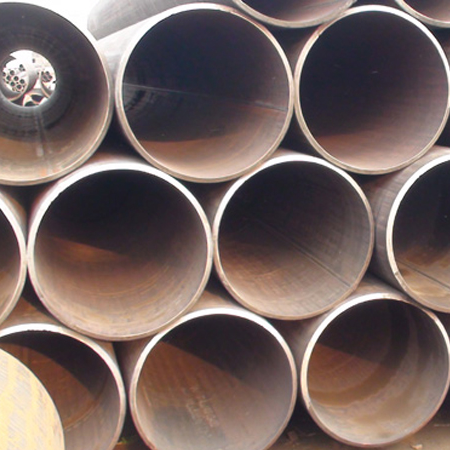







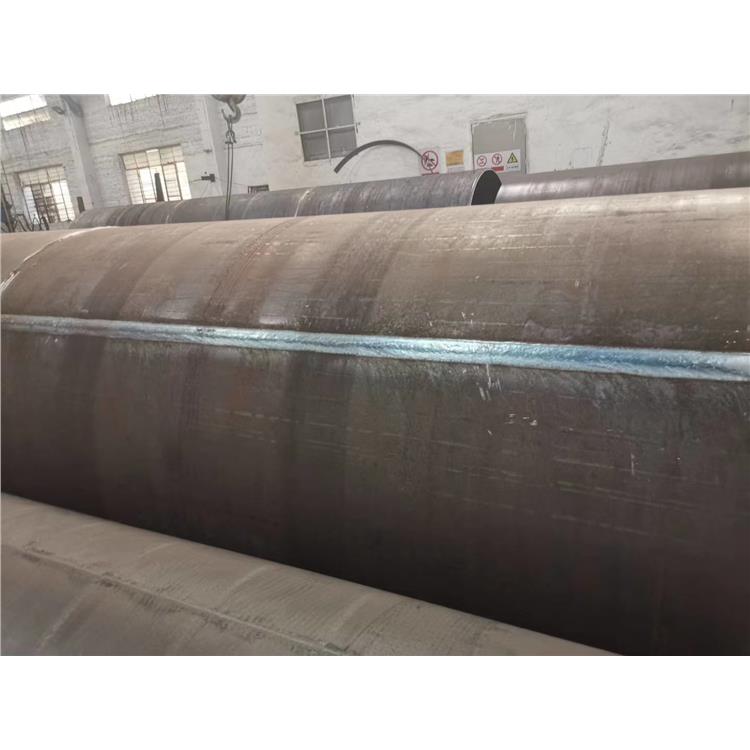


Welded steel pipes showcase their economic and aesthetic appeal in high-precision, low-pressure fluid applications. The production process for welded steel pipes is simple, with high efficiency, low costs, and rapid development. The strength of spiral-welded pipes is typically higher than that of straight-seam pipes. Larger diameter pipes can be produced from narrower billets, and pipes of different diameters can also be produced from the same width billet. However, compared to straight pipes of the same length, the length of the weld seam increases by 30% to 100%, resulting in lower productivity. Therefore, smaller diameter pipes usually use straight welding, while larger diameter welded steel pipes predominantly use spiral welding.
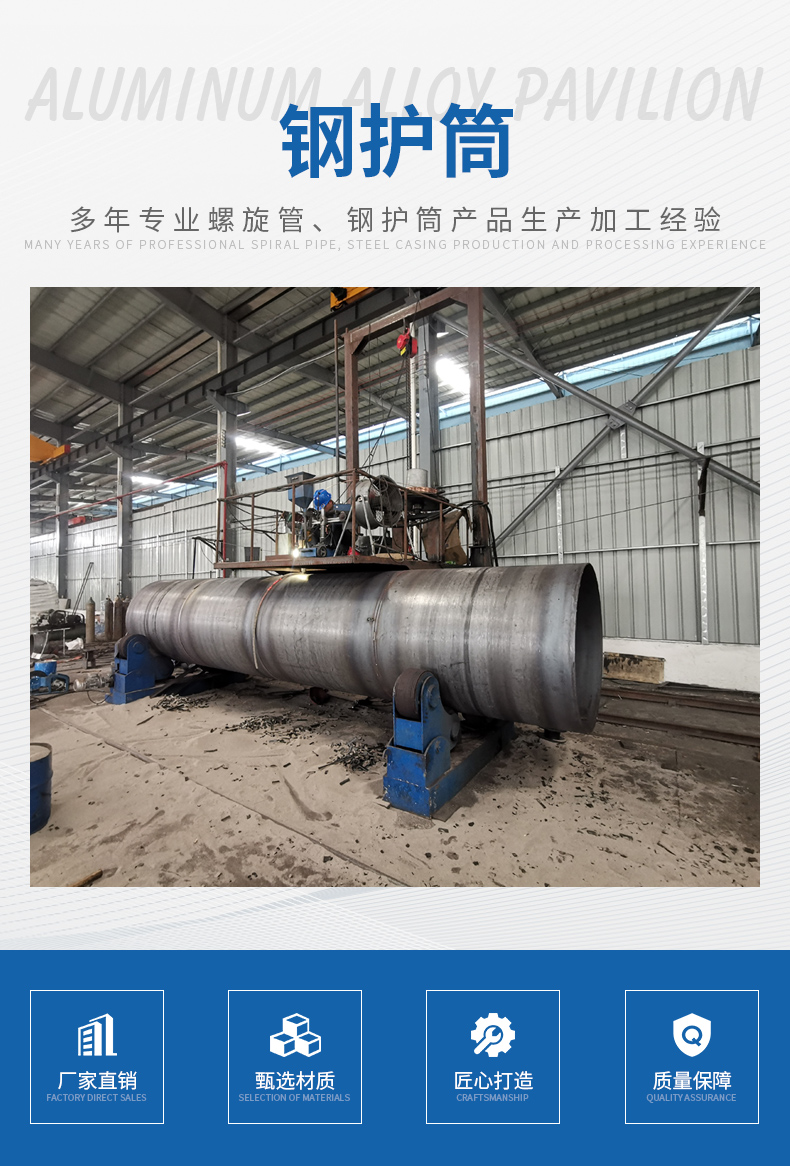
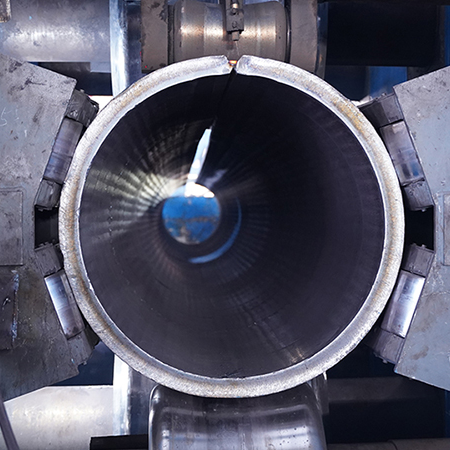
Welded steel pipes refer to pipes that are formed by bending and deforming steel strips or plates into circular, square, or other shapes and then welded together, with a seam on the surface. The raw material used for welded steel pipes is steel plates or strips.
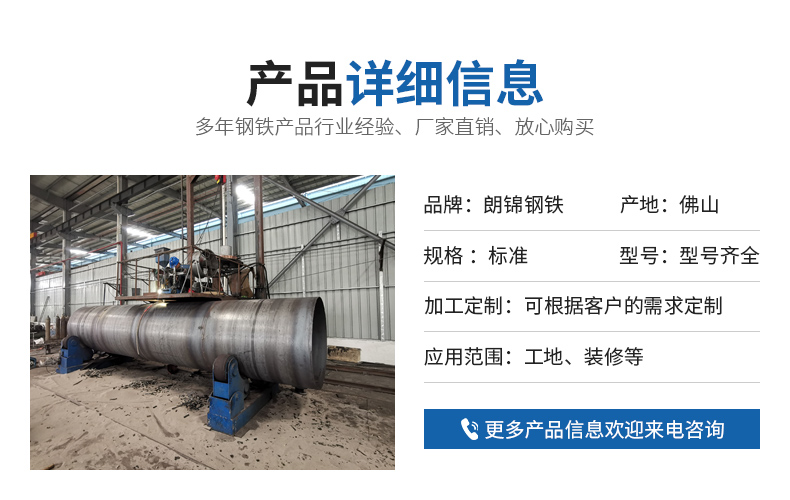
Welded steel pipe specifications:
As a Chinese manufacturer of welded steel pipes, we are capable of producing and supplying various sizes of welded steel pipes according to the requirements of international buyers. We offer both metric and British standards. Typically, the following size range is available:
Pipe wall thickness: 0.7 to 6.0 (mm)
Pipe Diameter: 4 inches (feet) to 8 inches (inches)
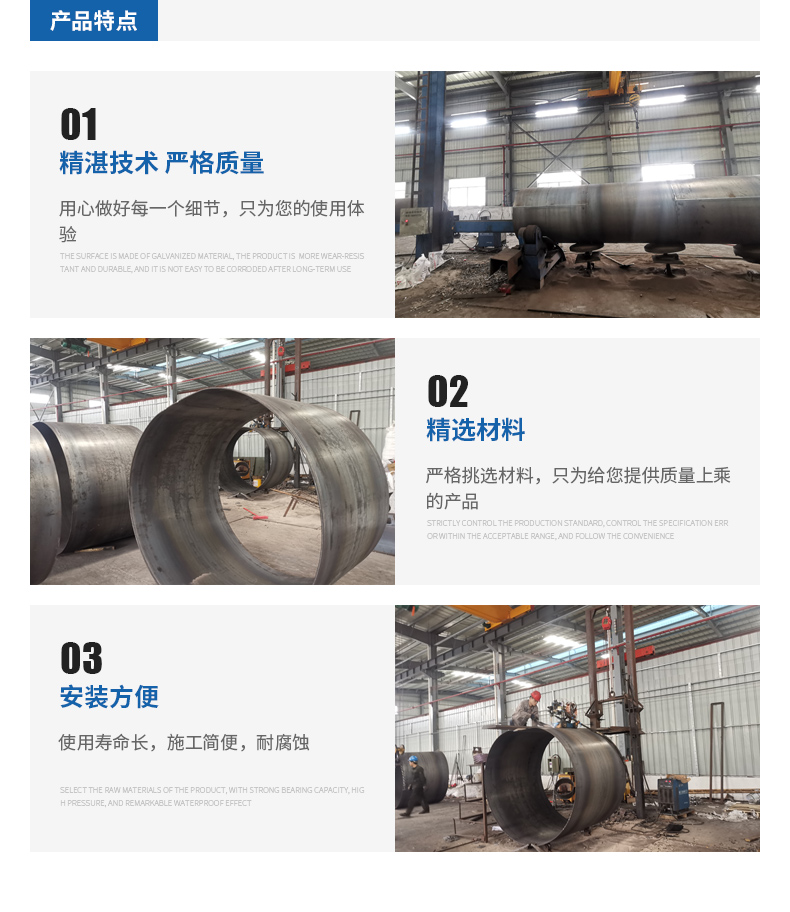
What is Welded Steel Pipe:
Welded steel pipes are formed by bending steel strips and plates and then welding them together to create circular or square shapes. According to their definition, they are known as welded pipes. Simply put, a welded pipe is a pipe that undergoes a welding process, and you may find weld seams on the surface of welded steel pipes. Of course, most ER pipes are produced with coatings like galvanizing, so the weld seams are not visible.