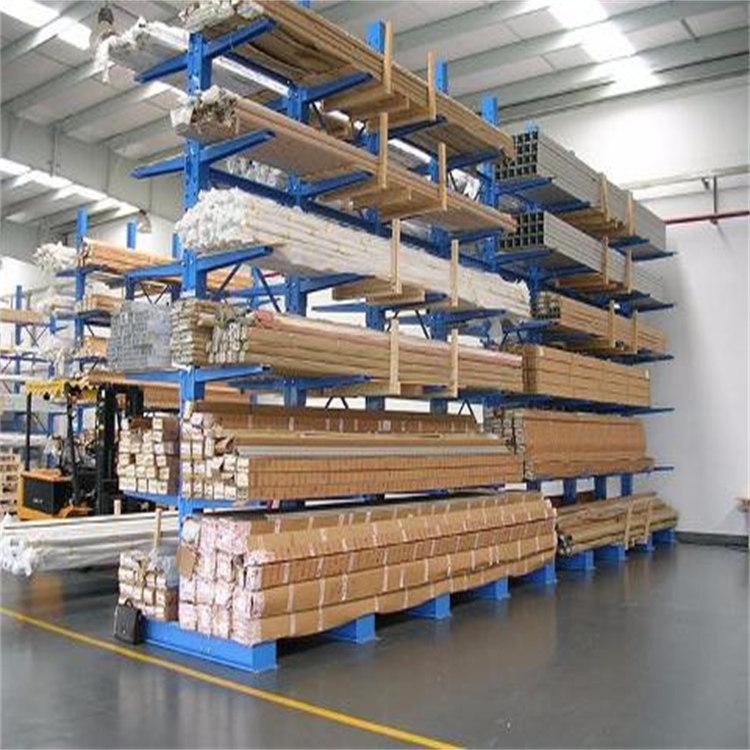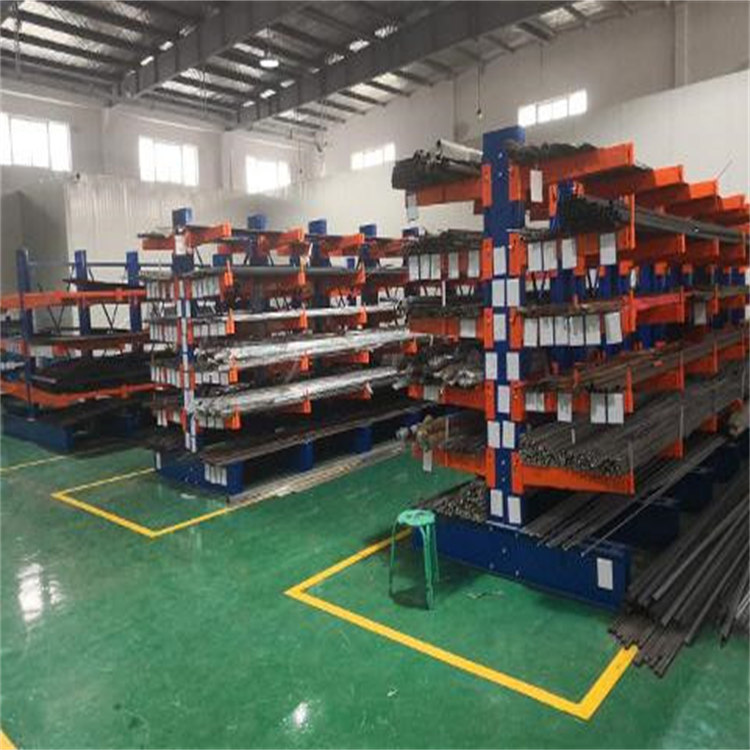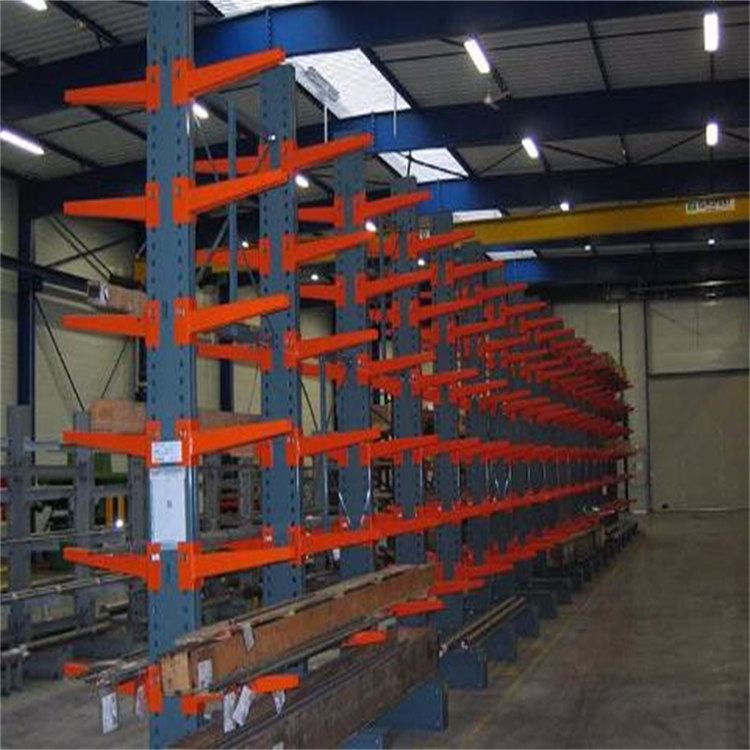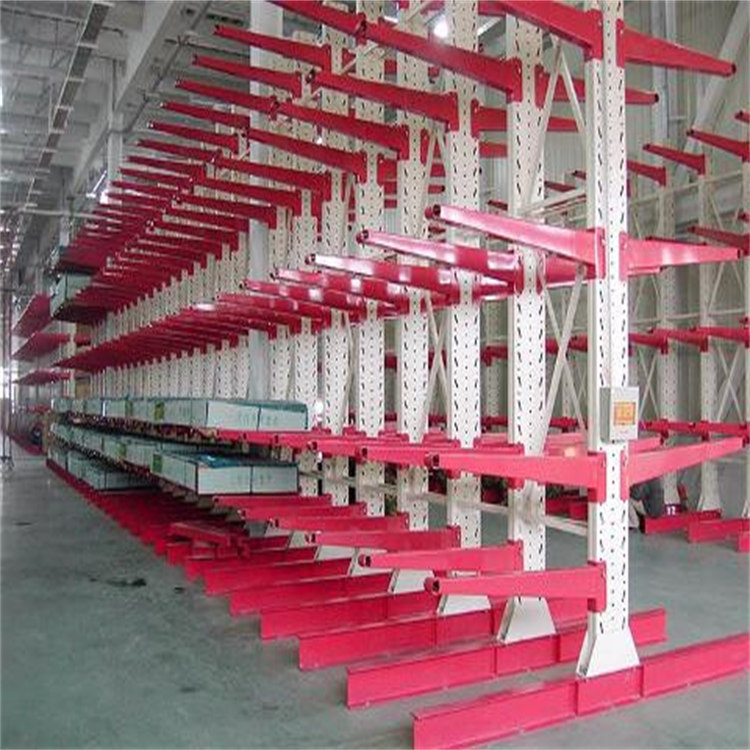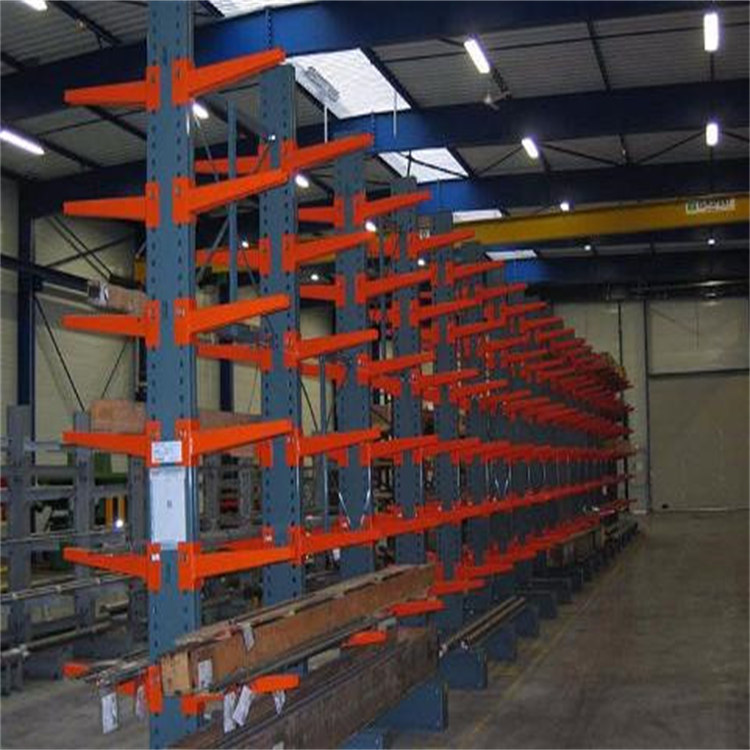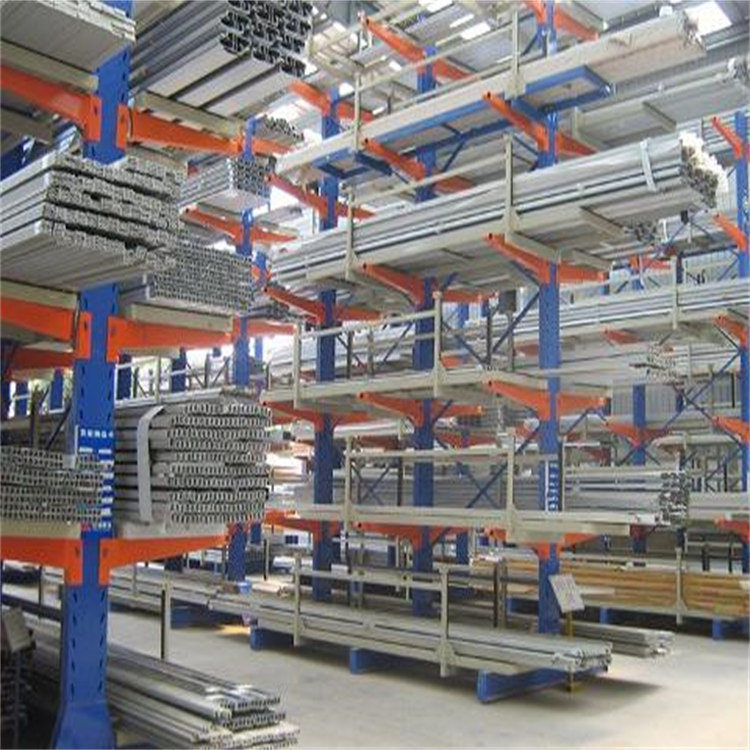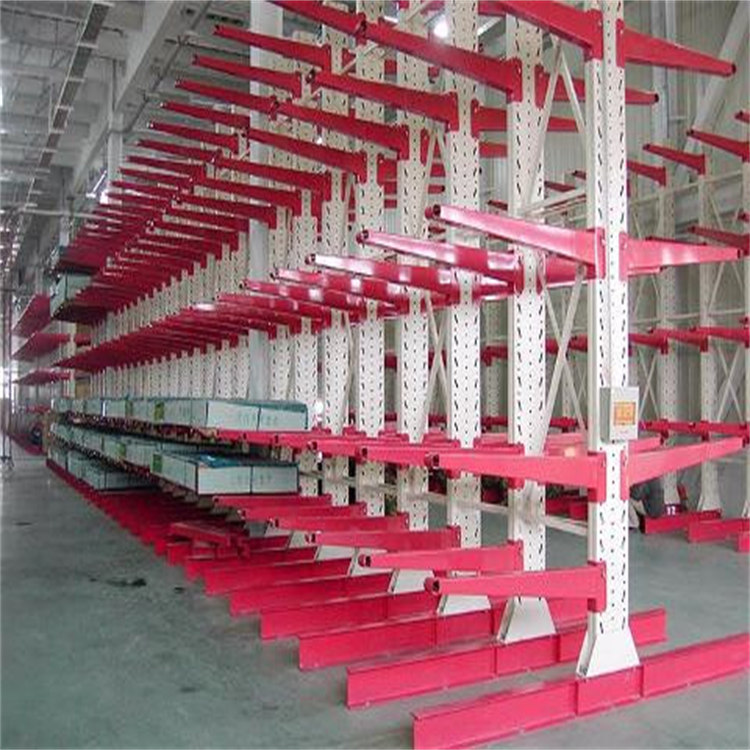

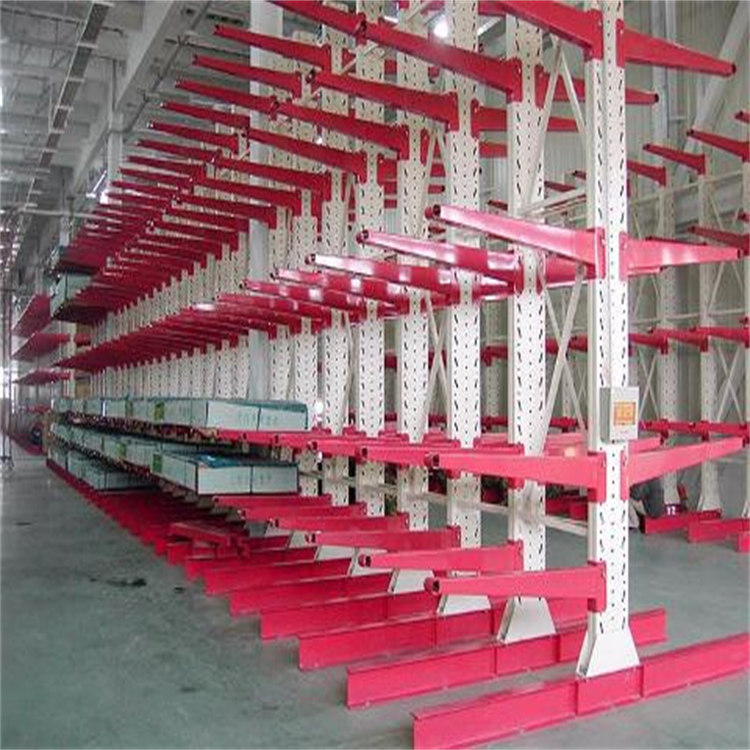
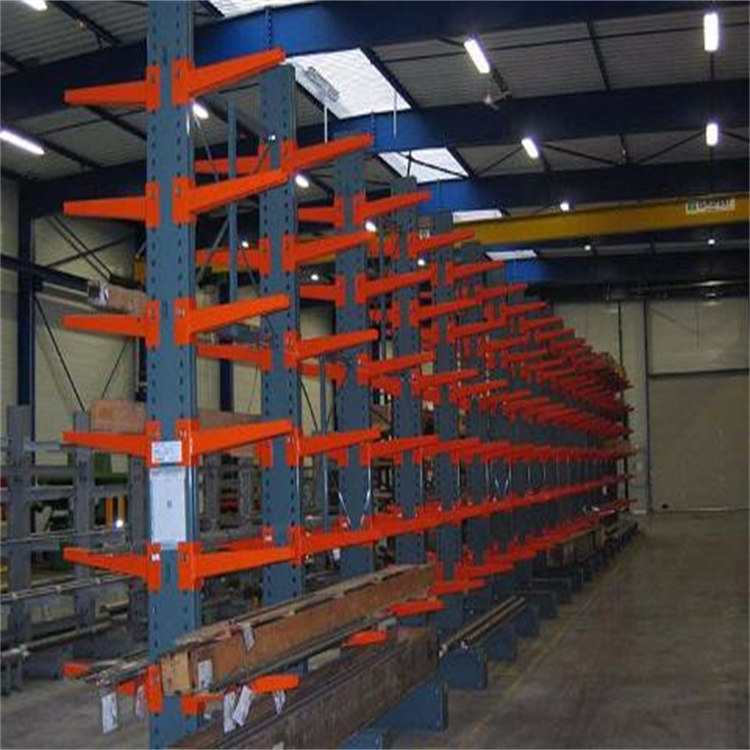
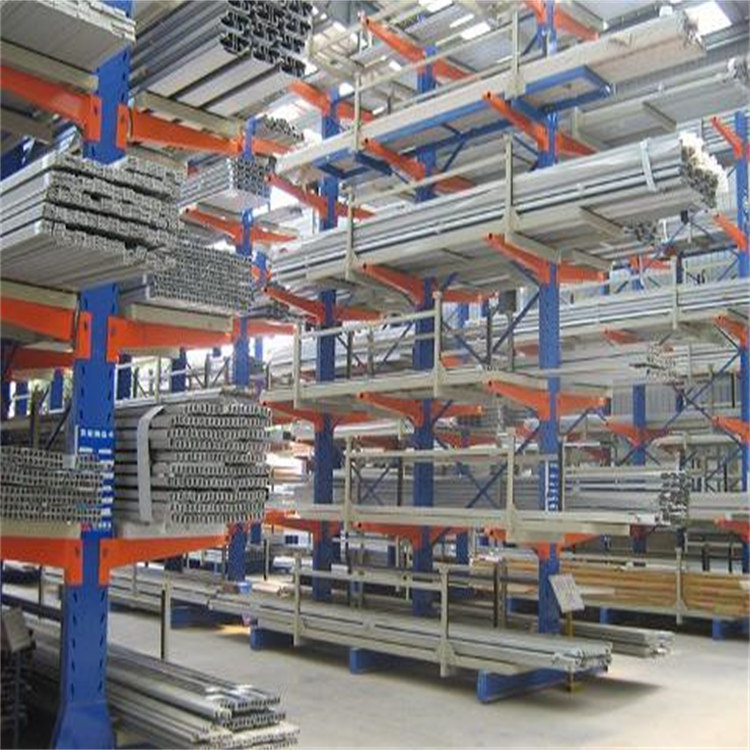









A cantilever racking system is composed of cantilevers mounted on columns, which can be either fixed or movable. It is commonly used for storing pipes and plates. It can be categorized into three types based on load capacity: light-duty, medium-duty, and heavy-duty; and into single-sided and double-sided cantilever racking based on structural design.
A cantilever racking system is suitable for storing long materials, circular materials, boards, pipes, and irregular goods. The posts are typically made of H-beams or cold-rolled steel sections, while the cantilevers are constructed from square tubes, cold-rolled steel, or H-beams. The connection between the cantilever and post is either through an interlocking mechanism or bolted joints, and the base is connected to the post with bolts, made from cold-rolled steel or H-beams. The goods are loaded and unloaded using forklifts, cranes, or manually. The height of the shelves is usually 2.5 meters or less (up to 6 meters when using a forklift), the cantilever length is within 1.5 meters, and the load capacity per arm is typically up to 1000KG. Such racks are commonly used in the mechanical manufacturing industry and construction material supermarkets. With added shelves, they are especially suitable for small, low-ceilinged warehouses, offering ease of management, broad visibility, and higher utilization compared to regular shelf racks. They are available in three types based on their load capacity: lightweight, medium, and heavy-duty.
For storing heavy, loose, or other special products, cantilever racking is an ideal solution. Cantilever racking comes in single-armed and double-armed varieties, suitable for storing lumber, piping, long bars, and similar items. Cantilever racking is a type of long-item shelving that is constructed by adding an outward cantilever to the traditional shelf posts.
The structural advantages and applications of cantilever racking:
The cantilever can be single-sided or double-sided, featuring stable structure, good load-bearing capacity, and high space utilization. Goods handling is done by forklifts, cranes, or manually.
A cantilever racking height typically ranges up to 2.0 meters (up to 6 meters if accessed by forklifts), with each arm extending no more than 1.5 meters and carrying a load of up to 800KG.
Amp type shelving is commonly used in the machinery manufacturing industry and building materials supermarkets. With added shelves, it is particularly suitable for small, low-height storage rooms, offering easy management, a wide field of view, and higher utilization than regular shelving.