









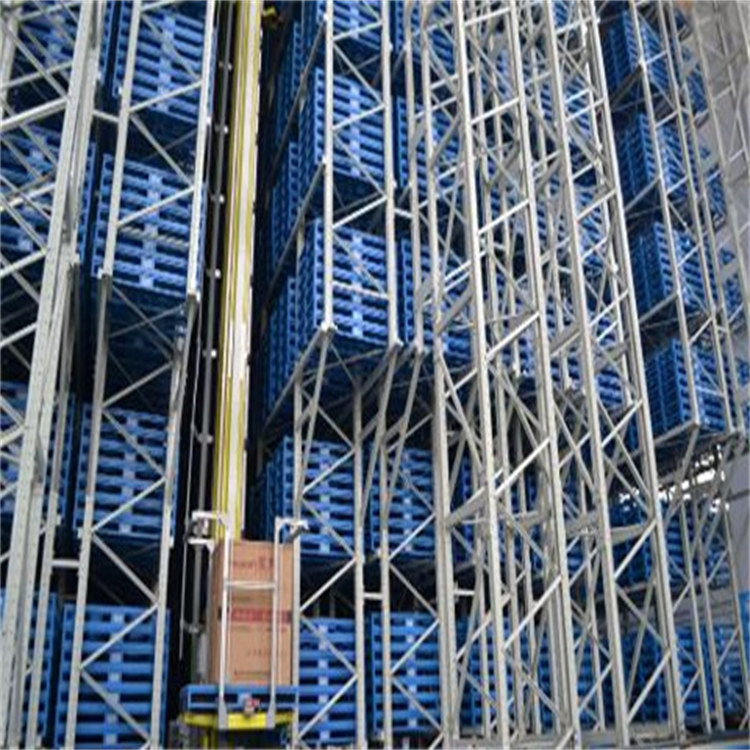

Definition
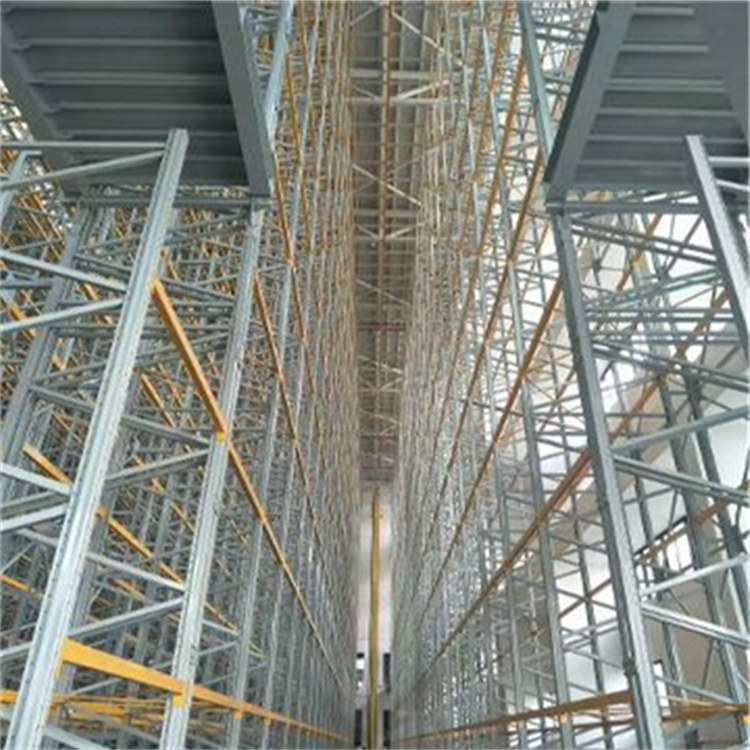
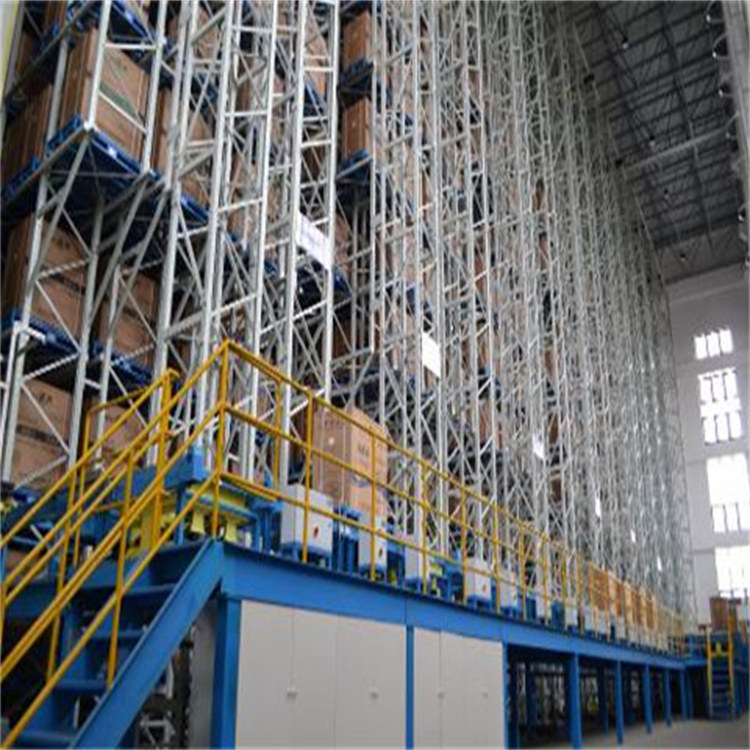
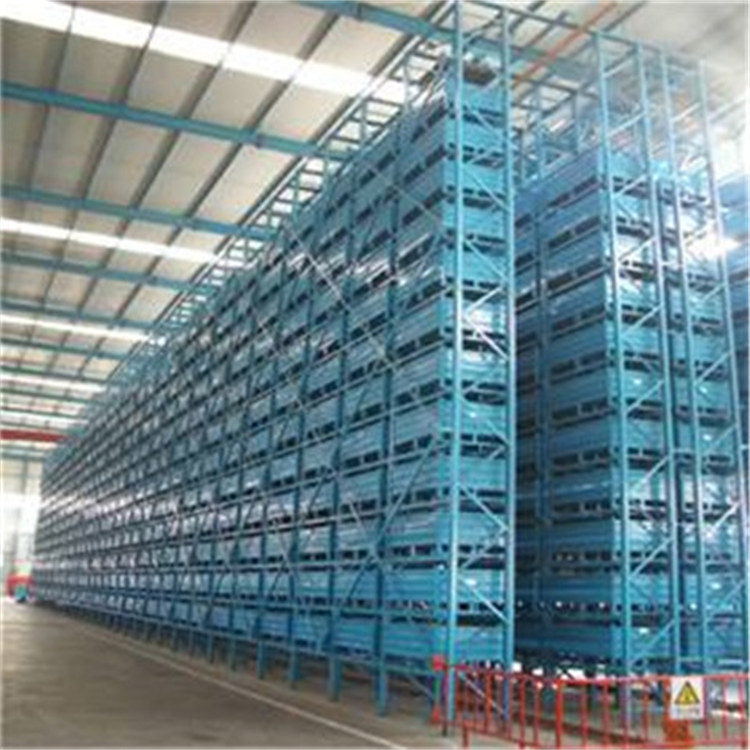
Due to their efficient use of space for storing goods, these warehouses are often metaphorically referred to as "stacked warehouses."
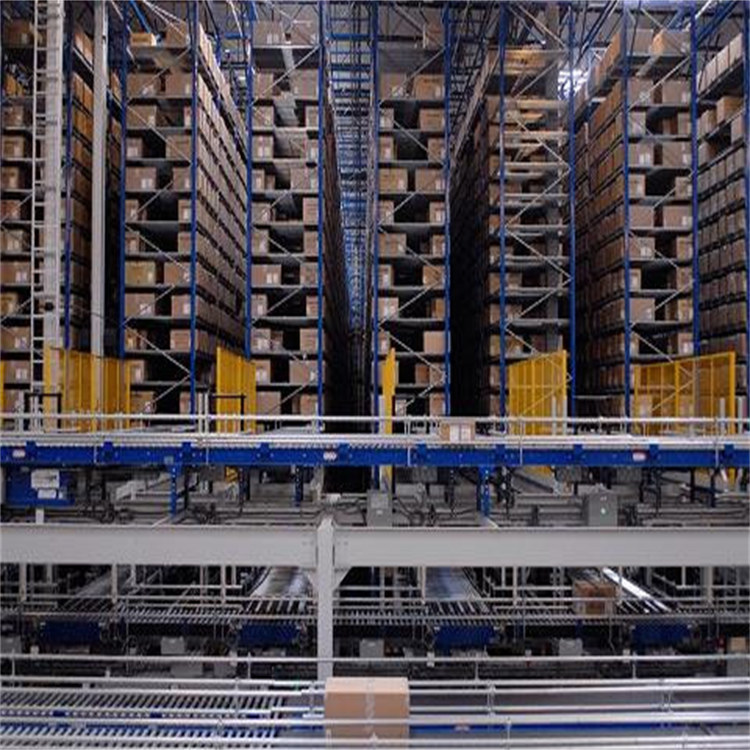
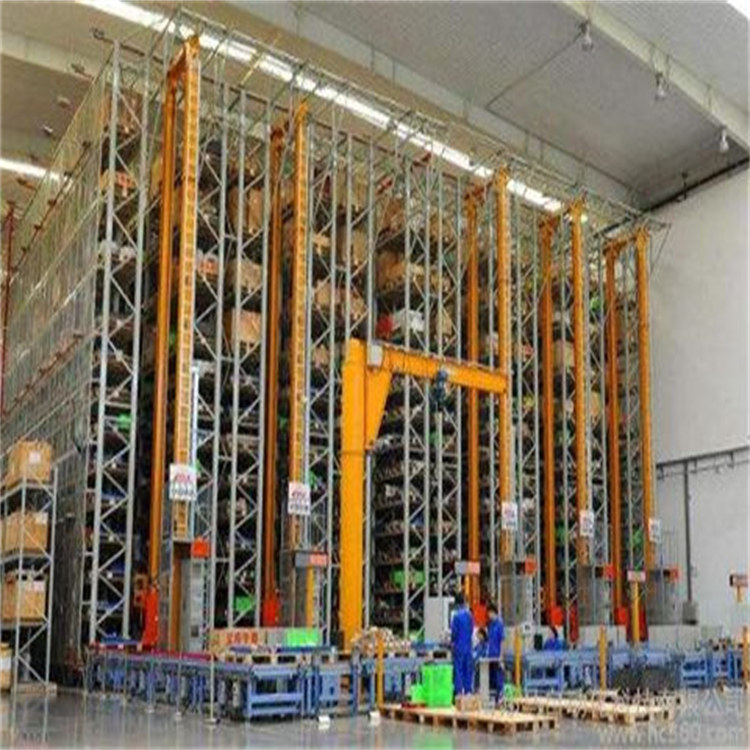
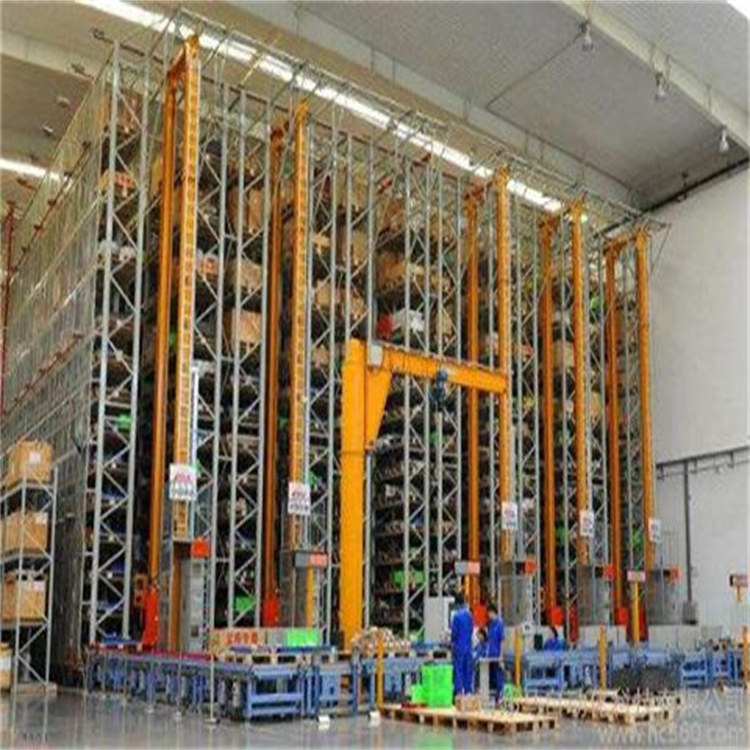
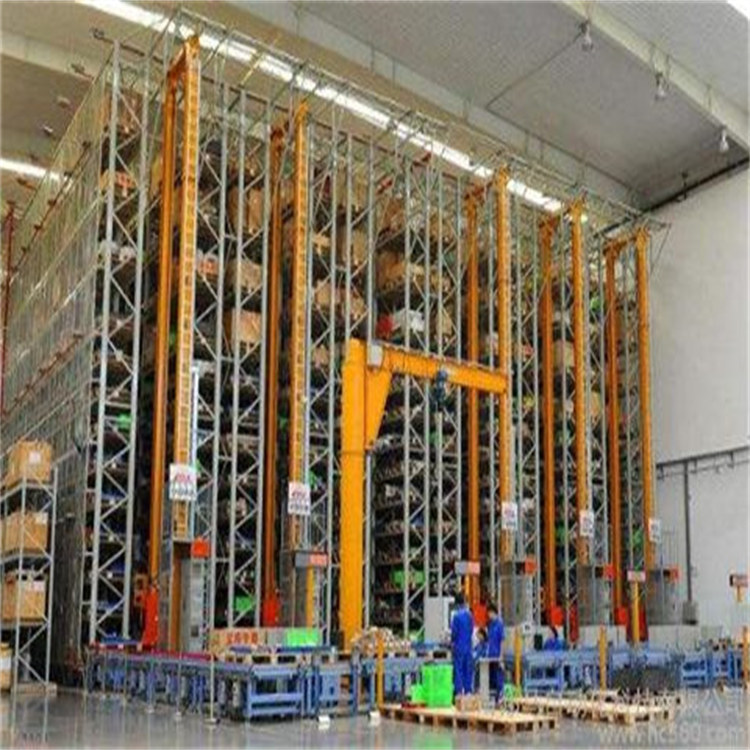
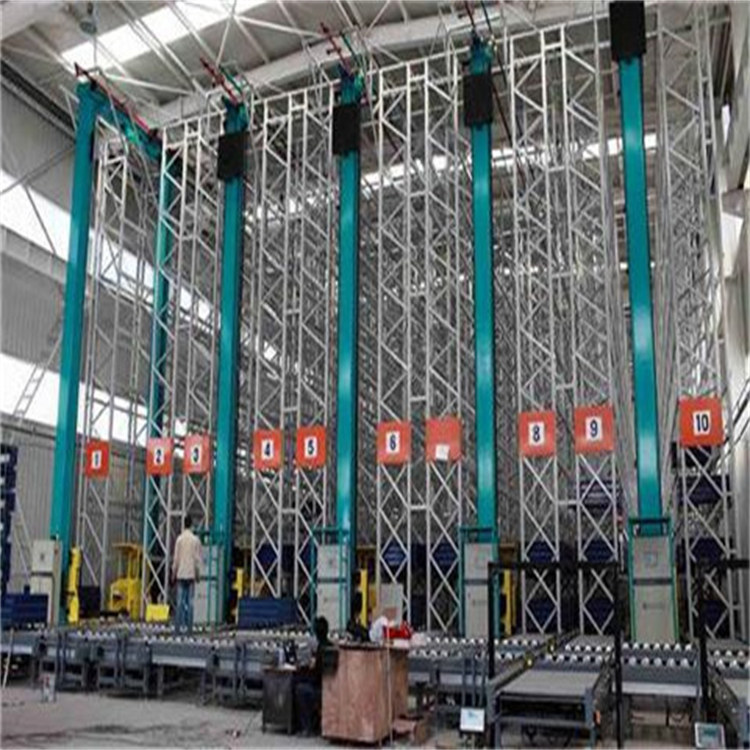
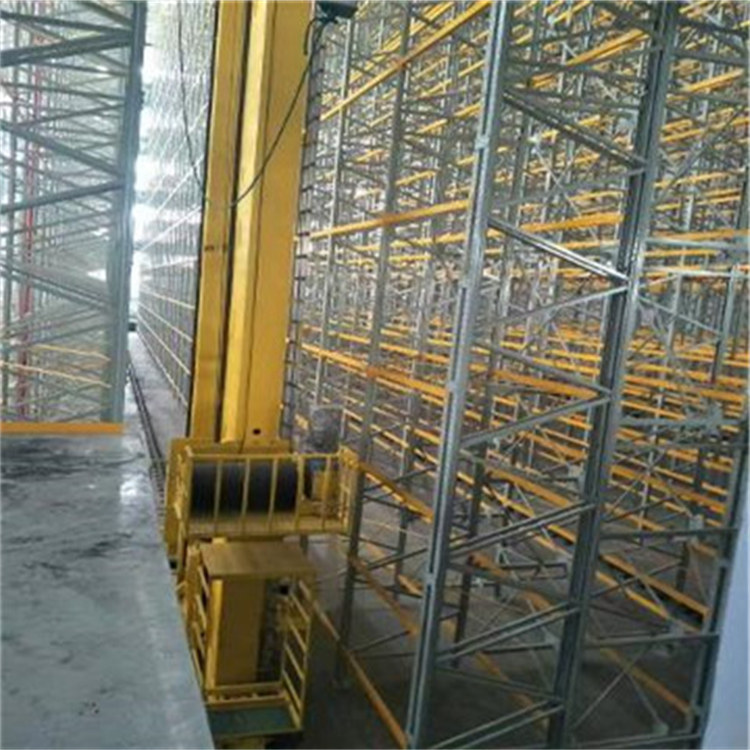
Automated Storage and Retrieval Systems (AS/RS) represent a revolutionary achievement in logistics technology. Typically composed of high-rise shelves, aisle stackers, conveyors, control systems, and a Warehouse Management System (WMS), they enable the automated storage and retrieval of unit loads under computer system control.
Development History
The emergence and development of automated storage and retrieval systems (AS/RS) are the results of production and technological advancements. In the early 1950s, the U.S. saw the advent of AS/RS using bridge cranes; by the late 1950s and early 1960s, driver-operated aisle cranes were introduced. In 1963, the U.S. was the first to implement computer control technology in high-bay warehouses, establishing a computer-controlled AS/RS. Subsequently, AS/RSs automated rapidly in the U.S. and Europe, evolving into a specialized field. In the mid-1960s, Japan began to develop AS/RSs, with increasing speed, and became one of the countries with the most automated AS/RSs in the world. China's research and development of AS/RS and material handling equipment did not lag behind; in 1963, a bridge crane was developed (by the Beijing Research Institute of Lifting and Transportation Machinery of the Ministry of Machinery); in 1973, China began to develop an AS/RS controlled by computers (15 meters tall, responsible by the Lifting Research Institute of the Ministry of Machinery), which was put into operation in 1980. As of now (2009), China has over 1,200 automated AS/RSs. Due to their high space utilization, strong inventory handling capabilities, and computerized control management, AS/RSs have become an indispensable warehousing technology for enterprise logistics and production management, and are increasingly valued by businesses.
Applied
The application scope of automated vertical warehouses is very broad, almost covering all industries. In our country, the main industries utilizing automated high-rise warehouses include machinery, metallurgy, chemicals, aerospace, electronics, books, food processing, tobacco, printing, distribution centers, airports, and ports.
Basic Composition
The automated vertical storage system is basically composed of the following parts:
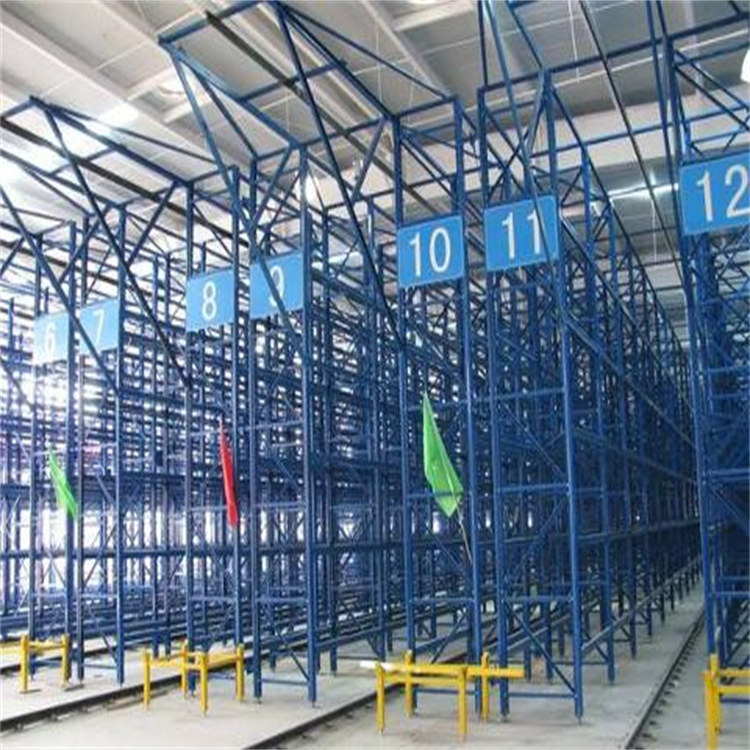
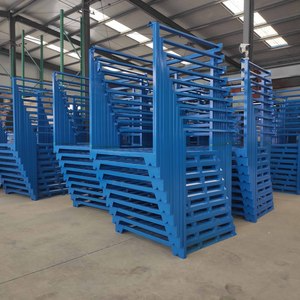
4.1 High-Rack Storage: Steel structural storage for goods. Currently, there are mainly two basic types: welded racks and assembled racks.
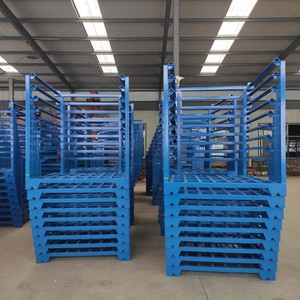
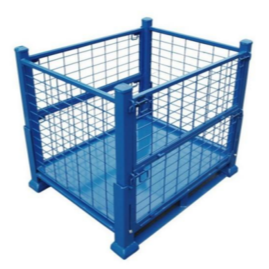
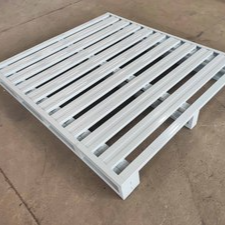
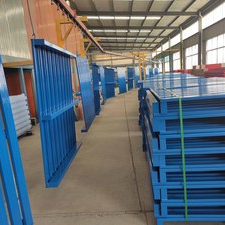
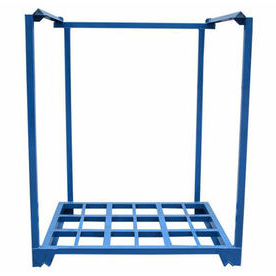
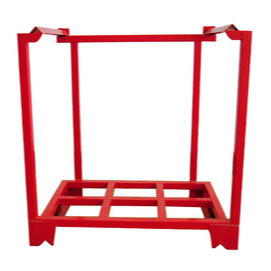
4.2 Pallet (Container): A device used for carrying goods, also known as a work station tool.
4.3 Conveyer Stacker: Equipment for automatic loading and unloading of goods. Divided into two basic types according to structure: single-column and double-column; and into three basic types according to service method: straight, curved, and transfer vehicle.
4.4 Conveying System: The main peripheral equipment of the automated storage and retrieval system (AS/RS), responsible for transporting goods to or from the stacker. There are many types of conveyors, including roller conveyors, chain conveyors, lifting tables, distribution carts, hoists, and belt conveyors, among others.
4.5 AGV System: Automatic Guided Vehicle. Divided into Inductive Guided Vehicles and Laser Guided Vehicles based on their guidance methods.
4.6 Automatic Control System: The automatic control system for driving various equipment of the automated storage and retrieval system. Currently, fieldbus-based control mode is predominantly used.
4.7 Inventory Information Management System (WMS): Also known as the Central Computer Management System. It is the core of the fully automated three-dimensional storage system. Currently, typical automated three-dimensional storage systems all utilize large-scale database systems (such as ORACLE, SYBase).Build typical client/server architectures (e.g., SE) that can be networked or integrated with other systems (e.g., ERP systems).
Superiority
The advantages of an automated vertical warehouse are multifaceted, and for businesses, they can be reflected in the following aspects:
Space Utilization
5.1 Enhance Space Utilization: The initial concept of early three-dimensional warehouses was centered around enhancing space utilization, which effectively conserves the limited and valuable land. In some developed countries in the West, the idea of space utilization has taken on a broader and deeper meaning, linking land conservation with energy conservation, environmental protection, and more. Some even treat the space utilization rate as a crucial indicator for evaluating the rationality and advancement of the system. The space utilization of a three-dimensional warehouse is closely related to its planning. Generally speaking, automated high-rise warehouses have a space utilization rate that is 2-5 times higher than that of conventional flat warehouses, which is quite significant.
Logistics System
5.2 Facilitates the formation of advanced logistics systems and improves the management level of corporate production. Traditional warehouses are merely places for storing goods, with the function of preservation, which is a "static storage." Automated vertical warehouses, equipped with advanced automated material handling equipment, not only allow for the automatic storage and retrieval of goods within the warehouse as needed but also can organically connect with production processes outside the warehouse. Through a computerized management system and automated material handling equipment, the warehouse becomes an important link in the corporate production logistics. The entry of externally purchased parts and self-manufactured production parts into the automated warehouse storage is a stage in the entire production process. Short-term storage is for automatic output to the next production stage, thereby forming an automated logistics system. This is a "dynamic storage" and also a clear technical trend in the development of today's automated warehouses. The aforementioned logistics system is also a subsystem of the overall corporate production management system (from ordering, necessary design and planning, scheduling and production arrangement, manufacturing, assembly, testing, shipment, etc.). Establishing real-time connections between the logistics system and the corporate management system is another clear technical trend in the development of automated high-bay warehouses. Modern enterprises place higher demands on management, and the mindset of "management creates benefits" has become a consensus among most modern corporate managers.
Production management is a crucial component of corporate management, encompassing product planning, production organization, logistics planning, procurement of external equipment, product quality, cost estimation, and more. The automated overhead storage system serves as a central link in the production process, participating almost entirely in the production management process.
Access节奏
5.3 Accelerate the pace of goods storage and retrieval, reduce labor intensity, and enhance production efficiency. Establish a logistics system centered around an automated vertical warehouse, which also boasts the advantage of the high-speed in-and-out capabilities of the automated elevated storage. It can quickly and properly store goods in the elevated warehouse (warehousing) and also promptly and automatically deliver the required components and raw materials to the production line. This feature is unattainable by ordinary flat warehouses. Additionally, the implementation of an automated vertical warehouse is a typical example of reducing labor intensity. This reduction is comprehensive, including: 1) Using automated aisle stackers to replace manual goods storage and retrieval, which is both quick and labor-saving. Since workers don't need to enter the warehouse, the working environment is greatly improved. 2) Employing a computer management system to manage goods, significantly enhancing management capabilities, making warehouse management scientific, with improved accuracy and reliability. Tasks like inventory management, inventory counts, and reporting become simpler and faster, greatly reducing labor intensity. 3) The vertical warehouse system supplemented with front-end auxiliary conveying equipment simplifies and facilitates in-and-out operations. 4) The automated vertical warehouse system requires few operators and system maintenance personnel, saving both labor and materials, conserving funds, and improving the working environment, achieving multiple benefits with a single move.
Excess inventory
5.4 Reducing Inventory Capital Pressure Through investigations of some large enterprises, it has been found that due to historical reasons, management methods are outdated, material management is scattered, making it difficult to establish a tight connection between production management and production processes. To achieve expected production capacity and meet production requirements, sufficient raw materials and components must be prepared, leading to significant inventory accumulation. How to reduce inventory capital pressure and fully meet production needs has become a major issue for large enterprises. The high-bay storage system is one effective means to address this issue. 1) A factory logistics system centered around automated vertical storage solves the circulation and supply-demand conflicts in various production stages, allowing raw material supply and component production to reach an optimal value. 2) The establishment of a computer network system makes the procurement of raw materials and purchased components more timely and meets actual demand. 3) The establishment of a computer management system strengthens macro-control functions, making production quantities in each stage more responsive to actual demand. 4) Establishing finished goods and semi-finished goods warehouses addresses temporary inconsistencies in market supply and demand, fully utilizing the company's production potential. 5.5 Symbol of Modern Enterprises Modern enterprises adopt an intensive large-scale production model, requiring close connections between all stages of production to form an organic whole. Production management must be scientific and practical, with decision-making being scientific. Establishing an automated high-bay storage system is one of the effective measures for this purpose. As previously mentioned, an automated logistics system has unparalleled advantages in maximizing space utilization, meeting production requirements, reducing labor intensity, improving production efficiency, strengthening production and material management, and reducing inventory capital pressure, which is exactly what a modern enterprise requires and pursues. Due to the adoption of computer management and network technology, it is now possible for corporate leaders to quickly grasp various material information and for engineers, production managers, and technical staff to timely understand inventory information to arrange production processes and improve efficiency. The Internet and corporate Intranet provide a vast space and robust technical support for online connections, breaking information bottlenecks, broadening horizons, and promoting both external and internal integration. Overall, large enterprises at home and abroad have gradually adopted automated logistics systems since the 1960s, making them an indispensable part of corporate production management. According to relevant statistics, Japan has already established over 8,000 automated vertical warehouses (logistics systems). Establishing an automated vertical warehouse system has become one of the important symbols of modern enterprises.