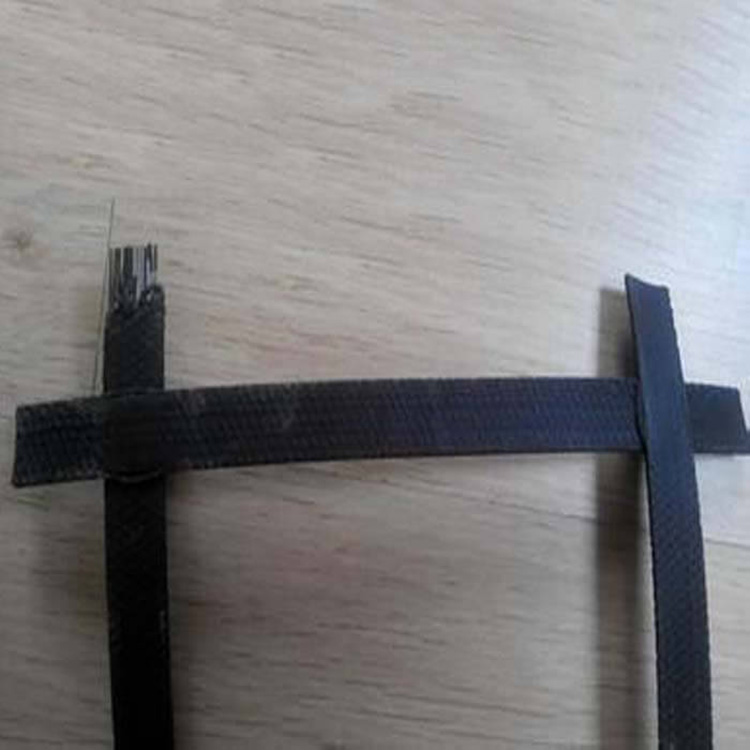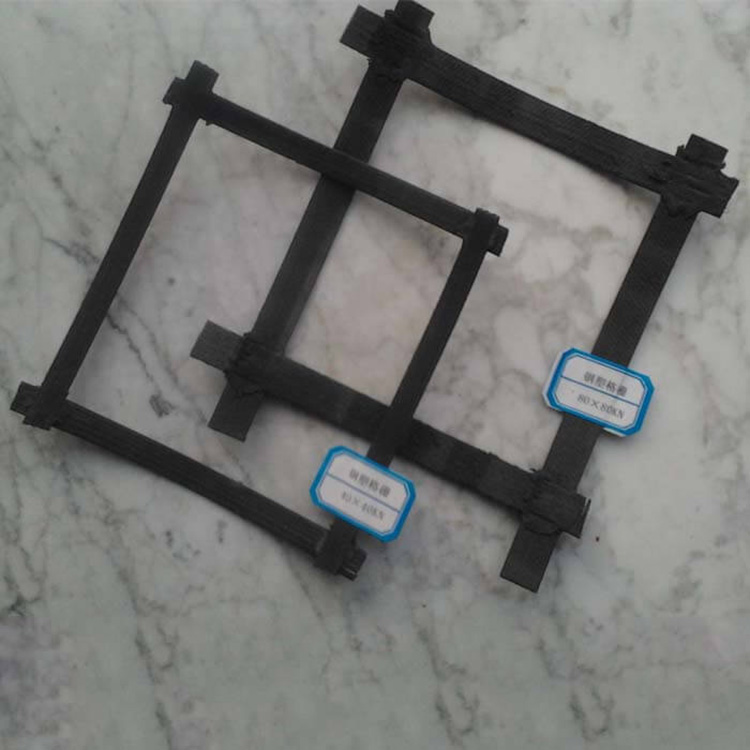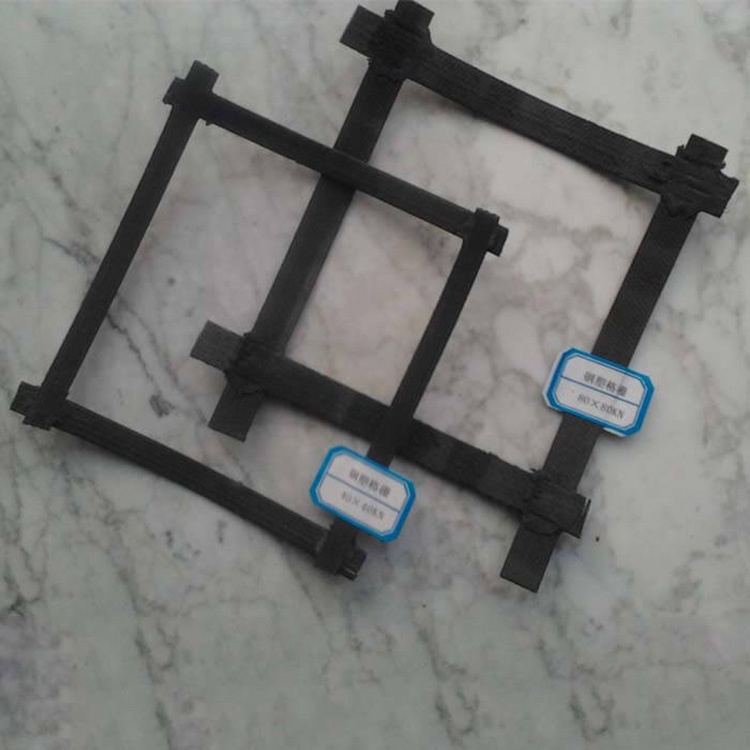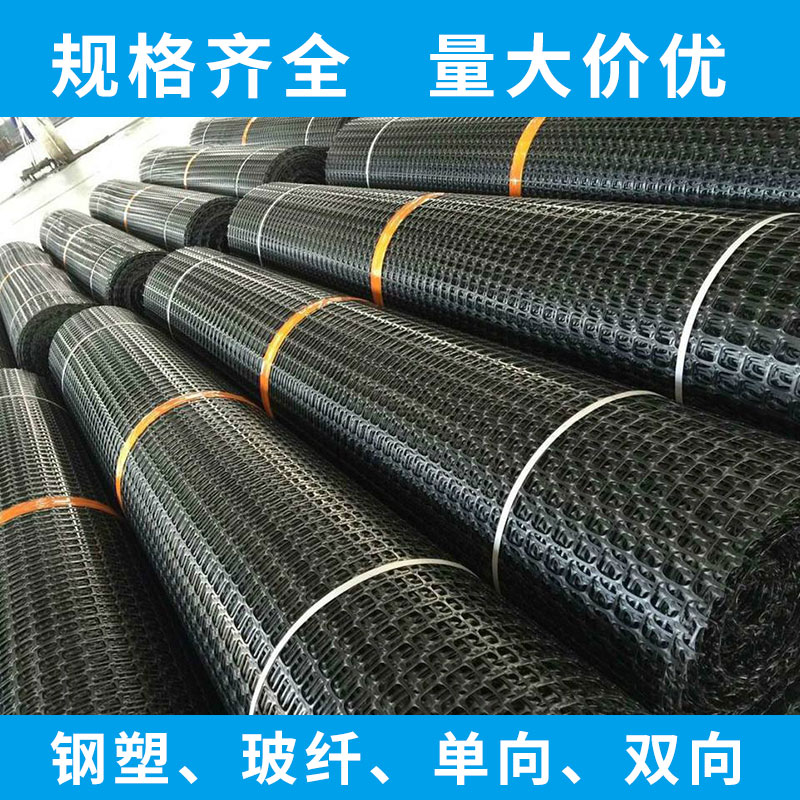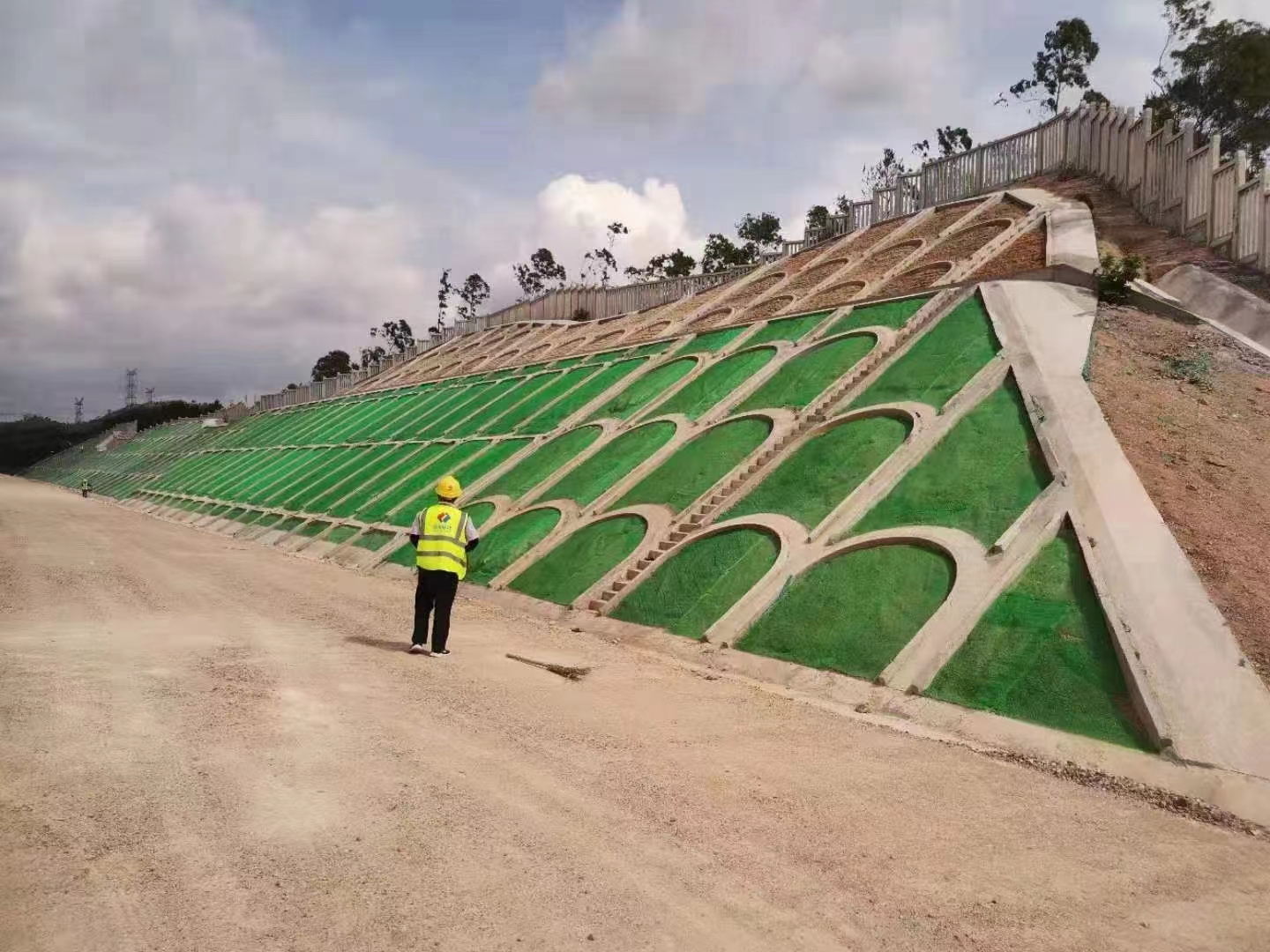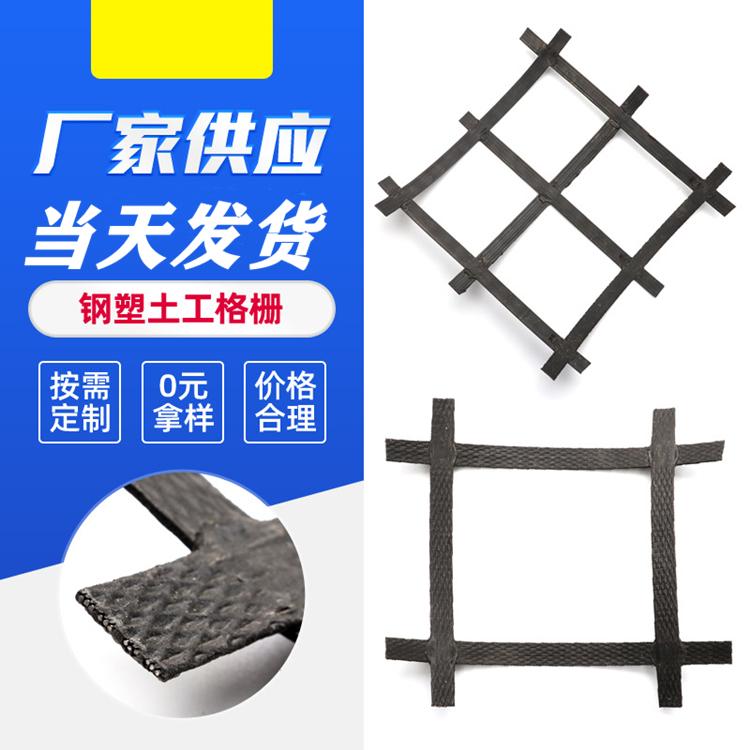


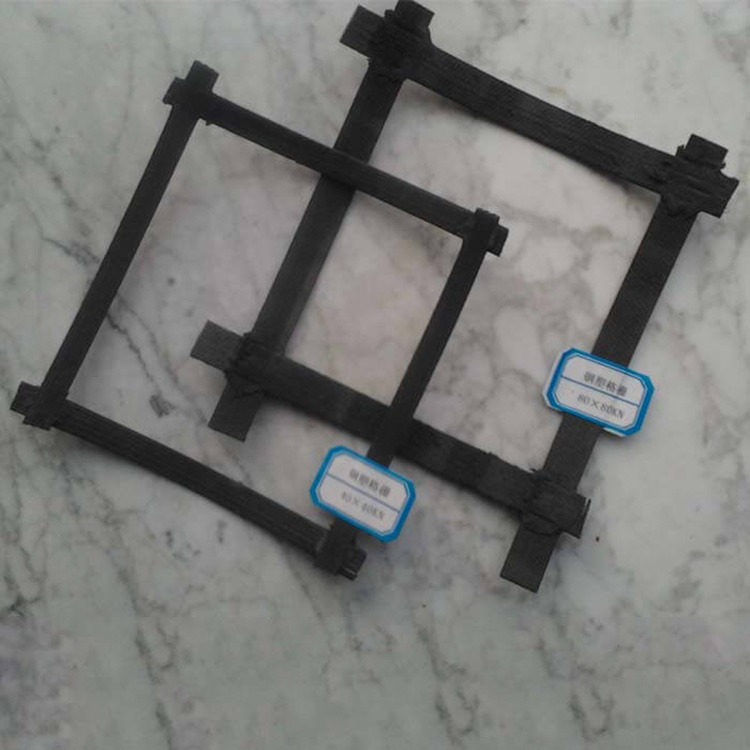


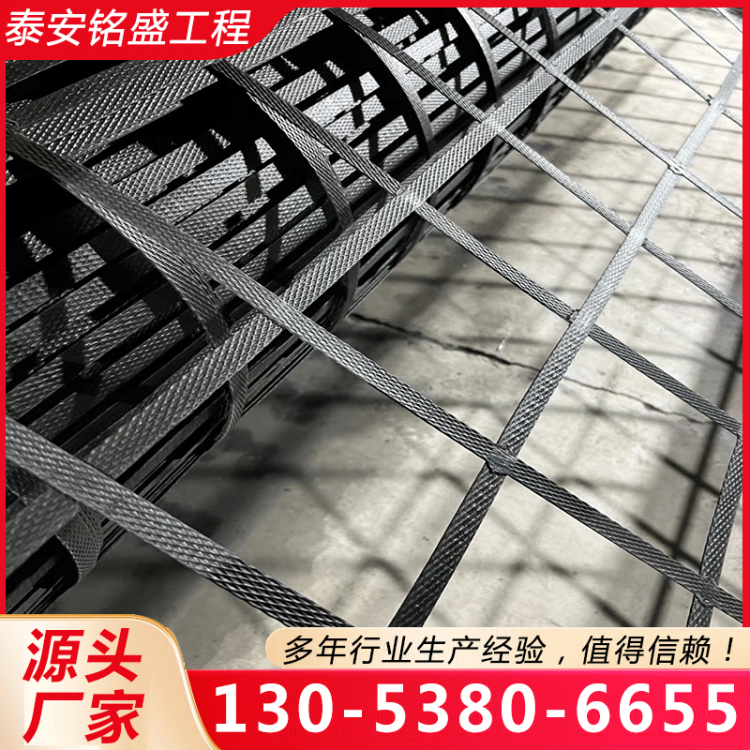
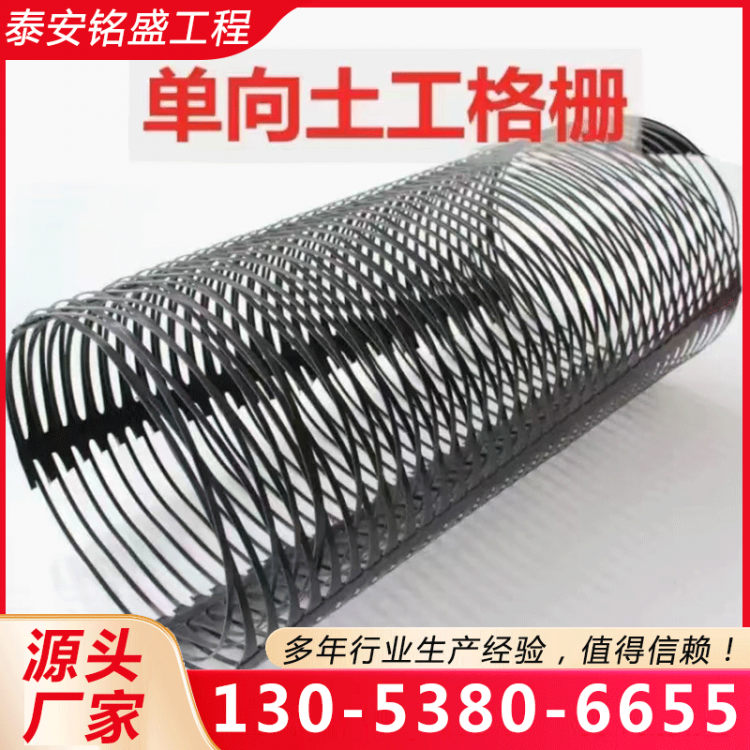
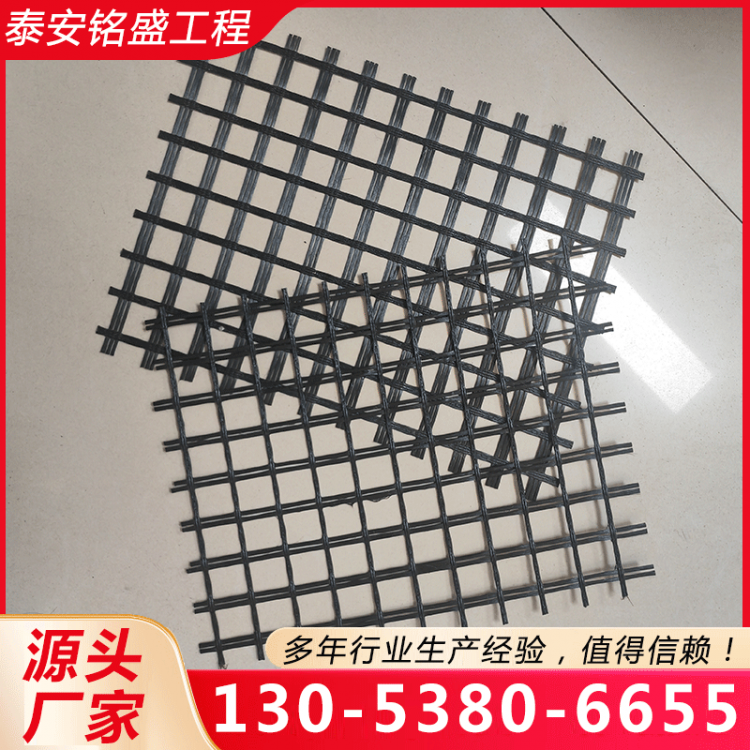





1. The tensile force of the steel-plastic composite geogrid is carried by the high-tensile steel wires woven in the warp and weft, generating tensile modulus under low strain capacity. The longitudinal and transverse ribs work together to fully utilize the interlocking effect of the grid on the soil mass.
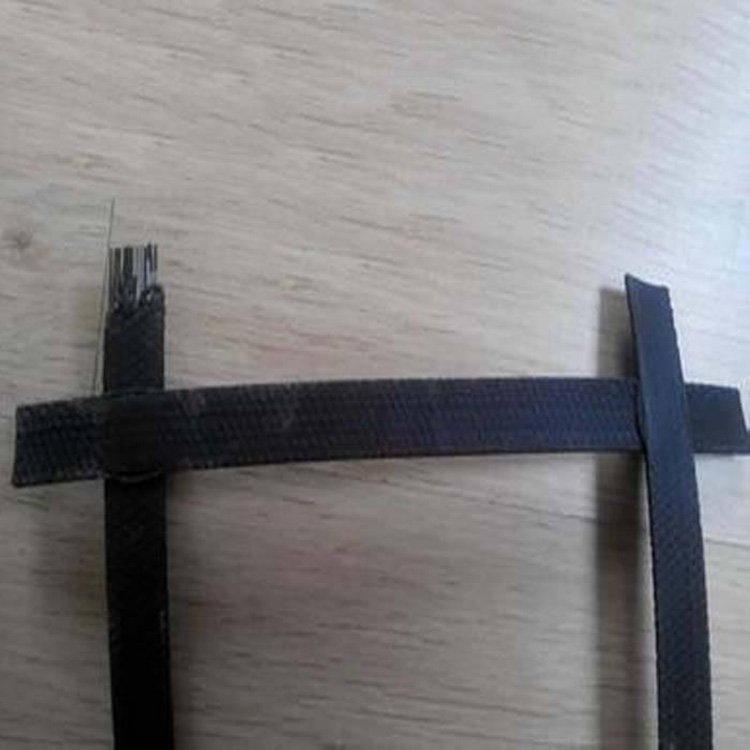
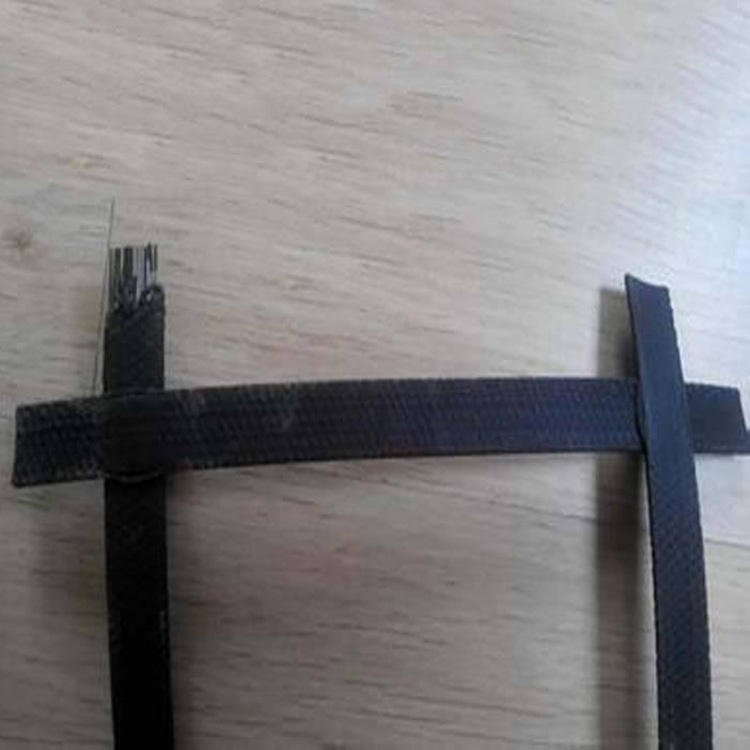
2. The longitudinal and transverse ribs of the steel-plastic composite geogrid are woven into a mesh with steel wires, with the outer wrapping layer formed in one piece. The steel wires and the outer wrapping layer work in harmony, resulting in a low elongation rate upon destruction (not exceeding 3%). The primary load-bearing element of the steel-plastic composite geogrid is the steel wire, with a low creep deformation.
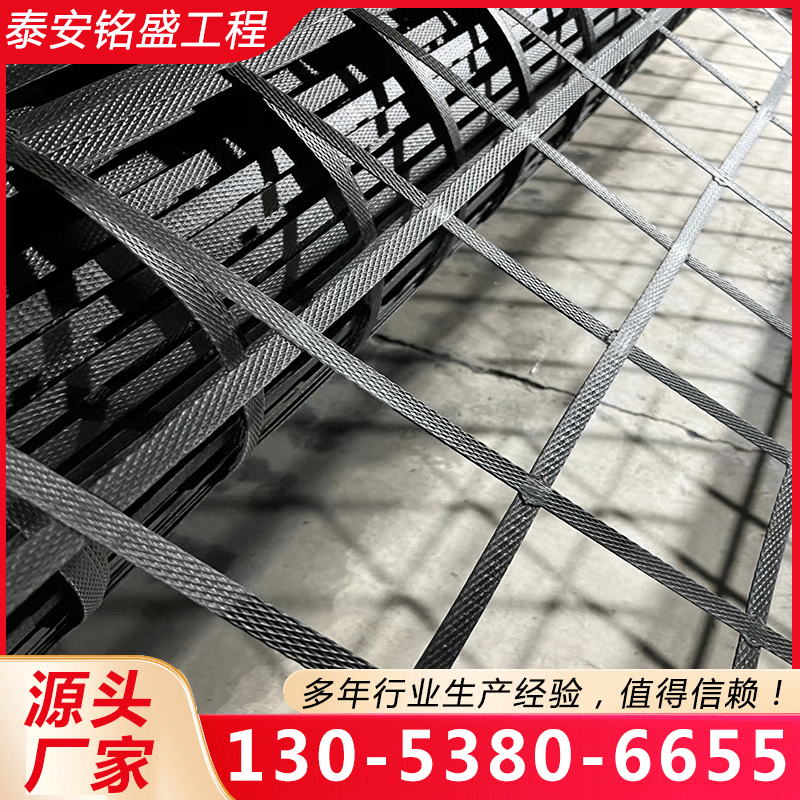
3. By treating the plastic surface during the production process, we press rough patterns to enhance the roughness of the格栅 surface, thereby increasing the friction coefficient between the steel-plastic composite geogrid and the soil mass.
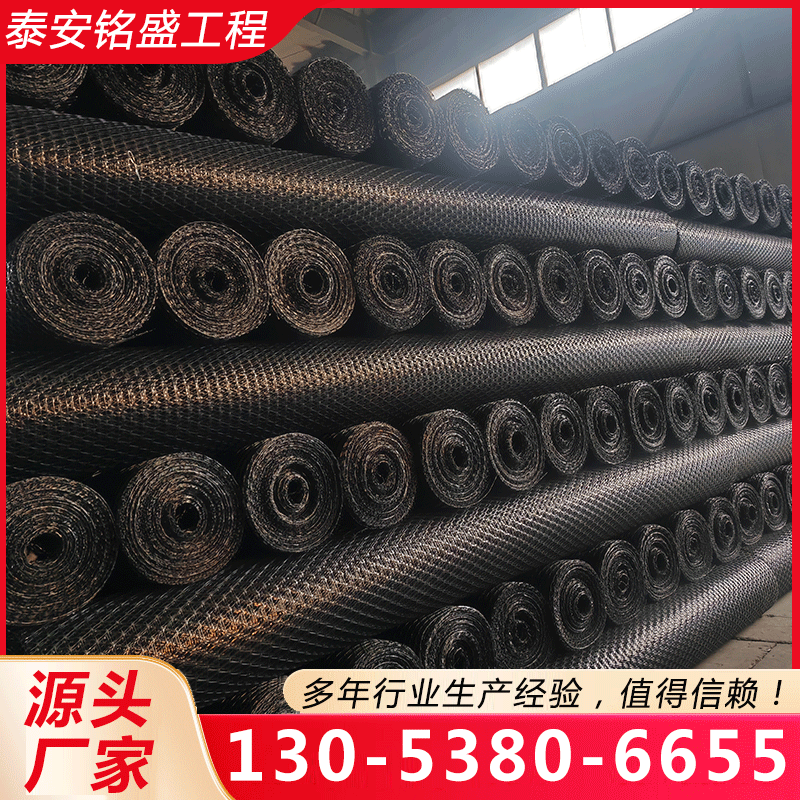
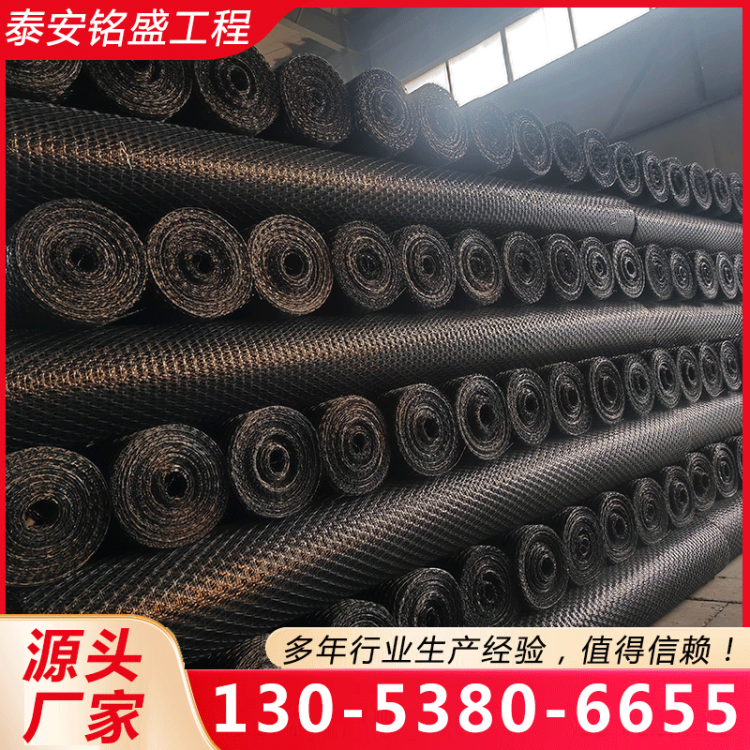
4. The width of steel-plastic composite geogrid can reach 6 meters, achieving reinforcing effects.
5. The high-density polyethylene used in steel-plastic composite geogrid ensures: It will not be eroded by acids, alkalis, salt solutions, or oils at room temperature; nor will it be attacked by water dissolution or microorganisms. Additionally, the high molecular properties of polyethylene are sufficient to resist aging caused by ultraviolet radiation. After the grid is loaded, the longitudinal and transverse ribs work together synergistically, preventing any node cracks or damage. In actual engineering, after the filling material is compacted, it is not eroded by ultraviolet light and oxygen, thus fully meeting the requirements of construction projects.
Features:
High strength, low creep, adaptable to various soil types, fully meets the requirements for tall retaining walls in high-grade highways.
2. Effectively enhances the interlocking and gripping action of reinforced bearing surfaces, strengthens the bearing capacity of the foundation, effectively restricts lateral displacement of the soil mass, and improves the stability of the foundation.
3. Offers superior features such as higher strength, greater load-bearing capacity, corrosion resistance, anti-aging properties, larger friction coefficient, uniform hole patterns, ease of installation, and extended service life compared to traditional grating.
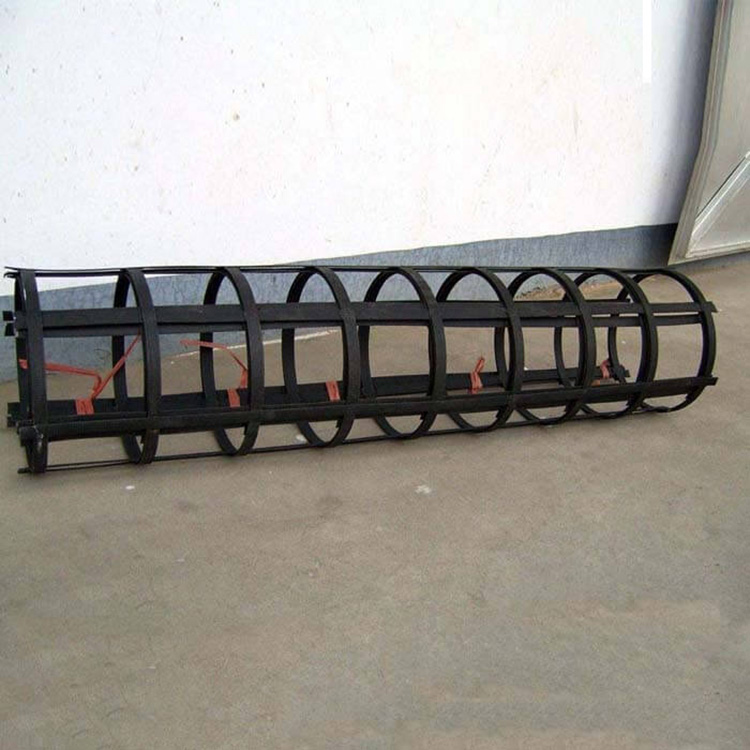
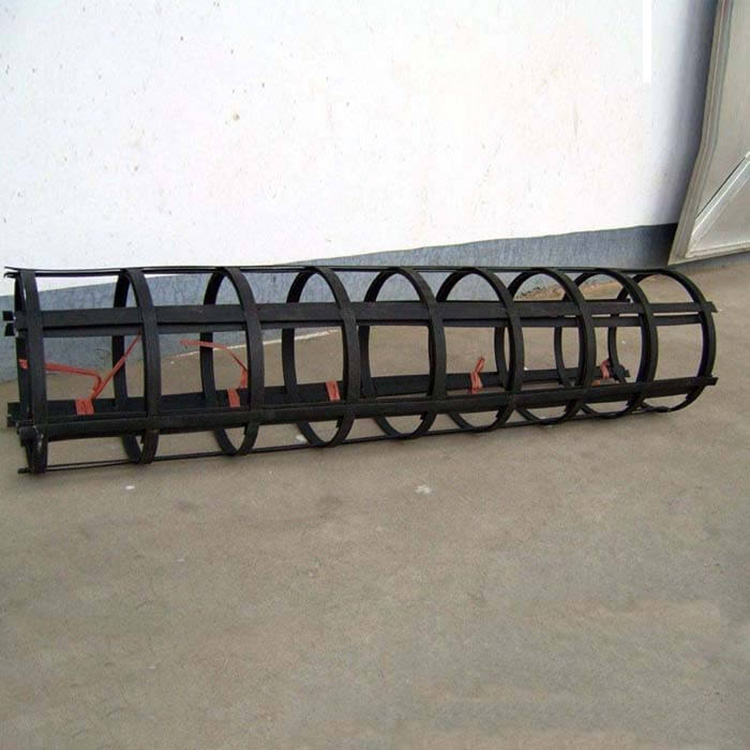
4. More suitable for deep-sea operations and embankment reinforcement, it fundamentally solves the technical challenges such as low strength, poor corrosion resistance, and short service life caused by stone baskets made of other materials due to long-term erosion by seawater.
5. Effectively prevents construction damage caused by machinery碾压 and destruction during the construction process.