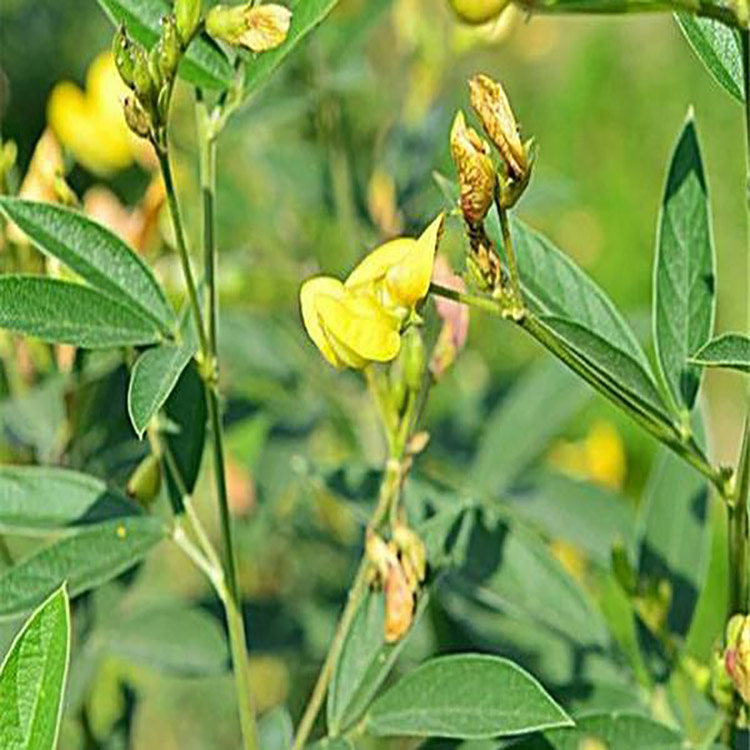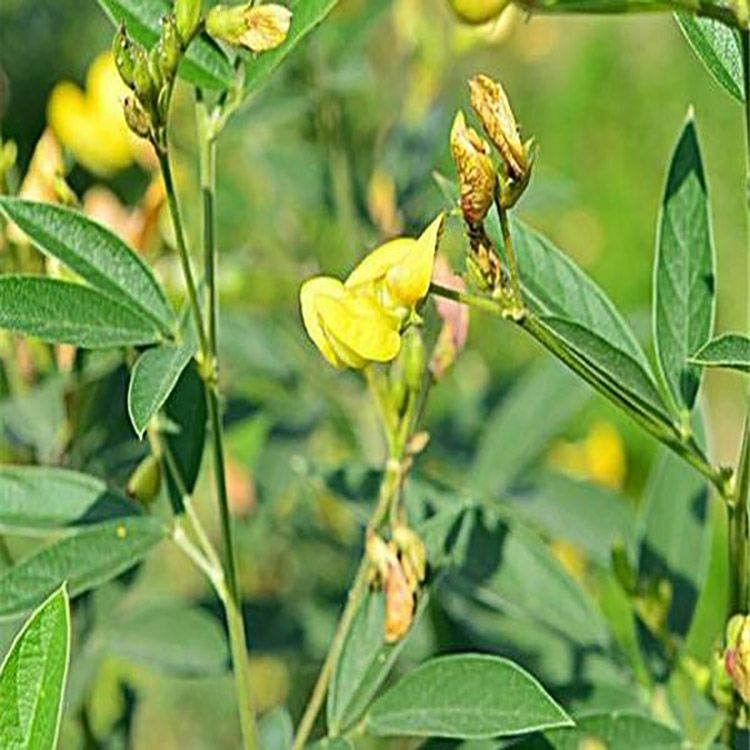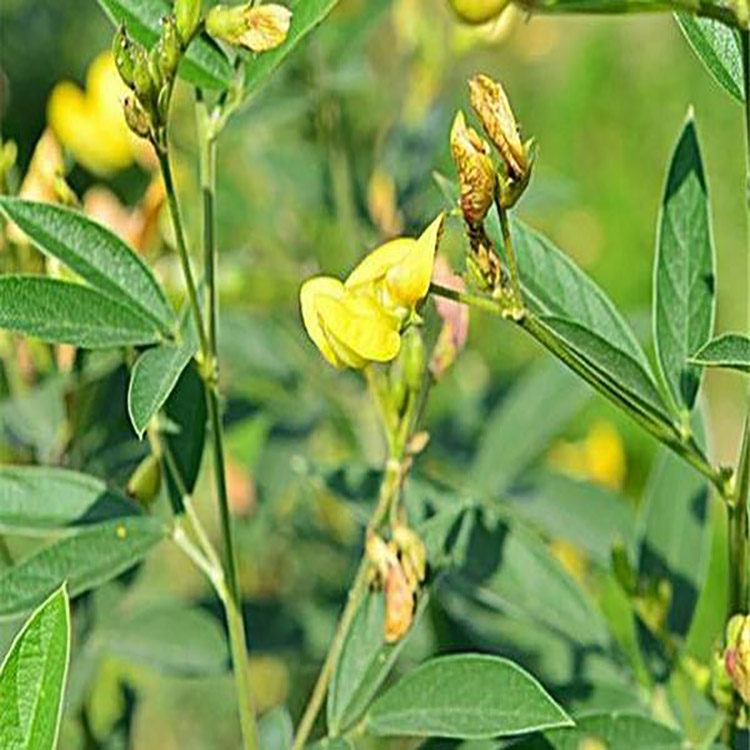


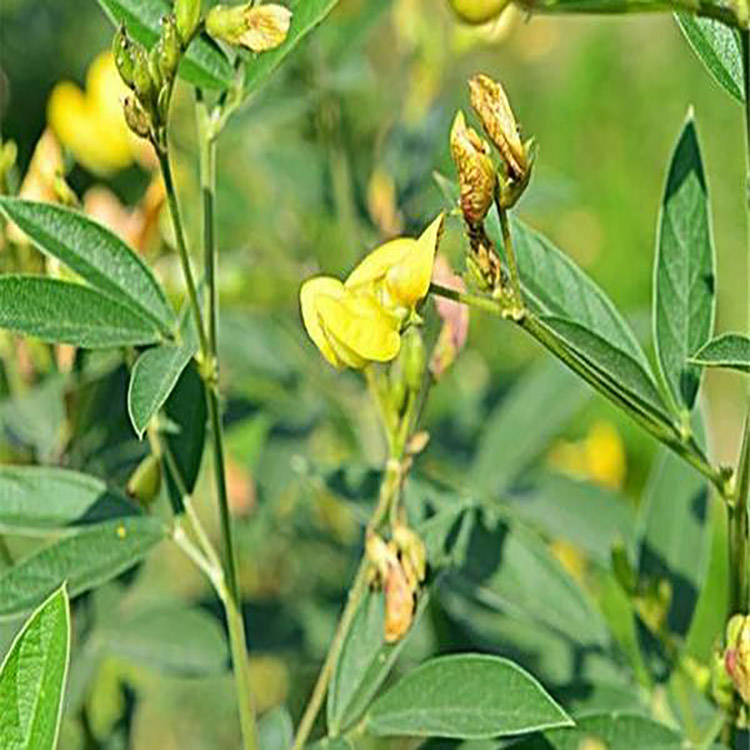
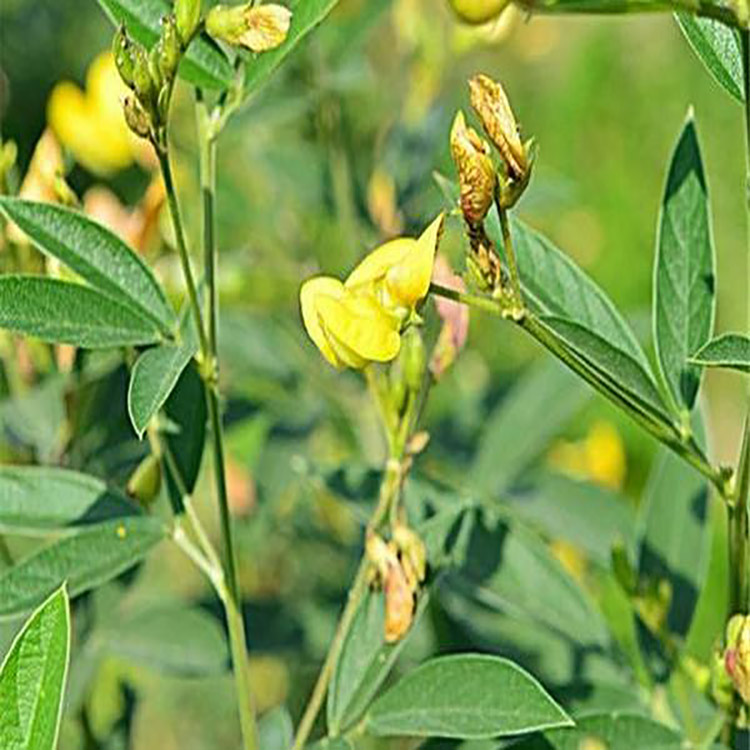


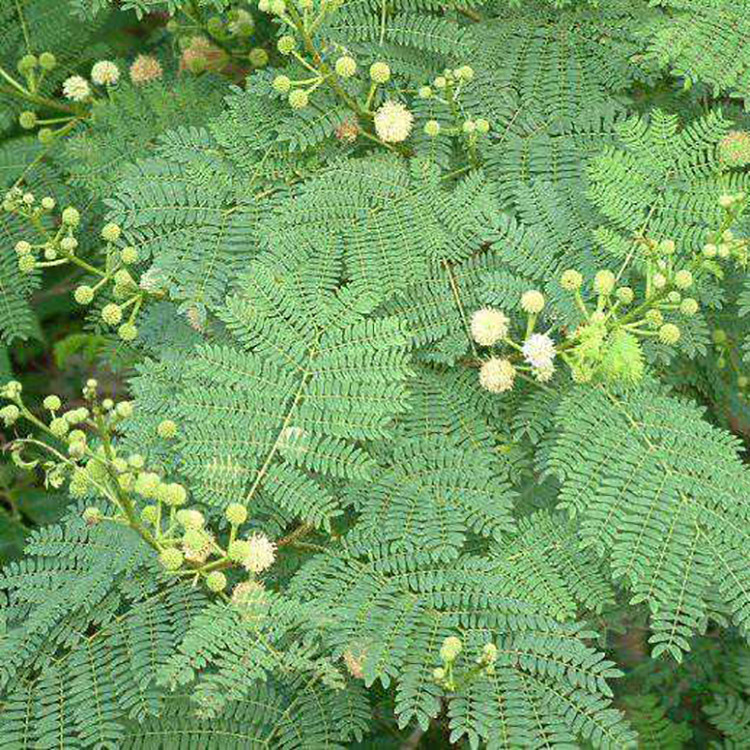











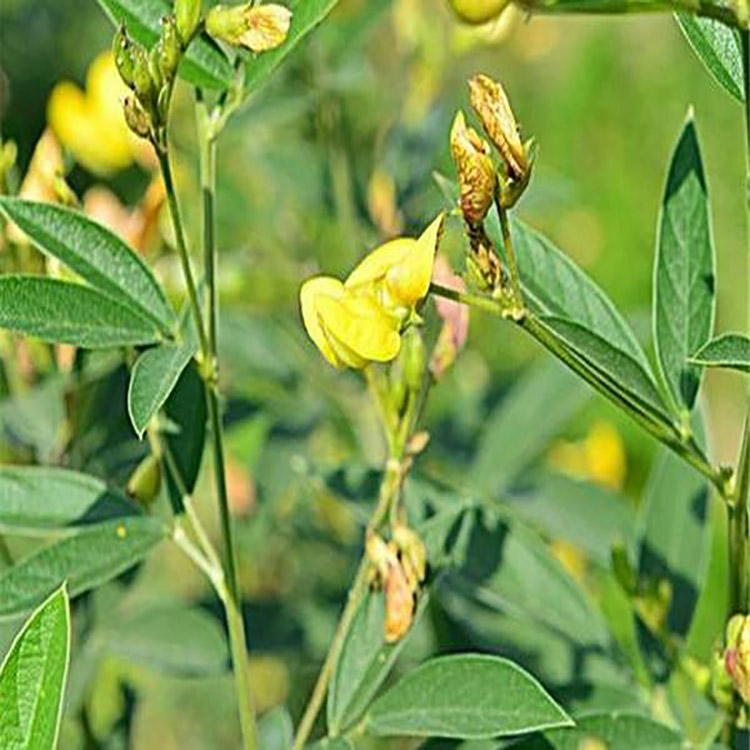
Cajanus cajan (Linn.) Millsp., commonly known as the pigeon pea, is a straight shrub in the Fabaceae family, reaching up to 3 meters in height. It is highly branched, with leaflets that are pinnately veined; the stipules are small and ovate-lanceolate, the petiole is long with a shallow groove on the upper surface and fine longitudinal ridges on the underside, the leaflets are papery, and the stipules are small; the petiolules are hairy. The racemes bear several flowers; bracts are ovate-elliptical; the calyx is bell-shaped, with triangular or lanceolate lobes, the corolla is yellow, the standard petal is nearly round, the ovary is hairy with several seeds, the style is linear and hairless, and the stigma is capitate. The pods are linear-oblong, the seeds are nearly round, the seed coat is dark red, and flowering and fruiting occur from February to November.
Originating from India, distributed in Yunnan, Sichuan, Jiangxi, Hunan, Guangxi, Guangdong, Hainan, Zhejiang, Fujian, Taiwan, and Jiangsu provinces of China.
Extremely tolerant of barren and arid conditions, it is widely cultivated in tropical and subtropical regions worldwide. The leaves can be used as feed for livestock and green manure. The roots can cool the body and detoxify. It also serves as an excellent host plant for lac insects.