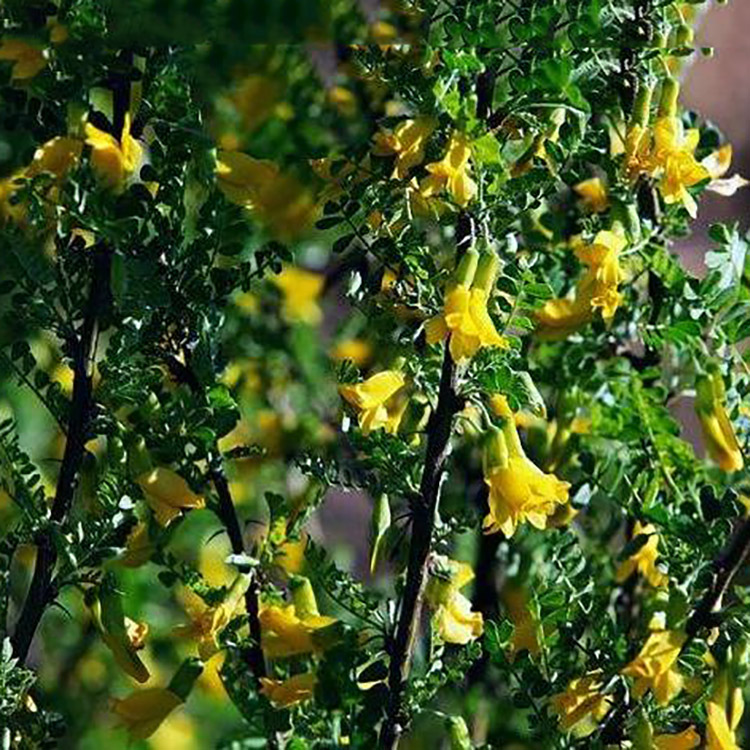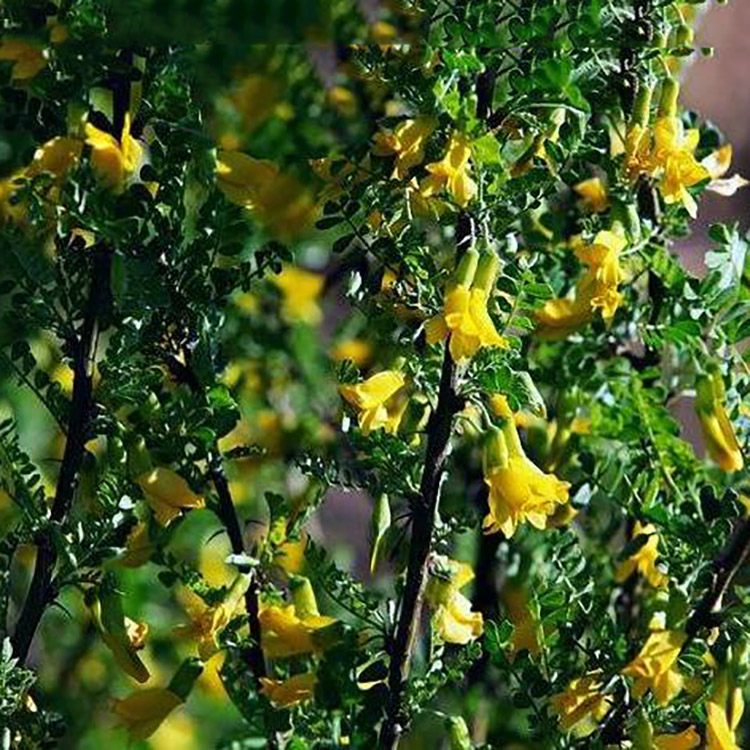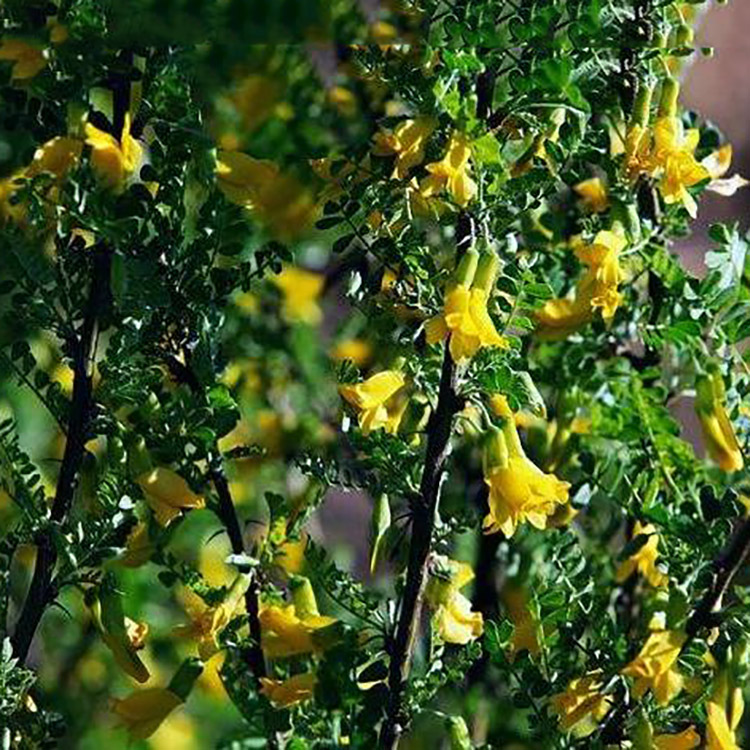


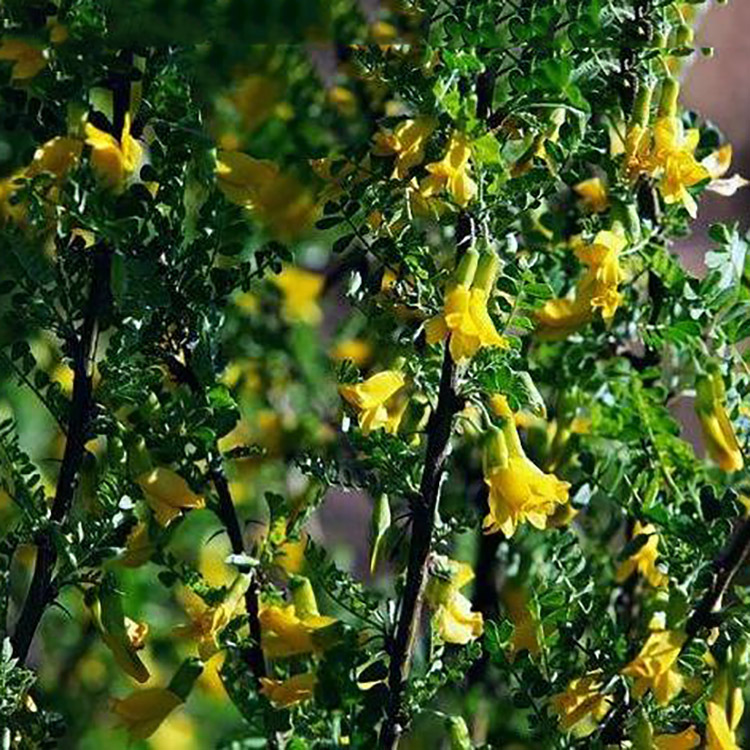
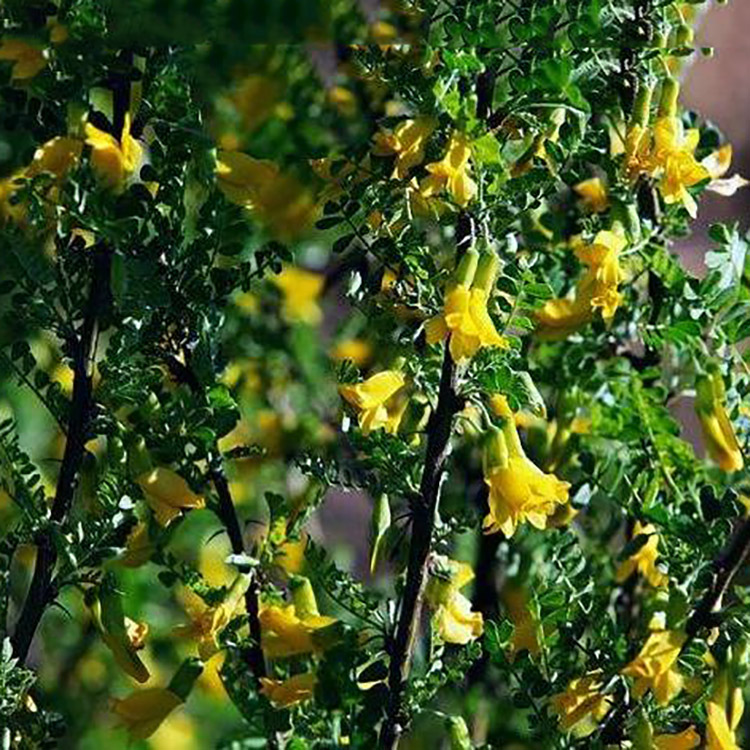


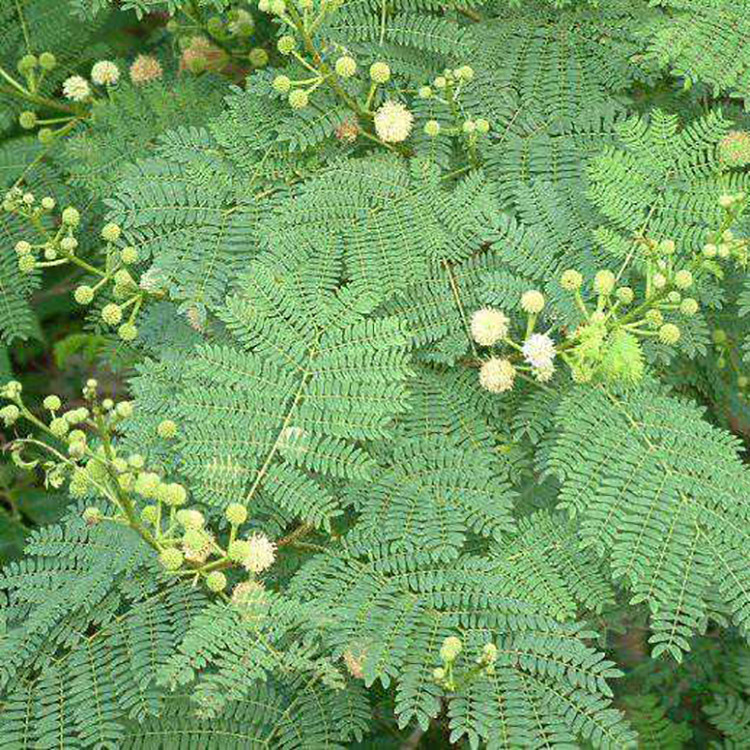










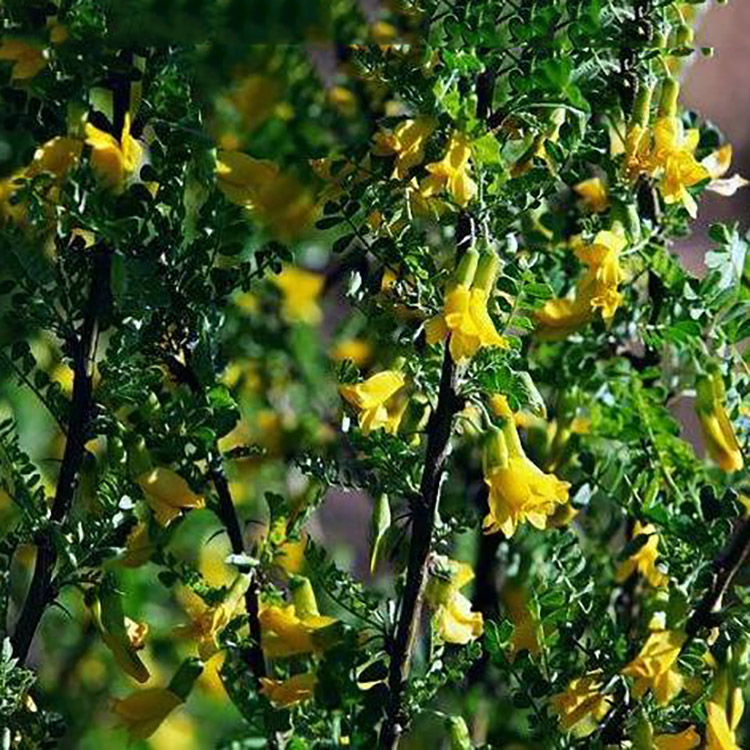
Shrubs, occasionally small trees, reaching 1-4 meters in height; old branches are golden yellow with a glossy appearance; white soft hairs. Pinnate compound leaves with 6-8 pairs of leaflets; stipules on long branches become hard thorns, 3-7 mm long, persistent; rachis 3-5 cm long, deciduous; leaflets lanceolate or narrowly ovate, 7-8 mm long, 2-7 mm wide, with an acute or slightly obtuse apex, spiny tip, broadly cuneate at the base, grayish green, densely covered with white appressed soft hairs on both sides.
Stem spathes are 6-15 mm long, densely covered with soft hairs, joints located in the middle to upper section; calyx tube-shaped campanulate, 8-9 mm long, 4-6 mm wide, densely covered with appressed short soft hairs, lobes triangular or lanceolate triangular; corolla 20-23 mm long, standard petal broadly ovate or nearly round, apex truncate and slightly concave, about 16 mm wide, with short petal stalk, wing petals with slender narrow stalks, slightly shorter than the petals, auricles short and small, toothed, keel petals with long petal stalks, auricles extremely short; ovary lanceolate, hairless. Pod flat, lanceolate, 2-2.5 cm long, 6-7 mm wide, sometimes covered with sparse soft hairs. Flowering in May, fruiting in June.
Seed maturity is about half a month earlier than that of Caragana microphylla and Caragana intermedia, but varies with regions. In the sandy areas of Gansu, it ripens in the late June to early July, while in the sandy areas of Inner Mongolia, it ripens in the first and middle ten days of July. Four to five days after the seed matures, the fruit pods split open, and the seeds scatter. Timely harvesting is essential, harvesting as they ripen. The thousand-seed weight is 50-60 grams, moisture content is 7.8%, germination rate is about 93%, and germination vigor is 77%. Stored under dry and ventilated conditions, the germination rate remains high at 91% until the third year, but two-thirds of the seeds lose their germination rate by the sixth year.
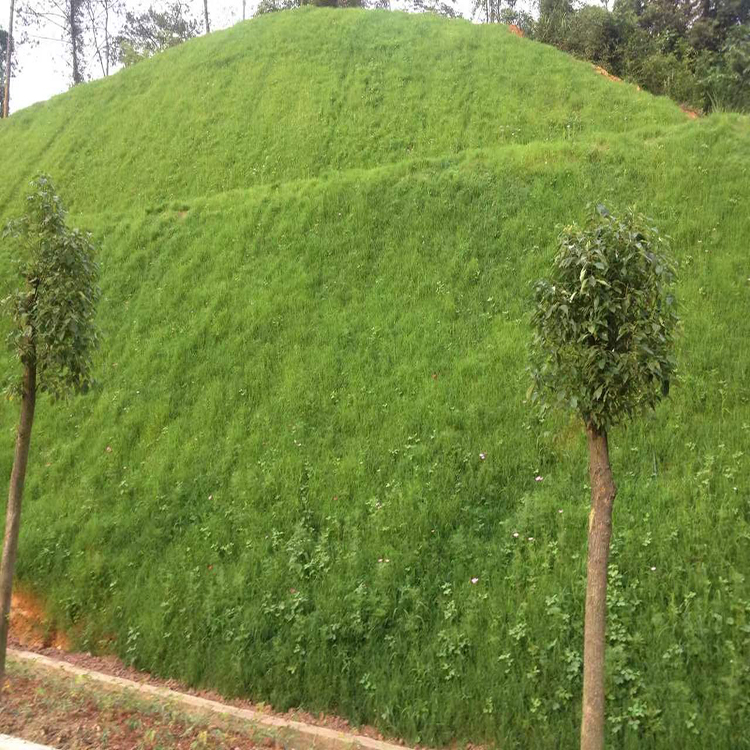
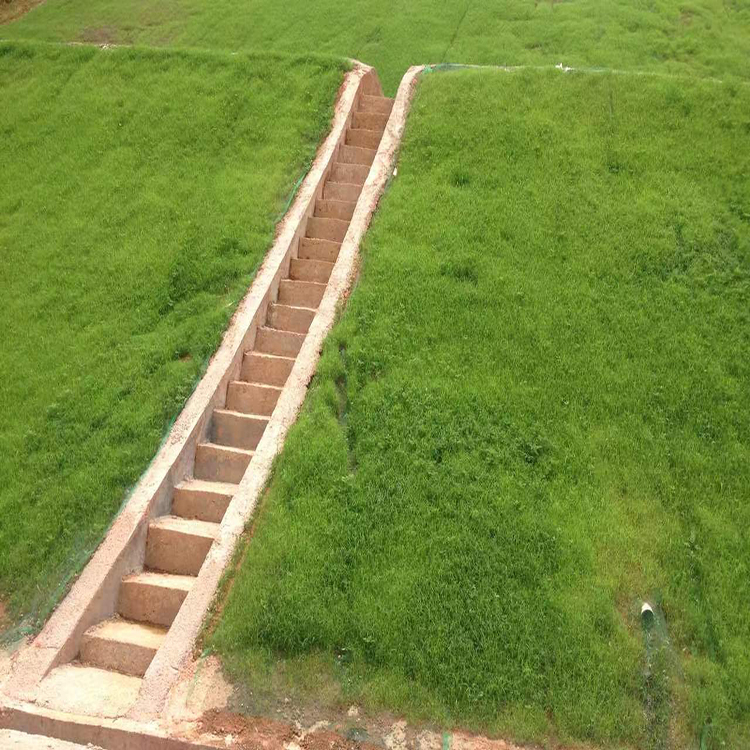
Caragana sinica is a taproot tree species with a well-developed taproot and fewer lateral roots, thus the survival rate of bare-root seedlings for afforestation is not high. It is advisable to perform root pruning before the seedlings enter autumn to promote the development of lateral roots. Additionally, actively promote the use of container seedlings for afforestation. Under conditions with good soil moisture, Caragana sinica grows better than Caragana microphylla and Caragana intermedia. However, during extensive land preparation or direct seeding on loess slopes, its growth is inferior to that of the latter. For afforestation in loess hilly areas, Caragana microphylla should be the main choice.