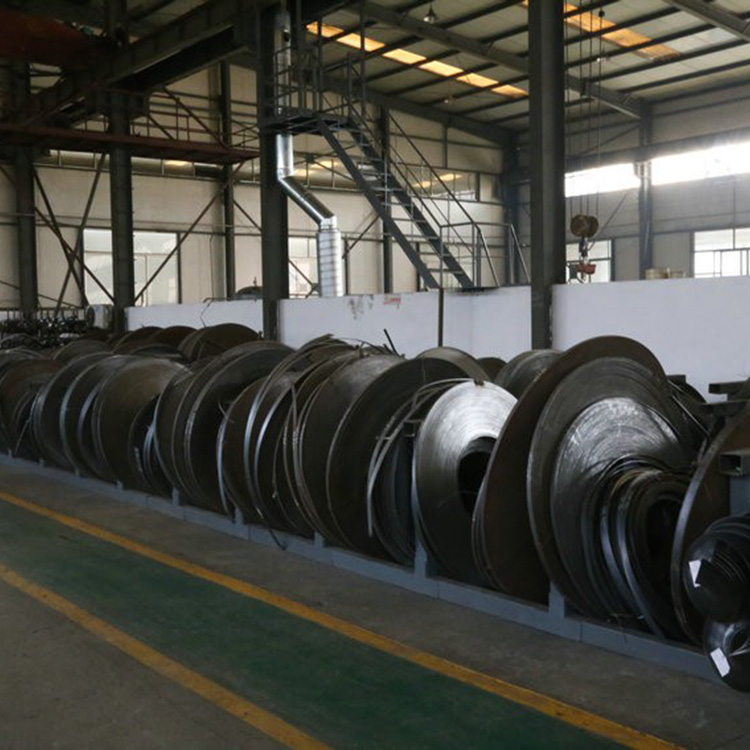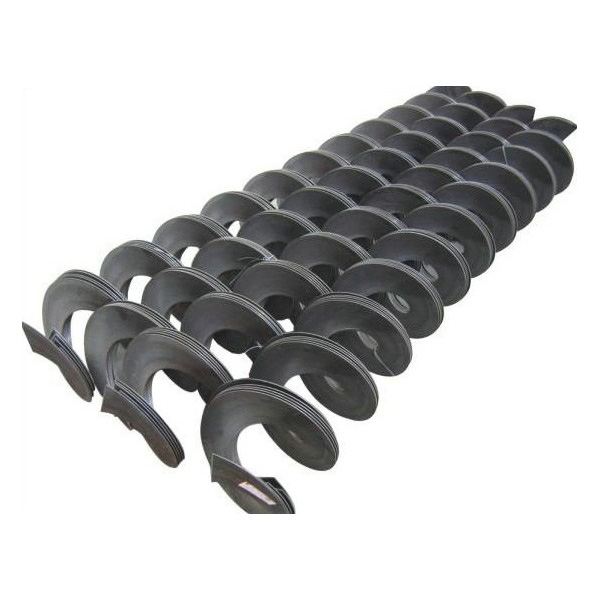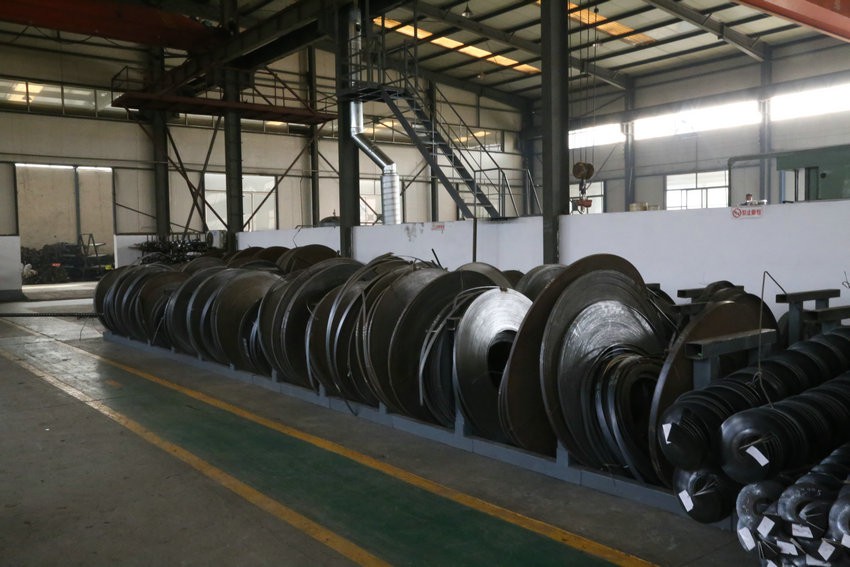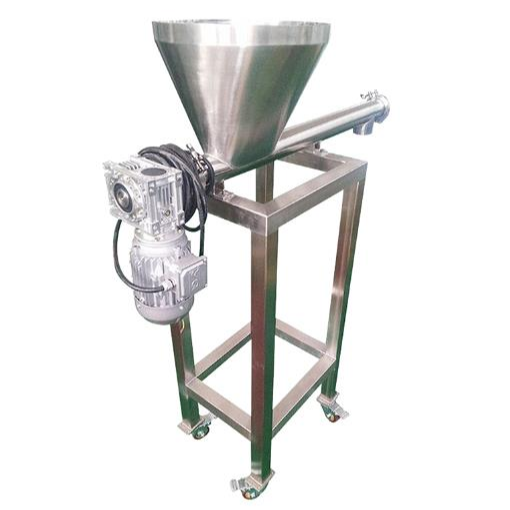








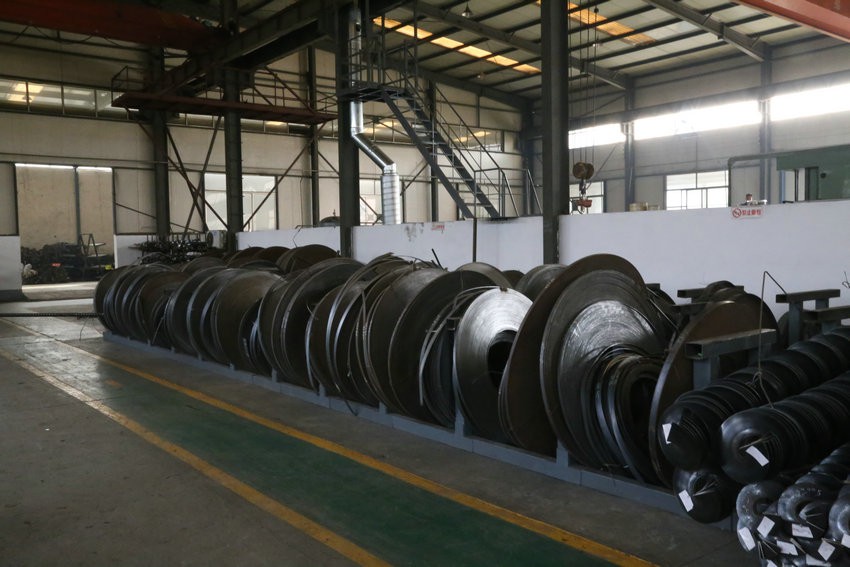
Common types of spiral blades include continuous spiral blades, single spiral blades, and uniform thickness spiral blades. Depending on different usage requirements, the appropriate type should be selected. Install them in sealed pipes or semi-enclosed U-shaped channels, with power supplied to one end, and they can form a spiral conveyor. They play a crucial role during the operation of the equipment, and due to the varying equipment applications, special attention must be paid to the processing method when manufacturing spiral blades.
If used in product processing, it's first necessary to determine its specific type, which typically includes solid, belt, blade, and toothed types. Each type corresponds to different application features and processing skills.
I. Categories:
Spiral blades can also be made of different materials depending on their applications, with common materials including plain carbon steel, stainless steel, and manganese steel. In food processing equipment, for hygiene reasons, stainless steel spiral blades should be chosen.
If it's a general material, such as wood chips, plastic granules, or powders, you can use a standard continuous spiral blade made of carbon steel; if conveying minerals or materials with a high particle hardness, opt for a wear-resistant manganese steel to increase its lifespan; two, characteristics:
① Helical blades produced by cold rolling process overcome the drawbacks of traditional helical blade production methods, such as poor precision, difficult shaping, high material consumption, and low production efficiency. ② High hardness and good wear resistance. Due to the cold working hardening on the surface after the cold rolling operation in the blade processing, the hardness of the blade is enhanced, and its wear resistance is improved. Of course, the increased hardness along the outer edge reduces wear during use, extending the service life.
③ After blade shaping, the surface is smooth with high dimensional accuracy and surface hardness, resulting in less resistance, which is favorable for material conveyance, significantly enhancing efficiency.
④ The spiral blades are made through a one-time molding process, eliminating the need for welding. This feature is highly beneficial for the device, making it easy and straightforward to use with the corresponding equipment.
Three, provide complete blades according to the spiral length required by the customer. They offer rigidity, can be welded during use, and are easy to assemble, quick and convenient.
Four: Used in wastewater treatment, material conveying, coal mining, food processing, grain, agricultural machinery and other industry fields.
Material: Low-carbon steel, stainless steel, alloy steel, wear-resistant steel, etc.
How to Choose Spiral Blades:
① Inspect for cracks. Counterfeit products, upon visual inspection, appear less bright and have obvious defects such as cracks, sand holes, inclusions, and burrs, which are prone to causing malfunctions.
② Check for a product certification. Qualified products have a certification of compliance issued by the national quality and technology supervision department, which authorizes them for consumption and factory shipment. This includes inspection certificates, instructions, and safety guidelines; without it, it's often a counterfeit or substandard product.
③ Check for assembly marks. Qualified products have clear and distinct assembly marks; those without marks or with unclear marks should not be selected.
④ Check for rust. Some spiral blades may show signs of rust, oxidation, discoloration, deformation, or aging due to improper storage or prolonged storage. If any of these conditions are present, do not purchase.
⑤ Check specifications and models. When selecting spiral blades, ensure the specifications and models meet the application requirements. Some may not be apparent from the outside, otherwise, they may not be usable after purchase.
⑥ Check for any warping or deformation. Due to improper storage methods, the spiral blades are prone to deformation, and the geometric dimensions may not meet the application requirements, rendering them unusable.
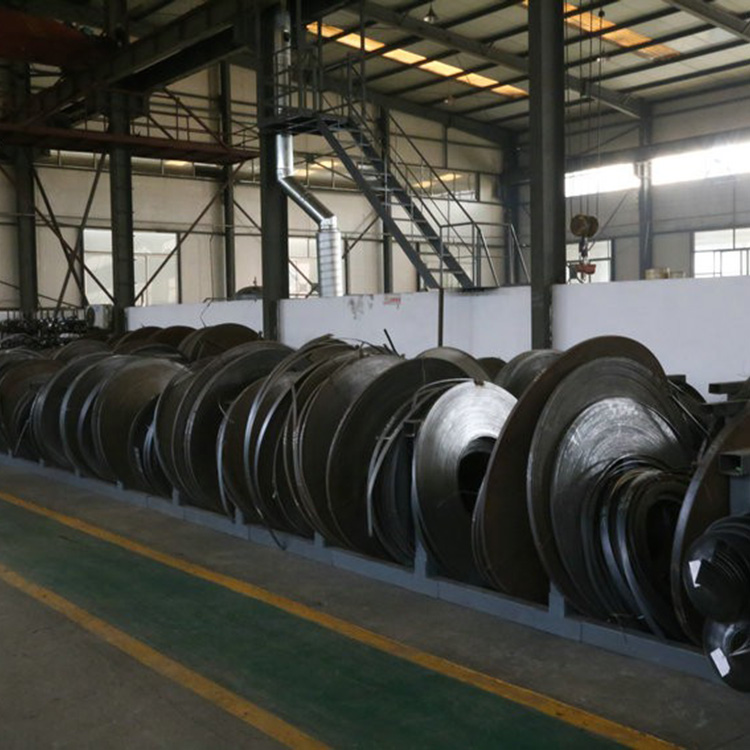
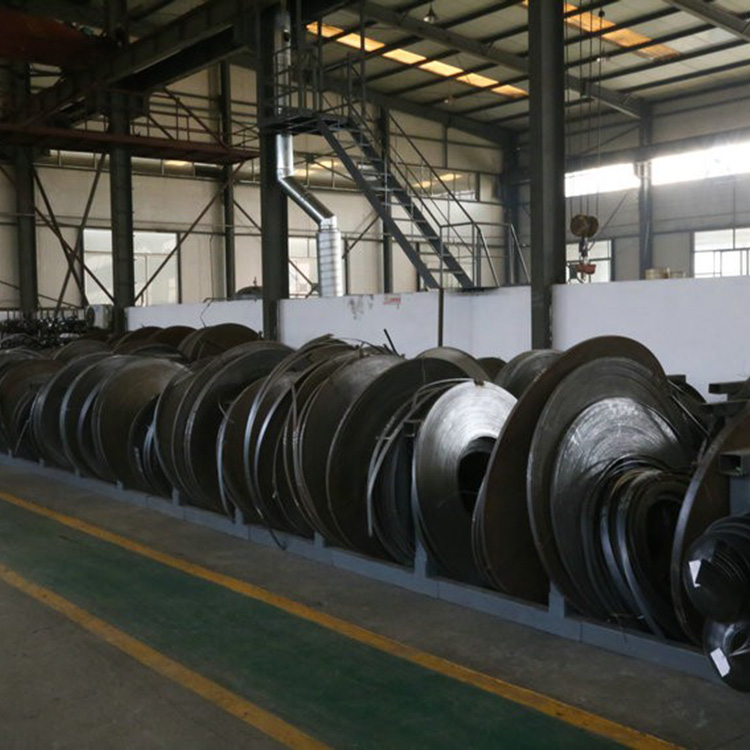
Spiral blades are primarily used for conveying materials with high viscosity and compressibility. This type of spiral surface not only facilitates the conveying process but also simultaneously performs functions such as mixing and blending of the material. Spiral conveyors come in three types of spiral blades: solid spiral surface, belt-type spiral surface, and blade-type spiral surface. Cold rolling machines are advanced equipment for continuously rolling blades from strip steel. By adjusting positions such as roll offset, feeding height, rolling pressure, and guide wheels, various specifications of blades can be produced. Current methods for manufacturing blades in China include individual stamping and welding, extrusion, winding, and cold rolling.