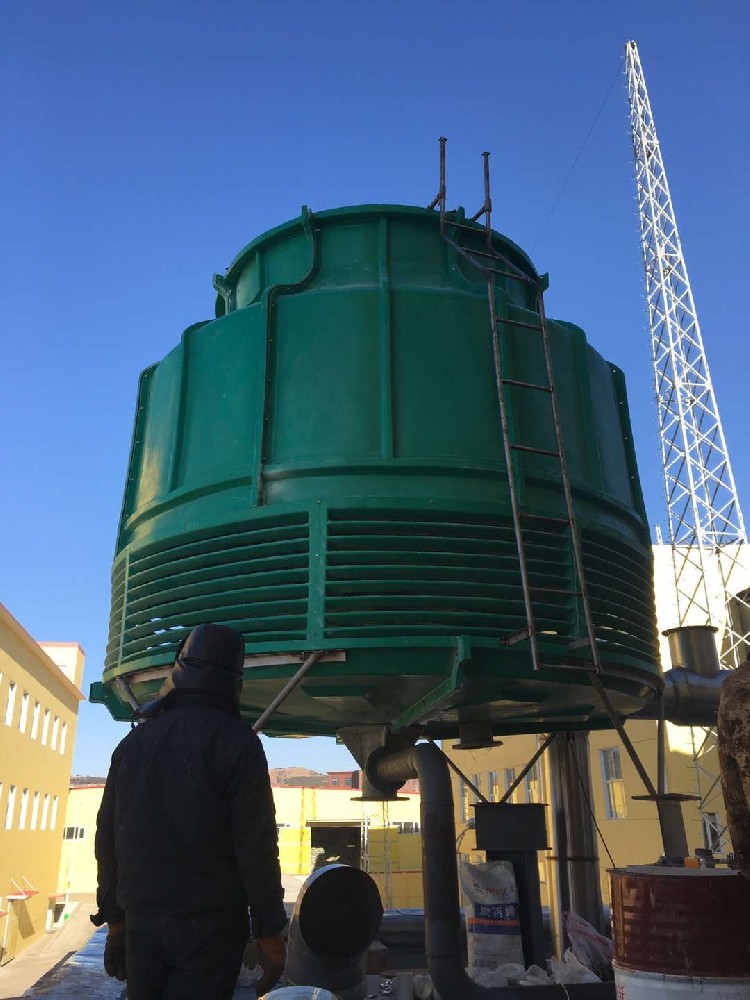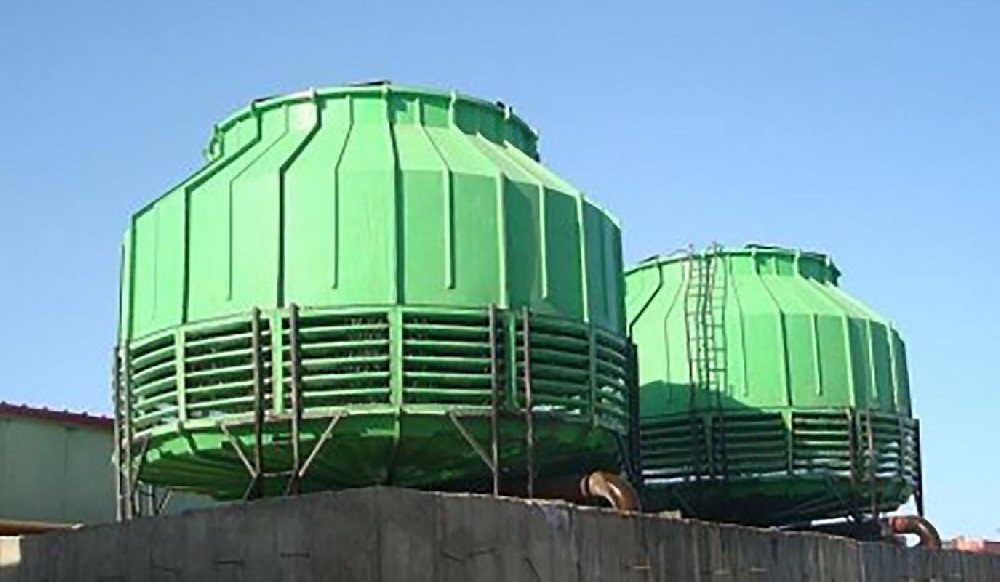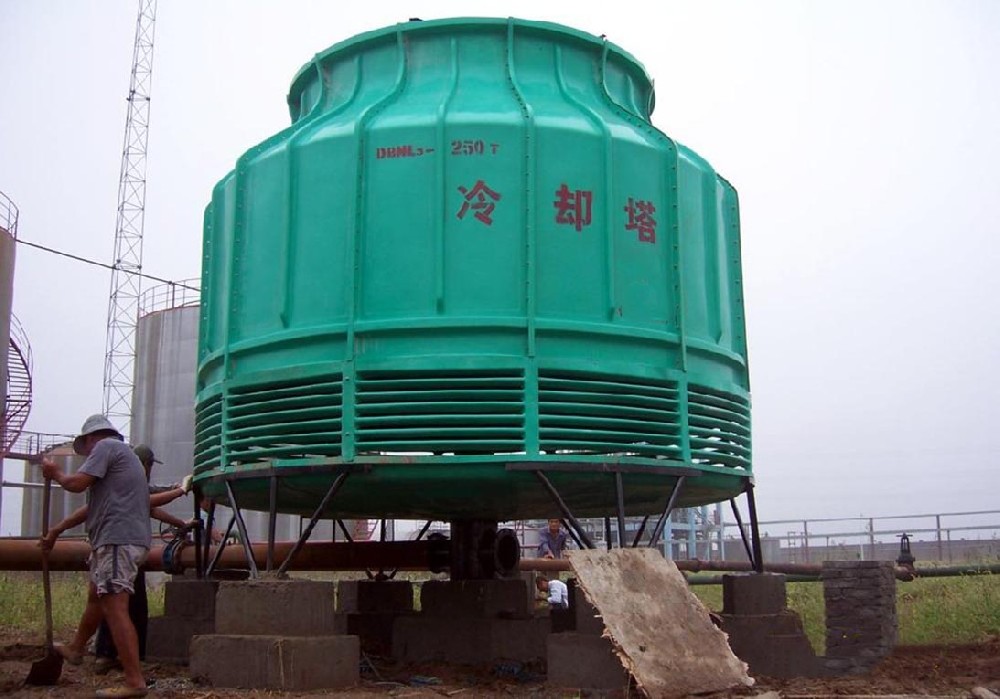

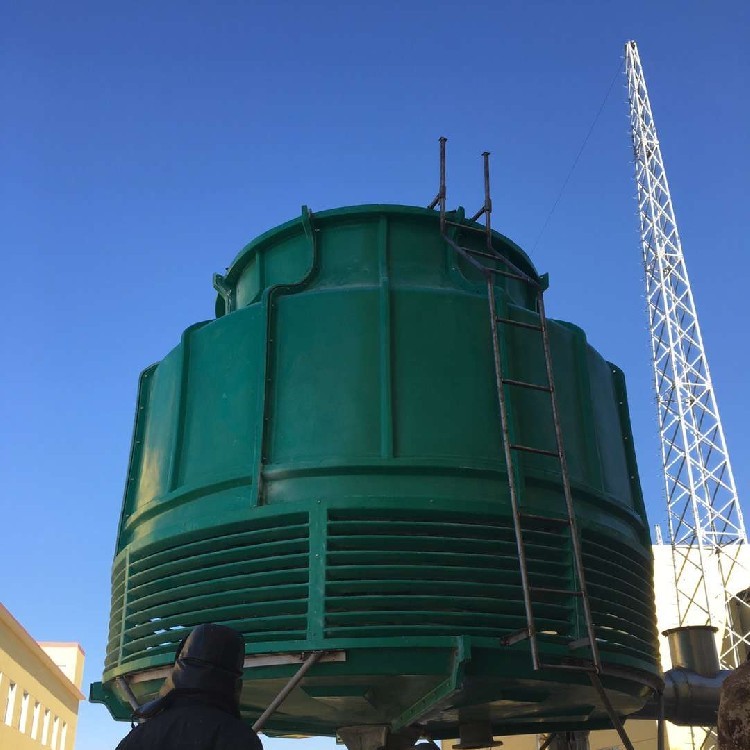

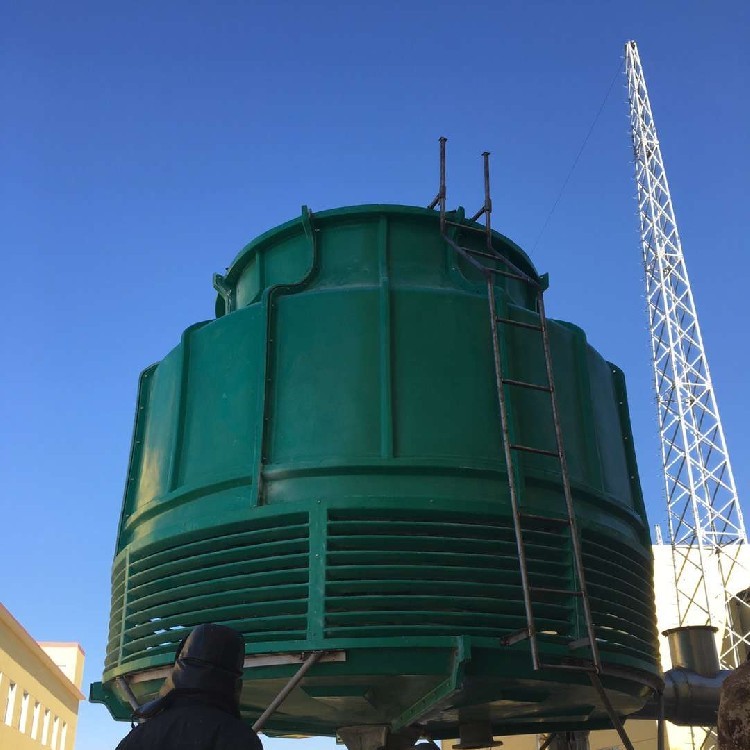

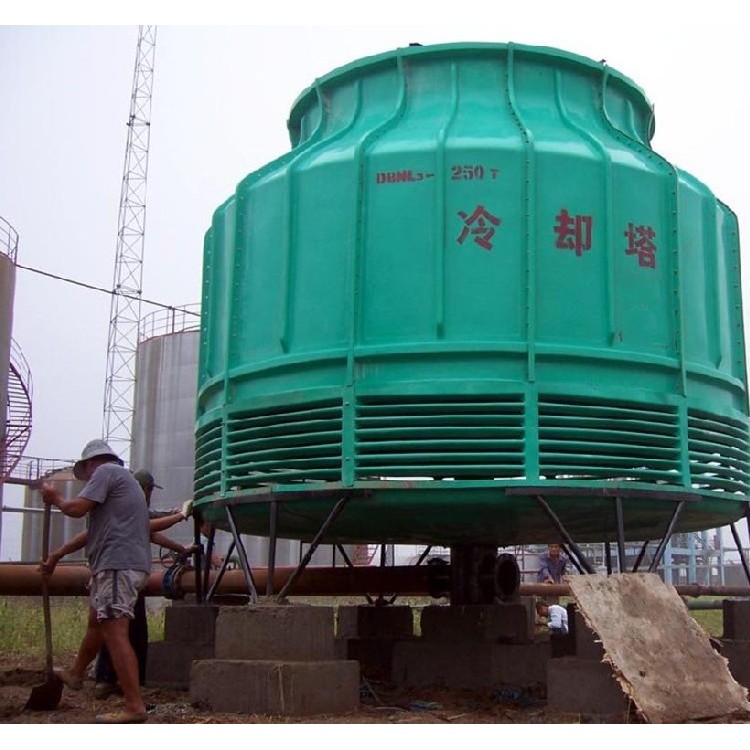












A "cooling tower" is a device that cools water by exchanging heat and mass with the air passing through it, thereby reducing the water temperature.
An open cooling tower is a device that dissipates waste heat generated in industrial processes or refrigeration and air conditioning systems by utilizing the contact between water and air through evaporation. The basic principle is: dry (low enthalpy) air, after being drawn by the fan, enters the cooling tower through the inlet grille; high-temperature water molecules with a large saturated steam pressure flow towards the lower-pressure air. Wet (high enthalpy) water is sprinkled into the tower from the sprinkling system. When water droplets come into contact with air, on one hand, heat is transferred directly due to the contact between air and water, and on the other hand, due to the pressure difference between the water vapor surface and the air, evaporation occurs under the pressure, which is the heat transfer of unsaturated dry air to remove the sensible heat of water, and part of the water evaporates to remove the latent heat from the water, thereby achieving the purpose of cooling the cooling water.
Closed-loop cooling towers utilize water and contact with the coil to transfer heat through the tube walls, thereby removing heat from the cooling medium inside the coil to achieve cooling. The circulating water in closed-loop cooling towers only circulates within the tower, exchanging heat with the air for cooling and then comes into contact with the coil to carry away the heat of the medium inside. The补水管 (make-up water pipe) is used to replenish water as needed. Compared to open-loop cooling towers, a distinct feature of closed-loop cooling towers is the addition of coils. The liquid medium to be cooled flows through the steel coils without direct contact with water, exchanging heat through the tube walls.
Application Scope:
Waste heat generated during industrial production or refrigeration processes is typically carried away using cooling water. The role of a cooling tower is to facilitate heat exchange between the cooling water carrying the waste heat and the air inside the tower, transferring the waste heat to the air and dispersing it into the atmosphere. For example, in a power plant, the boiler heats water into high-pressure steam, which drives the turbine to generate electricity. After the turbine's work, the exhausted steam enters the condenser, where it exchanges heat with the cooling water and condenses into water, which is then pumped back to the boiler for reuse. During this process, the waste heat from the exhausted steam is transferred to the cooling water, raising its temperature. The cooling water carrying the waste heat transfers heat to the air in the cooling tower, which is then expelled into the atmosphere through the air duct. The cooling tower is widely used in applications such as air conditioning cooling systems, refrigeration series, injection molding, leather processing, foaming, power generation, steam turbines, aluminum profile processing, air compressors, and industrial water cooling, with the most extensive use in air conditioning cooling, refrigeration, and plastic chemical industries.